
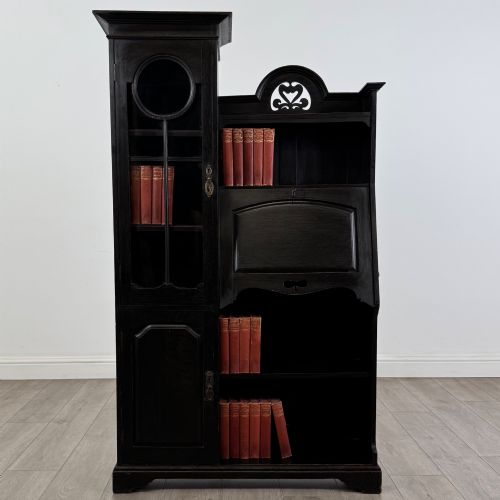
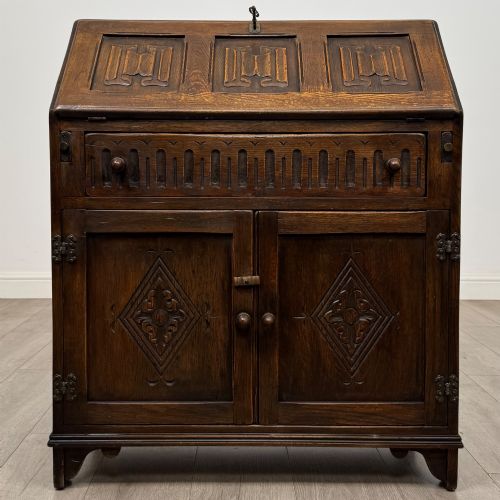
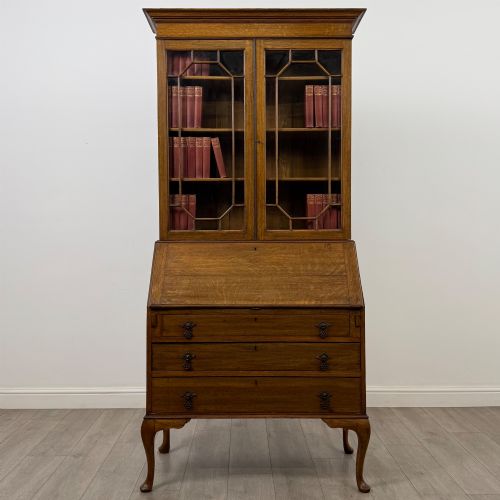
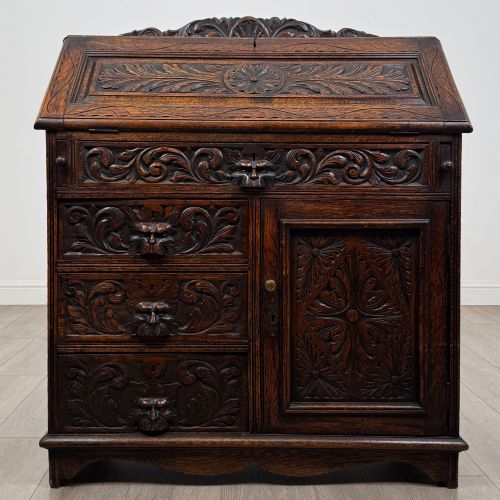
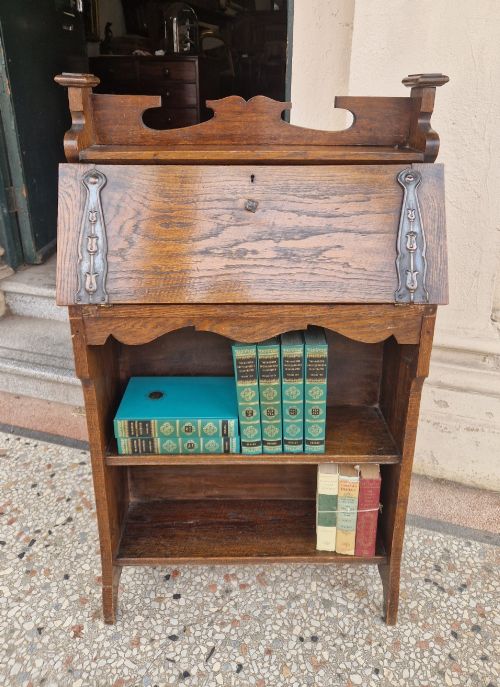
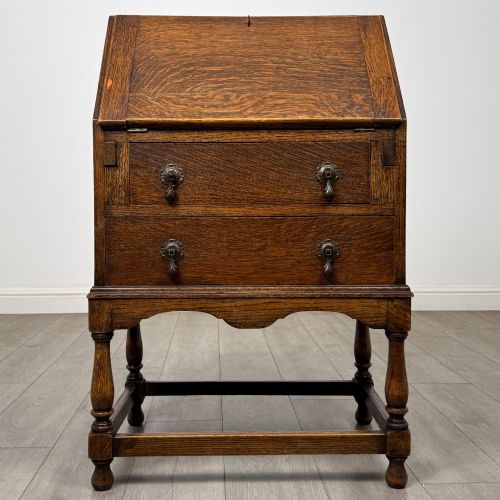
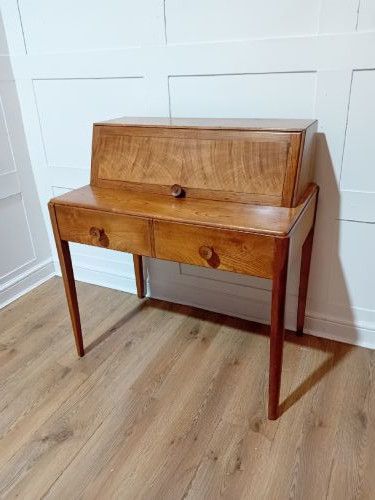
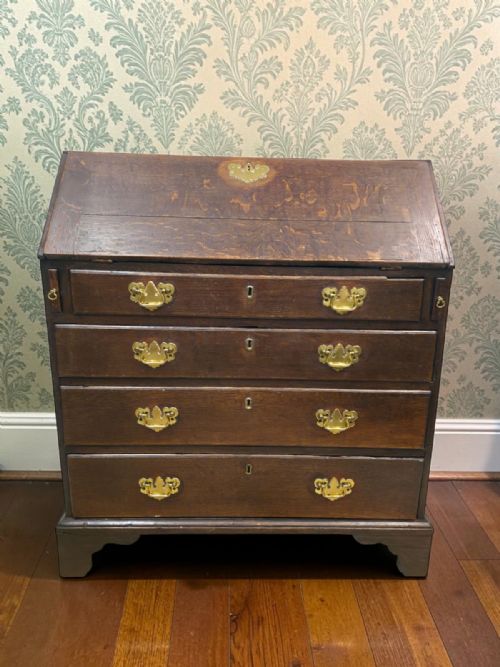

Fall Front Oak Desk
A fall front oak desk brings centuries of cabinet-making heritage into a room, offering a private writing surface that folds away neatly when the work is done.
Understanding the fall front oak desk
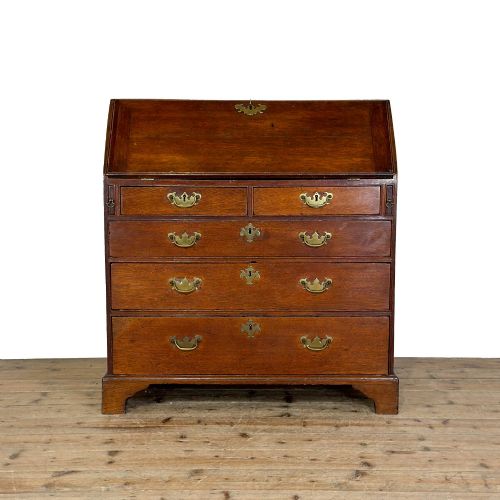
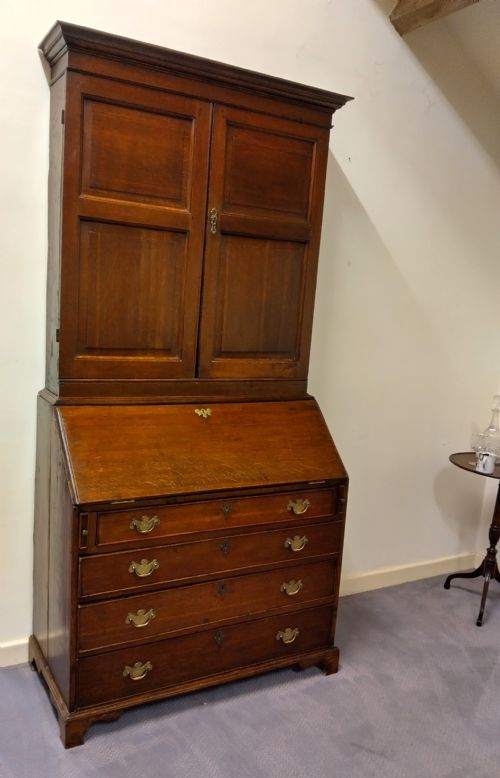
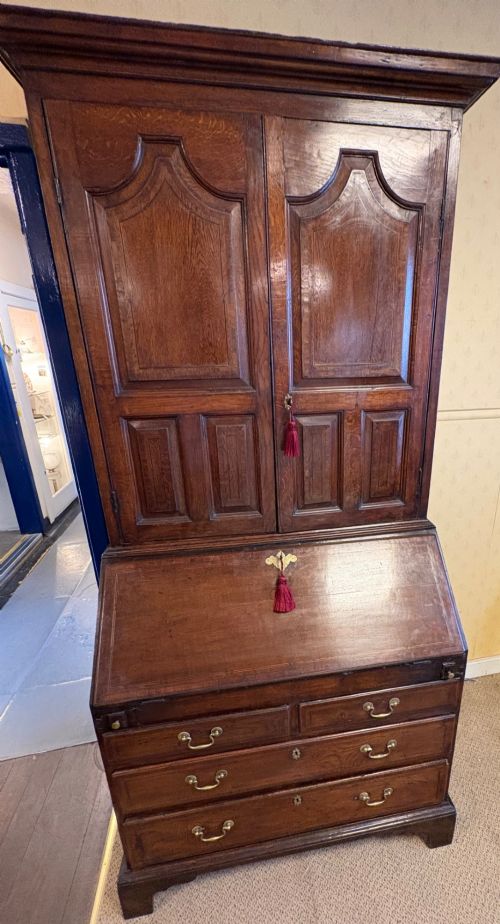
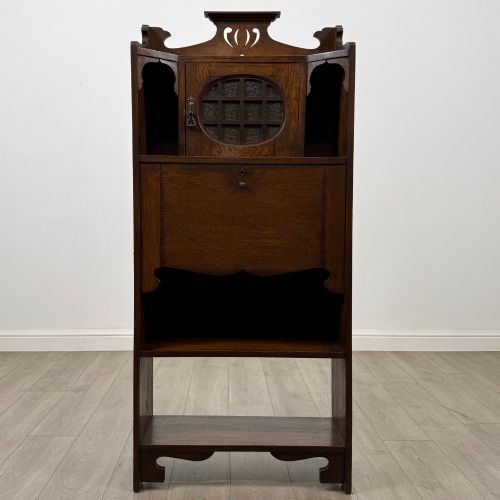
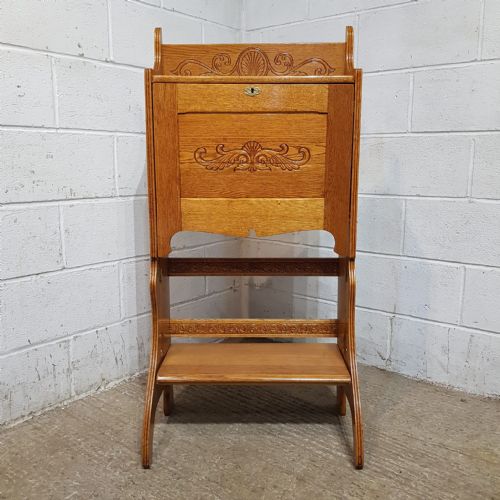
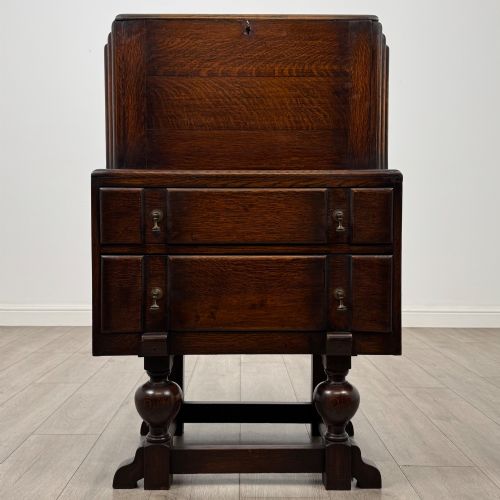
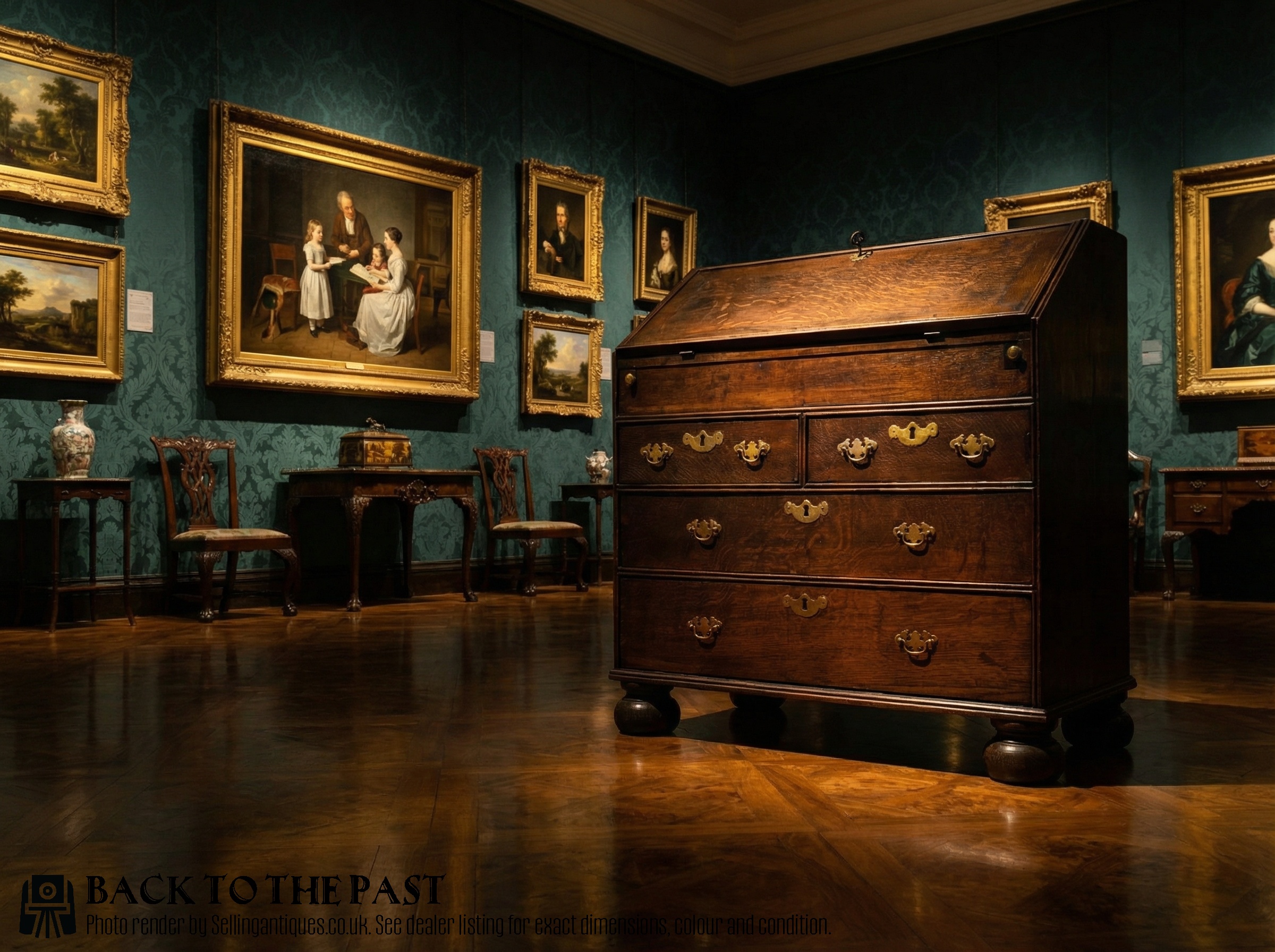
A fall front oak desk, also known in various listings as a bureau, writing desk or bureau bookcase, is a practical item of furniture designed for correspondence and storage. These pieces combine a hinged writing flap that drops down to form a horizontal surface with a series of internal compartments and lower drawers for papers.
The versions encountered on this page span several centuries and styles, ranging from late seventeenth-century examples to Edwardian revivals and mid-twentieth-century pieces. Makers of these desks utilised robust timber to create functional items that served domestic and professional needs alike.
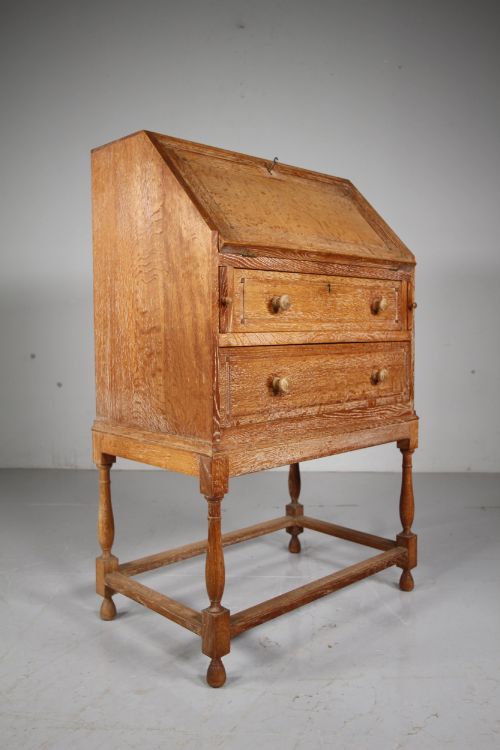
Forms vary from compact bureau desks on stands to substantial bureau bookcases that incorporate upper shelving. Buyers often find smaller proportions alongside larger Georgian and Victorian formats, reflecting the specific spatial demands of different eras.
Materials and construction methods
The primary material across these listings is oak, frequently specified as English oak, complemented by secondary timbers and structural elements in glass, brass and wrought iron. Artisans selected this durable hardwood for its strength and distinctive grain pattern, which supported both plain utilitarian builds and more decorative treatments.
Construction techniques involve traditional joinery to secure the heavy fall front flaps, drawers and internal fittings. Hardware such as brass drop handles and hinges play an essential structural and decorative role, while decorative details like barley twist supports and crossbanding demonstrate the cabinet-maker's repertoire.
Retail Price Guide 2026
Typical UK retail prices for fall front oak desk, calculated from the Sellingantiques database of over a million retail prices indexed since 2003. This retail price guide relies exclusively on Sellingantiques data; no external sources or auction records are used, so the figures do not describe the wider market.
Listings incorporate items spanning the seventeenth century through to 1940, showcasing stylistic revivals alongside period originals.
Assessing quality and craftsmanship
Quality in these desks is determined by the refinement of the interior arrangement and the integrity of the timber selection. Finer examples display carefully organised fitted interiors with hidden compartments, pigeonholes and small drawers behind the main flap, showing a higher degree of joinery skill.
The distinction between standard pieces and superior work lies in the execution of decorative elements such as crossbanding, carved mouldings and the quality of the brass hardware. Uniform grain selection and the retention of original structural components separate exceptional pieces from simpler utilitarian iterations.
Robert Mouseman Thompson·Harris Lebus
The Fall Front Oak Desk Glossary
- Fall front
- A hinged writing flap that drops down to a horizontal position for use and lifts back up to conceal the interior. This mechanism protects writing materials and maintains a tidy exterior appearance.
- Bureau
- An enclosed desk featuring a sloping or falling front that opens to reveal a fitted interior with pigeonholes and small drawers. The term frequently appears interchangeably with writing desk in older cataloguing.
- Bureau bookcase
- A tall combination piece comprising a lower desk section with a fall front and an upper shelving unit enclosed by doors. These pieces provided dual functionality for both writing and library storage.
- Crossbanding
- A decorative border technique where thin strips of veneer are laid around the edges of a drawer front or flap so that the grain runs at right angles to the surrounding wood.
- Barley twist
- A type of turned furniture leg or support resembling a spiral rope. This decorative turning method appears frequently on seventeenth-century and Edwardian revival furniture.
Frequently Asked Questions
What is a fall front oak desk?
A fall front oak desk is a traditional form of writing furniture featuring a hinged flap that drops down to create a desk surface, concealing internal pigeonholes and small drawers. Below this flap, the piece typically incorporates functional storage drawers or stands.
These desks were designed for domestic correspondence and record keeping. Their closed format allowed owners to secure private papers away from view when not in use.
How do I date an oak bureau?
Dating an oak bureau involves examining construction methods, timber characteristics and stylistic markers such as hardware and decorative turnings. Pieces from the seventeenth century often display heavy frame and panel construction with hand-cut joinery.
Later Edwardian and twentieth-century examples tend to utilise lighter internal framing while mimicking earlier historical styles like Georgian or William and Mary. Comparing the type of brass handles and secondary woods provides further clues to the exact period.
How were these desks used historically?
Historically, these desks served as the primary household station for writing letters, managing accounts and storing important documents. The internal compartments kept inkwells, quills and stationery organised.
In larger homes, they stood in parlours, studies or libraries. Their dual role as a writing surface and a storage chest made them central pieces of everyday domestic life.
Where should I place an oak bureau?
An oak bureau suits a variety of rooms including home offices, living spaces and quiet corners of a hallway. Because the fall front closes flush, the piece presents a clean wooden cabinet front when workspace is not required.
Consider room dimensions to ensure adequate clearance when the writing flap is lowered and when someone is seated at the desk. Positioning away from direct heat sources helps protect the solid oak timber over time.