


Ersari Turkmen Carpet
These woven pieces span grand main carpets down to small saddle rugs, offering rich tribal patterns for any room.
Ersari Turkmen Carpet
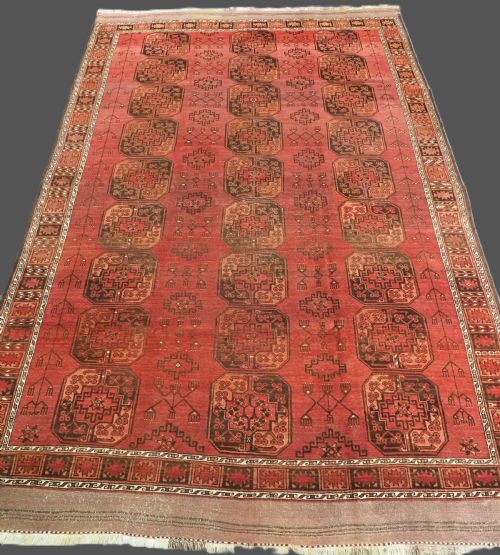
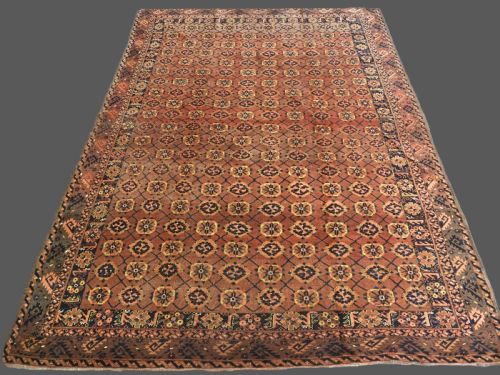
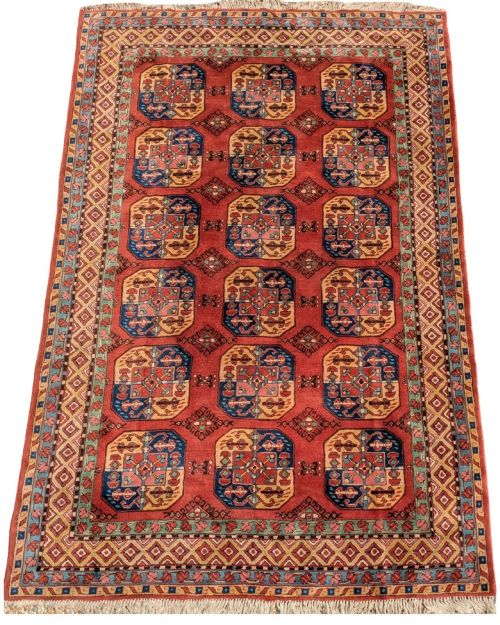
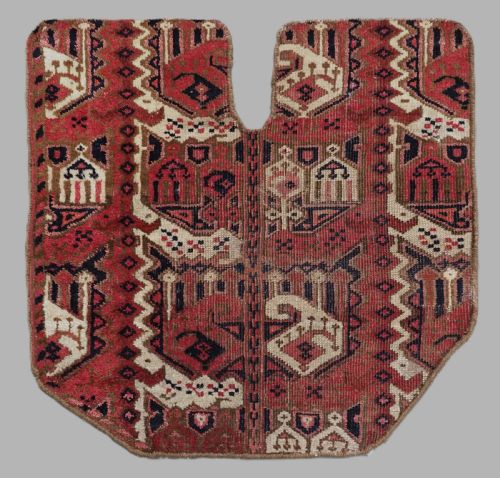
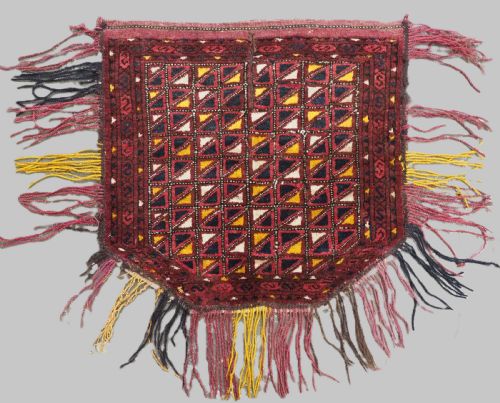
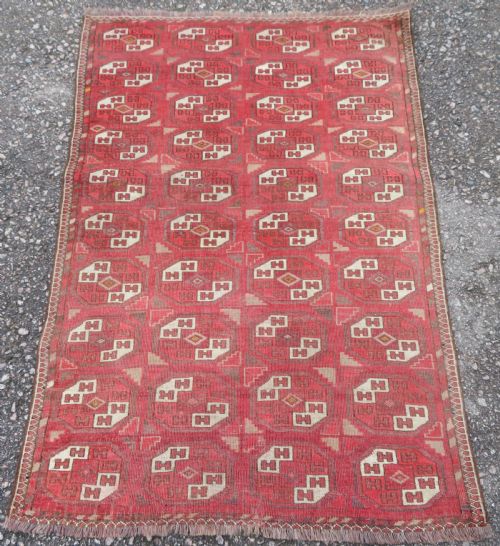
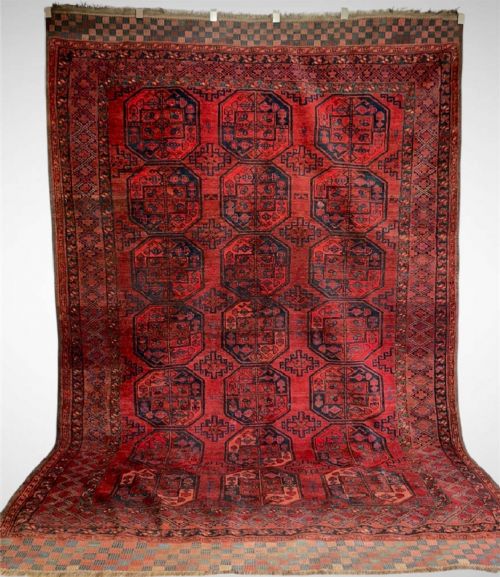
When you search for an ersari turkmen carpet, you are looking at woven textiles originating from Central Asian tribal groups, predominantly associated with the Ersari tribe of Turkmenistan and Northern Afghanistan. The pieces listed on this page encompass substantial main carpets, village carpets, and smaller format items like torbas, chuval faces, and saddle rugs.
You are most likely to encounter room-size main carpets and smaller utility bags featuring traditional gul motifs, often attributed to the late nineteenth and early twentieth centuries. These rugs served practical and decorative functions within nomadic and village households before entering the antique market.
Materials and construction
These textiles are constructed primarily from hand-spun wool, utilising natural dyes to achieve deep red, plum, and warm brown colour palettes. Structural foundations occasionally incorporate goat hair and horsehair for added durability.
Weavers employed traditional tribal knotting techniques to produce dense, hard-wearing piles designed to withstand heavy domestic use. Specialised subsets, such as Beshir pieces, frequently incorporate fluid ikat designs alongside standard geometric layouts.
Ersari Turkmen Carpet Retail Price Guide 2026
Typical asking prices for ersari turkmen carpet among the pieces listed under this phrase on Sellingantiques today, from the lower quarter to the upper quarter. They describe what is for sale here now, not the wider market.
Listings span main carpets and small bags produced between the mid-nineteenth century and the early twentieth century, utilising hand-spun wool and natural dyes.
Quality and variation
Quality in these carpets rests upon the fineness of the wool, the depth and clarity of the natural dyes, and the precision of the tribal drawing. Early examples often display greater nuance in colour graduation and more expressive rendering of the primary guls.
State of preservation significantly influences desirability, with intact original borders and minimal pile loss distinguishing superior survivals. Structural integrity, including sound selvedges and robust foundations of wool or animal hair, marks the upper tier of the range.
The Ersari Turkmen Carpet Glossary
- Gul
- A primary medallion or repeating octagonal motif used extensively in tribal rug design. These motifs often identify the specific sub-tribe or regional origin of the weaving.
- Torba
- A small utilitarian bag or hanging sack produced by nomadic weavers for household storage. They typically feature carefully arranged face designs similar to larger carpets.
- Chuval
- A large tent bag used for storing household goods during nomadic migrations. Surviving pieces usually comprise only the decorative face of the original sack.
- Beshir
- A regional style associated with Ersari weavers residing along the Amu Darya river valley. These pieces are notable for botanical influences, prayer arches, and fluid ikat patterns.
- Kapunuk
- A specialised tent door rug designed to frame the entrance of a nomadic dwelling. They feature a distinct three-sided shape intended to fit across the door lintel and jambs.
Ersari Turkmen Carpet: Frequently Asked Questions
What is an ersari turkmen carpet?
An ersari turkmen carpet is a hand-knotted textile produced by nomadic and village tribes of Central Asia. These pieces are celebrated for deep red tones and repeating geometric gul motifs.
Most surviving examples date from the nineteenth and early twentieth centuries, reflecting traditional craftsmanship from regions spanning Turkmenistan and Northern Afghanistan.
How were these carpets used?
Nomadic families utilised these large main carpets as floor coverings within traditional dwellings, while smaller formats served as camel trappings, tent door surrounds, and storage bags.
Utility bags such as torbas and chuvals were hung inside tents to hold personal belongings, showcasing the weaver's finest decorative work on the visible face.
How do I live with an antique rug?
These robust wool and natural dye textiles suit high-traffic domestic spaces due to their dense pile and hard-wearing construction. Using a quality underlay protects the wool foundation and prevents slipping on hard floors.
Regular gentle vacuuming without rotating brushes maintains the pile, while keeping the textile away from direct, harsh sunlight preserves the rich red and gold colour tones.
How can I tell different tribal designs apart?
Distinctions rely primarily on the shape and arrangement of the repeating guls, as well as the choice of secondary borders and palette. Sub-tribes such as the Kizil Ayak or Taghan introduce specific variations in medallion structure and colour saturation.
Beshir pieces depart from strict geometric layouts by incorporating flowing boteh, star, or ikat patterns influenced by regional textile traditions along the Amu Darya.