




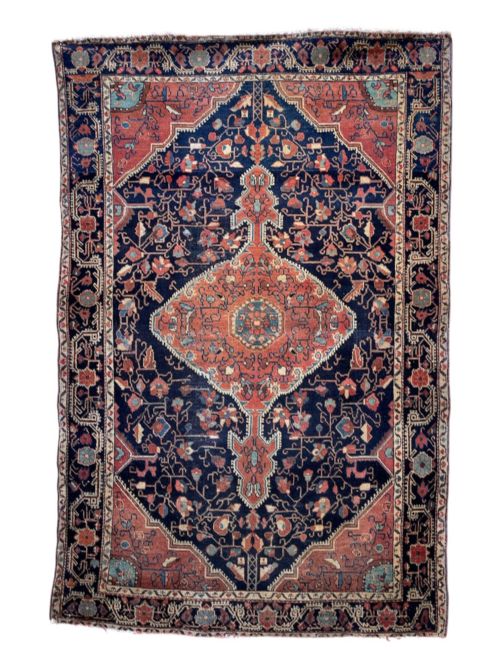
Red Hand Knotted Rug
These red hand knotted rug examples bring grounded tribal geometry and centuries of nomadic weaving tradition straight to your floor.

Red Hand Knotted Rug
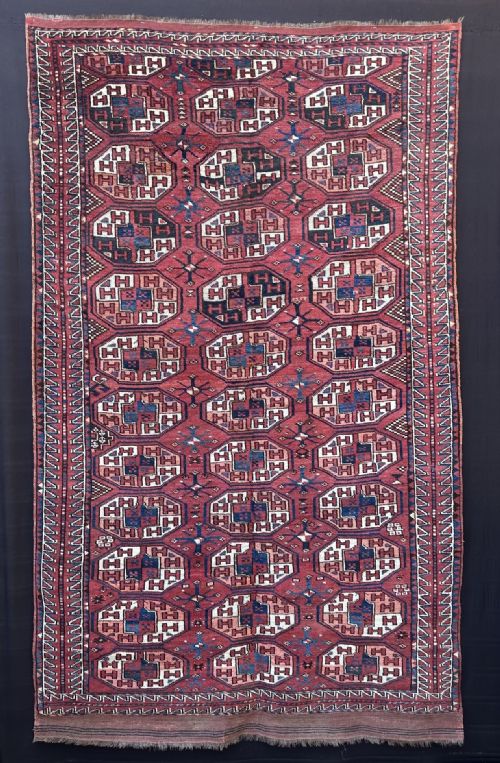
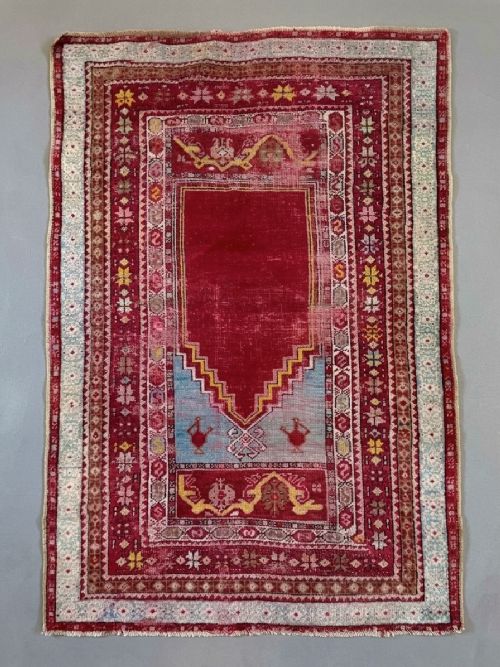
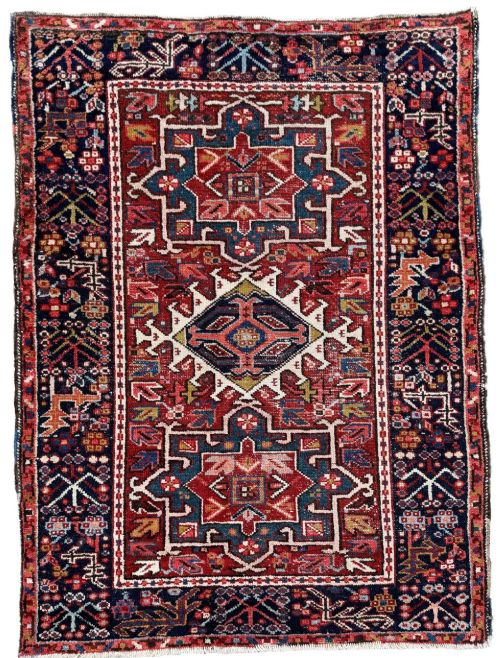
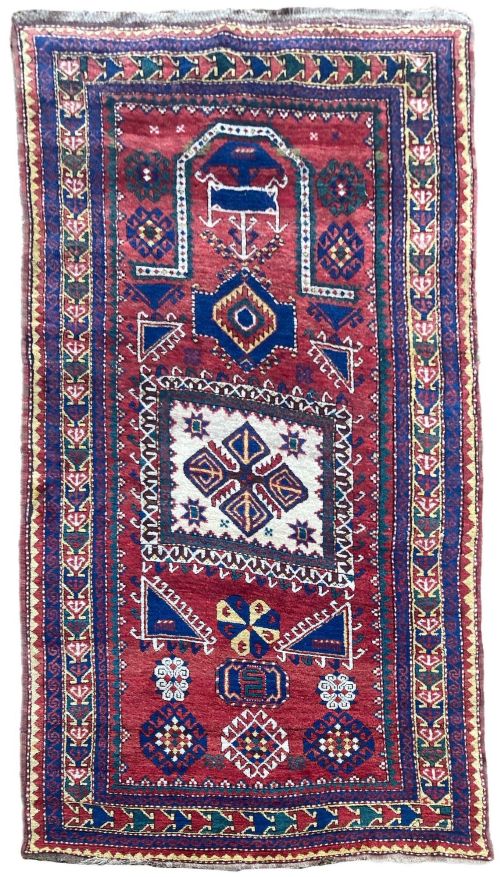
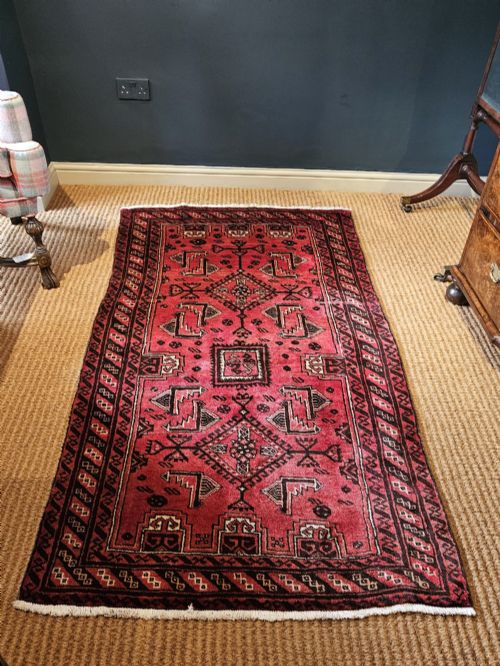
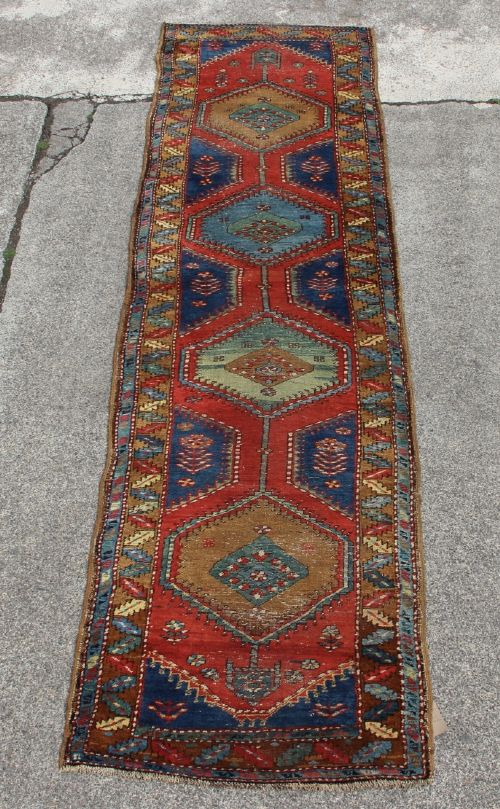
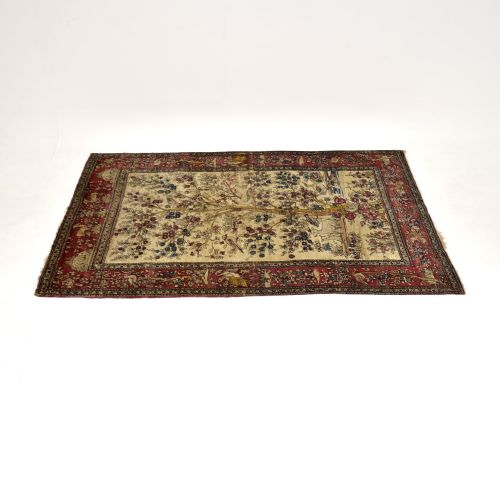
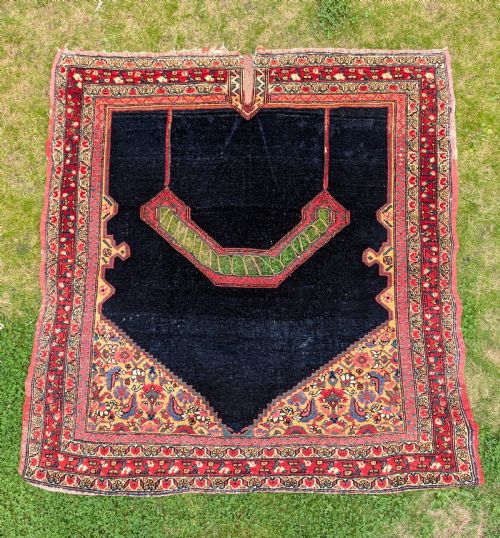
A red hand knotted rug encompasses nomadic and village weaving traditions from Persia, the Caucasus, and Anatolia, spanning from the early nineteenth century through to the interwar decades. When you search for a red hand knotted rug, you encounter room-size carpets, smaller area rugs, and specialised tribal pieces like tent door hangings and prayer rugs.
The pieces listed here lean heavily into Persian tribal and Caucasian tribal aesthetics, alongside Ottoman Anatolian origins. You will most frequently meet Persian village formats like Karadja, Lori, Hamadan, and Mahal, each bringing distinct regional geometries and deep madder red grounds to domestic spaces.
Older nineteenth-century examples, such as Khamseh main carpets and Bordjalou Kazak rugs, display figurative elements and bold medallions. Meanwhile, later 1920s and 1930s productions maintain the traditional knotting techniques while adapting slightly more regularized village layouts.
How they were made
The construction relies on sturdy wool piles hand-knotted onto foundations of wool or cotton warp and weft threads. Artisans utilised hand-spun wool in many instances, allowing natural variations in the yarn to absorb dye with rich tonal depth.
Dye traditions focused heavily on rich reds derived from natural sources like madder root, which yielded the characteristic warm crimson and rust tones seen across these rugs. Weavers worked from memory or traditional tribal motifs rather than rigid paper cartoons, passing geometric patterns down through generations.
Red Hand Knotted Rug Retail Price Guide 2026
Typical asking prices for red hand knotted rug among the pieces listed under this phrase on Sellingantiques today, from the lower quarter to the upper quarter. They describe what is for sale here now, not the wider market.
Some carpets preserve accidental stray animal hairs spun directly into the wool, reminding us of the village flocks.
What varies in quality
Quality in these rugs rests upon the tightness of the knotting, the purity and resilience of the wool, and the complexity of the design layout. Finer knots permit crisper delineation of geometric medallions, tribal figures, and intricate border bands.
The depth and saturation of the red dye ground also dictate visual success, with richer madder tones offering superior ageing characteristics compared to less stable dye mixtures. Intact original selvedges and complete outer borders distinguish well-preserved nomadic pieces from those that have suffered significant side-cord loss or re-weaving.
The Red Hand Knotted Rug Glossary
- Warp
- The vertical foundation threads stretched tightly on the loom before knotting begins. The fringe of a finished rug is simply the extension of these warp threads.
- Weft
- The horizontal threads passed back and forth between the warp rows to lock the knots in place. In many tribal rugs, the weft is dyed red or blue to add subtle colour variation to the back.
- Madder
- A natural dye extracted from the root of the Rubia plant, producing durable and warm red tones. It forms the foundation colour for the majority of traditional tribal weaving.
- Kapunuk
- A specialised triangular-topped tent door hanging produced by Turkmen tribes. These pieces historically framed the entrances of nomadic dwellings.
- Selvedge
- The finished side edges of a rug formed by wrapping the outermost warp threads. Original selvedges indicate a well-maintained textile.
Red Hand Knotted Rug: Frequently Asked Questions
How do I style a red hand knotted rug?
These rugs anchor modern and traditional rooms alike by introducing rich earthy reds and structured geometry to hardwood floors. They work particularly well beneath wooden dining tables or as central accents in sitting areas.
Allow sufficient floor space around the edges of the rug to let the tribal borders frame the piece properly without crowding the furniture layout.
How do I clean a wool rug?
Regular gentle vacuuming without a rotating power brush prevents dust from settling deep into the wool pile. Professional specialist cleaning remains essential every few years to protect natural dyes.
Avoid chemical spot treatments or excessive moisture, which can weaken old cotton foundations and cause fugitive colours to bleed.
How do I tell an old rug from a newer one?
Examine the back of the rug to assess the irregularity of the knotting and the wear patterns on the foundation threads. Hand-spun wool and natural madder dyes exhibit subtle tonal shifts that reveal artisanal production.
Slight asymmetries in the geometric design and minor variations in pile height often point toward older nomadic and village origins rather than modern factory output.
What is a tribal rug?
Tribal rugs are woven by nomadic or semi-nomadic peoples for personal domestic use, dowries, or local trade rather than commercial export. Their designs reflect specific clan heritages and symbolic motifs.
These pieces typically emphasise bold geometric medallions, stylized animal figures, and saturated red backgrounds drawn from local flora.