
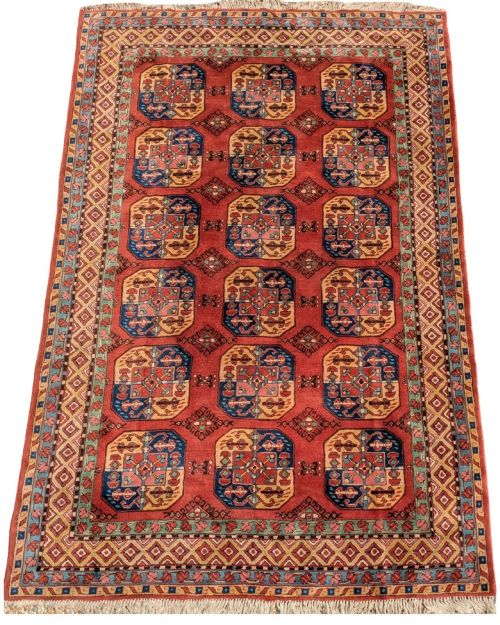
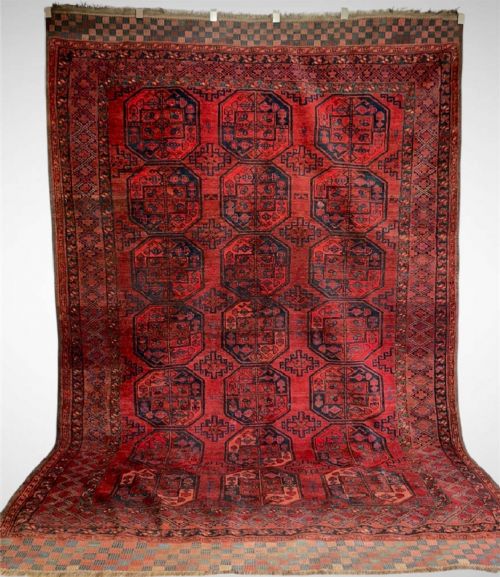


Ersari Afghan Rug
An ersari afghan rug brings rich tribal character and deep madder tones into a room through classic Turkmen patterns woven in northern Afghanistan.
Ersari Afghan Rug
When searching for an ersari afghan rug, buyers encounter heavy village carpets, main carpets, and smaller tent hangings originating from Central Asian tribal weavers. These textiles date primarily from the late nineteenth century and the early decades of the twentieth century, reflecting a long tradition of nomadic and village knotting.
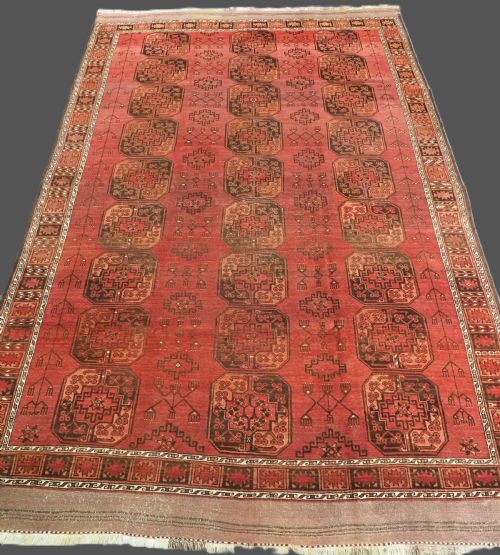
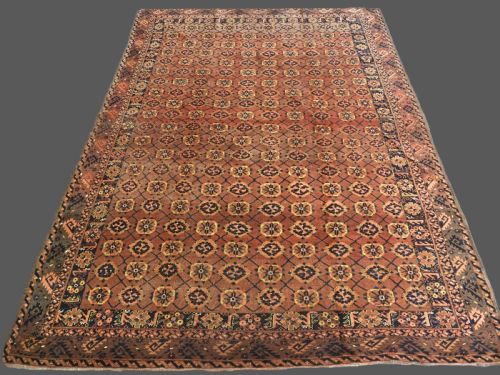
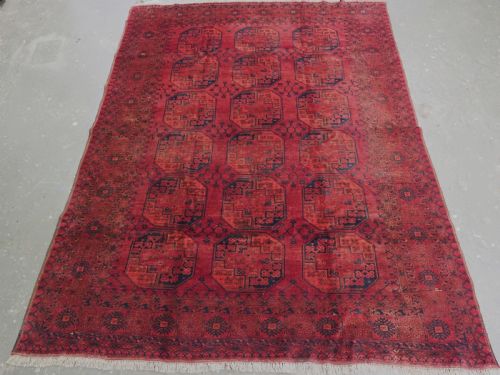
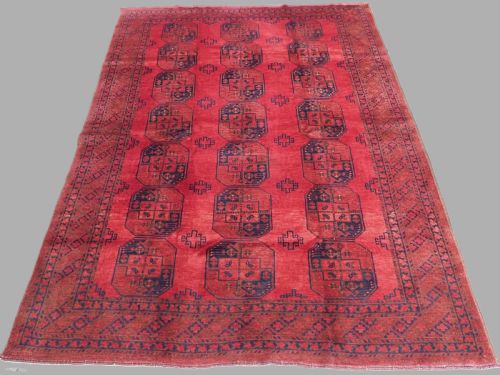
The most common examples on this page are village and main carpets displaying warm red grounds, deep madder colouration, and large repeating gul motifs. Pieces often span substantial room sizes down to smaller prayer rugs, runners, and specialised formats like ensi door hangings.
Originating from northern Afghanistan and associated with Turkmen groups such as the Ersari, Kizil Ayak, and Taghan sub-tribes, these floor coverings combine utility with distinct tribal iconography. Their traditional designs serve both decorative functions and practical domestic use in country houses and village settings.
How They Were Made
Weavers constructed these carpets using hand-spun wool for the pile, often yielding soft, glossy textures alongside hard-wearing durability. Foundations frequently incorporate cotton or wool, with occasional examples utilising horsehair or goat hair in the structure.
Natural dyes produced the characteristic deep reds, warm tones, and golden hues seen across the pieces. Artisans tied dense wool piles onto sturdy warp and weft foundations to withstand generations of heavy foot traffic.
Some tent hangings still retain traces of goat hair and horsehair in their sturdy foundations.
What Varies in Quality
Quality separates across examples through the handling of natural dyes, wool lustre, and the crispness of the tribal gul geometry. Finer pieces demonstrate superior wool preparation that retains a soft, glossy handle while maintaining structural integrity.
The depth and variation of the madder red colouration distinguish exceptional weaving, alongside the preservation of the pile and the overall balance of the classic design.
The Ersari Afghan Rug Glossary
- Gul
- A medallion motif repeated across Turkmen carpets. These octagonal or polygonal designs act as tribal emblems.
- Chuval
- A large storage bag face produced by nomadic weavers. These utility pieces display detailed primary guls and elem panels.
- Main Carpet
- A large-format floor covering woven for domestic use within the tribe. These substantial carpets anchor major rooms.
- Madder
- A natural red dye derived from plant roots. It provides the characteristic warm red ground colour.
Ersari Afghan Rug: Frequently Asked Questions
Where were ersari afghan rugs made?
These carpets were produced by tribal and village weavers in northern Afghanistan. Communities such as the Ersari and related sub-tribes kept traditional knotting methods alive across generations.
Local workshops and nomadic groups utilised regional materials like hand-spun wool and natural dyes to create durable floor coverings for daily use.
How do I care for an antique rug?
Regular gentle vacuuming without a beater bar removes surface dust safely. Professional cleaning tailored to antique wool ensures the natural fibres remain preserved.
Keeping the textile out of direct sunlight prevents the natural dyes from fading prematurely over the years.
What is a gul motif?
A gul is an octagonal or repeating medallion design central to Turkmen weaving traditions. Each tribe utilised distinct variations to signal heritage and identity.
These motifs form the orderly rows seen across main carpets and smaller village formats.
Are these rugs durable for daily use?
The dense wool pile and sturdy foundations make these textiles exceptionally hard-wearing. Many examples were built to withstand heavy foot traffic in active village homes.
Placing a quality underlay beneath the carpet provides extra cushioning and prevents slipping on hard floors.