


Red Geometric Area Rug
A red geometric area rug brings centuries of tribal weaving traditions into a modern room through bold angular motifs and deep crimson wool.
Red Geometric Area Rug
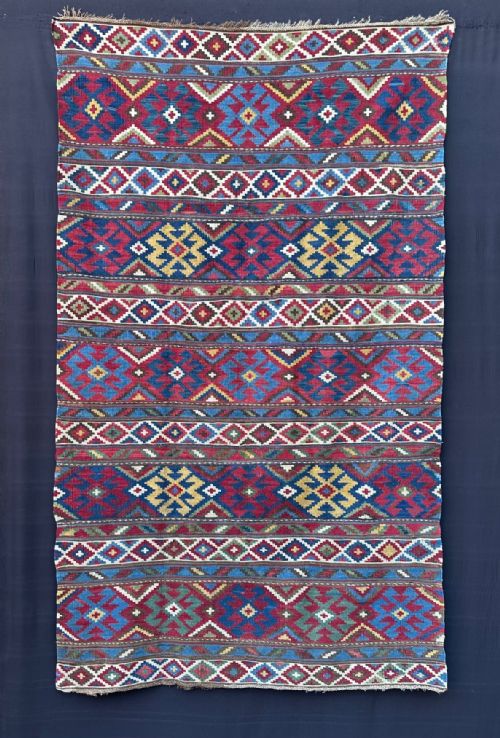
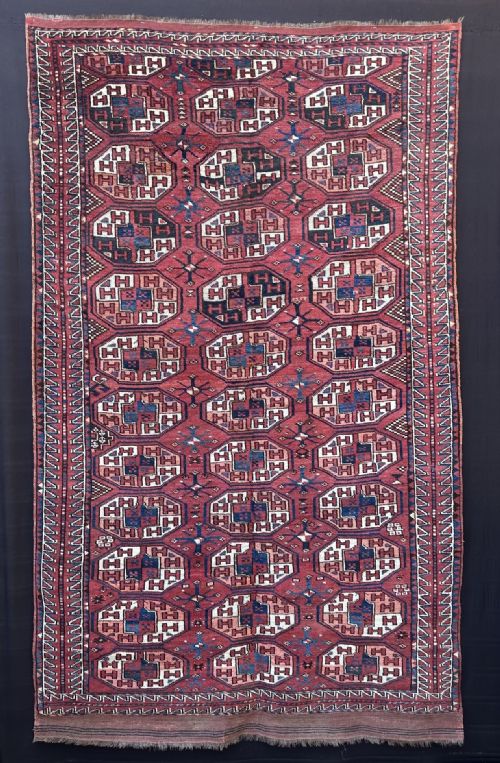
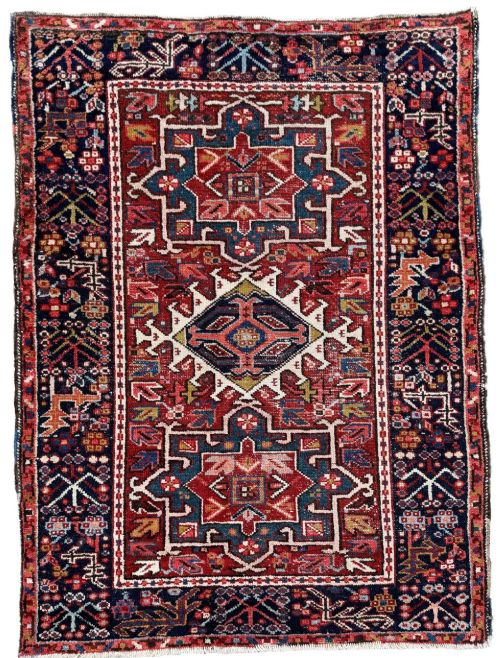
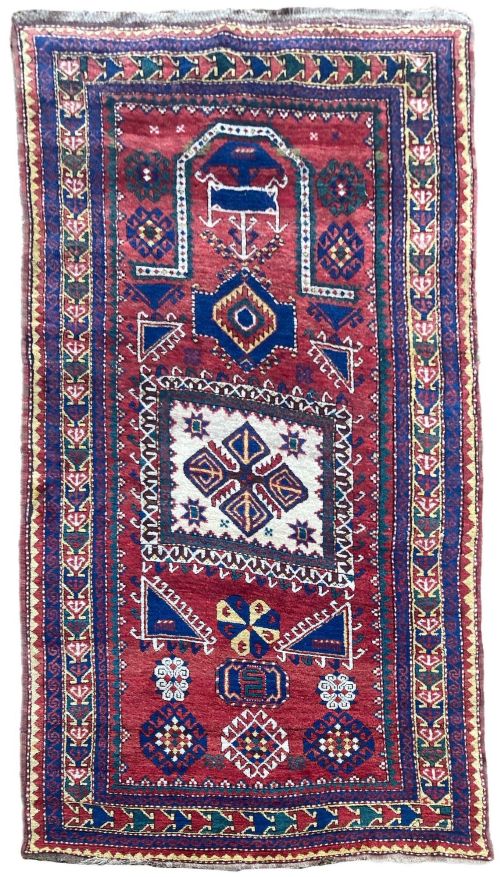
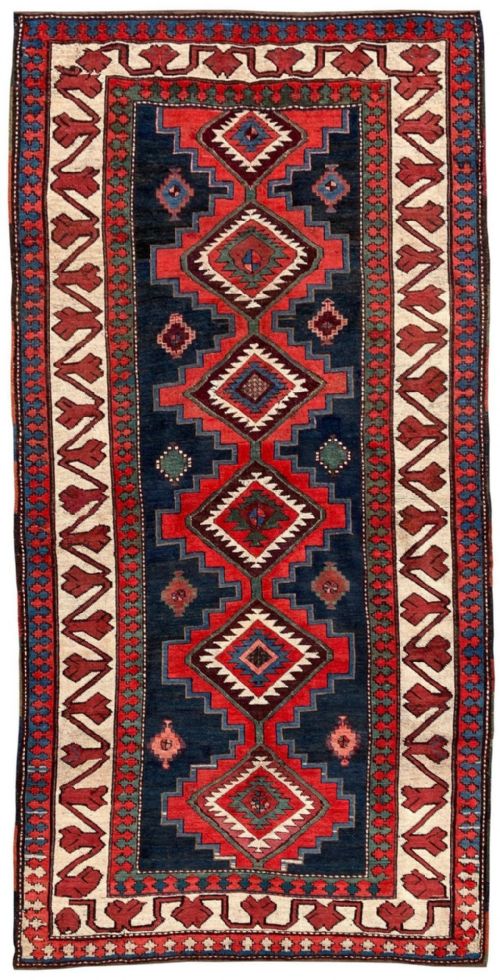
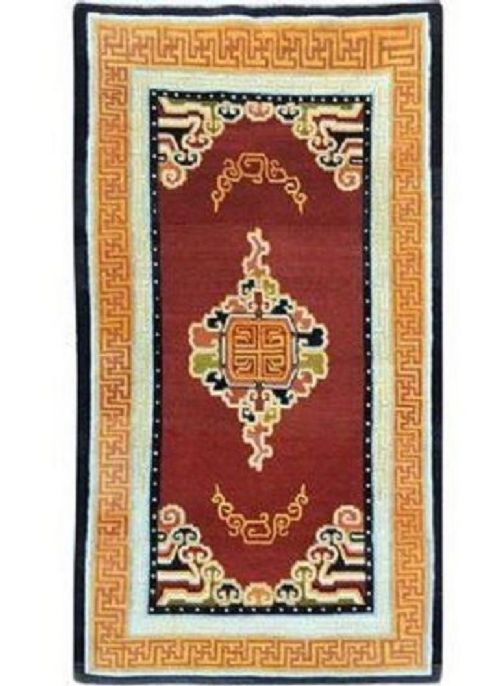
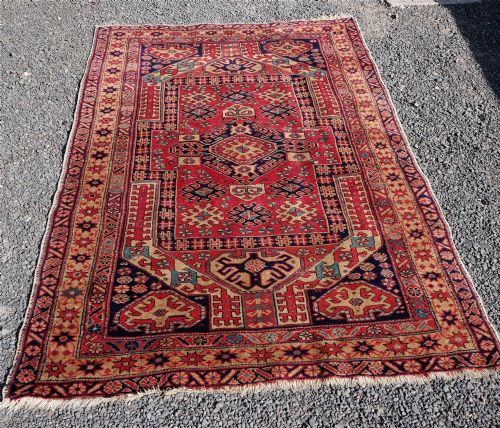
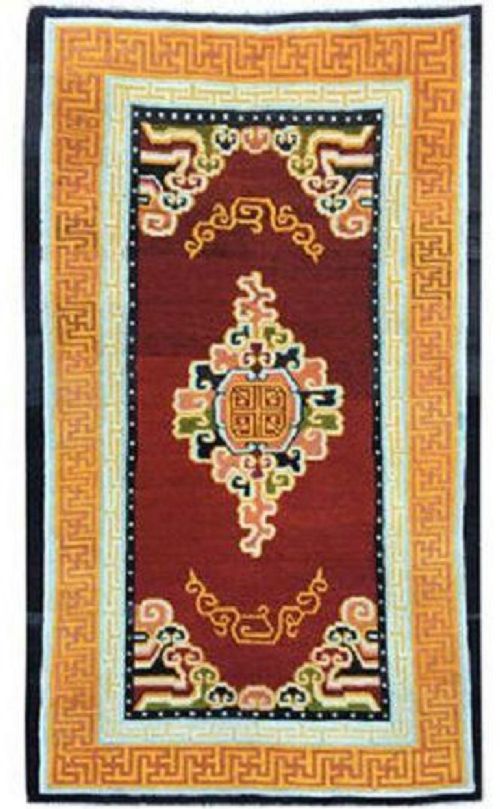
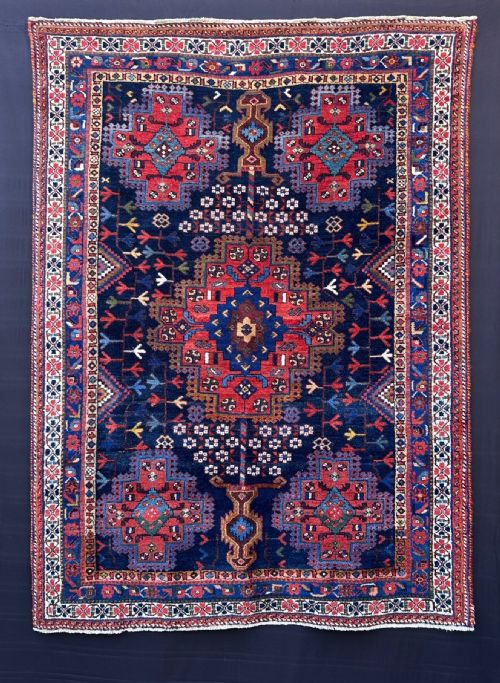
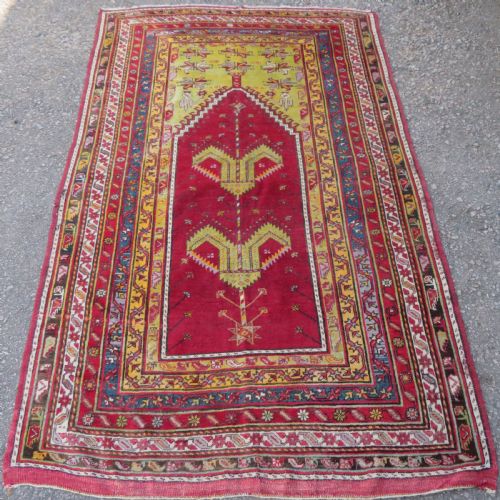
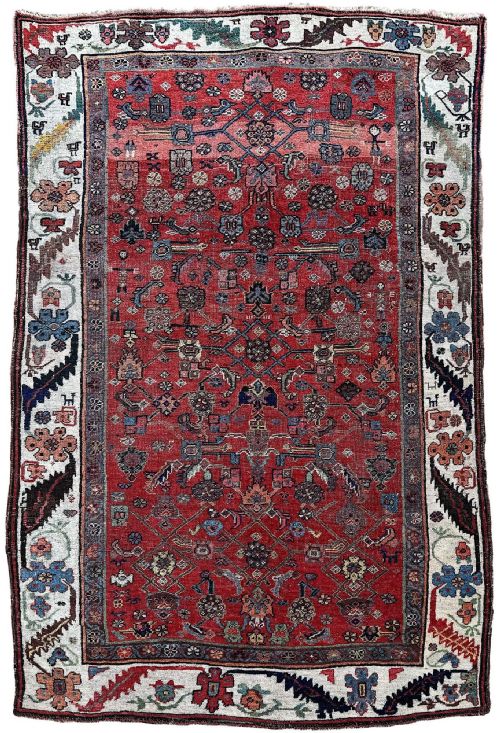
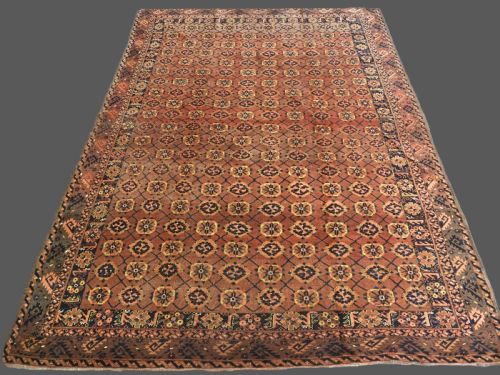
When you search for a red geometric area rug, you are looking at floor coverings originating from tribal and village workshops across Persia, the Caucasus, Anatolia, and Turkmenistan. These pieces span periods from the nineteenth century through the early twentieth century, taking the form of carpets, hearth-sized runners, and smaller prayer rugs. The version you are most likely to meet on this page is a village or tribal weave featuring angular medallions and rectilinear patterns set against a dominant red field.
The regional styles vary distinctly across these origins, ranging from the bold primary colours of Caucasian Kazak and Shirvan pieces to the robust village weaving of Heriz and Hamadan. Tribal groups such as the Yomut, Ersari, and Baluch contribute specific field designs, including repeated guls and double mihrab niches. These items served practical roles as floor coverings or tent furnishings before entering the antique market as decorative works.
Materials and Construction
The construction relies fundamentally on wool and hand-spun wool pile knotted onto cotton or wool foundations, providing the dense structure needed for survival across generations. Artisans utilised natural dyes derived from plants and insects to achieve the characteristic warm reds, deep indigos, and earthy tones seen across the inventory. These traditional materials yield a heavy, flexible textile that settles naturally onto a floor.
Weaving techniques vary by region, from the coarse, sturdy knotting of nomadic tribal carpets to the tighter, more controlled weave found in village workshop productions. The use of hand-spun wool introduces subtle variations in texture and dye absorption across the surface of the rug. Finishing methods typically involve overcast edges and secured flatweave ends to prevent unravelling.
Red Geometric Area Rug Retail Price Guide 2026
Typical asking prices for red geometric area rug among the pieces listed under this phrase on Sellingantiques today, from the lower quarter to the upper quarter. They describe what is for sale here now, not the wider market.
Several hearth-sized rugs on this page spent their early years warming chilly nomadic tent floors before travelling across continents to modern rooms.
Evaluating the Weave
Quality in these textiles rests upon the integrity of the wool, the clarity of the geometric drawing, and the vibrancy of the dye palette. Superior examples display high knot density and precise execution of angular motifs, whereas lesser pieces show compressed detailing or clumsy proportions. The stability of the foundation and the evenness of the pile wear further distinguish standard village output from master tribal works.
The handling of natural dyes creates another division in quality, as richer dye saturation and successful colour oxidisation produce deeper chromatic resonance over time. A strong, balanced composition where the red ground harmonises with secondary shades indicates superior design planning by the weaver. Consistency in edge finishing and original side-cord bindings also contribute to the overall integrity of the piece.
The Red Geometric Area Rug Glossary
- Medallion
- A central ornamental motif positioned in the middle of the rug field. It often takes a polygonal, diamond, or cruciform shape in geometric village carpets.
- Mihrab
- A niche design mirroring the shape of a prayer hall arch, frequently found in rugs intended for devotional use. Double mihrab formats feature arches at both ends of the field.
- Gul
- An octagonal or repeating medallion motif characteristic of Turkmen and Central Asian tribal weaving. These motifs serve as clan identifiers and traditional geometric ornaments.
- Kazak
- A designation for rugs woven in the southern and western regions of the Caucasus. They are known for bold primary colours, large geometric medallions, and sturdy wool.
- Heriz
- A style of large carpet originating from north-west Persia, recognised for heavy geometric formatting and a prominent central medallion anchored by large corner spandrels.
Red Geometric Area Rug: Frequently Asked Questions
How do I clean an antique rug?
Gentle surface vacuuming without a rotating brush attachment removes loose dust without stressing the old wool fibres.
Deep washing should be left to specialist conservators who understand natural dyes and historical wool structures.
Are these rugs suitable for high traffic?
Traditional village and tribal carpets were built for daily domestic use and withstand moderate foot traffic well.
Placing a quality underlay beneath the piece prevents slipping and reduces friction against the floorboards.
How can I tell tribal from village rugs?
Tribal rugs typically display less rigid symmetry, asymmetric colour variations, and nomadic motifs woven from memory.
Village rugs often show slightly more structured formats and tighter geometric planning within local cooperative traditions.
What causes the abrash effect?
Abrash appears as subtle horizontal bands of shifting colour tone across the field of the rug.
This variation occurs naturally when dyers mix new dye batches or use hand-spun wool that absorbs colour differently.