



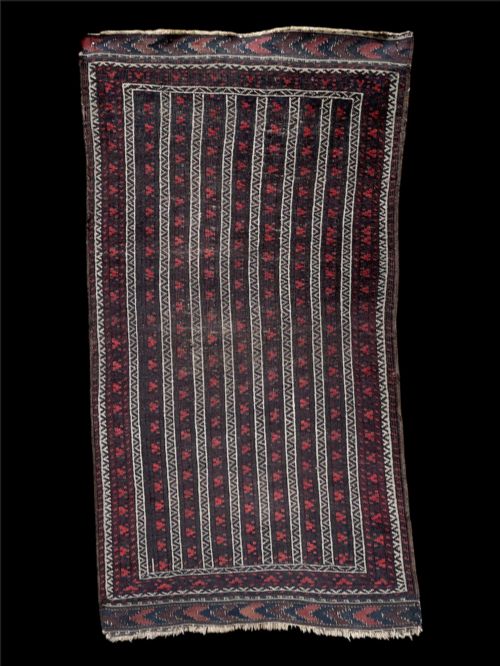

Traditional Afghan Carpet
Traditional afghan carpet pieces bring deep red wool warmth and tribal motifs into domestic spaces.
Traditional Afghan Carpet
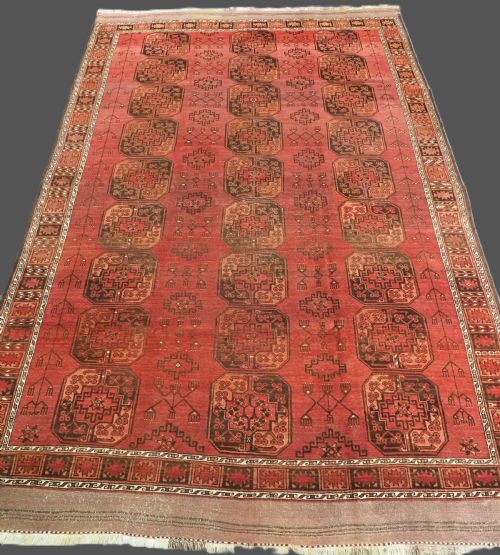
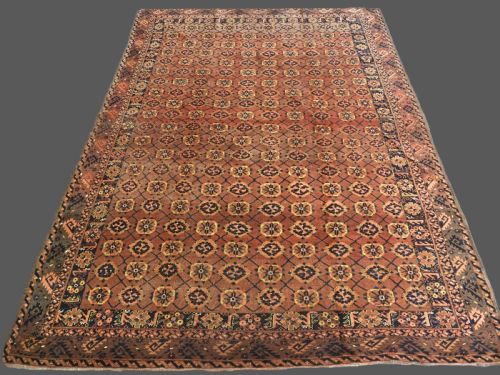
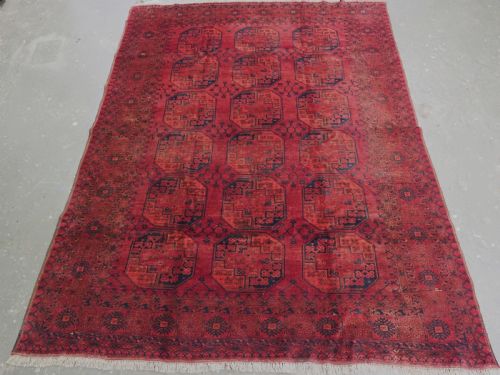
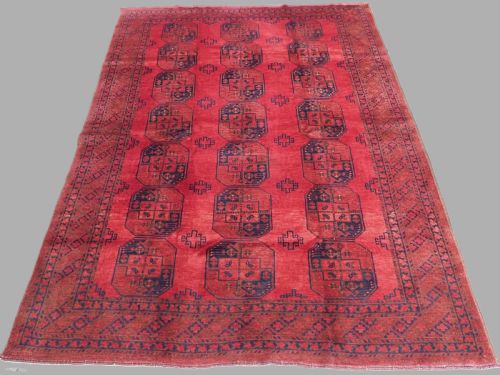
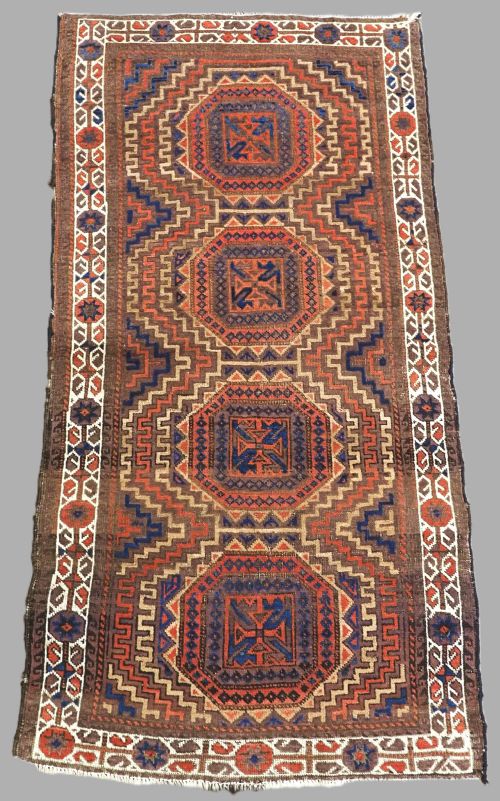
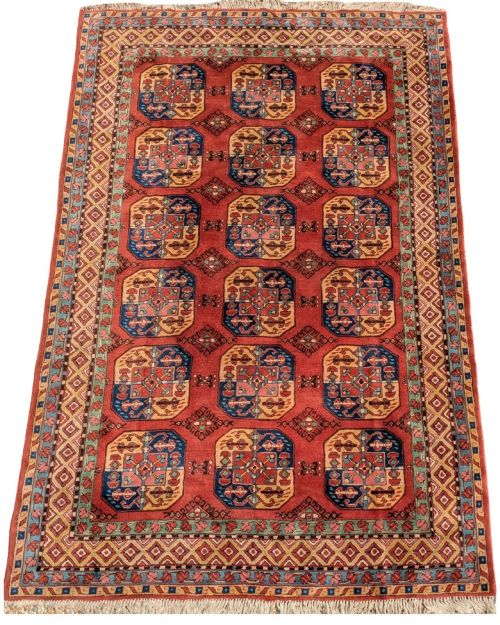
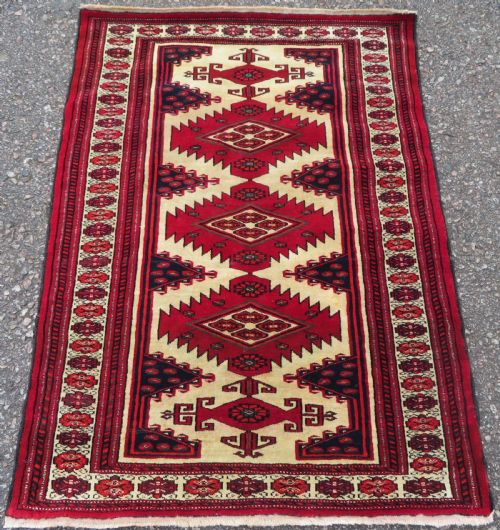
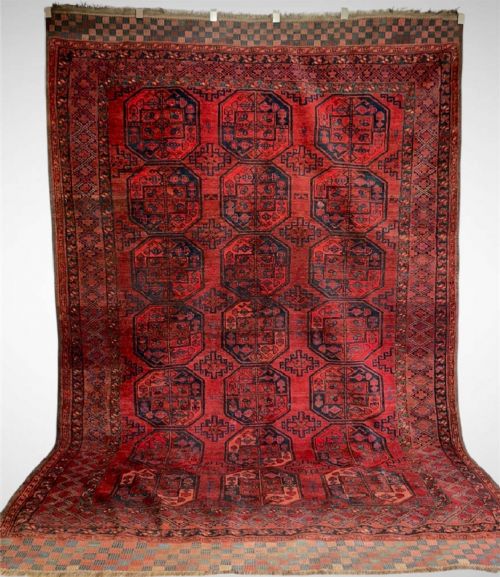
A traditional afghan carpet encompasses tribal village rugs, runners and main carpets woven across nineteenth and early twentieth century Central Asia. These floor coverings typically display deep red or warm orange tones alongside characteristic geometric motifs.
Makers often utilised classical tribal design layouts such as repeated guls or prayer mihrab formats. Examples on this page range from small village formats to large country house sizing.
Assessing Quality
Quality differences stem from the fineness of the knotting and the complexity of the tribal design elements. Tightly woven village carpets demonstrate superior wool preparation and more intricate gul or mihrab patterns.
The integrity of the natural dyes and the overall condition of the wool pile dictate the visual impact of the piece. Well-preserved foundations and balanced colour palettes distinguish finer examples from standard village work.
Traditional Afghan Carpet Retail Price Guide 2026
Typical asking prices for traditional afghan carpet among the pieces listed under this phrase on Sellingantiques today, from the lower quarter to the upper quarter. They describe what is for sale here now, not the wider market.
Listings feature wool, natural dyes, cotton, horsehair and goat hair across pieces dated from the nineteenth century up to nineteen thirty.
The Traditional Afghan Carpet Glossary
- Gul
- A repeating medallion motif often found in Turkmen and Afghan tribal carpet designs. These octagonal or gabled shapes form the primary geometric structure across the field.
- Mihrab
- A niche design element originating from mosque architecture, frequently utilised in prayer rugs. Single, double or triple mihrabs point toward a spiritual direction.
- Kalam Donneh
- A traditional motif resembling a pencil box or paisley shape. This pattern appears frequently in Baluch and Timuri regional weaves.
- Runner
- A long, narrow carpet format designed for corridors, hallways or stairways. These rectangular pieces adapt traditional tribal motifs to linear spaces.
- Natural Dyes
- Organic colouring agents derived from plants and minerals used to pigment wool before weaving. These materials yield rich, saturated red and gold tones that age gracefully.
Traditional Afghan Carpet: Frequently Asked Questions
How do I care for a traditional afghan carpet?
Vacuum the rug regularly with the suction attachment set to low, avoiding any aggressive beating motion that might disturb the wool pile.
Professional cleaning by specialists in antique oriental textiles is recommended every few years to preserve the natural dyes.
Where were these carpets originally made?
Weavers produced these textiles across various regions of Afghanistan, including northern areas and western districts near the border.
Nomadic and settled tribal groups such as the Ersari, Baluch, Kizil Ayak and Salor created these rugs in village and camp settings.
What is a prayer rug?
A prayer rug is a smaller format textile featuring a mihrab niche design that represents the direction of prayer.
These pieces were traditionally utilised for personal devotion rather than general floor covering in large rooms.
How can I date an old carpet?
Dating relies on examining the wool quality, dye composition, structural wear and characteristic tribal design variations recorded in nineteenth and early twentieth century examples.
Archival comparisons with dated pieces from the eighteen-eighties through the nineteen-thirties help establish reliable manufacturing periods.