




Engraved Silver Pitcher
An engraved silver pitcher brings weight and ceremony to the table, taking forms from claret jugs to cream ewers across Victorian and Georgian workshops.

Engraved Silver Pitcher
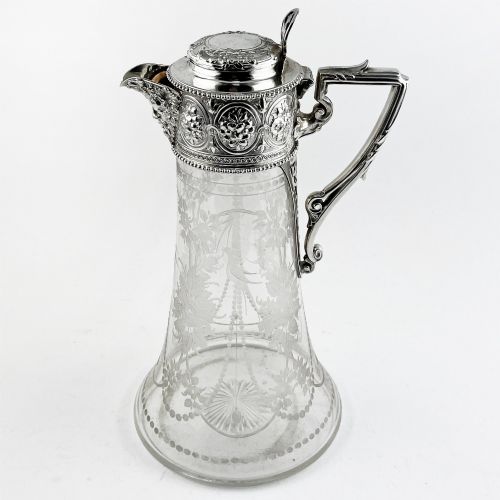
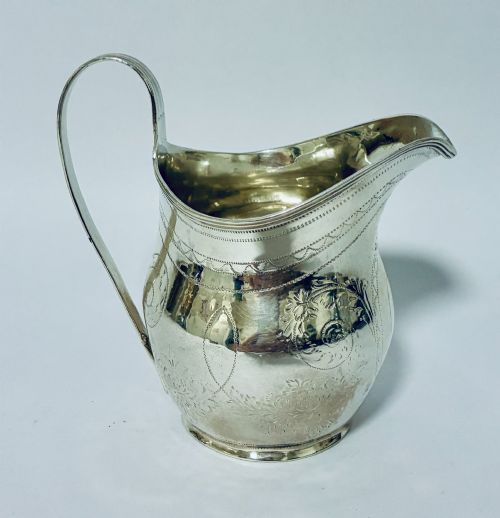
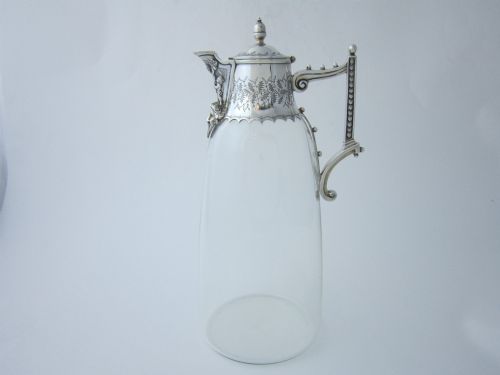
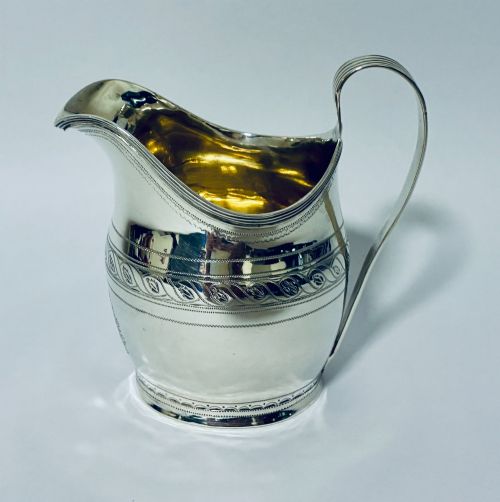
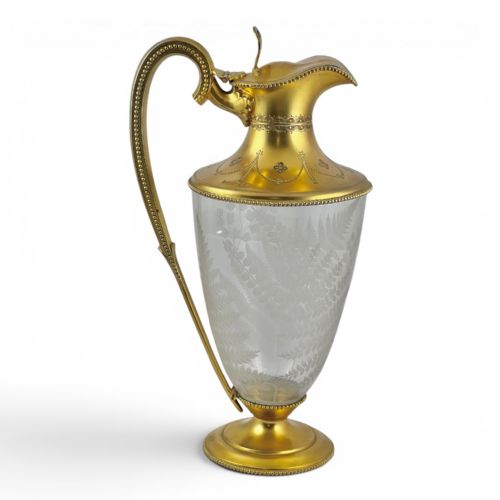
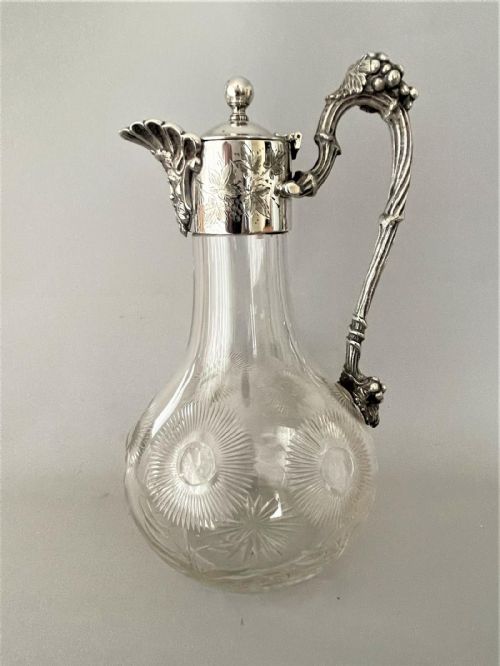
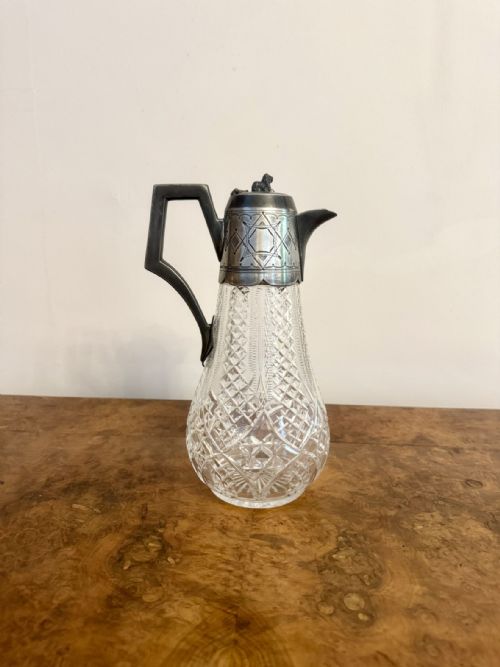
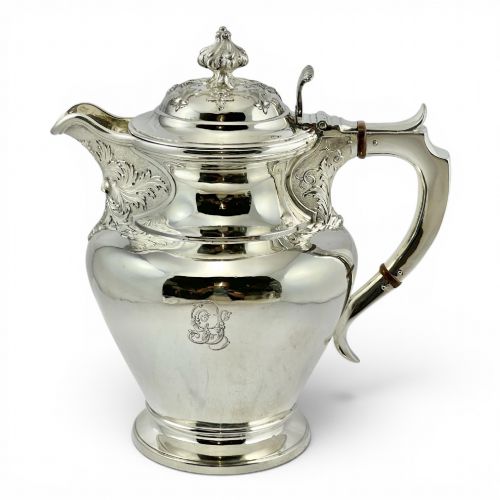
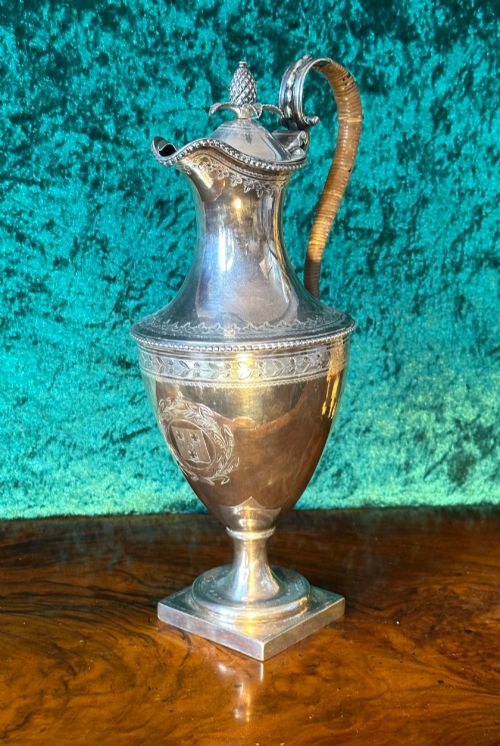
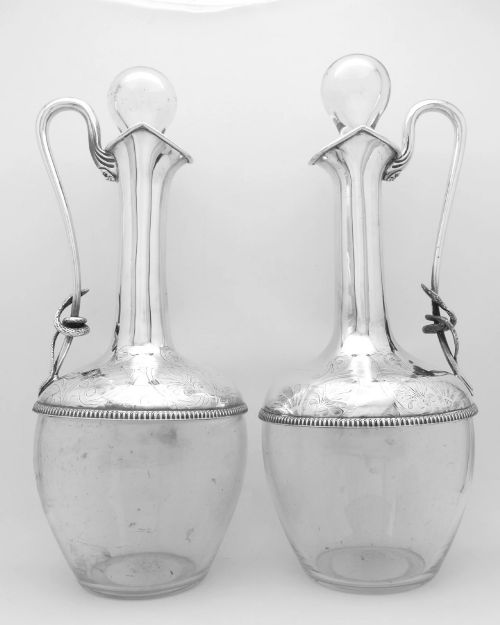
When you search for an engraved silver pitcher, you find serving vessels spanning the Georgian, Victorian, and Edwardian periods. The selection includes sterling silver claret jugs, heavy glass bodies mounted in silver, and bright-cut cream jugs.
Most examples originate from British silversmiths operating through the nineteenth century, alongside earlier Georgian serving pieces. Forms range from tall wine ewers with serpent handles to small cream jugs and water pitchers.
Makers utilised solid sterling silver, silver plate, and Old Sheffield plate, frequently combining metal with cut and engraved glass. These vessels served wine, water, and cream at formal dining tables.
Materials and Craftsmanship
Silversmiths shaped bodies through hammering, spinning, or casting, applying handles in organic forms such as serpents, bacchus masks, and woven wicker motifs. Metal components were joined by soldering before hand-engraving floral or heraldic designs across the surface.
Glass bodies for claret jugs were blown into moulds and subsequently cut with geometric facets or floral patterns to catch the light. Silver mounts and collars were secured directly to the glass necks, often incorporating hinged lids with thumbpieces.
Engraved Silver Pitcher Retail Price Guide 2026
Typical asking prices for engraved silver pitcher among the pieces listed under this phrase on Sellingantiques today, from the lower quarter to the upper quarter. They describe what is for sale here now, not the wider market.
One unexpected Victorian piece takes the literal form of a miniature watering can, proving silversmiths enjoyed practical jokes.
Distinctions in Quality
Quality rests in the crispness of the hand-engraving and the weight of the metal used in the mounts and handles. Heavy cast silver mounts with detailed chasing display superior craftsmanship compared to thin stamped alternatives.
The integration between materials marks the better pieces, particularly where silver collars meet cut glass bodies without movement or excess adhesive. Hallmarks stamped clearly on solid sterling pieces provide evidence of proper assay office standards.
Asprey and Co. Ltd·John Emes·Peter and Ann Bateman·Padley Parkin and Staniforth·Elkington Mason·William Davenport
The Engraved Silver Pitcher Glossary
- Claret Jug
- A vessel designed specifically for serving claret or red wine at the dining table. These pieces often pair cut glass bodies with silver mounts and hinged lids.
- Old Sheffield Plate
- A material created by fusing a thin sheet of silver to a thicker copper base before rolling them together. This technique predates modern electroplating.
- Bright-Cut
- An engraving technique utilising faceted V-shaped cuts to reflect light from the metal surface. It appears frequently on Georgian cream jugs.
- Ewer
- A large pitcher with a wide spout and a curved handle, traditionally used for holding water or wine. Many examples feature classical forms adapted by Victorian makers.
Engraved Silver Pitcher: Frequently Asked Questions
What is an engraved silver pitcher used for?
These vessels served various liquids at the dining table, depending on their size and form. Smaller examples held cream or water, while larger pieces functioned as wine jugs and claret ewers.
Today they serve as decorative display items or functional serving ware for formal dinners. Their sturdy construction permits continued use for pouring beverages.
How do I date an antique silver pitcher?
Dating relies primarily on the hallmarks stamped into the metal by official assay offices. These marks indicate the town, the assay year, and the maker.
Stylistic clues such as bright-cut engraving point to the Georgian era, while heavy glass cut with naturalistic floral motifs usually indicates the Victorian period.
How do I clean silver mounted glass jugs?
Cleaning requires separating the care of the silver metal from the glass body. Use a soft cloth and a gentle silver polish on the metal mounts, avoiding contact with the glass.
Warm soapy water cleans the glass interior, but submerging mounted jugs should be avoided to protect cements or adhesives securing the collar.