

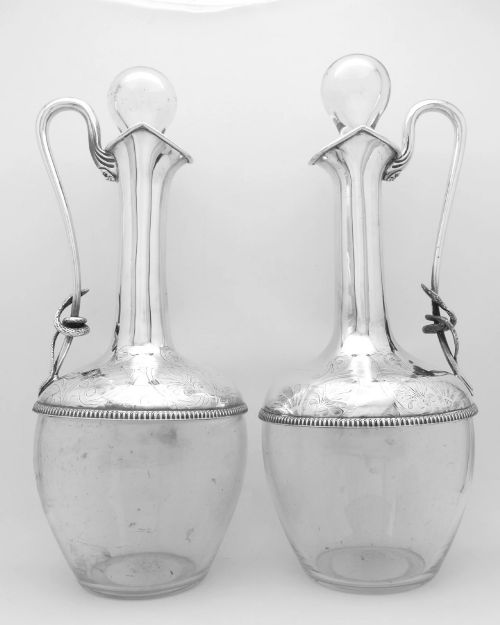


Victorian Silver Wine Decanter
These Victorian silver wine decanter pieces bring nineteenth-century dining tables to life with cut glass vessels, silver mounts, and engraved labels.
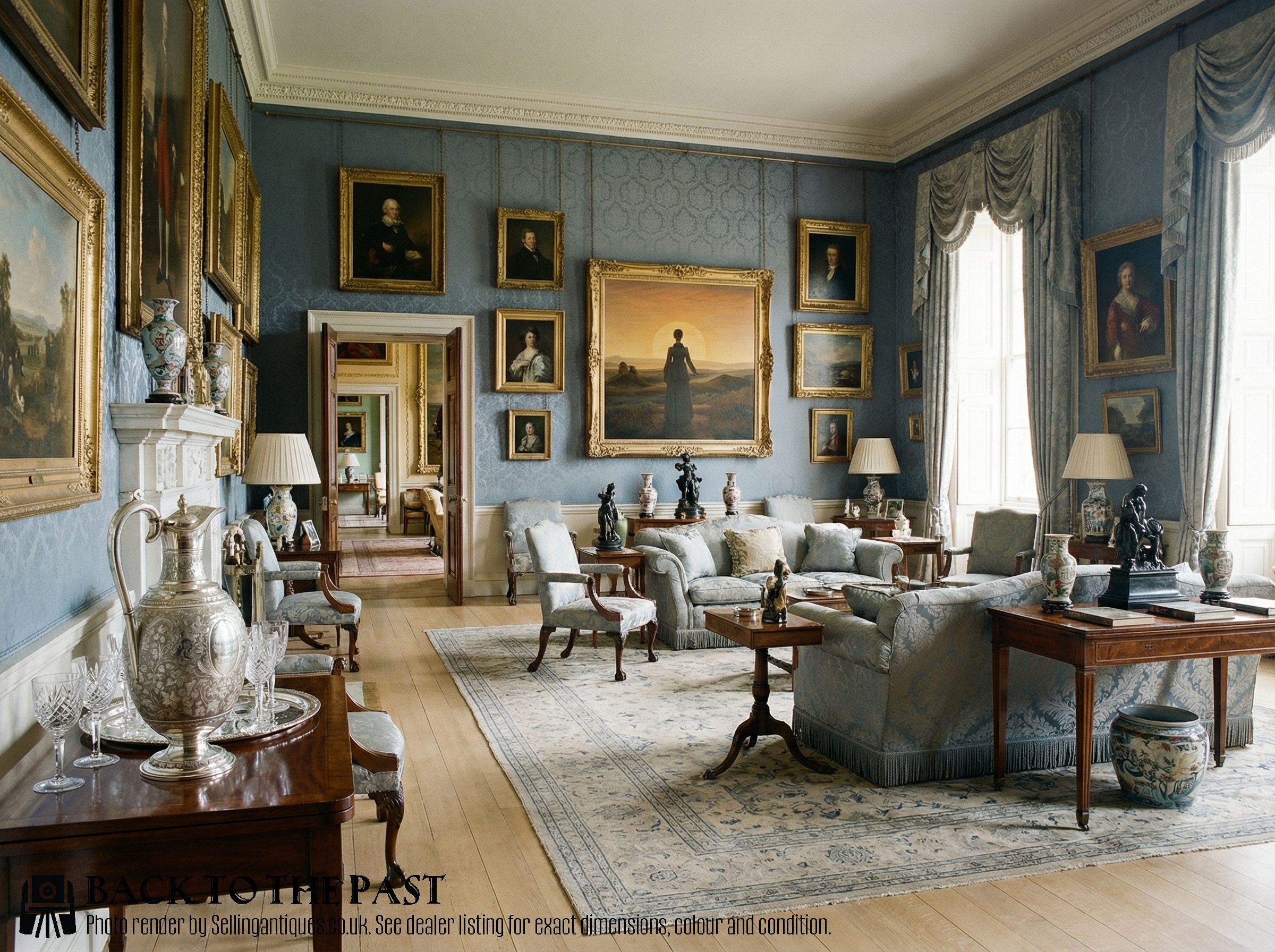
Victorian Silver Wine Decanter
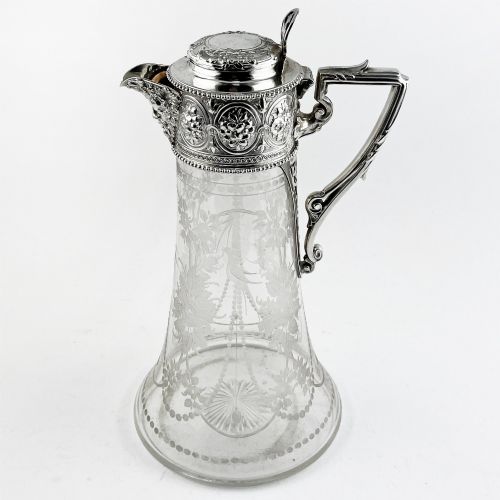
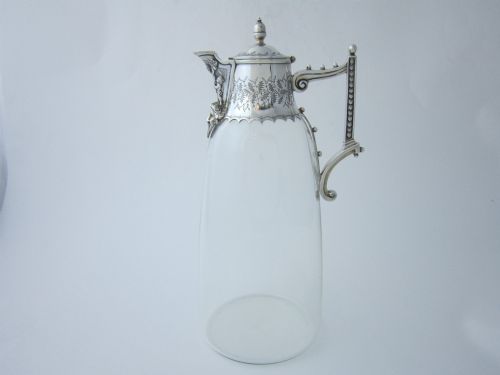
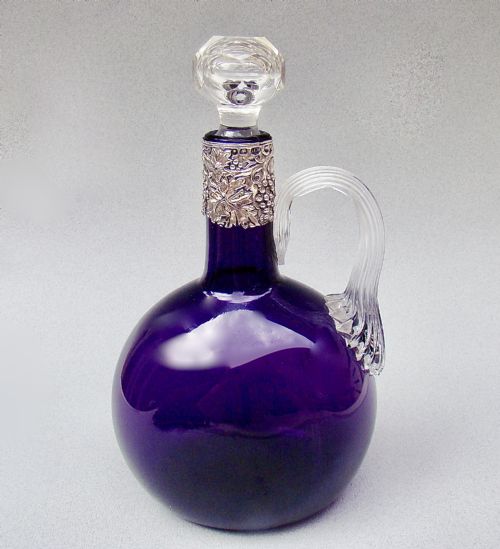
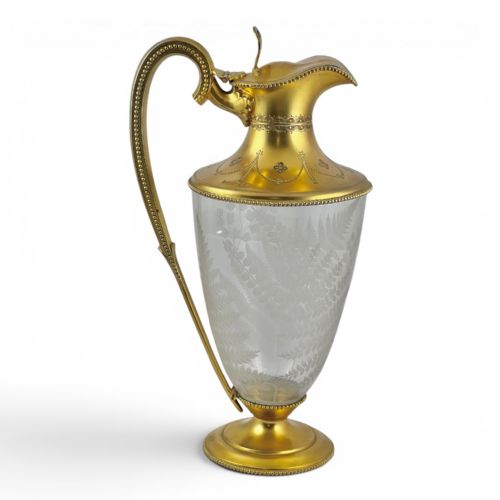
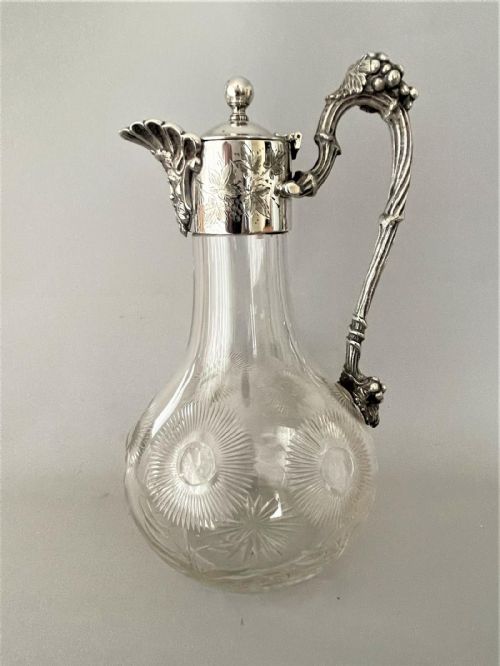
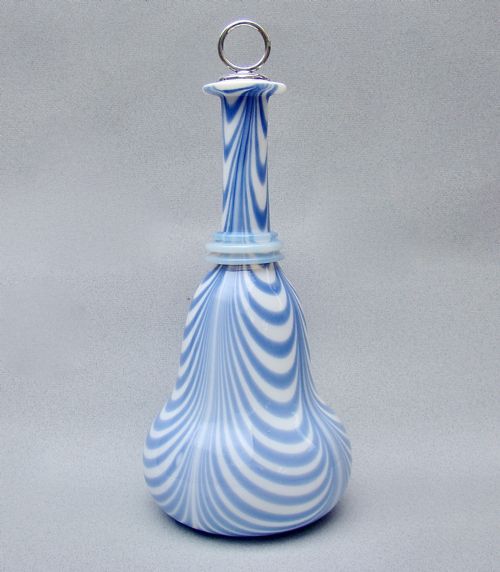
When you search for a victorian silver wine decanter, you encounter a varied group of serving vessels and accessories designed for nineteenth-century dining. The selection includes tall glass claret jugs with hinged silver mounts, paired wine coasters, and individual bottle tags.
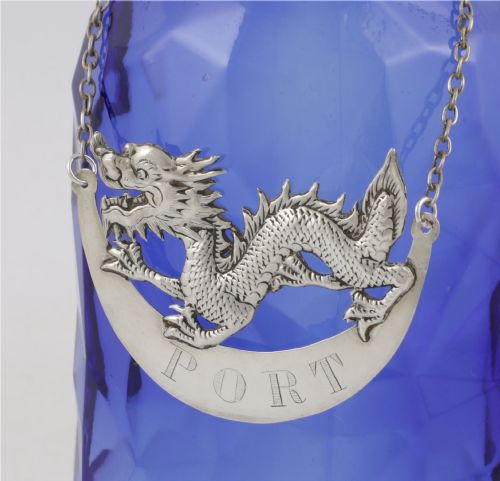
The pieces appearing most frequently combine moulded or cut glass bodies with sterling silver or silver-plated mounts. Alongside these stand smaller items such as decorative bottle stoppers and cast silver wine labels inscribed for port, sherry, and madeira.
Silver and glass union
The manufacturing process united two distinct craft traditions through metalwork and glassblowing. Glass bodies arrived via cutting, moulding, or etching, utilising green, amethyst, and clear crystal.
Silversmiths then fitted collars, handles, and hinged lids around the glass necks, often applying chased floral motifs, rococo scrolls, or figural details like serpent handles and bacchus masks.
Listings feature Victorian pieces incorporating sterling silver, silver plate, cut glass, and coloured amethyst or green glass.
Subtleties of execution
Quality in these objects rests upon the crispness of the silversmith's cast ornamentation and the depth of the glass cutting. Heavier mounts and thicker crystal indicate sturdier construction and greater material expense.
The integration between metal collar and glass vessel determines overall cohesion, alongside the clarity of hallmarks struck into the silver components.
Asprey and Co. Ltd·Henry Matthews·Elkington
The Victorian Silver Wine Decanter Glossary
- Claret jug
- A tall pouring vessel specifically intended for red wine, featuring a handle and a hinged silver lid. These often combine cut crystal bodies with elaborate silver mounts.
- Decanter label
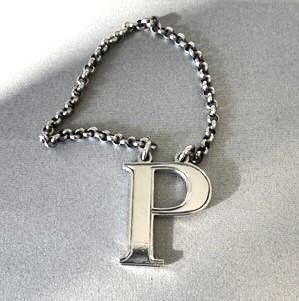
- A small piece of silver suspended by a chain around the neck of a bottle to identify its contents. They appear shaped like shields, scrolls, or vines.
- Silver plate
- A base metal coated with a thin layer of silver, frequently utilised for nineteenth-century jugs and coasters. Sheffield plate represents an early form of this technique.
- Wine coaster
- A small circular tray with a wooden base and a silver or plated rim, designed to protect the dining table. They frequently incorporate rollers or wheels.
- Hallmark
- A series of stamped marks on silver indicating the maker, assay office, and year of testing. These provide the primary evidence for dating.
Victorian Silver Wine Decanter: Frequently Asked Questions
What is the difference between a claret jug and a decanter?
Claret jugs incorporate a handle and a hinged lid designed for immediate pouring at the table. Decanters generally rely on a fitted glass stopper to seal the contents.
Both forms utilise silver mounts, but jugs emphasise the pouring spout and handle structure.
How do I identify the date of a silver mount?
British silver bears hallmarks that include a date letter corresponding to a specific year and assay office. These stamps are usually located near the rim or handle.
Matching the maker's mark alongside the assay letter confirms the period of manufacture.
Were wine labels used on all decanters?
Silver labels served to distinguish between multiple bottles circulated during formal dining. They hung from chains around the necks of decanters and carafes.
Specific titles such as port, sherry, and madeira appear frequently on these tags.
How should I clean antique glass and silver?
Glass bodies require gentle hand washing with lukewarm water to preserve the internal surfaces and clarity. Silver mounts benefit from targeted polishing away from the glass to avoid residue.
Harsh chemical immersion damages both the silver plating and the historic glass.