


Antique Silver Ewer
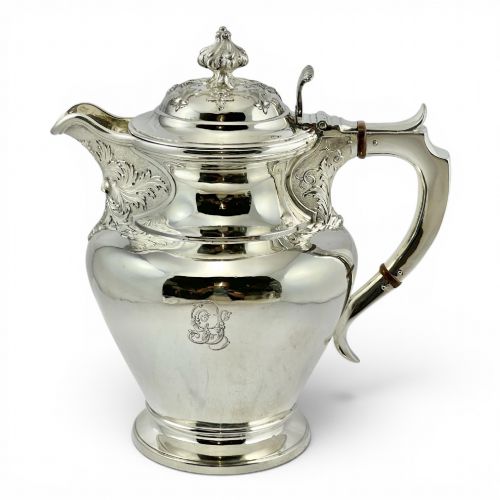
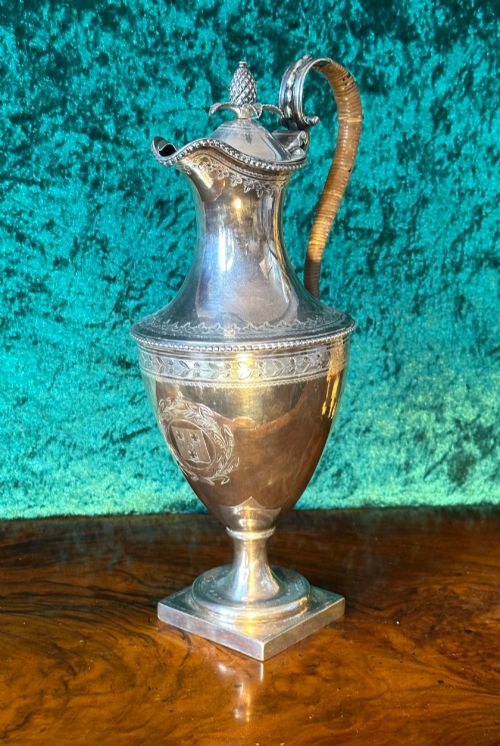
An antique silver ewer stands as a commanding vessel for serving wine or water, prized for its sculptural form and chased metalwork.
Forms and Origins
An antique silver ewer appears across this selection as a grand pitcher, wine jug, or claret ewer fashioned during the Georgian, Regency, and Victorian periods.
Makers shaped these tall, handled vessels in sterling silver and Old Sheffield Plate, often employing styles such as William IV and elaborate Victorian ornamentation.
Examples on this page range from water jugs produced in Edinburgh to crested wine ewers intended for formal dining tables.
Materials and Techniques
Silversmiths constructed these ewers using solid sterling silver or fused Old Sheffield Plate, occasionally mounting the metal bodies onto glass or crystal.
Decoration relied on skilled techniques including chasing, figural engravings, and applied crests, alongside hammered finishes seen on Arts and Crafts examples.
Listings feature sterling silver, Old Sheffield Plate, and glass-mounted pieces produced across the Georgian and Victorian periods.
Standards of Craftsmanship
The distinction between standard utility vessels and superior presentation pieces lies in the depth of hand-chased detail and the weight of the silver used.
Master silversmiths integrated naturalistic motifs like grape and vine designs with balanced handles and crisp armorial engravings that separate finer works from plain production.
Robert Garrard·William Eaton·Elkington·Barnard·W and G Sissons
The Antique Silver Ewer Glossary
- Ewer
- A large jug or pitcher with a wide spout and a curved handle, traditionally used for holding water or wine.
- Old Sheffield Plate
- A composite material made by fusing a thin sheet of silver to a thicker copper base, common in nineteenth-century tableware.
- Claret Jug
- A specialised pouring vessel designed specifically for serving red wine at the dining table, frequently mounted with hinged silver lids.
- Sterling Silver
- An alloy consisting of pure silver and other metals, standardised for durability while maintaining a bright metallic lustre.
- Chasing
- A metalworking technique where the silversmith punches and hammers details from the front to create raised ornamental patterns.
Frequently Asked Questions
What is an antique silver ewer?
An antique silver ewer is a decorative pouring vessel with a handle and spout, created to hold water or wine during formal meals.
These pieces reflect the design sensibilities of the Georgian and Victorian eras, combining practical function with sculptural artistry.
How do I care for silver ewers?
Maintain the surface by dusting regularly with a soft cloth and applying specialist silver polish only when tarnish requires removal.
Avoid harsh abrasives that can wear away thin silver plating or soften the crisp details of hand-chased ornamentation.
Were these ewers used for wine?
Many examples function specifically as claret jugs or wine ewers designed to aerate and serve wine at the table.
Others served as water jugs or purely decorative presentation pieces awarded for notable achievements.
How are different periods identified?
Makers' marks, town marks, and date letters stamped directly into the silver provide precise chronological indicators for most pieces.
Stylistic shifts from Regency neoclassical lines to heavy Victorian ornamentation also help date unmarked or plated items.