
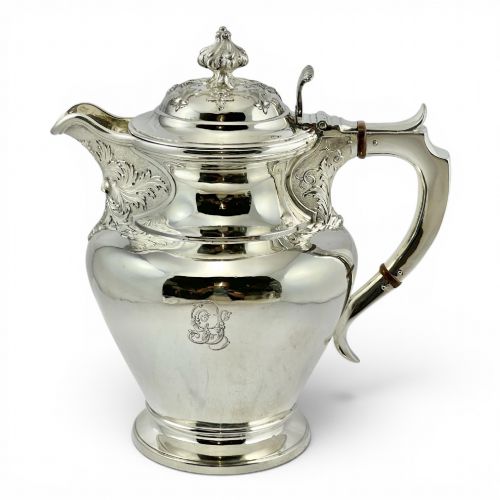
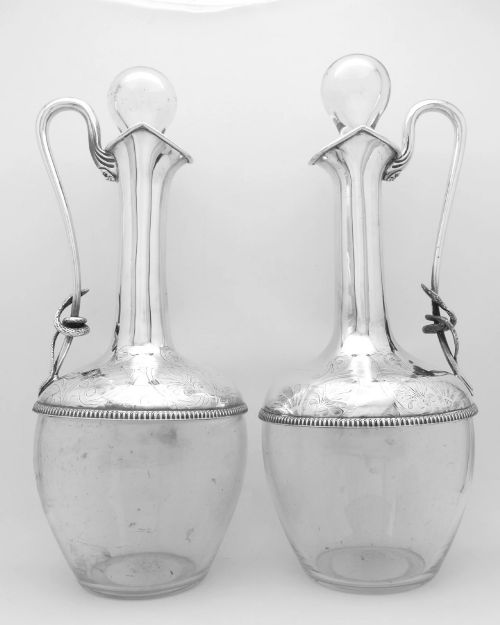


19th Century Silver Pitcher
These 19th century silver pitcher pieces span robust silver-plate, cut glass and solid silver, offering practical serving vessels for the dining table.
19th Century Silver Pitcher
A 19th century silver pitcher encompasses a diverse range of serving vessels, from claret jugs and water jugs to ceremonial ewers and cream jugs. Buyers searching this category frequently encounter pieces spanning the Georgian, William IV and Victorian eras, including French Rococo Revival and Indo-Tibetan styles.
The selection on this page demonstrates various forms, such as pedestal cream jugs, wine flagons, harvest jugs and novelty monkey claret jugs. These items combine functional utility with distinct period aesthetics, utilising materials like silver plate, sterling silver and mounted cut glass.
Originating from English, Scottish, French and Asian workshops, these vessels reflect the diverse drinking and serving customs of the nineteenth century. Whether intended for wine, water or cream, each object carries the characteristic weight and decorative detail of its specific decade.
What varies in quality
The distinction between standard utility items and exceptional pieces rests upon the crispness of the chasing and the integrity of the mounts. Superior examples feature deeply etched glass, robust silver-plated or solid silver mounts and tightly integrated handles without loose joints.
Makers' marks and assay office stamps provide clear indicators of origin and workshop standard, elevating pieces signed by notable silversmiths. The weight of the metal and the clarity of the cut crystal further separate mass-produced items from finer studio output.
The documented object types span claret jugs, beer jugs, communion vessels, gravy warmers and ceremonial Indo-Tibetan ritual ewers.
Padley Parkin And Staniforth·Elkington·Robert Hennel
The 19th Century Silver Pitcher Glossary
- Claret jug
- A vessel specifically designed for serving claret or red wine at the dining table, often combining a glass body with a silver mount and hinged lid.
- Old Sheffield Plate
- An early composite material made by fusing a thin sheet of silver to a thicker copper core, creating durable tableware before modern electroplating.
- Ewer
- A large pitcher with a flared spout and a sweeping handle, historically used for decorative or ceremonial water pouring.
- Pedestal
- A raised base or foot supporting the main body of a jug or cream pitcher, adding vertical proportion to the design.
- Silver plate
- A layer of silver bonded to a base metal substrate, allowing manufacturers to produce decorative vessels at a lower cost than solid silver.
19th Century Silver Pitcher: Frequently Asked Questions
How do I clean a silver plated claret jug?
Use a soft cloth and a gentle silver polish formulated for plated items, taking care not to submerge glass bodies in hot water. Avoid abrasive pads that might strip the thin silver layer from the base metal.
Polish gently around engraved or etched patterns where residue can accumulate. Ensure the piece is dried thoroughly after cleaning to prevent tarnishing.
Were these pitchers used for wine or water?
Nineteenth-century vessels served multiple beverages depending on their specific form and size. Claret jugs and wine flagons held alcoholic drinks, while larger pieces functioned as water or beer jugs.
Smaller vessels, such as cream jugs, remained on the tea table for dairy. The presence of cut glass or specific spouts often indicates the intended liquid.
How can I tell a Victorian jug from a Georgian one?
Georgian and William IV pieces often display restrained classical lines or early revival motifs, whereas Victorian items frequently embrace heavier ornamentation and eclectic styles. Assay office marks and date letters stamped on the silver provide definitive chronological proof.
Stylistic shifts, such as the introduction of French Rococo Revival or ecclesiastical detailing in the mid-nineteenth century, help narrow down the period of manufacture.
Can I use these antique pitchers for daily dining?
Many sturdy silver-plated and solid silver vessels remain fully functional for serving drinks at modern gatherings. However, pieces with delicate cut glass, silver-gilt interiors or antique cement joints require careful handling and hand washing.
Inspecting the interior for cleanliness and ensuring the hinged lid functions properly will help determine everyday suitability.