
English Oak Hall Table
When searching for an english oak hall table, you are looking at sturdy side pieces and lowboys built to stand in corridors and entrances for centuries.
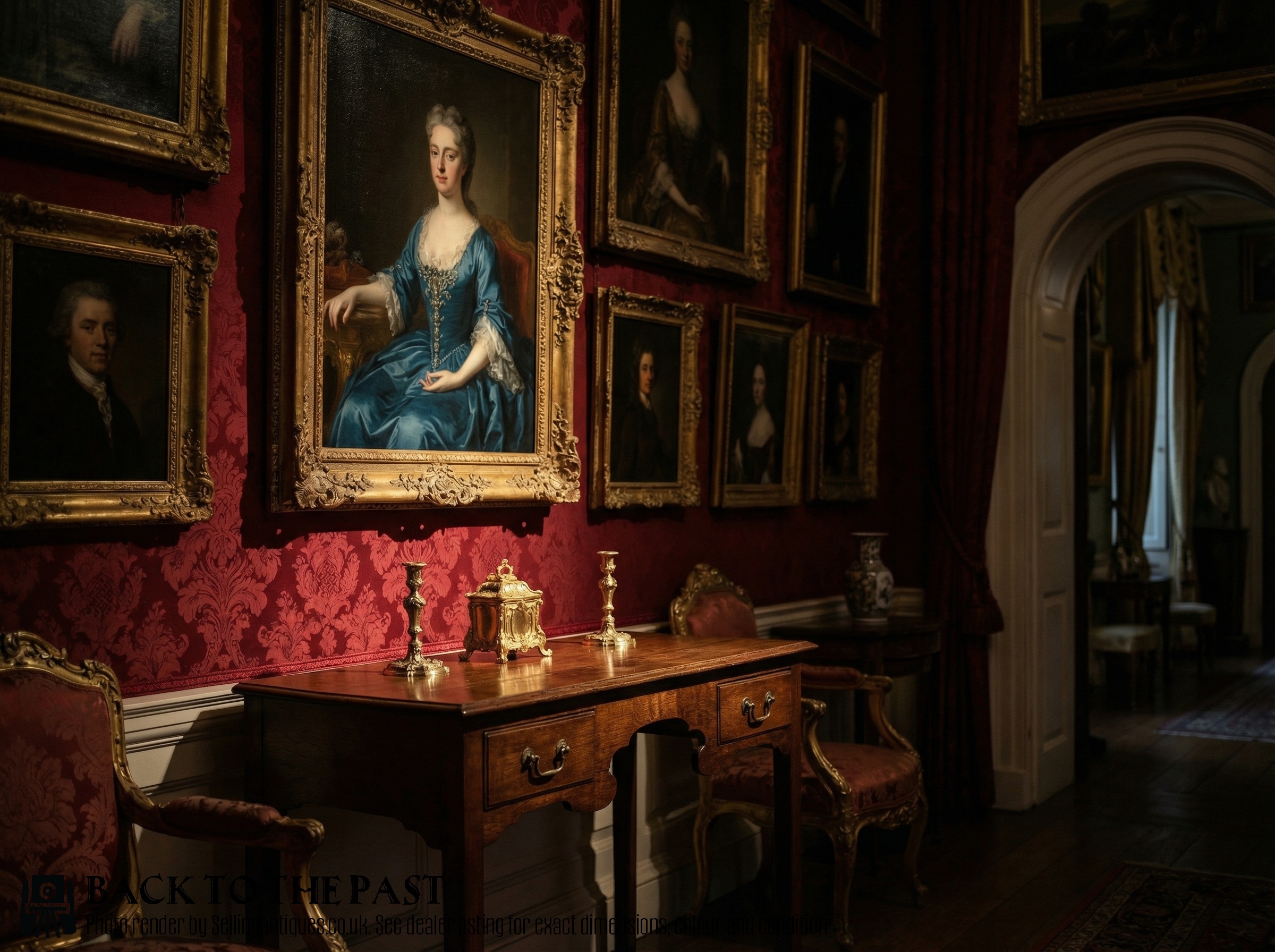
English Oak Hall Table
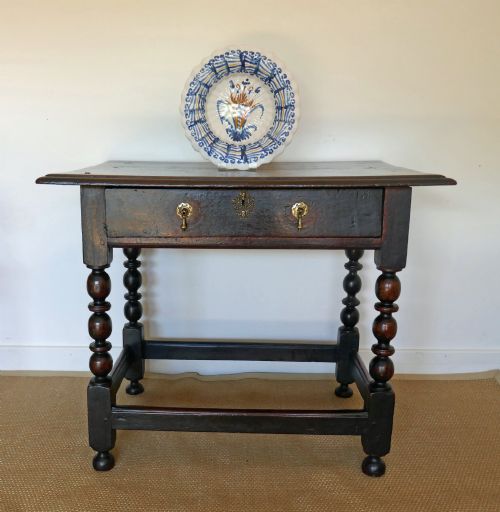
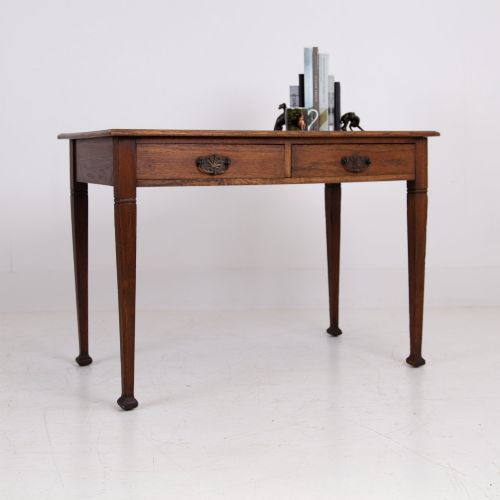
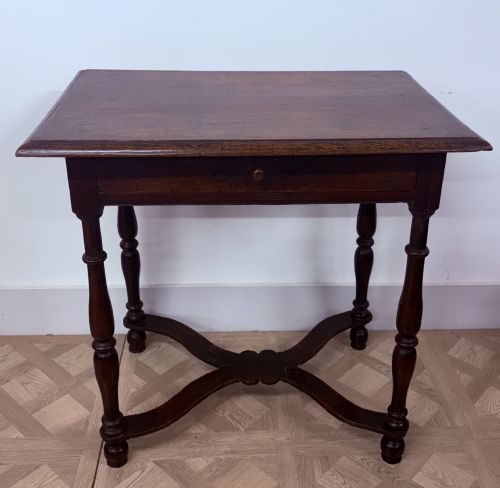
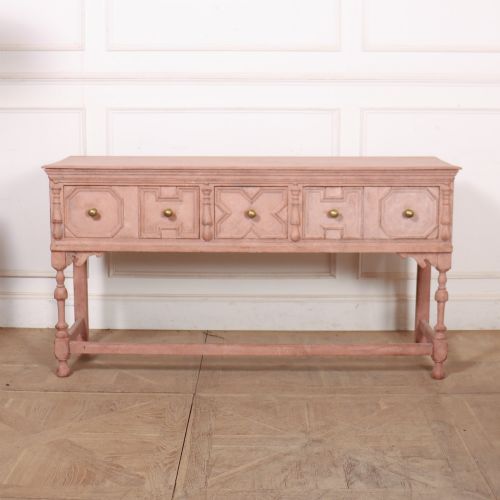
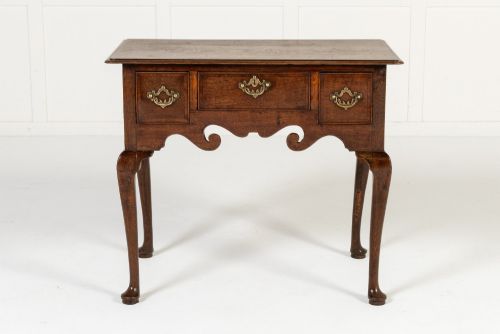
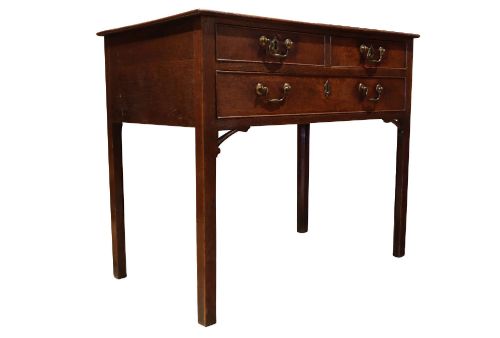
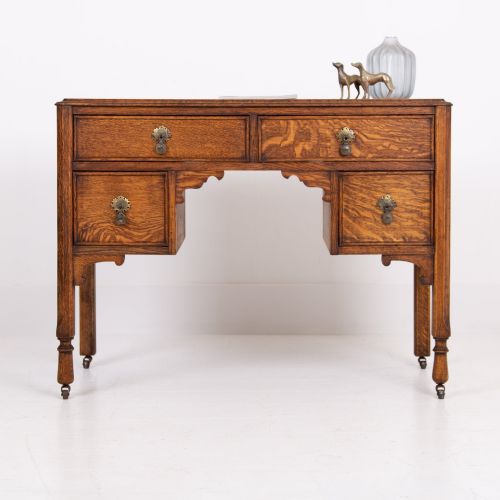
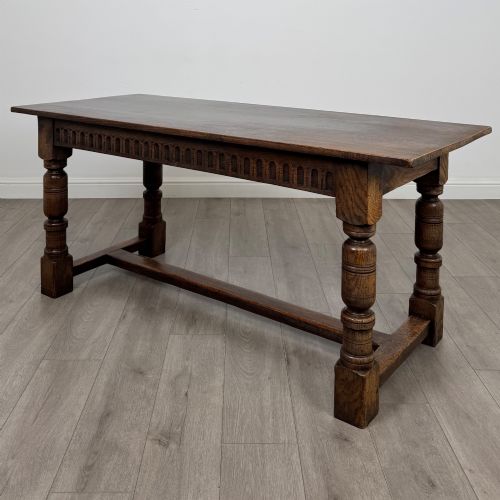
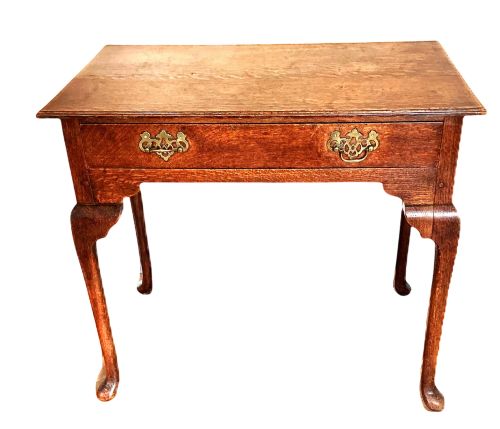
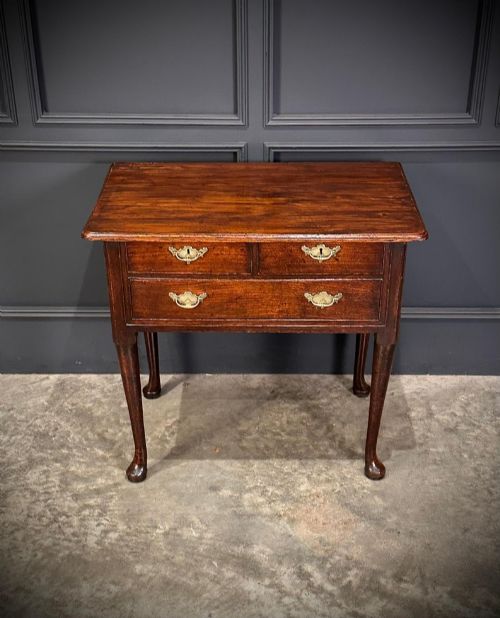
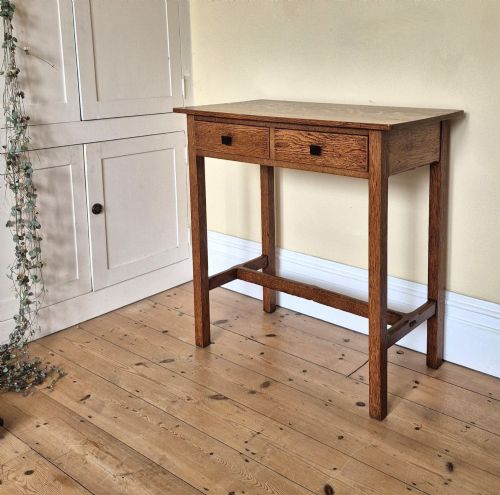
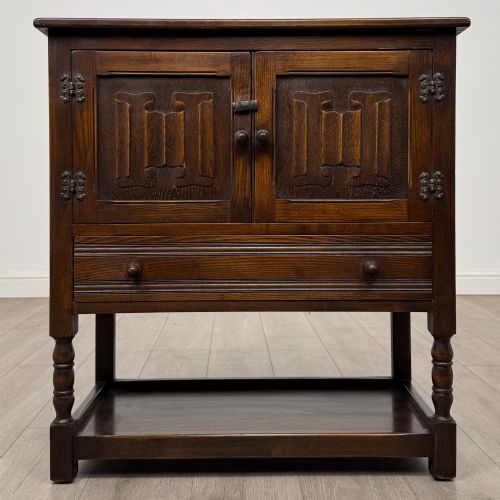
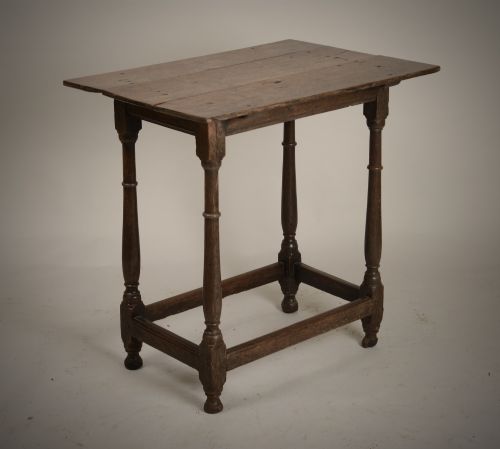
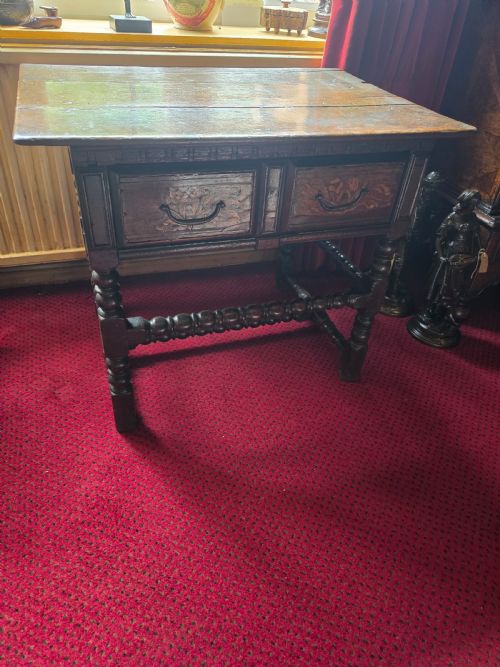
An english oak hall table encompasses utilitarian side pieces, lowboys, and occasional tables designed for placement in corridors and entranceways. These items derive from domestic contexts spanning the seventeenth, eighteenth, and nineteenth centuries, with later revival examples also appearing.
The inventory on this page draws heavily from Georgian and seventeenth-century eras, incorporating provincial country furniture alongside formal designs. Side tables and lowboys with single or multiple drawers dominate the forms encountered by buyers.
How they were made
Makers utilised solid oak boards, frequently supplemented by secondary timbers such as elm, ash, and pine for drawer linings and internal framing. Joinery relied on traditional mortise and tenon construction, secured with pegged joints rather than modern metal fasteners.
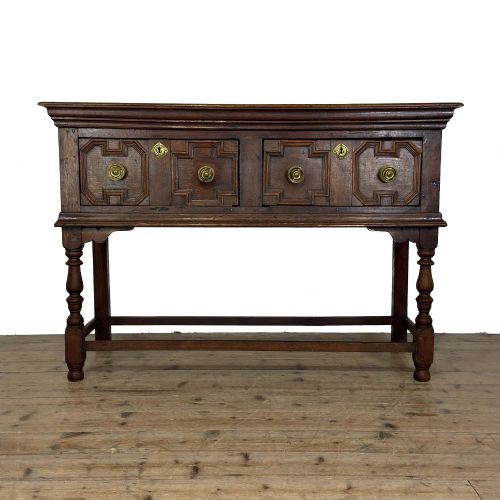
Surfaces received various treatments, from waxed natural grain to historical painted finishes, pollard oak veneers, and geometric mouldings. Brass drop handles and escutcheons were fitted to drawer fronts during the seventeenth and eighteenth centuries.
Some seventeenth-century servers retain deep knife marks on their tops from centuries of hearty Tudor meal preparations.
What varies in quality
Quality rests in the integrity of the timber selection and the crispness of the original joinery. Pieces displaying well-figured grain, untouched patination, and minimal timber replacement command greater respect than those with heavily altered surfaces or swapped hardware.
Proportion and structural balance dictate the appeal of these tables. Refined mouldings, well-executed dovetails on drawers, and original untampered stretchers separate workshop craftsmanship from utilitarian mass production.
Hubert Simpson of Kendal·Walker and Hall
The English Oak Hall Table Glossary
- Lowboy
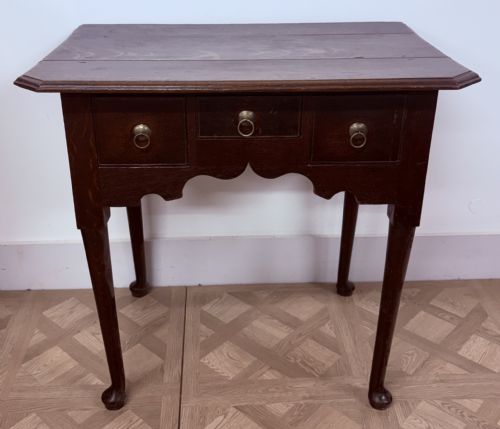
- A small side table or dressing table fitted with drawers, typically standing on four slender legs. These forms became popular during the late seventeenth and eighteenth centuries.
- Dresser Base
- A low, long sideboard featuring drawers above cupboards or open pot boards. They served everyday storage functions in country houses.
- Barley Twist
- A turned wooden furniture leg or stretcher carved in a continuous spiral twist. This decorative technique appears frequently on seventeenth-century and revival pieces.
- Cross Banding
- A border of veneer laid around the edges of a table top with the grain running perpendicular to the centre panel. It provides a neat framing effect.
- Mortise and Tenon
- A joint formed by inserting a shaped projection into a corresponding cavity. This method forms the skeletal strength of early oak furniture.
English Oak Hall Table: Frequently Asked Questions
What is a lowboy used for?
A lowboy functioned as a small writing table, dressing desk, or side table in domestic rooms. Drawers provided storage for personal items, documents, or cutlery.
In modern interiors, these compact tables serve as practical hallway surfaces for keys and post without crowding narrow spaces.
How can I tell a seventeenth-century table from a nineteenth-century revival?
Seventeenth-century examples display hand-split timbers, pegged joinery, and distinct tool marks from primitive saws and adzes. The oak develops a deep, dry patination over centuries of exposure.
Revival pieces from the nineteenth and twentieth centuries often utilise machine-cut timber dimensions and standardised modern fixings hidden beneath the structure.
Did these tables always have drawers?
Many provincial side tables and tavern forms were built as simple rectangular frames supported by legs and stretchers without drawers. Drawers were added based on the domestic requirement for concealed storage in hallways and parlours.
Lowboys invariably featured one to three drawers, while basic serving tables omitted them entirely.
How do I care for antique oak?
Antique oak benefits from occasional applications of traditional beeswax to nourish the dry timber and protect the surface. Avoid placing wooden tables near direct heat sources or strong sunlight.
Routine dusting with a soft, dry cloth preserves the historical finish and prevents wax buildup over the carved mouldings.