


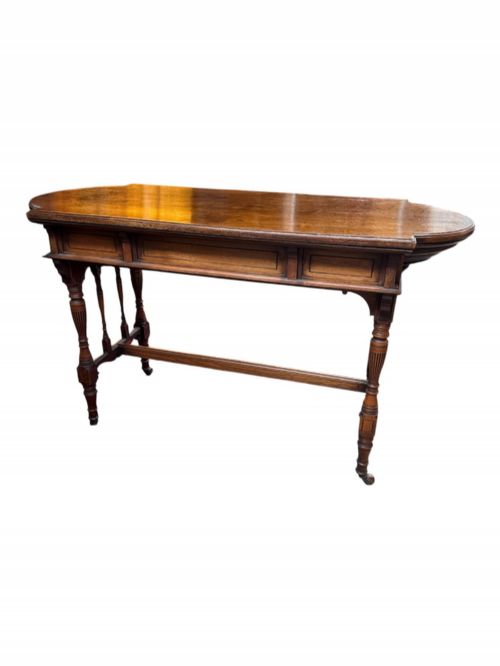
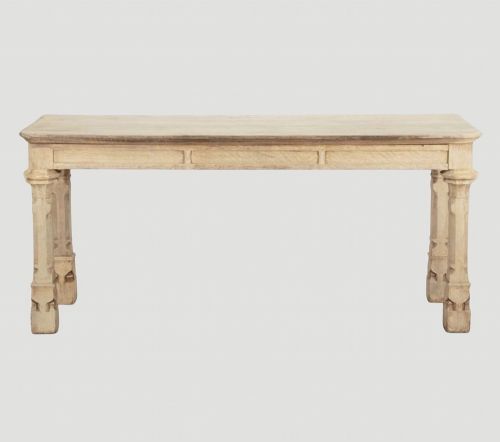

19th Century Oak Console
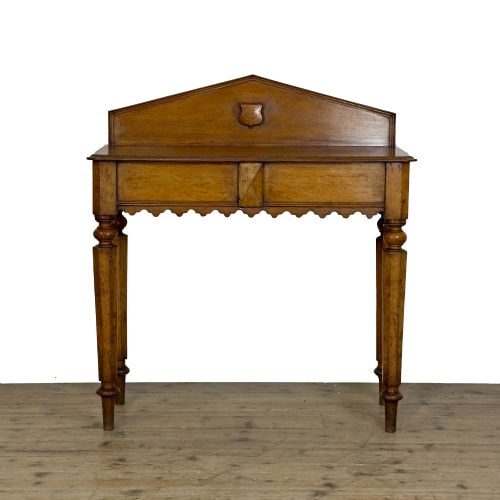
A 19th century oak console brings robust timber character and practical surface space to a hallway or reception room.
19th Century Oak Console
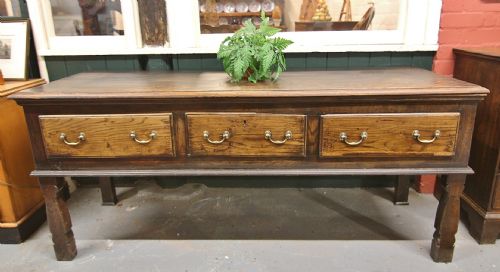
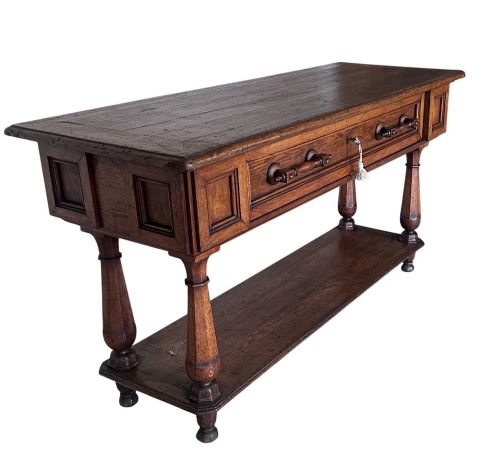
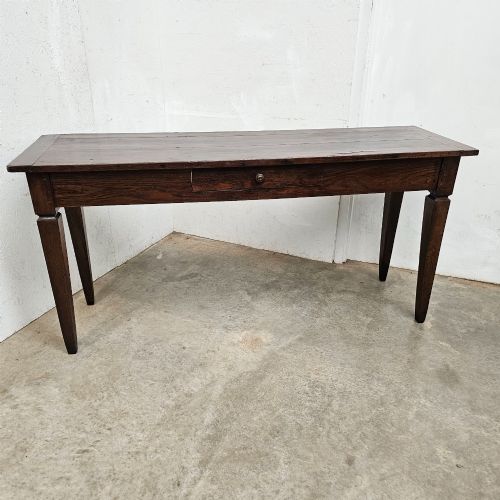
A 19th century oak console is a sturdy serving, side, or hall table designed to stand against a wall, frequently featuring single or multiple drawers.
The selection ranges from vernacular country house pieces and Gothic Revival side tables to refined Regency and French provincial examples.
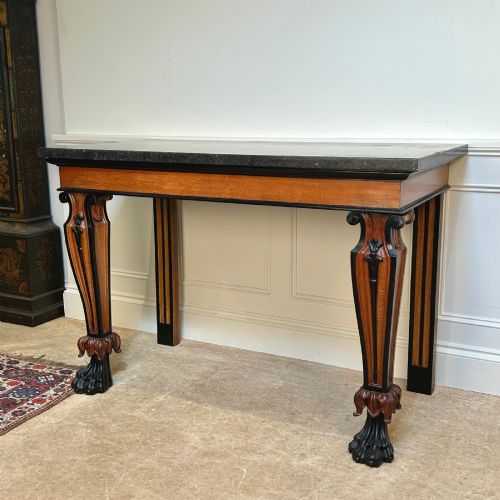
Makers utilised native and imported oaks, occasionally pairing the timber with marble tops, brass mounts, or secondary woods such as walnut and mahogany.
How They Were Made
Cabinet makers constructed these tables from solid oak, burr oak, and bleached oak, often employing sturdy mortise and tenon joints for frames.
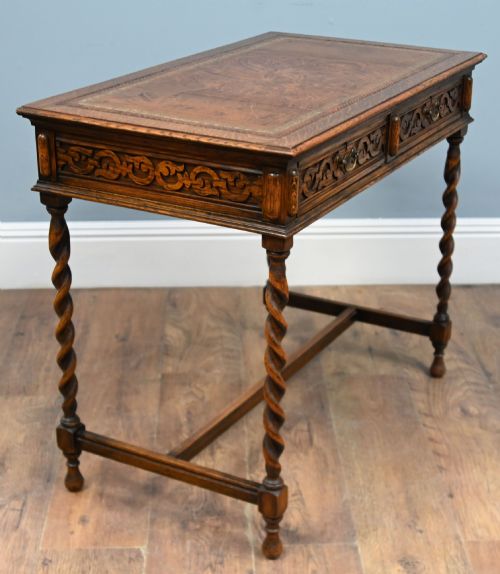
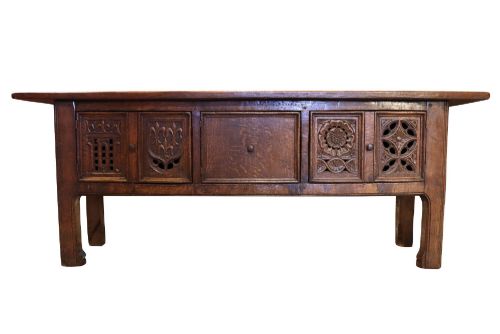
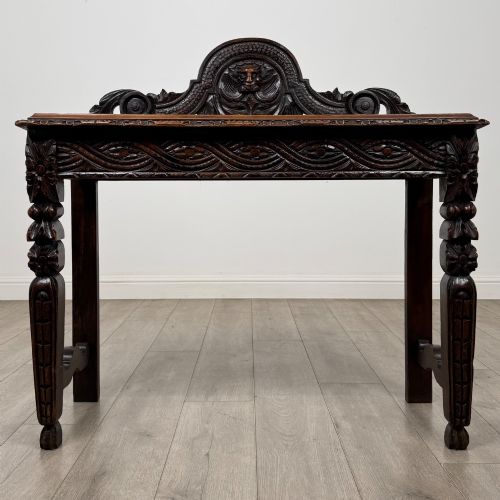
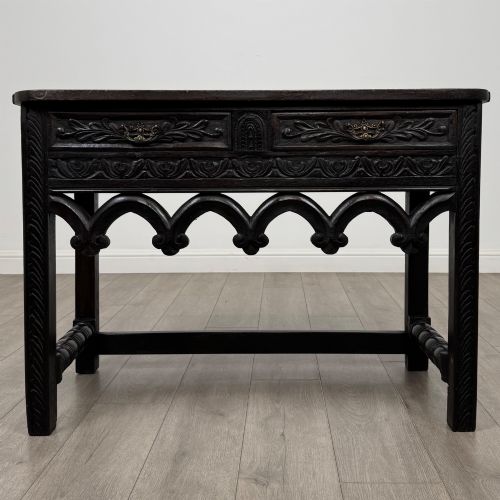
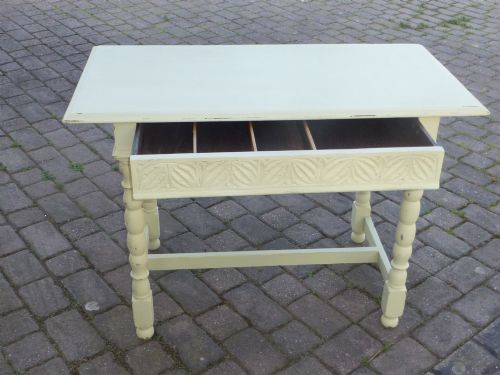
Decoration relied heavily on deep hand-carving, displaying motifs such as Green Man masks, tracery, and geometric mouldings.
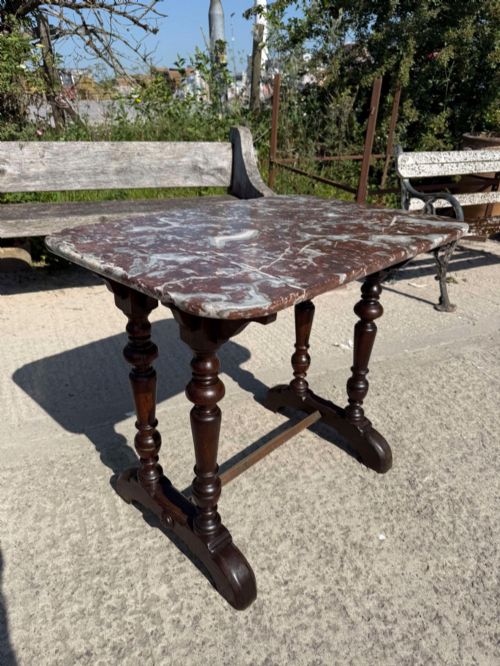
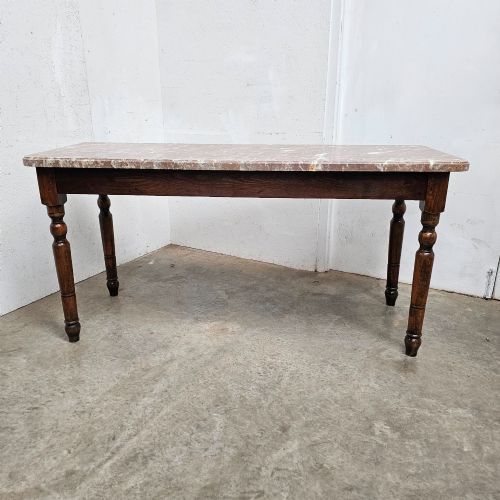
Selected pieces incorporate inset Siena or white marble tops, ebonised wood details, or turned supports to achieve specific regional and stylistic tastes.
19th Century Oak Console Retail Price Guide 2026
Typical asking prices for 19th century oak console among the pieces listed under this phrase on Sellingantiques today, from the lower quarter to the upper quarter. They describe what is for sale here now, not the wider market.
Several pieces feature carved Green Man masks glaring out from the woodwork.
What Varies in Quality
The standard of carving distinguishes routine production from exceptional pieces, with crisply defined relief work commanding greater attention.
Timber selection creates clear differentiation, as figured burr oak, dense Scottish oak, or pale bleached surfaces carry superior visual weight.
Proportion and structural integrity matter deeply, separating narrow, balanced hall consoles from heavy or disproportionate adaptations.
The 19th Century Oak Console Glossary
- Console table
- A table designed to stand against a wall, frequently secured with brackets or supported by front legs. These pieces serve practical display and serving functions in hallways and principal rooms.
- Dresser base
- A low sideboard or table fitted with drawers, originating from country houses and serving rooms. They offer substantial storage beneath a broad timber top.
- Gothic Revival
- An architectural and decorative style popular during the Victorian era. It utilises medieval motifs such as pointed arches, tracery, and heavily carved panels.
- Burr oak
- Timber taken from oak tree growths that produce complex, swirling grain patterns. Cabinet makers utilised these veneers and solid sections for decorative highlights on tabletops.
- Centre table
- A freestanding table designed to be viewed from all sides rather than placed against a wall. Examples from this period often feature circular or rectangular oak and marble surfaces.
19th Century Oak Console: Frequently Asked Questions
Where should I place a console table?
These tables find a natural home in entrance halls, narrow corridors, or against living room walls where surface space is required without blocking movement.
Their shallow depth allows them to sit comfortably behind sofas or beneath mirrors and artwork.
How do I clean oak furniture?
Dust the timber regularly with a soft, dry cloth to prevent dirt accumulation in the carved recesses and grain.
Avoid silicone-based polishes and excessive moisture, opting instead for traditional beeswax applied sparingly to nourish the oak.
What is the difference between a console and a side table?
Console tables traditionally stood against walls and were sometimes wall-mounted or supported by distinct front legs. Side tables are generally freestanding pieces designed to sit alongside seating or in corners.
In 19th-century cabinet making, these terms frequently overlap depending on the proportions of the specific piece.
How can I identify the period of an oak console?
Look to the construction methods, secondary timbers, and stylistic markers such as Gothic Revival tracery or Regency classical lines. Regional traits, such as Scottish or French provincial carving, also help date and localise the furniture.
Drawer construction and tool marks on the underside provide further clues to the manufacturing decade.