
Provincial Oak Table
When you search for a provincial oak table, you enter a world of honest timber built for country kitchens, halls and dining rooms.
Provincial Oak Table
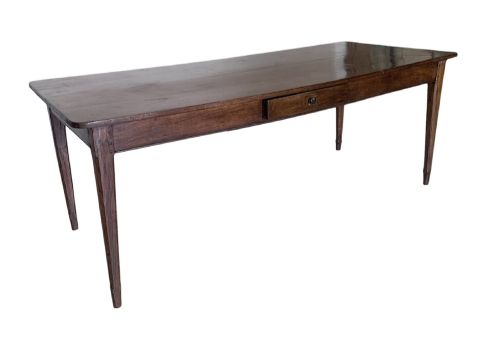
A provincial oak table represents sturdy rural craftsmanship, created for everyday use in French and English country houses and farmhouses. These pieces span from the seventeenth century through the nineteenth century, reflecting regional domestic life rather than courtly fashion.
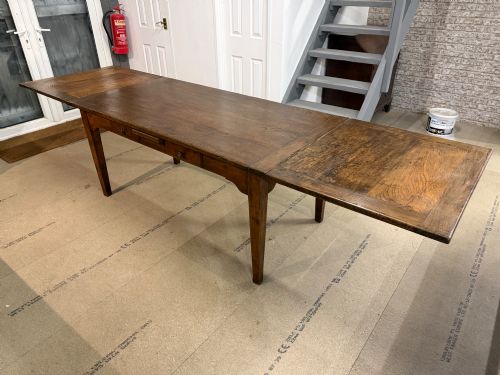
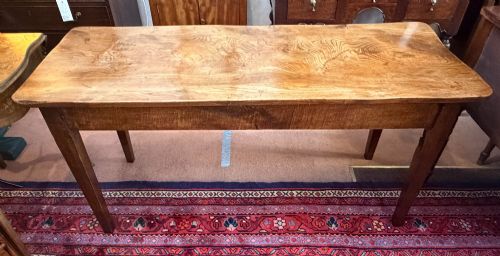
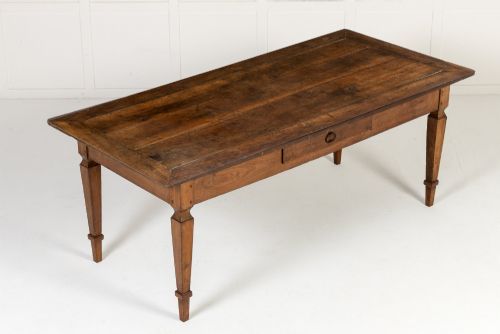
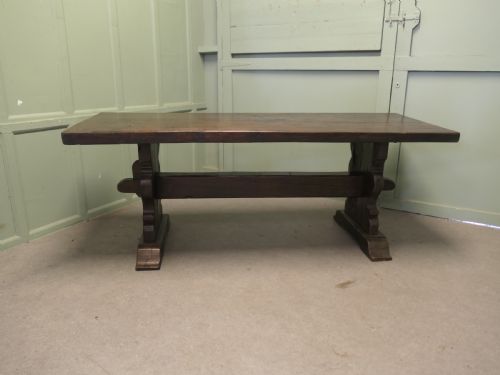
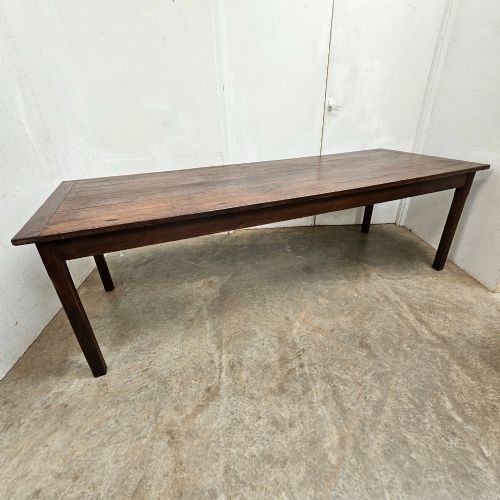
You will most frequently encounter long dining boards and refectory tables, alongside smaller side tables, lowboys, and occasional tripod tables. Dining versions often include practical additions such as drawers or bread slides.
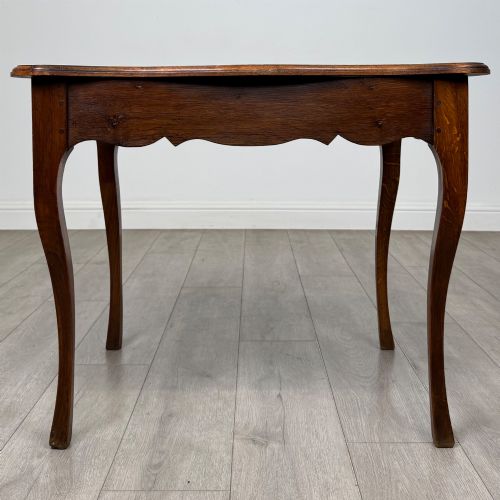
The form embraces rustic farmhouse styles alongside Georgian and French provincial designs, showing local character in turned legs, plank tops, and simple aprons. They bridge the gap between utilitarian furniture and enduring domestic charm.
How they were made
Makers relied principally on solid oak timber, frequently supplemented with fruitwood, cherry, pine, or elm for secondary framing and drawers. Planks were joined with pegged mortise and tenon joints to withstand decades of daily service.
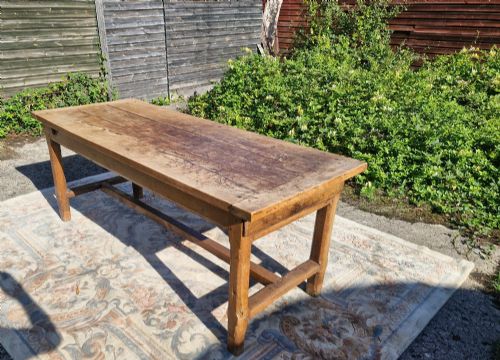
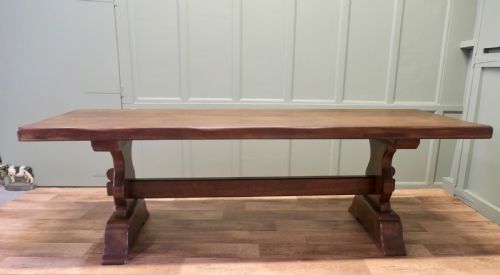
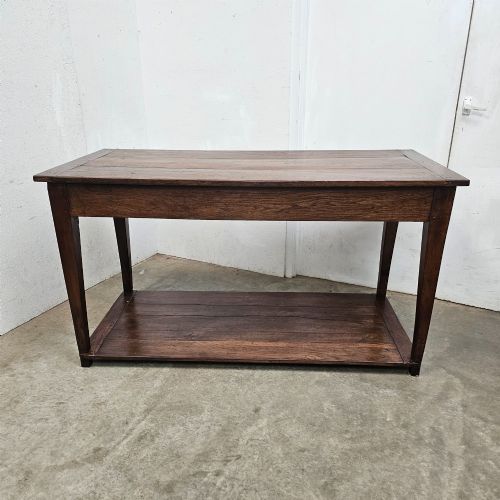
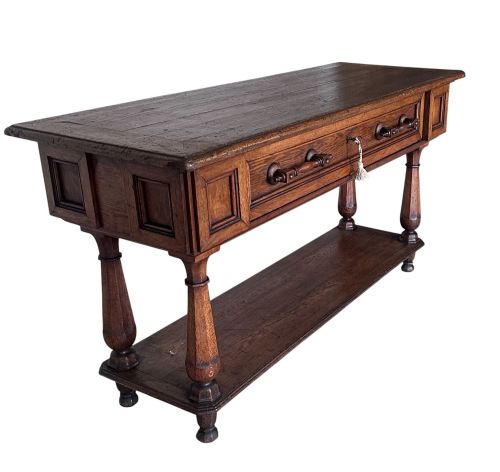
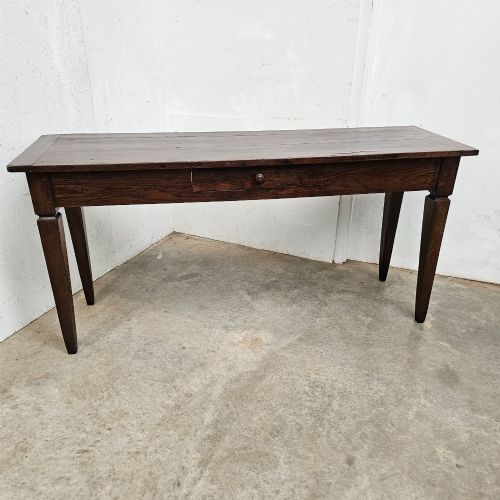
Working surfaces often consist of thick multi-plank tops supported by sturdy trestles, four legs connected by stretchers, or robust pedestals. Hardware in brass and metal appeared primarily on drawers, hinges, and drop-leaf mechanisms.
Finishes relied on natural wax and accumulated patina rather than heavy varnish, allowing the grain of the timber to show through. Secondary materials like marble inserts or tiled tops appeared on specialised forms such as patisserie and serving tables.
Listings feature pieces spanning the 18th century, 19th century, and early 20th century in oak, cherrywood, fruitwood, and pine.
What varies in quality
Quality rests upon the integrity of the timber selection and the retention of original structure across the base and top. Thick, single-board or tight multi-plank tops with minimal warping demonstrate superior initial construction.
The degree of hand-carving and the subtlety of regional turning distinguish simpler utilitarian benches from finer estate pieces. Refined stretcher arrangements and well-fitted drawer construction indicate higher workshop standards.
Surviving finish and surface wear tell the history of use, where deep natural colour and patination elevate an example far above one stripped or heavily refinished.
The Provincial Oak Table Glossary
- Refectory table
- A long dining table originally built for monastic dining halls and later adopted in domestic provincial settings. These pieces feature long rectangular tops supported by substantial legs linked with low stretchers.
- Lowboy
- A small eighteenth-century dressing or writing table fitted with one or more drawers beneath the working surface. They typically stand on slender cabriole or turned legs.
- Cricket table
- A small three-legged occasional table with a round wooden top, traditionally used beside firesides in English country houses. The three-legged design kept the table stable on uneven flagstone floors.
- Bread slide
- A pull-out wooden shelf integrated beneath the top of a farmhouse table. Bakers used these surfaces to cool loaves or prepare dough close to the oven.
- Joint stool
- A sturdy wooden stool constructed with pegged mortise and tenon joinery rather than turned or glued parts. They served as seating or small makeshift side tables.
Provincial Oak Table: Frequently Asked Questions
What is a provincial oak table used for today?
These tables serve primarily as large kitchen dining surfaces, office desks, or prominent console tables in hallways and living spaces. Their enduring construction handles daily family life with ease.
Smaller formats such as tripod tables and lowboys function well as bedside stands or lamp tables in period and modern interiors alike.
How do I tell an 18th century table from a 19th century one?
Early pieces from the eighteenth century typically feature hand-cut peg joinery, pegged tenons, and deep patination developed over centuries of polishing and wear. Drawer linings and underside construction often display irregular adze marks from hand tools.
Nineteenth-century examples frequently show standardised machining in secondary woods and more uniform plank thicknesses, though they retain traditional French and English provincial forms.
Are these tables suitable for modern kitchens?
Their robust oak construction makes them exceptionally well suited for contemporary family kitchens and dining areas. The durable timber surfaces stand up reliably to daily food preparation and gatherings.
Buyers often pair these historic boards with contemporary seating to create a balanced mix of old and new in open-plan rooms.
What is the difference between English and French provincial tables?
English versions from regions like Lancashire or the West Country often lean towards Georgian restraint, featuring straight block legs, oak joint construction, and understated aprons. They prioritize unadorned structural strength.
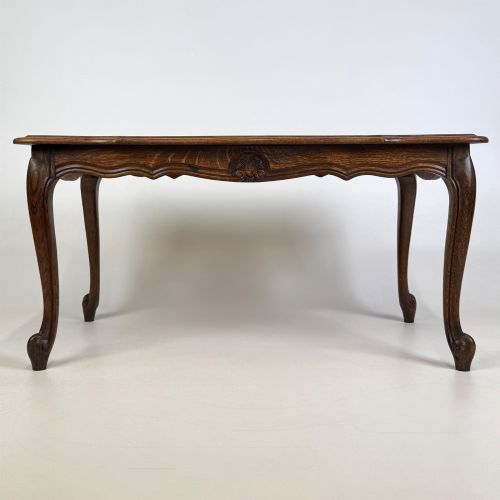
French provincial designs frequently incorporate softer curves, subtle carved details around the skirts, and occasional fruitwood or cherry additions reflecting regional woodworking traditions.