


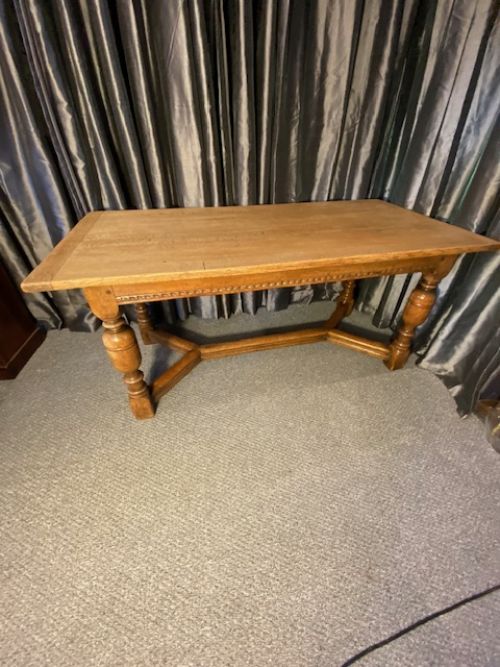


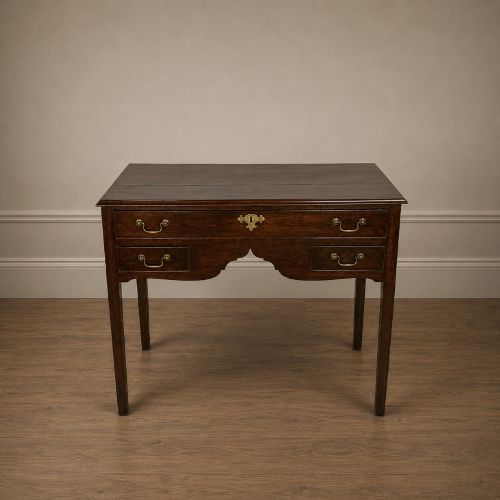
Carved Apron Oak Desk
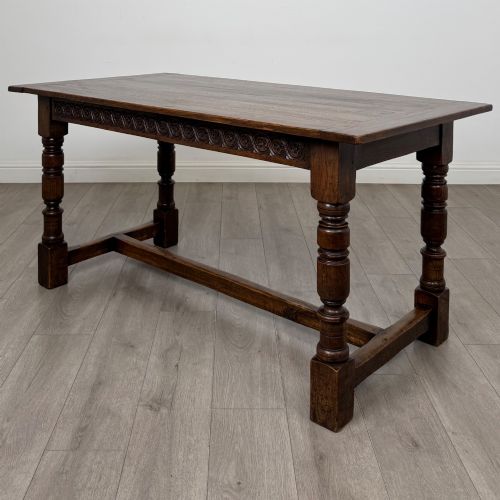
A carved apron oak desk brings straightforward provincial character into a room through solid timber construction and distinct apron detail.
Carved Apron Oak Desk
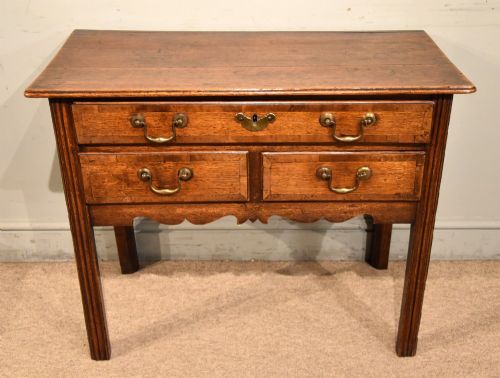
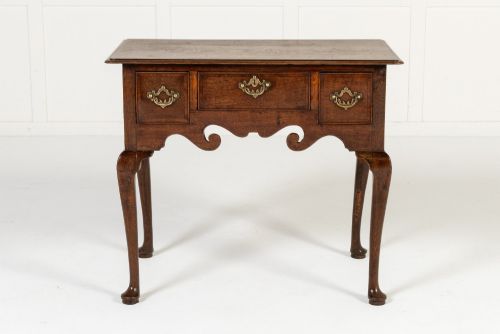
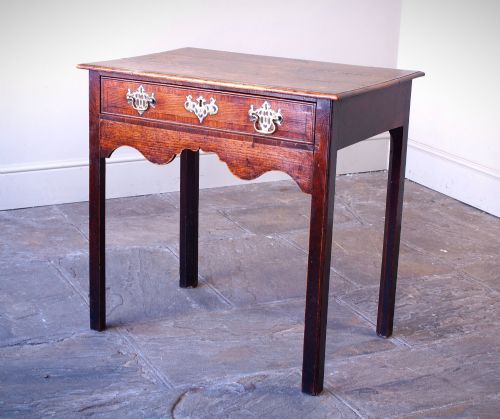
When you search for a carved apron oak desk, you encounter side tables, dining tables, and centre tables originating from the eighteenth and nineteenth centuries. These pieces typically manifest as lowboys and regional vernacular tables rather than modern writing furniture, incorporating robust oak and occasionally walnut.
The version you are most likely to meet on this page is an eighteenth-century lowboy or side table featuring Georgian or Welsh vernacular design. Such examples showcase the practical domestic forms that define early timber furniture from British and European workshops.
These items offer utilitarian surfaces supported by sturdy legs, frequently accented with shaped or carved woodwork beneath the tabletop. They suit studies and hallways where compact proportions and historical timber grain provide utility and visual warmth.
How they were made
Cabinetmakers constructed these pieces primarily from solid oak, sometimes utilising walnut, brass hardware, and wrought iron for structural support or decorative hinges. Timber inlay also appears on select examples to add subtle surface detail without altering the core joinery.
Joinery methods relied on traditional hand woodworking techniques suited to heavy hardwoods. Carpenters shaped the aprons using manual saws and chisels to achieve the distinct decorative profiles seen across Georgian and revival pieces.
Early Welsh cabinetmakers occasionally let their imagination run wild on a humble apron, carving rustic flourishes that outlasted the dynasties.
What varies in quality
The standard of carving on the apron separates standard utility pieces from finer vernacular examples. Crisp execution in the woodwork and balanced proportions indicate greater care by the original maker.
The integrity and colour of the timber grain influence the overall presence of the object. Pieces retaining rich patination across the oak surface demonstrate superior preservation compared to heavily altered equivalents.
The Carved Apron Oak Desk Glossary
- Lowboy
- A small oak table with drawers and a finished top, commonly utilised as a dressing table or side table in eighteenth-century domestic spaces.
- Apron
- The decorative timber strip beneath the tabletop connecting the legs, frequently shaped or carved on vernacular furniture.
- Vernacular
- Regional furniture built by local craftsmen to satisfy everyday domestic needs rather than following strict metropolitan academic styles.
- Georgian
- The period of British design spanning the reigns of the four Georges, characterised by proportion, classical restraint, and robust craftsmanship.
- Patina
- The surface sheen and colour developed on aged timber through decades of handling, cleaning, and exposure to light.
Carved Apron Oak Desk: Frequently Asked Questions
What is a lowboy?
A lowboy is a small table equipped with drawers, historically used for personal grooming or as a compact side table.
These pieces typically date from the eighteenth century and feature four legs supporting a rectangular top with a shaped apron below.
How do I style an oak table?
An oak table integrates easily into traditional and contemporary interiors through its neutral timber tones and sturdy silhouette.
Place the piece in a hallway or study where the surface provides practical display space while the carved apron adds architectural interest.
What distinguishes Georgian oak?
Georgian oak furniture relies on honest construction methods and understated classical proportions established during the eighteenth century.
Makers focused on sturdy joinery and clean lines, occasionally incorporating simple edge moulding or carved aprons for subtle ornamentation.
How should I clean antique oak?
Antique oak benefits from gentle dusting with a soft cloth and occasional application of appropriate beeswax to nourish the timber.
Avoid harsh chemical cleaning agents that strip the historic surface patination and dry out the grain.