





Spanish Oak Table
A spanish oak table brings robust joinery and deep patination into a room, offering both practical surface space and historic character.
Spanish Oak Table
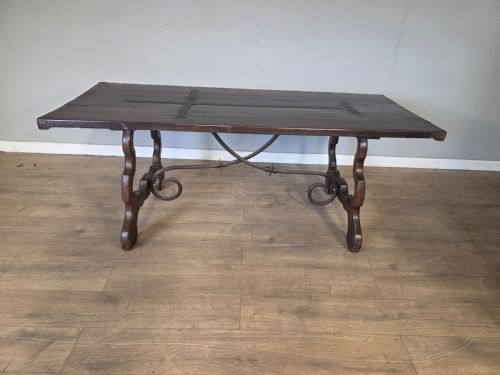
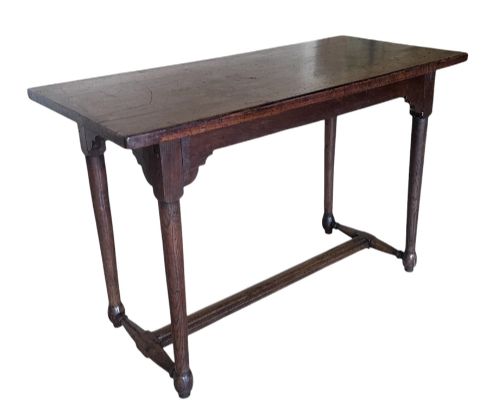
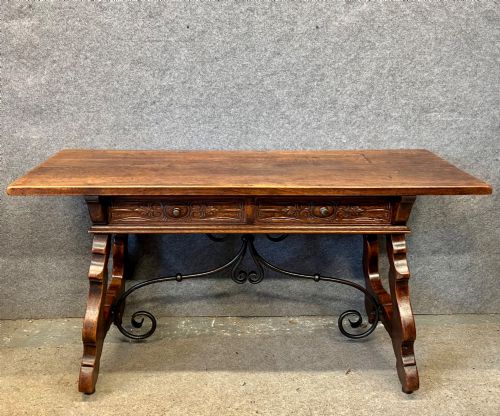
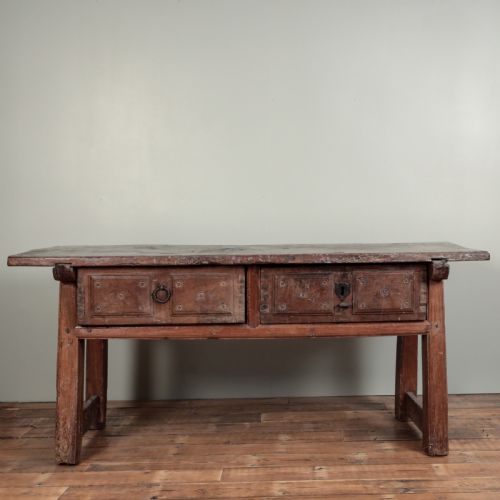
A spanish oak table is typically encountered as a heavy refectory, side, or console form originating from the seventeenth, eighteenth, or nineteenth centuries. These pieces carry regional vernacular styles such as Spanish Baroque, Colonial, and Basque farmhouse designs intended for daily utility.
The selection ranges from long dining boards with single plank tops and trestle supports to smaller occasional, server, and coffee tables. Many examples incorporate supporting wrought iron stretchers, adding structural rigidity to the dense timber frames.
Evaluating Quality
Quality rests upon the integrity of the timber and the proportion of the piece, with single plank oak tops commanding greater appreciation than multi-board tops joined later. The depth of patination and the originality of the structural ironwork also dictate the standing of an individual table.
Examples retaining their early surface treatments, such as genuine bleached finishes or historic wax polish, demonstrate superior preservation. Pieces showing sympathetic timber repairs rather than intrusive modern replacements maintain a truer connection to their period of origin.
Several sheep are likely responsible for the bench listed as a shepherd's seat, though they left no paperwork.
The Spanish Oak Table Glossary
- Refectory table
- A long dining table traditionally used in communal halls, characterised by substantial legs connected by low stretchers.
- Trestle table
- A table supported by two or more vertical frames connected across by a horizontal beam.
- Stretcher
- A horizontal support connecting the legs of a table to increase stability and rigidity.
- Patina
- The surface sheen and colour developed over decades or centuries through handling, waxing, and exposure to light.
- Bleached oak
- Timber treated to lighten its natural tone, a finish seen on various regional tables from the nineteenth century.
Spanish Oak Table: Frequently Asked Questions
How do I style a spanish oak table?
Pair the table with simple seating to let the heavy timber grain and historic structure remain the visual centre of the room. Mixing the piece with plain walls or contemporary lighting balances the dense dark wood or bleached surfaces.
Avoid overcrowding the surface with small decorative items so the scale and construction of the top remain visible. A large ceramic bowl or simple iron candlestick suits the vernacular origins of these tables.
Can I use a spanish oak table daily?
These tables were built for heavy domestic use, making them durable surfaces for modern dining rooms, kitchens, or studies. Solid timber withstands regular activity when treated with basic care.
Use coasters and placemats to protect historic wax or polished finishes from heat and moisture marks. Regular dusting with a dry cloth keeps the grain clean without stripping the accumulated patina.
How do I identify seventeenth century tables?
Seventeenth century examples typically display simpler, heavier joinery with thick timber tops and straightforward rectangular proportions. Wrought iron stretchers on these early pieces often show hand-forged irregularities and pinned construction.
Later nineteenth century revivals and copies often adopt similar decorative styles but utilise machine-cut elements or lighter timber scantlings. Examining the underside and joint construction reveals the hand-worked tool marks characteristic of earlier periods.
What is a refectory table?
A refectory table is an elongated dining table designed originally for communal dining spaces in monasteries and large houses. The long format requires substantial structural support beneath.
In these listings, refectory forms frequently feature iron stretchers or heavy trestle ends to support the long oak boards. This layout provides ample legroom along the length while maintaining rigidity.