
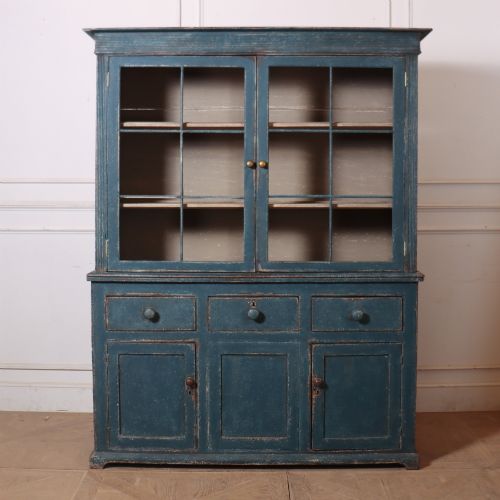


English Kitchen Hutch
An english kitchen hutch brings honest utility and timeless proportions to a room, offering open display above deep storage for everyday use.
English Kitchen Hutch
The pieces listed here span the eighteenth and nineteenth centuries, including Victorian country iterations and earlier Georgian foundations. Oak and pine dominate these forms, often retaining original paint or showing the rich patination of age.
Regional variations appear clearly, particularly West Country dressers that bring distinct local character to the standard kitchen hutch layout. These items combine open plate racks or enclosed upper cabinets with heavy base storage.
How they were made
Joiners built these kitchen hutches using solid native timbers like oak and pine, employing traditional frame and panel construction to handle heavy daily wear. Surfaces frequently show the marks of hand-planing and simple jointing methods suited to provincial workshops.
Many examples feature applied paint finishes, ranging from early layered pigments to later decorative schemes that protect the softwoods underneath. Brass hardware, wire mesh inserts, and ceramic elements complete the functional assembly of these practical storage pieces.
Current listings demonstrate a strong presence of nineteenth-century pieces alongside eighteenth-century oak examples, predominantly utilising pine, oak, and applied paint.
What varies in quality
The calibre of an english kitchen hutch rests in the integrity of its timber selection and the degree of surface preservation it retains. Pieces displaying untouched original paint or deep, undisturbed oak patination stand apart from heavily restored alternatives.
Proportion and scale also dictate distinction, where well-balanced proportions in regional vernacular forms command greater appreciation among collectors. The survival of original brass pulls, glass panes, and wire mesh further elevates the standing of an individual dresser.
The English Kitchen Hutch Glossary
- Patina
- The surface sheen and softening of timber edges developed through decades of cleaning, handling, and environmental exposure. This gradual accumulation of wear is valued for its authenticity.
- Breakfront
- A cabinet design where the central section projects forward from the flanking wings. This architectural arrangement adds depth and visual structure to larger storage furniture.
- Vernacular
- Architecture or furniture built by local craftsmen using traditional regional methods and available materials rather than formal academic styles. Such pieces reflect the specific needs of their local community.
- Farmhouse
- A style characterised by sturdy construction, straightforward utility, and regional timber use suited to rural domestic life. These items prioritise robust function over ornate decoration.
- Dresser
- A multi-tier furniture piece combining a lower storage base of drawers or cupboards with an upper plate rack or display shelving. It serves as both storage and display in domestic spaces.
English Kitchen Hutch: Frequently Asked Questions
What is an english kitchen hutch used for?
These pieces served as the central storage and display units in traditional kitchens, holding tableware, crockery, and food provisions. The open top shelves allowed everyday ceramics to dry and remain within reach.
Today, they function similarly in modern homes, providing generous display space for collections while concealing kitchen clutter in the lower drawers and cupboards.
How do I date an antique kitchen hutch?
Dating relies on examining construction techniques, tool marks, and timber characteristics. Eighteenth-century examples often display pegged joints, hand-sawn boards, and dense native oak.
Nineteenth-century and Victorian pieces frequently utilise pine alongside oak, sometimes incorporating machine-cut elements or wire mesh alongside traditional joinery methods.
Are painted finishes on these hutches original?
Many nineteenth-century country pieces retain early or original painted surfaces that have weathered naturally over generations. Close inspection reveals layer thickness, wear patterns around handles, and pigment fading consistent with age.
Later repainting is common in provincial furniture, so evaluating the underlying timber texture helps determine the history of the finish.
What is a West Country dresser?
A West Country dresser is a regional variant originating from the southwestern counties of England, known for distinct local proportions and craftsmanship. These pieces often feature specific mouldings and drawer arrangements characteristic of West Country workshops.
They represent a significant portion of provincial vernacular furniture found within nineteenth-century English kitchen designs.