


Edwardian Silver Salts
These edwardian silver salts bring tactile weight to the dining table through pierced metalwork, boat shapes, and fitted leather cases.
Edwardian Silver Salts
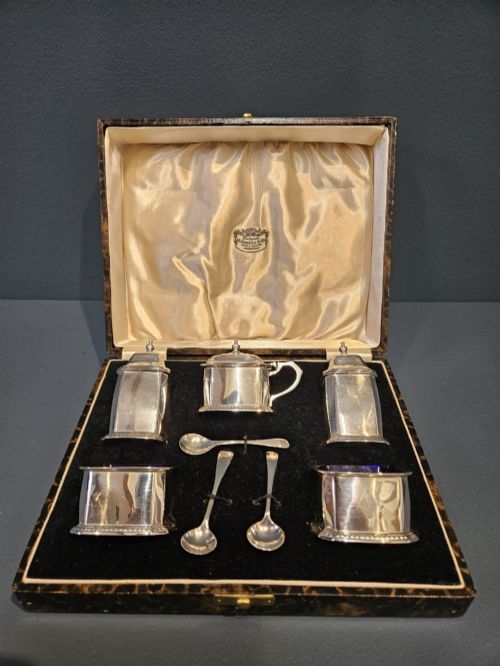
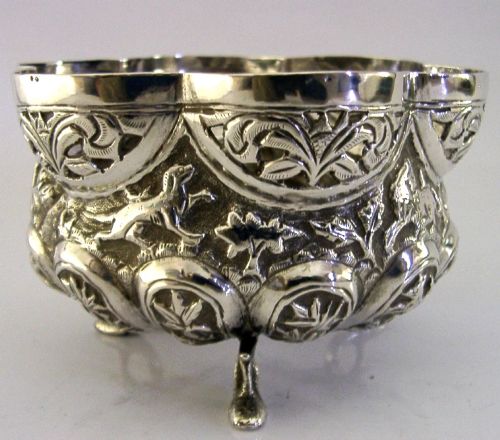
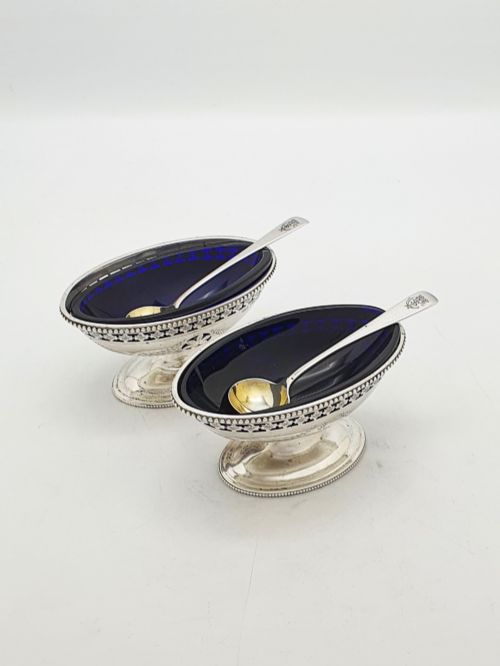
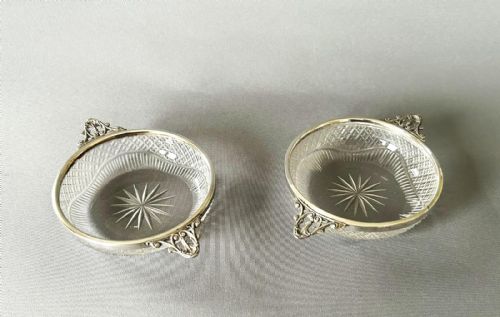
When you search for edwardian silver salts, you encounter small open vessels and enclosed cellars designed to hold condiments on the formal table. The most frequent examples on this page are pairs of open salt cellars, often accompanied by matching silver spoons inside lined presentation cases.
These pieces date primarily from the early twentieth century, though related examples span from late Victorian production into the 1920s and 1930s. The forms draw on earlier aesthetic movements, including Rococo revival curves and Arts and Crafts simplicity, alongside classic boat shapes and cauldron designs.
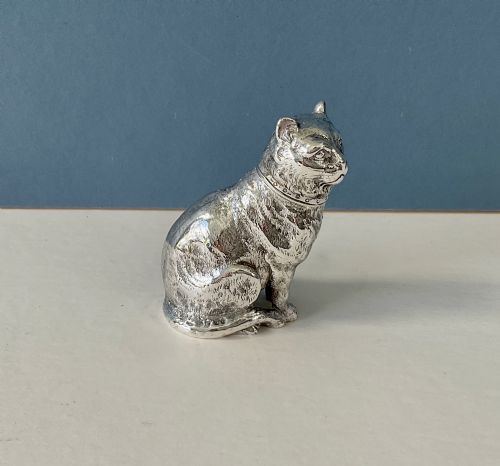
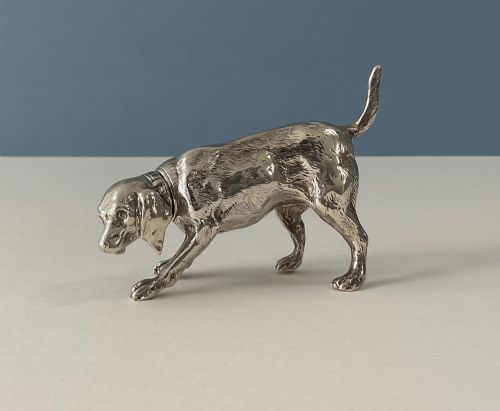
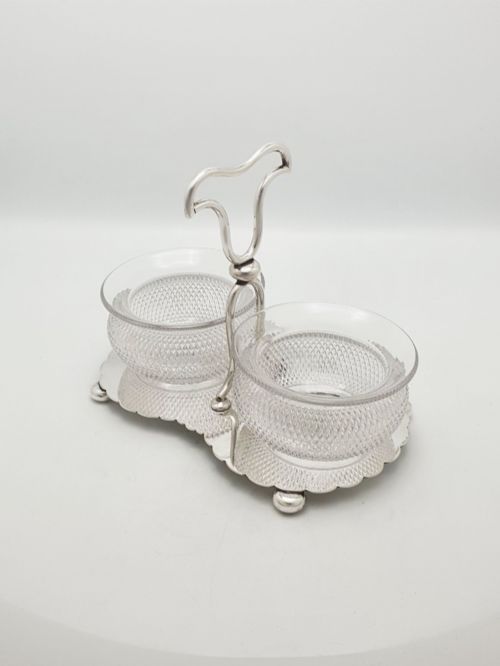
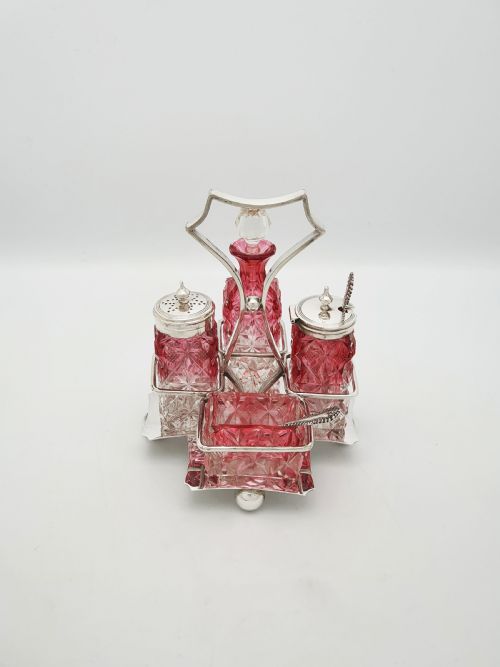
Beyond standard table salts, the category encompasses larger cruet sets, condiment stands holding multiple bottles, and novelty pepper pots modelled as animals and birds. Many surviving sets retain their original fitted cases, indicating they were intended as gifts or presentation pieces from the outset.
Materials and Construction
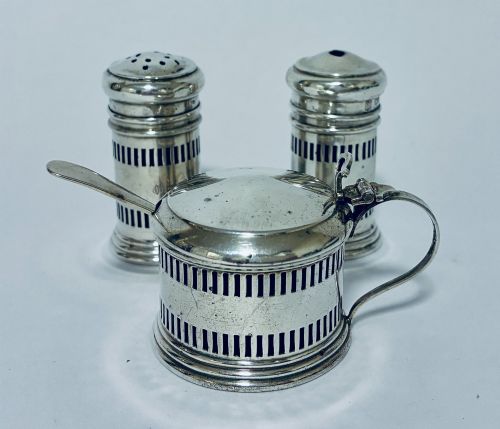
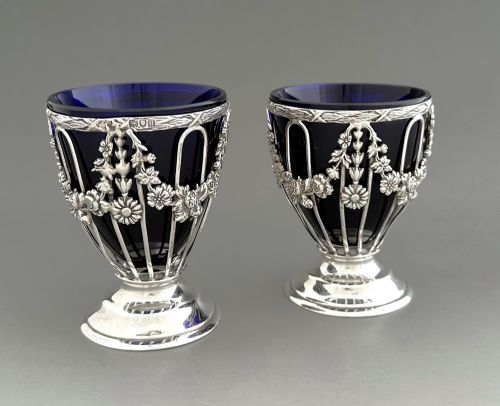
Makers utilised sterling silver and silver plate for the structural frames, mounting them with contrasting inserts of cobalt glass, cranberry glass, and ruby glass. Pierced silver wirework creates light, open frameworks that expose the coloured glass liners nestled within.
Cast elements appear frequently in figural pepper pots and detailed novelty items, capturing animal forms and character figures through metal casting. Solid silver bowls and salts often feature gilded interiors, known as wash gilt, which protected the silver from the corrosive nature of salt.
Listings feature sterling silver, silver plate, and cut glass across periods spanning from late Victorian production through to the 1930s.
Assessing the Pieces
The distinction between standard production and finer execution lies in the crispness of the chasing and the weight of the silver. Thicker gauge metal resists denting and maintains structural integrity in delicate wirework frames and pierced galleries.
The inclusion of matching hallmarks across all components, alongside original glass liners that fit their mounts precisely, elevates a set's integrity. Presentation cases complete with functioning clasps and original silk linings preserve the context of the initial purchase.
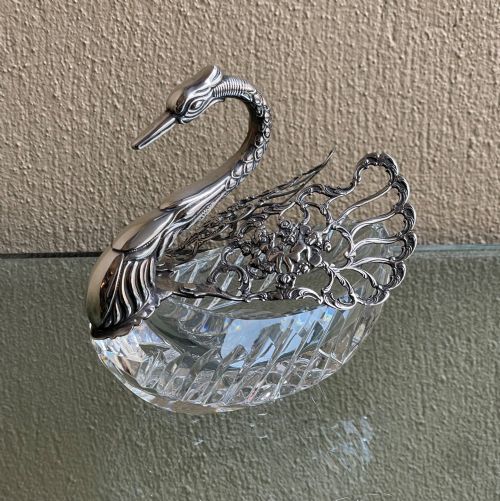
Artistry in novelty pieces separates mechanical mass production from skilled modelling, particularly in animal and figural peppers where facial expression and posture display individual character.
Goldsmith & Silversmith's·Walker & Hall·Bricks & Sons·G H James & Co·Sampson Mordan·William Henry Leather·William Aitken
The Edwardian Silver Salts Glossary
- Salt cellar
- An open vessel used to hold salt on the dining table before the invention of the spring-loaded shaker. They typically rest on three tiny feet or a flat circular base.
- Cruet set
- A matched assembly of condiment containers housed on a shared stand or tray. These sets commonly hold mustard pots, pepper pots, and salt cellars.
- Wash gilt
- A very thin layer of gold applied to the interior of a silver vessel to prevent the salt from corroding the underlying silver. This technique preserves the finish of open salt cellars.
- Wirework
- Metalwork constructed from thin strands of silver soldered together into open geometric or floral patterns. This technique reduces the weight of the piece while maintaining structural strength.
- Liner
- A removable glass insert placed inside an open salt cellar to protect the metal from direct contact with salt. They are frequently blown in cobalt, ruby, or cranberry glass.
Edwardian Silver Salts: Frequently Asked Questions
How were edwardian silver salts used?
Diners used open salt cellars by taking pinches of salt with small condiment spoons or fingers, rather than shaking it over food. They sat at individual places or were shared between diners along the length of the table.
The matching spoons found in cased sets were specifically proportioned to rest on the rim of the salt cellar or inside the presentation box alongside the vessel.
Why do some salts have coloured glass liners?
Coloured glass liners made from cobalt, ruby, or cranberry glass protected the sterling silver from the corrosive chemical action of salt. Unlined silver salts risked pitting and damage if salt remained in contact with the metal for extended periods.
These coloured inserts also added visual contrast against pierced silver wirework and polished frames.
What is wash gilt on a salt cellar?
Wash gilt is a thin layer of gold applied electrolytically or by fire-gilding to the interior bowl of a silver salt cellar. It provided an effective barrier against salt corrosion before glass liners became ubiquitous.
Over decades of use, this delicate gold layer often wears thin on the high points of the interior.
How do I date an edwardian silver salt?
British silver bears hallmarks stamped directly into the metal, indicating the assay office, the standard mark, and a specific date letter. Examining these small stamped symbols provides the exact year of manufacture and the town where the piece was tested.
Unmarked pieces rely on stylistic indicators, construction techniques, and accompanying fitted presentation cases to establish their period.