




Edwardian Serpentine Cabinet
An edwardian serpentine cabinet brings fluid curves and refined cabinet-making into a room, offering elegant storage through its distinctive undulating front.
Edwardian Serpentine Cabinet
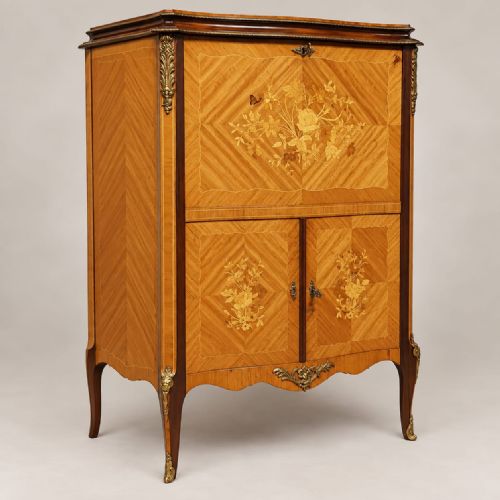
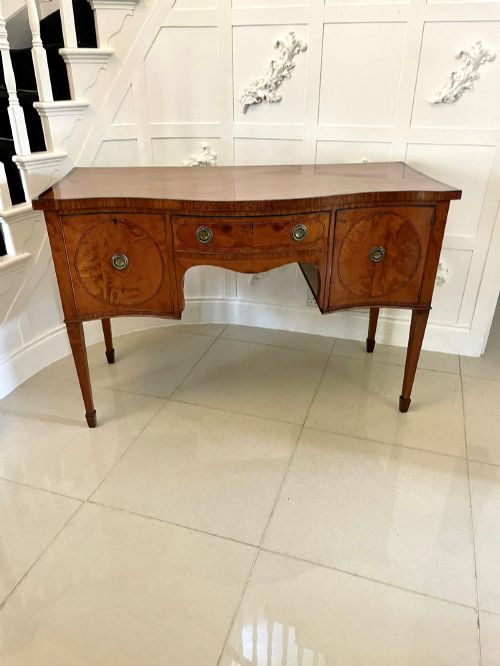
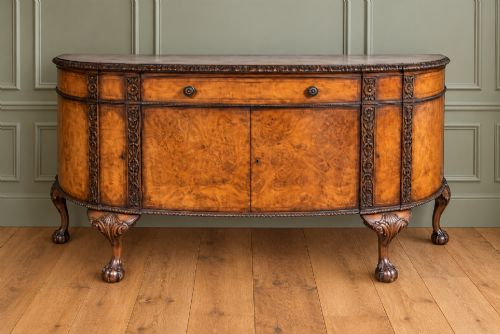
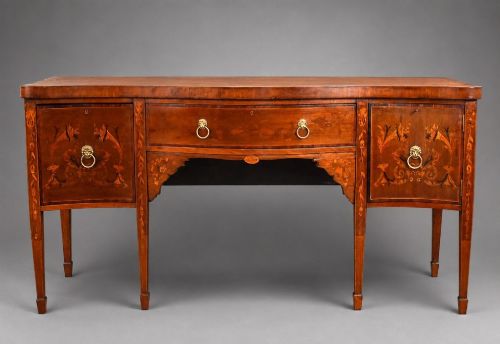
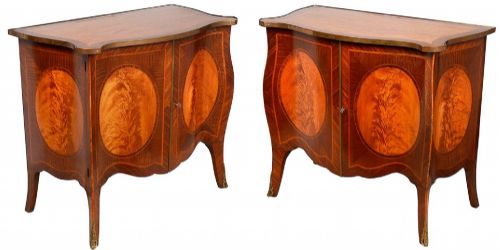
The edwardian serpentine cabinet combines the curving, convex-and-concave front profile popularised in earlier centuries with the lighter aesthetic of the early twentieth century. These pieces appear primarily as display cabinets, side cabinets, and sideboards originating from the Edwardian period and the late nineteenth century.
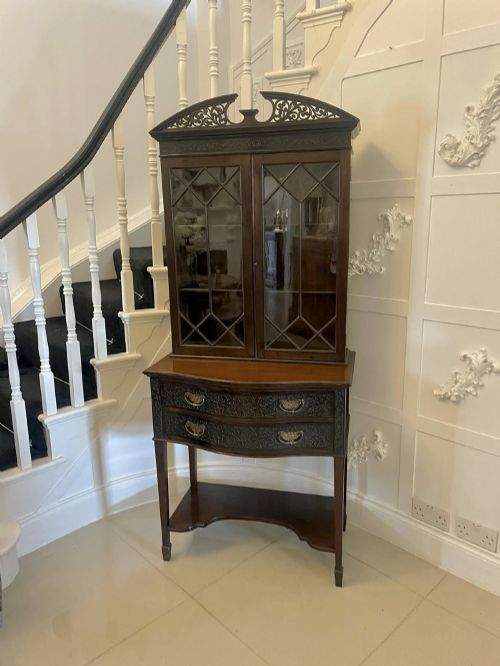
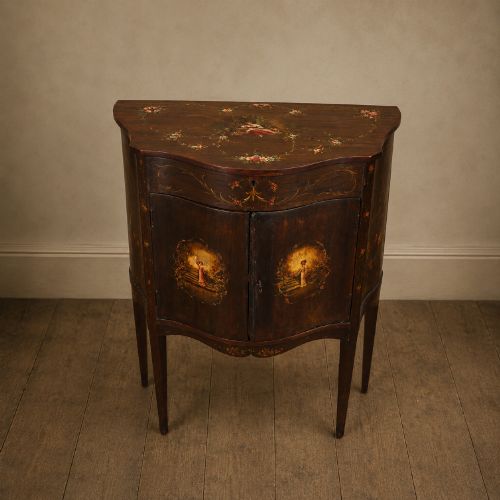
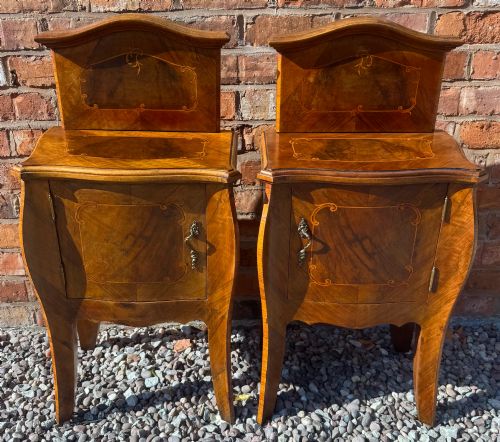
Makers of the era drew heavily on Sheraton Revival and Chippendale Revival styles, producing forms that range from tall two-part display cases to compact bedside cupboards. The undulating line of the serpentine front defines the category, creating movement across the timber facade whether the piece stands on slender tapering legs or a shaped base.
Materials and Technique
Makers constructed these cabinets using a foundation of solid mahogany or walnut, frequently selecting satinwood, burr walnut, or kingwood for decorative exterior surfaces. Timber veneers were carefully applied and matched across the curved serpentine contours to create symmetrical grain patterns.
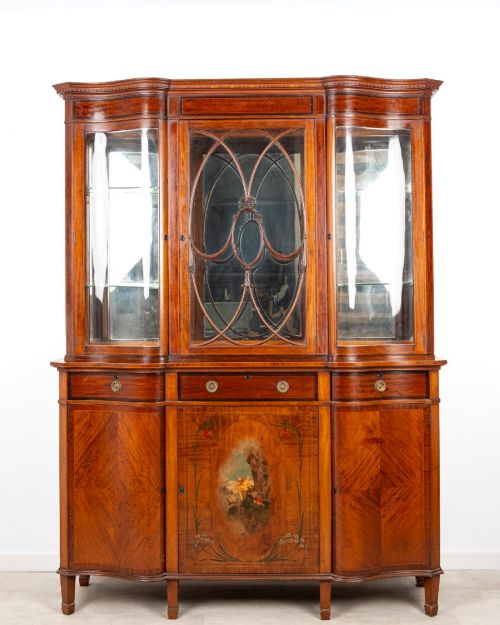
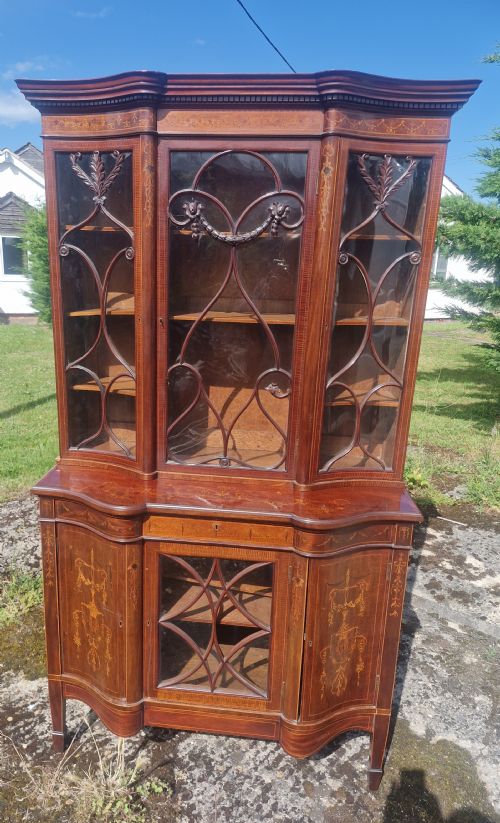
Detailed craftsmanship relied on fine marquetry and fruitwood inlay, often complemented by hand-painted floral motifs and satinwood banding. Glazed doors with intricate wooden tracery housed porcelain or glassware, while brass fittings and handles completed the construction.
Edwardian Serpentine Cabinet Retail Price Guide 2026
Typical asking prices for edwardian serpentine cabinet among the pieces listed under this phrase on Sellingantiques today, from the lower quarter to the upper quarter. They describe what is for sale here now, not the wider market.
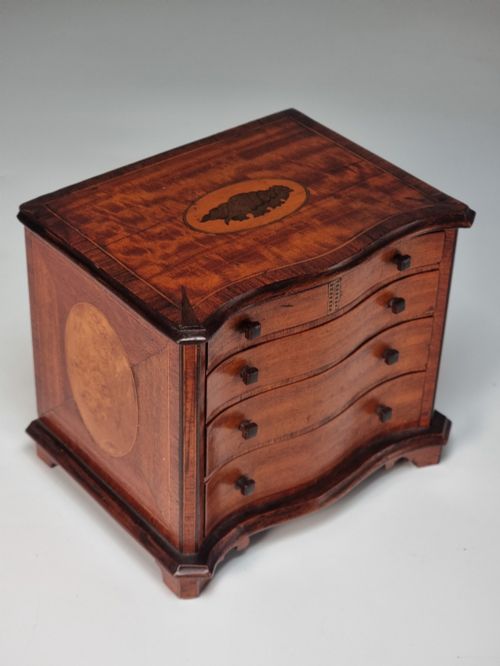
Some miniature serpentine chests exist alongside full-sized sideboards, offering tiny drawers built with the exact same joinery.
Assessing Craftsmanship
Quality in an edwardian serpentine cabinet rests on the precision of the timber shaping and the complexity of the marquetry work. Superior pieces exhibit seamless veneer alignment across the difficult curves of the front, alongside hand-painted details and refined interior cabinetry rather than plain secondary woods.
Attribution to prominent workshops elevates a piece, as demonstrated by surviving pieces bearing maker signatures or stamps. The crispness of carved details, the weight of the brass mounts, and the balance of proportions distinguish standard production items from exhibition-grade examples.
Edwards and Roberts·Maple and Co·Waring and Gillows·A. F. Lloyd
The Edwardian Serpentine Cabinet Glossary
- Serpentine
- A furniture front characterised by a double-curved line, curving outward in the centre and inward toward the ends. This shape requires advanced woodworking skill to execute cleanly across solid timber and veneers.
- Marquetry
- The art of applying decorative veneer pieces of different woods, and occasionally ivory or shell, to form geometric or pictorial patterns. It provides the elaborate surface decoration seen on many Edwardian display cabinets.
- Sheraton Revival
- A late nineteenth and early twentieth century design movement that reinterpreted the neoclassical furniture styles of Thomas Sheraton. These pieces utilise light timbers, satinwood banding, and tapered legs.
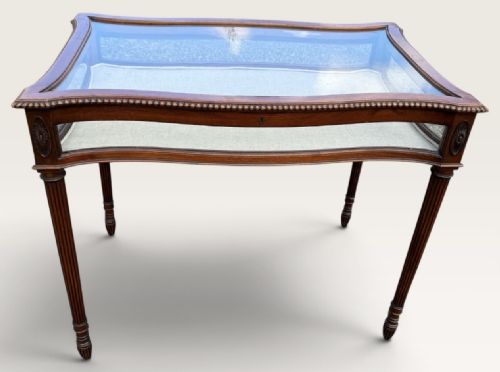
- Bijouterie Table
- A glass-topped display table designed for showcasing small valuable items, medals, or curiosities. They frequently share the serpentine shaping and inlaid details of larger cabinets.
- Credenza
- A sideboard or display unit originally developed in the nineteenth century, often featuring a mirrored back and enclosed cupboards. They provide substantial surface and interior storage capacity.
Edwardian Serpentine Cabinet: Frequently Asked Questions
What rooms suit an edwardian serpentine cabinet?
These cabinets suit dining rooms, drawing rooms, and hallways where their curved facades soften angular corners. Display variants function effectively for holding china or glass.
Sideboard and credenza versions offer practical storage while serving as focal points against a wall. Their compact proportions often allow them to integrate easily into modern interior layouts.
How do I care for inlaid wood surfaces?
Maintain the timber by keeping the cabinet away from direct sunlight and fluctuating heat sources, which can dry out old veneers. Apply a quality beeswax periodically to nourish the grain.
Avoid using modern aerosol polishes or excessive moisture on marquetry and painted sections. Gentle dusting with a soft cloth protects the delicate inlay work.
How are Edwardian and Victorian styles told apart?
Victorian pieces tend to be heavier in scale, utilising darker mahoganies and denser carvings with a focus on substantial presence. Edwardian pieces shift toward lighter timbers like satinwood and brighter marquetry.
The revival styles overlapping these eras borrow eighteenth-century lightness, but Edwardian proportions generally favor airier frames and slender tapered supports.
Were these cabinets used for dining rooms?
Many serpentine forms served specific dining functions, operating as sideboards, serving tables, or storage units for cutlery and china. The addition of fitted drawers and interior shelving supported hosting duties.
Display cabinets and vitrines, conversely, remained in reception rooms for showing porcelain collections and decorative objects to guests.