
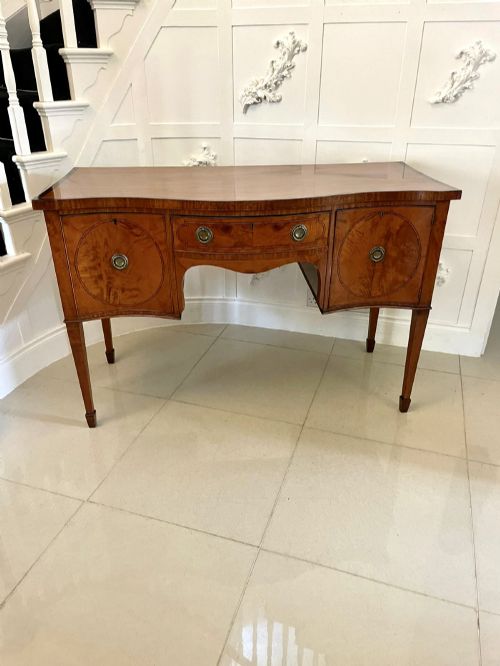
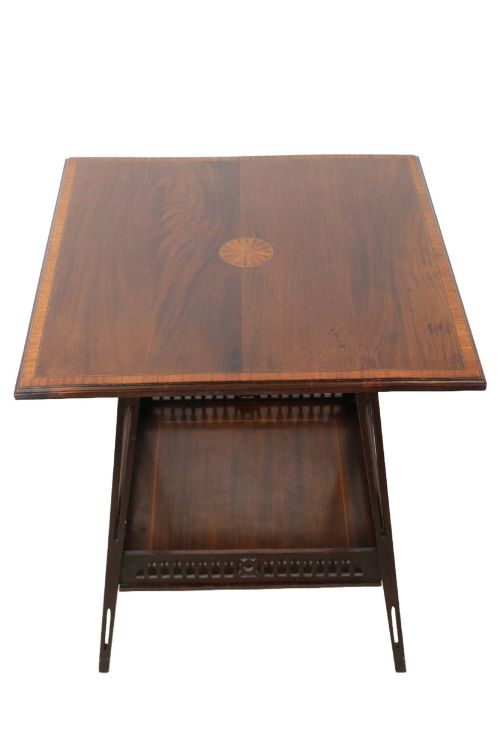
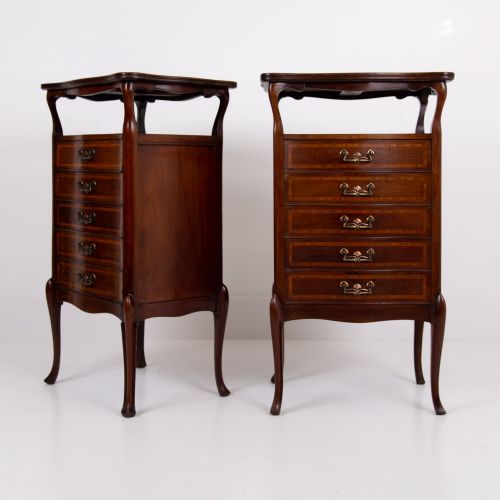
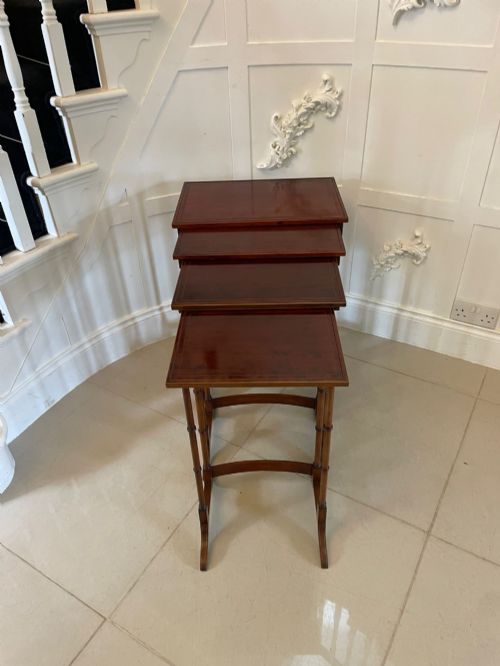
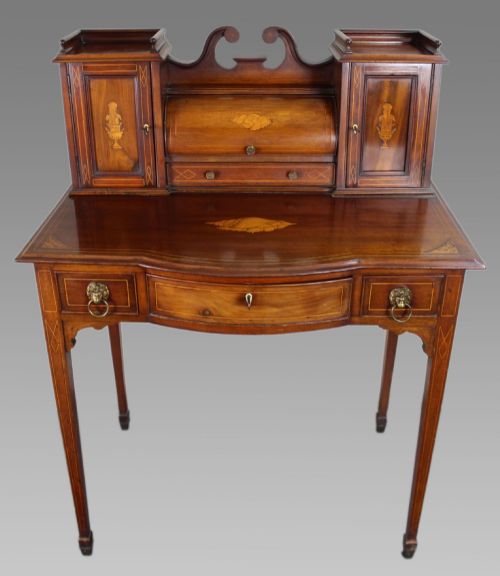
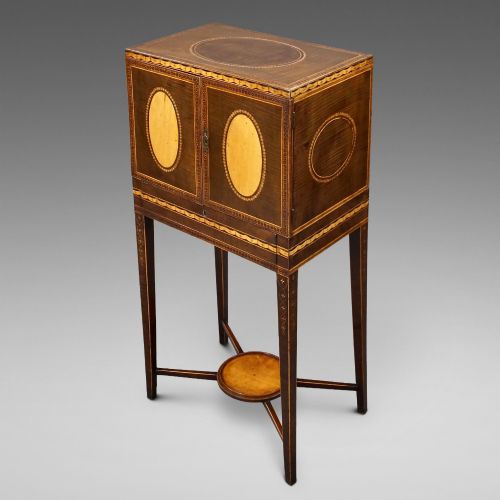
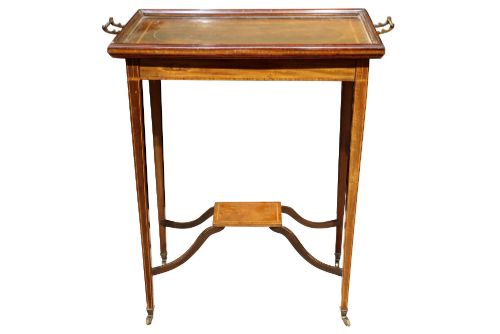
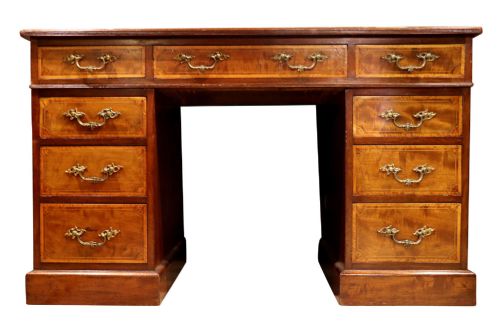
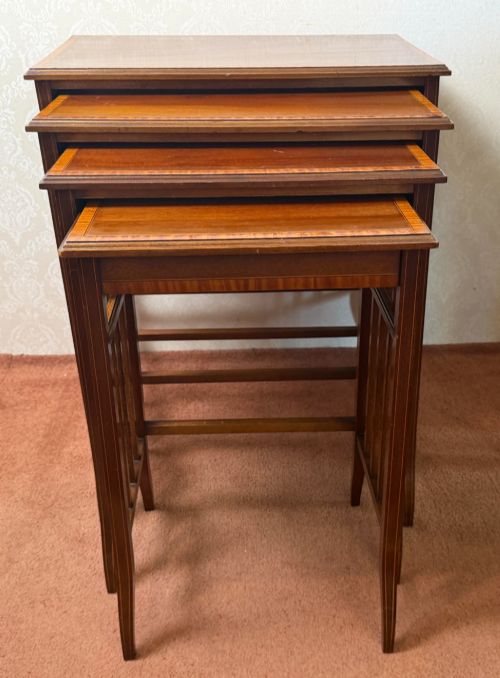
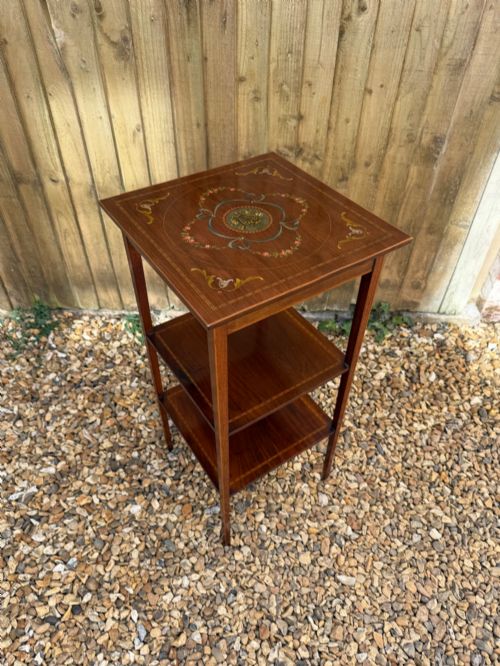
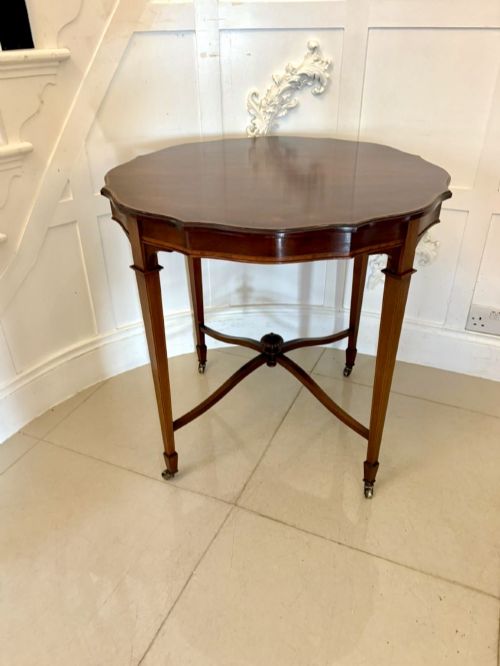
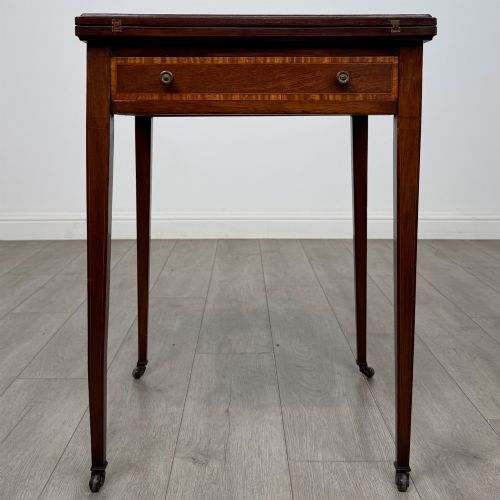
Edwardian Satinwood Inlay Table
These pieces bring together bright satinwood timbers and delicate banded stringing, offering a refined focal point for a period sitting room or study.
Edwardian Satinwood Inlay Table
The form spans compact lamp tables, nests of four tables, and larger display or tea tables designed for drawing rooms. Cabinetmakers of the period drew heavily on eighteenth-century Sheraton designs, translating classical proportions into lighter domestic furniture.
Buyers selecting an edwardian satinwood inlay table choose between occasional furniture meant for display and working desks equipped with drawers or leather-lined surfaces. The primary appeal lies in the warm contrast between pale satinwood panels and darker mahogany or rosewood structures.
Materials and construction
Workshops utilised satinwood veneers laid over stable secondary timbers like mahogany, framed by contrasting boxwood and ebony stringing lines. Cabinetmakers cut intricate marquetry motifs and geometric crossbanding to edge table tops and drawer fronts.
Joinery relied on traditional hand-cut tenons and dovetails for drawers, whilst delicate tapered legs provided structural support without heavy visual weight. Surfaces received hand-applied polish that brought out the natural chatoyancy of the satinwood grain.
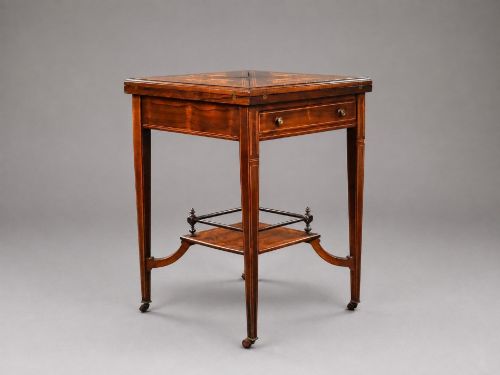
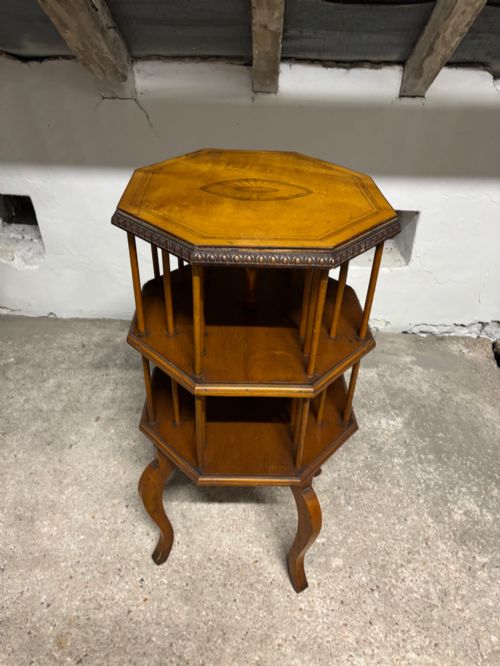
Revolving bookcases and envelope card tables represent the most versatile functional forms found in Edwardian furniture selections.
The markers of quality
Superior examples display crisp, unbroken inlay work with tightly mitred corners on every crossbanded border. The choice of timber grain determines visual depth, with premium satinwood exhibiting a strong, shimmering ripple across the surface.
Construction integrity separates standard production from workshop pieces bearing maker stamps. Original brass hardware, smooth drawer action, and intact leather writing inserts indicate careful preservation and higher initial craftsmanship.
Edwards and Roberts·Maple and Co·Morant and Co·Trevor Page and Co
The Edwardian Satinwood Inlay Table Glossary
- Satinwood
- A dense, lustrous timber with a natural golden sheen utilised for veneers and stringing. It forms the primary decorative surface on classical Revival furniture.
- Crossbanding
- A narrow strip of veneer laid around the border of a table top so that the grain runs at right angles to the central panel. This technique creates a neat framing effect.
- Stringing
- Thin lines of contrasting timber inlaid into shallow channels on table legs and top surfaces. Boxwood and ebony are typical choices for these fine linear details.
- Sheraton Revival
- A design movement spanning the late nineteenth and early twentieth centuries that reinterprets eighteenth-century neoclassical forms. These pieces feature delicate proportions and painted or inlaid ornamentation.
- Envelope card table
- A folding table with four triangular flaps that swivel and open to reveal a baize-lined playing surface. The mechanism relies on a central rotating pivot.
Edwardian Satinwood Inlay Table: Frequently Asked Questions
How do I care for satinwood?
Keep these pieces away from direct sunlight and heat sources to prevent the polish from crazing and the timber from fading.
Dust regularly with a dry cloth and apply a quality beeswax sparingly to nourish the wood grain.
Are these tables sturdy enough for daily use?
Occasional tables and nests suit regular placement in a sitting room, provided they are not overloaded with heavy objects. Writing tables and card tables offer greater structural substance for active tasks.
Lift tables rather than dragging them across floors to protect the slender tapered legs.
What is Sheraton Revival style?
This design movement mirrors the lightness and symmetry promoted by eighteenth-century cabinetmaker Thomas Sheraton. Workshops revived these classical proportions during the Edwardian era.
Characteristics include satinwood veneers, painted floral swags, and fine brass hardware.
How do I date an inlaid table?
Examine the secondary timbers inside drawers and beneath table tops to check for age indicators like hand-cut dovetails. Maker stamps or retailer labels often confirm the Edwardian production period.
Construction methods and the style of the inlay work provide further clues to the decade of manufacture.