
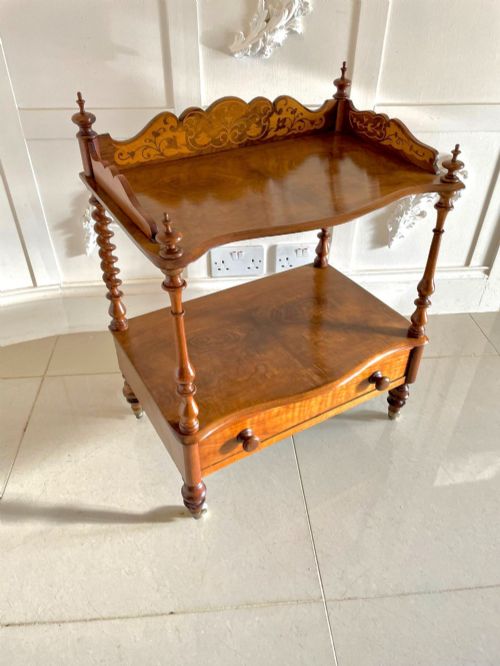
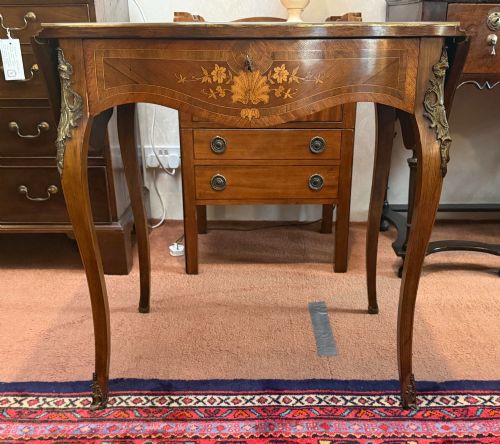
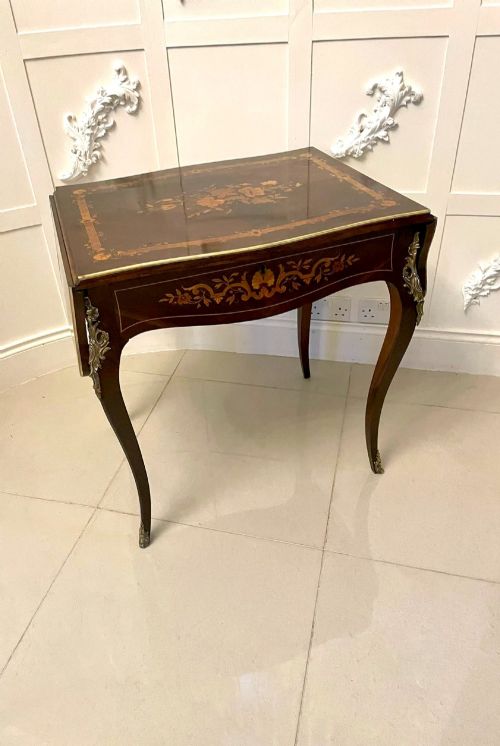
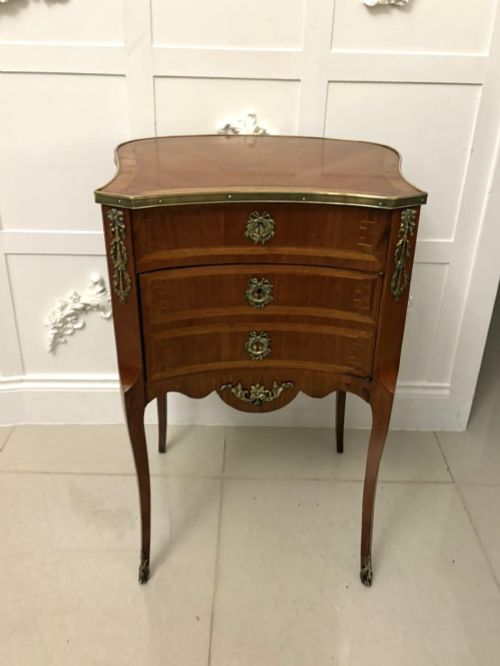

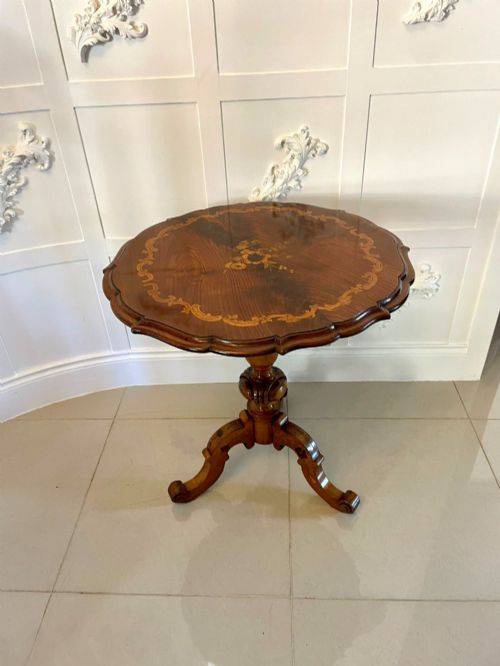
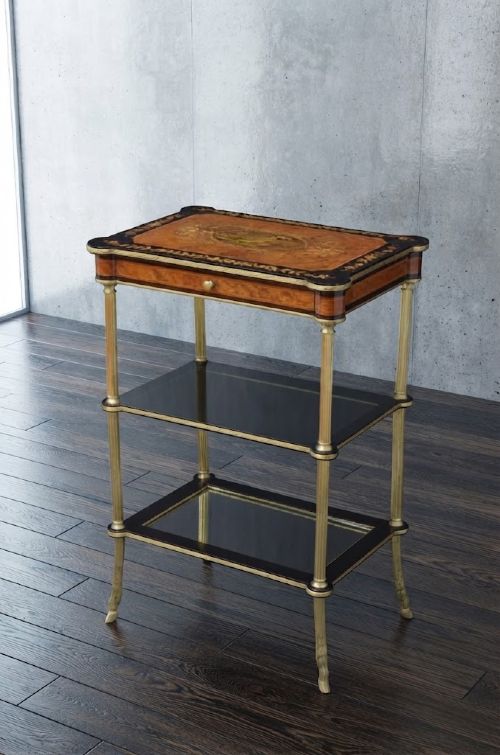
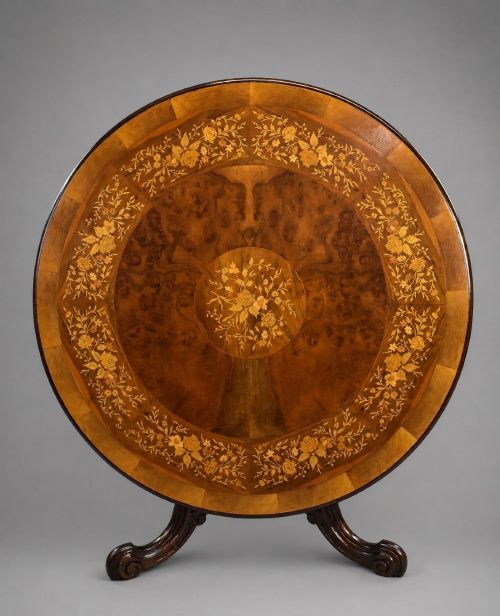
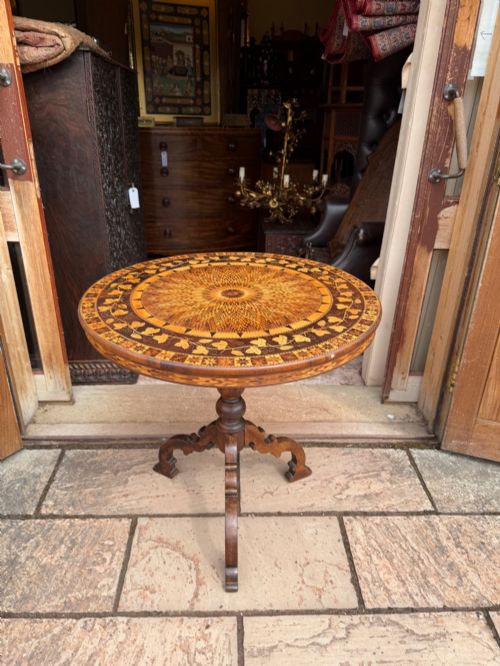
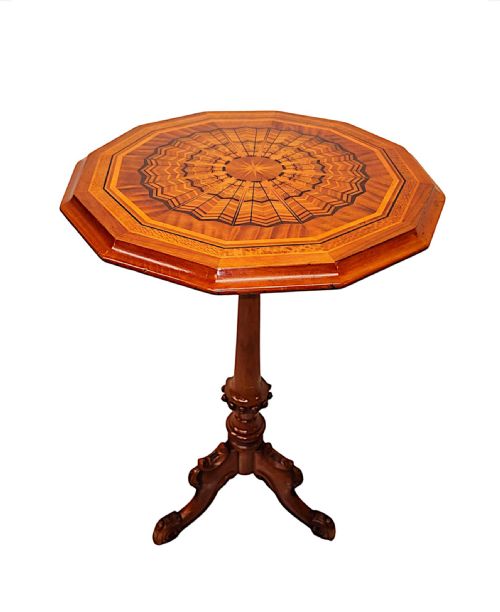
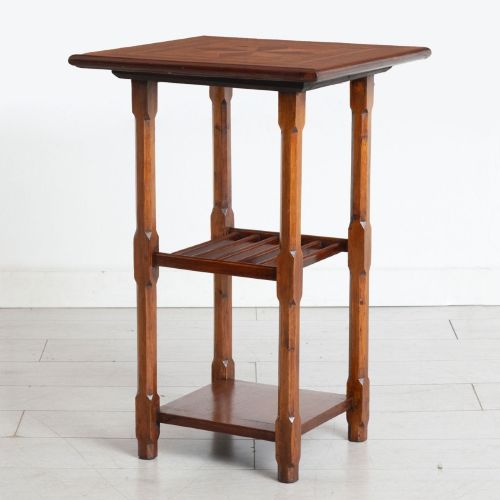
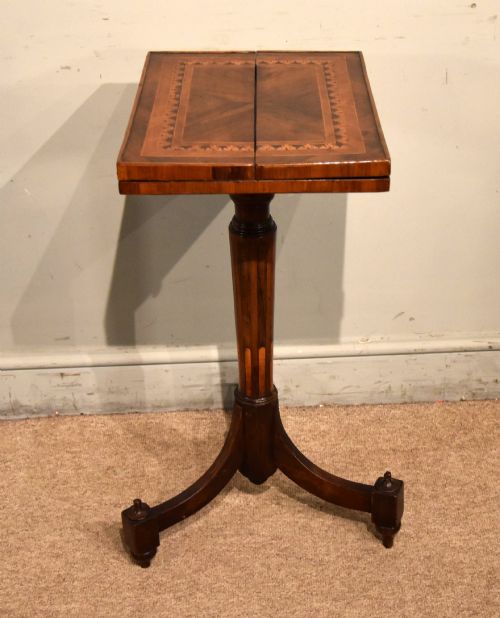
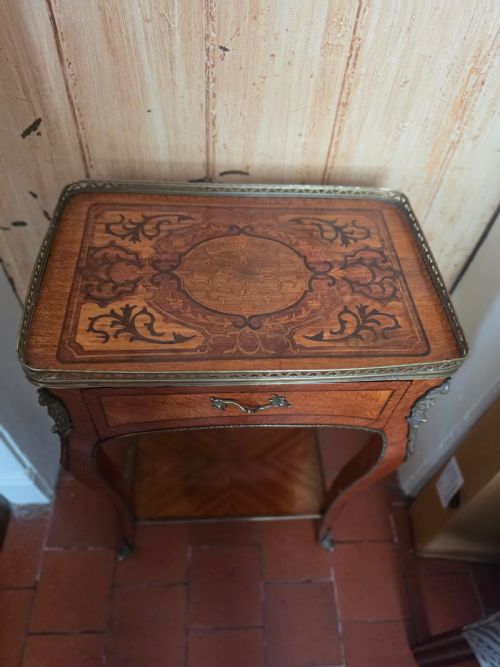
Marquetry Inlaid Accent Table
A marquetry inlaid accent table brings patterned wood veneers and refined surfaces into a room, offering surface space with decorative depth.
Marquetry Inlaid Accent Table
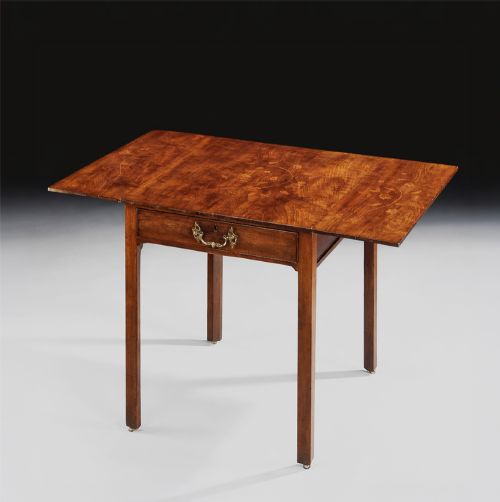
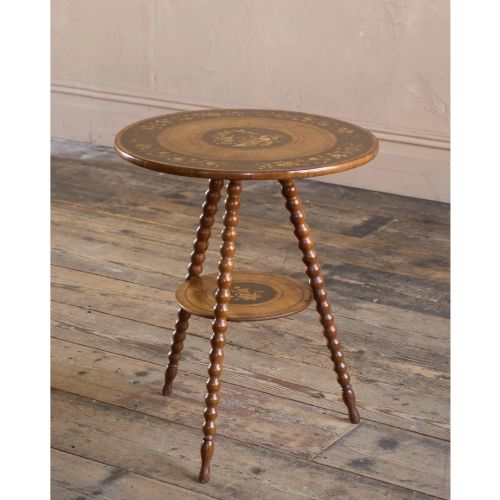
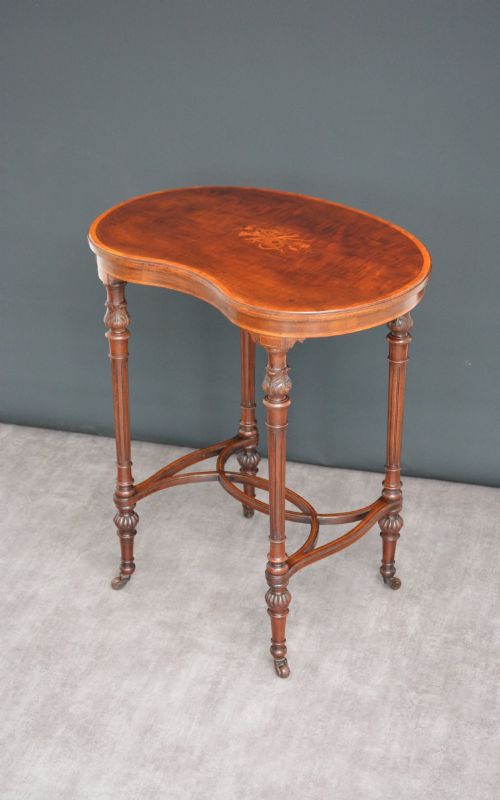
A marquetry inlaid accent table appears in various forms on this page, including lamp tables, occasional tables, centre tables, Pembroke tables, nests of tables, side cabinets, corner tables, and sofa tables.
The selection spans multiple eras, drawing from the 17th century, 18th century, Georgian, Regency, Victorian, and Edwardian periods, alongside continental French and Italian workshops.
Buyers encounter walnut, mahogany, satinwood, rosewood, and kingwood surfaces shaped into ovals, rectangles, and kidney forms.
Materials and technique
Craftsmen applied fine wood veneers such as burr walnut, satinwood, and kingwood onto solid secondary timbers, cutting floral and geometric patterns by hand.
Many examples incorporate brass mountings, ormolu, and galleries to edge the tops, combining metalwork with timber construction.
Veneers are arranged to exploit natural grain figures, creating contrast within the marquetry panels across lamp and occasional tables.
One listed table is specifically designated for the game of patience, proving our ancestors took solitaire very seriously indeed.
Quality distinctions
The precision of the veneer cutting and the complexity of the floral or geometric marquetry dictate the distinction between standard and exhibition pieces.
The choice of primary timber, from plain mahogany to burr walnut or figured satinwood, alters the visual depth of the surface.
Integration of secondary materials like ormolu mounts, brass galleries, and mirrored tiers separates simpler forms from elaborate creations.
Gillows·Liberty & Co.·Anton Seuffert·Millet·Edwards & Roberts
The Marquetry Inlaid Accent Table Glossary
- Marquetry
- Decorative veneer work forming pictures or patterns by fitting together small pieces of wood. This technique defines the primary surface ornamentation of these tables.
- Satinwood
- A hard, yellowish wood with a reflective sheen used extensively for fine cabinetmaking. It provides a bright background for contrasting inlay.
- Ormolu
- Gilded bronze used for mounts and decorative details on furniture. It accents the corners and edges of French style tables.
- Pembroke table
- A small table with hinged flaps on either side that can be raised or lowered. These often feature drawers and inlaid tops.
- Kingwood
- A dense, dark violet-brown wood with lighter streaks employed in high-end veneering. It creates strong visual borders in marquetry designs.
Marquetry Inlaid Accent Table: Frequently Asked Questions
What is a marquetry inlaid accent table used for?
These pieces serve as functional surface space for lamps, books, or decorative objects while adding pattern to a room.
Their compact forms allow placement beside seating or in corners where larger furniture does not fit.
How do I identify a Victorian marquetry table?
Victorian examples frequently utilise burr walnut veneers paired with floral marquetry motifs across oval or round tops.
Construction from this era often includes robust pedestal bases or turned legs supporting the decorated surface.
What distinguishes French style inlaid tables?
French pieces often incorporate kingwood or rosewood veneers alongside ormolu mounts and curved Louis XV styling.
Such tables lean towards decorative presence, sometimes featuring serpentine edges and freestanding centre designs.
How should I care for veneered wood surfaces?
Keep these items away from direct sunlight and steady heat sources to prevent the veneers from drying or lifting.
Dust gently with a soft cloth and avoid abrasive cleaning products that might damage the delicate inlay work.