


Kidney Shaped Console Table
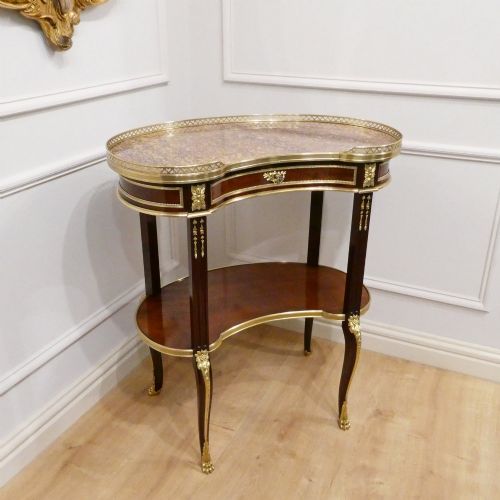
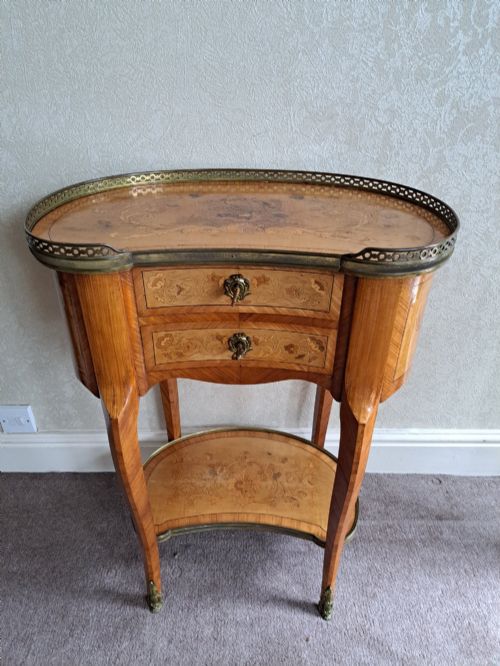
A kidney shaped console table offers a graceful curve designed to hug a wall and save floor space in a hallway or drawing room.
Kidney Shaped Console Table
A kidney shaped console table brings a distinctive serpentine outline to interiors, originating largely from French and English cabinet making traditions. When searching for a kidney shaped console table, buyers encounter pieces spanning the nineteenth century, including Victorian interpretations and Louis XVI revivals.
These items serve multiple domestic functions as side tables, occasional tables, or compact writing desks. The form is most frequently met in polished hardwoods with decorative inlays, occasional marble tops, and slender legs.
Originating in periods of high craftsmanship, these tables balance decorative appeal with practical surface area. The curved front allows a person to stand closer to the piece when using it as a writing surface or displaying ornaments.
Materials and construction methods
Cabinet makers constructed the distinctive curved frames of these tables using timber carcases faced with figured veneers such as mahogany, burr walnut, and rosewood. Skilled artisans also incorporated contrasting stringing and marquetry inlays to define the sweeping top surfaces.
Support elements often feature brass mounts, gilt bronze details, and occasional leather writing inserts bordered by gilt tooling. Marble tops appear set into wooden galleries, while specific pieces incorporate ceramic plaques or painted decoration within the woodwork.
Listings feature nineteenth century pieces incorporating mahogany, burr walnut, rosewood, and marble.
Distinctions in quality
The standard of a table rests on the selection of timber veneers and the precision of the curved carcase construction. Pieces featuring matched burr walnut or finely figured mahogany demonstrate superior cabinet work compared to simpler plain timber versions.
Details such as the weight of cast brass mounts, the subtlety of marquetry inlay, and the integration of original marble slabs or leather inserts elevate the standing of an individual table. Finer examples maintain crisp carving along the legs and smooth operation of any integrated drawers.
Maison Millet·Williams and Gibton
The Kidney Shaped Console Table Glossary
- Marquetry
- Decorative patterns formed by fitting small pieces of veneer into a wooden background. This technique creates complex floral or geometric designs across the tabletop.
- Ormolu
- Gilded bronze mounts applied to furniture for decorative effect. These metal elements appear frequently on pieces influenced by French styles.
- Stringing
- Thin lines of contrasting wood inlaid into the surface of furniture. It frames the curved edge of the top and accentuates the outline.
- Gallery
- A raised rim of wood or metal fitted around the edge of a table top. It prevents items from sliding off the curved surface.
- Veneer
- A thin layer of highly figured wood applied over a secondary timber carcase. This method displays rich grain patterns without using solid costly timber throughout.
Kidney Shaped Console Table: Frequently Asked Questions
Where should I place a kidney shaped console table?
These tables suit narrow hallways, drawing rooms, or bedrooms where a straight-edged piece might obstruct movement. The curved silhouette allows the furniture to sit flush against a wall while projecting less into the room.
They also function effectively as compact writing desks beneath windows or in alcoves where floor space is limited.
How do I identify a Victorian example?
Victorian versions of these tables frequently employ native or imported hardwoods like mahogany and burr walnut, often featuring rich grain patterns and dark polish. Cabinet work from this era typically displays sturdy carcase construction and occasional inlaid stringing.
Looking beneath the top reveals traditional joining methods and timber shrinkage consistent with nineteenth-century workshop practices.
Did these tables originate in France or Britain?
The kidney form draws heavily on eighteenth-century French design principles, which British and French cabinet makers revived during the nineteenth century. Many pieces reflect Louis XVI styles with classical proportions and refined mounts.
English makers adopted the shape enthusiastically during the Victorian period, adapting it for domestic writing desks and occasional tables.
How do I care for the timber surface?
Polished hardwood surfaces benefit from application of traditional beeswax rather than modern silicone sprays, which build up a hazy residue over time. Regular gentle dusting with a soft dry cloth preserves the lustre of the French polish or wax finish.
Keeping the furniture away from direct heat sources and strong sunlight prevents the wood veneers from drying out or splitting.