
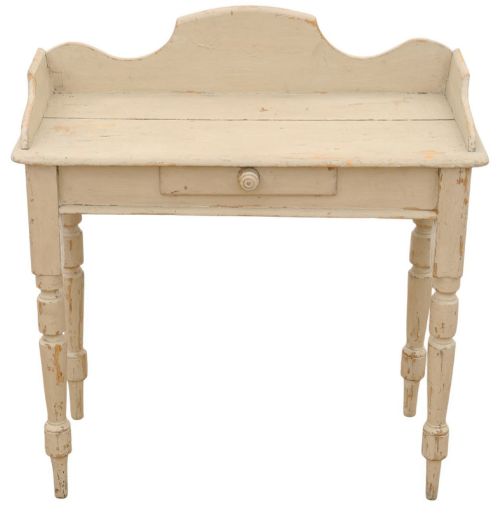
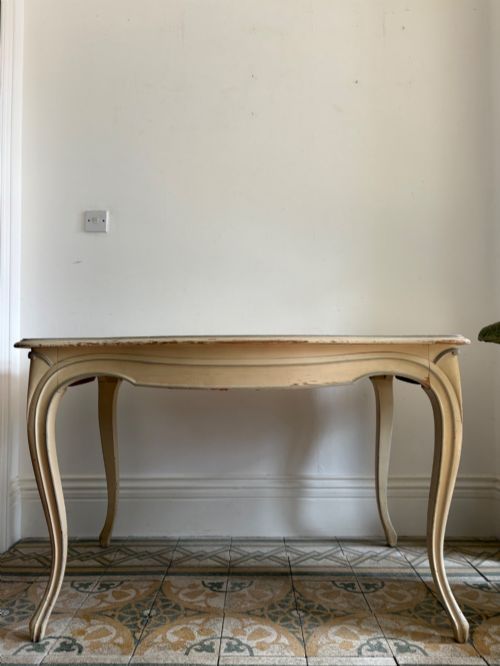
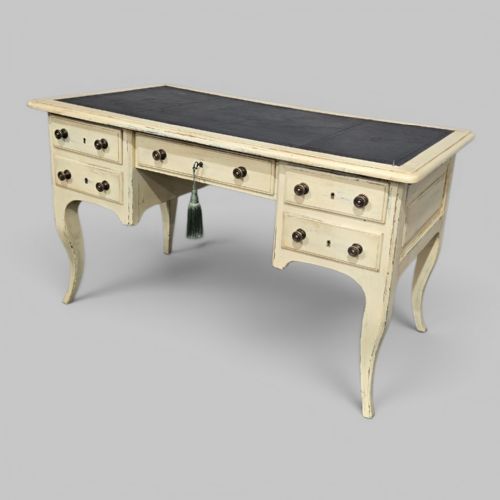
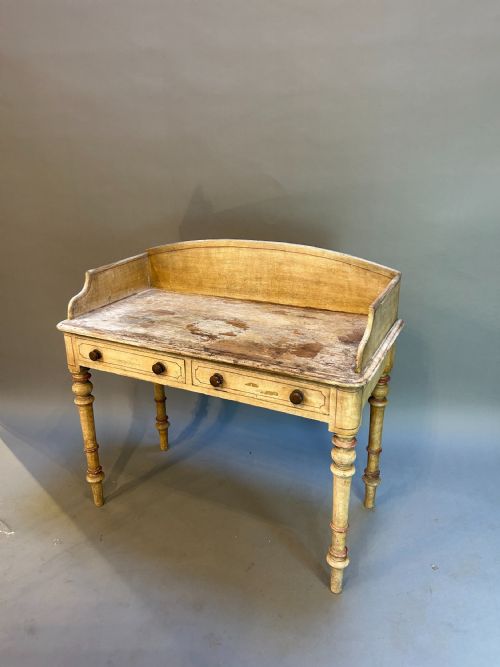



Cream Painted Writing Desk
A cream painted writing desk brings lightness and character to a study, offering a practical workspace shaped by centuries of regional European and British design.
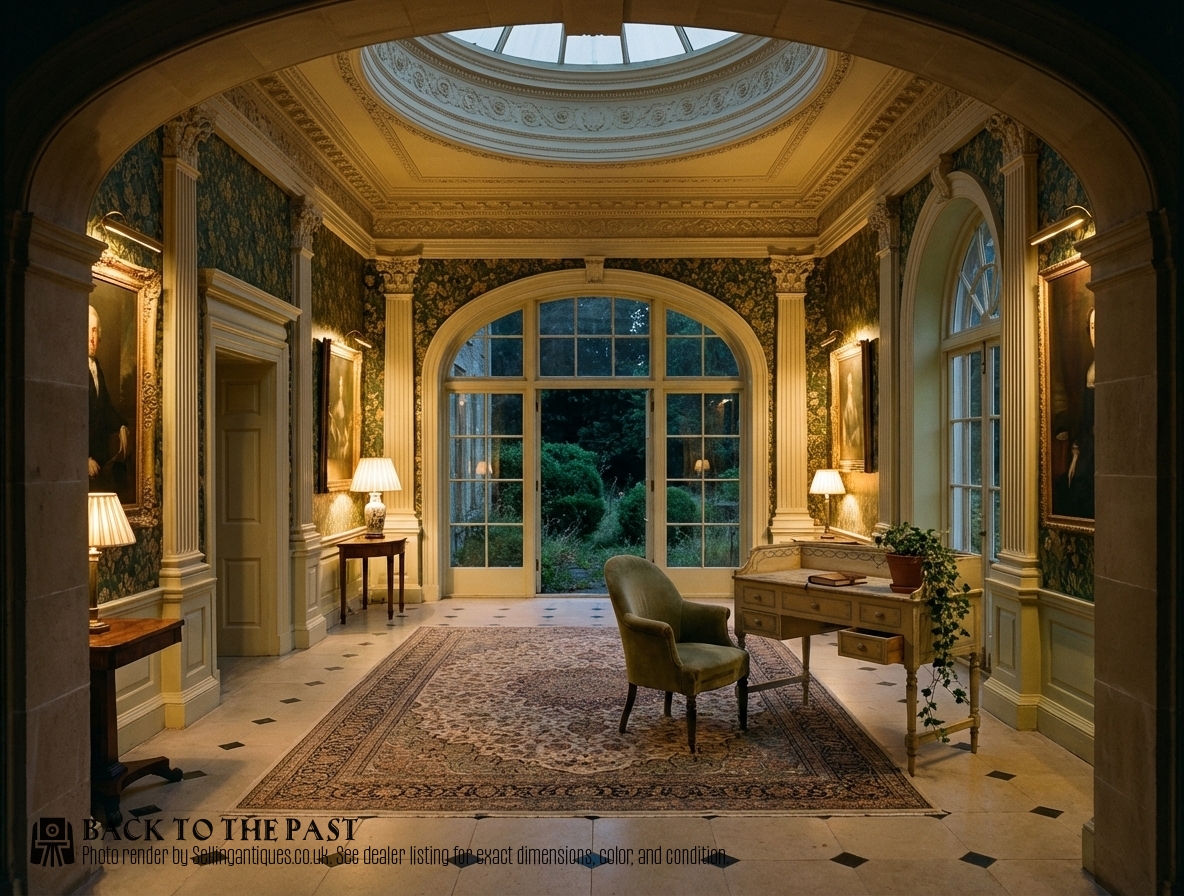
Cream Painted Writing Desk
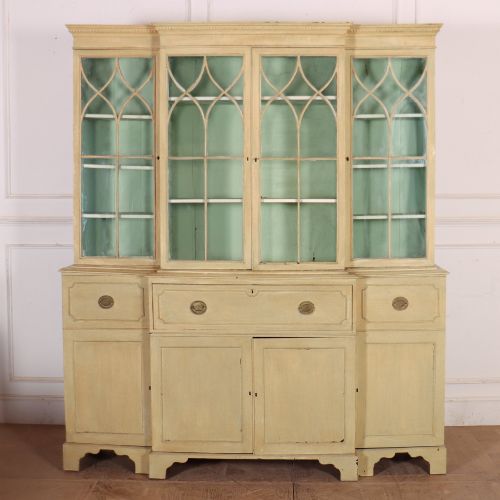
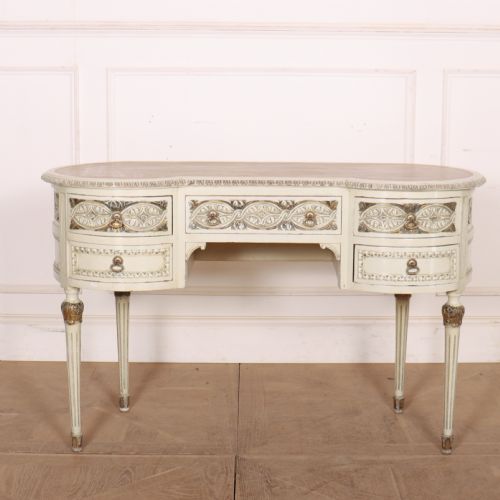
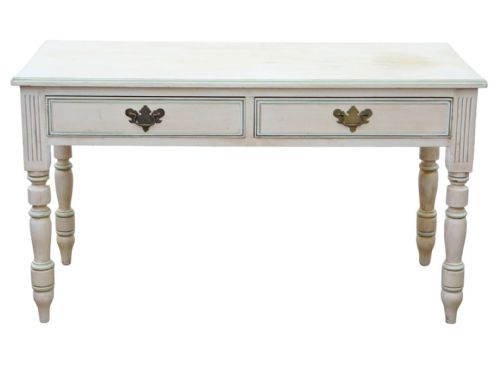
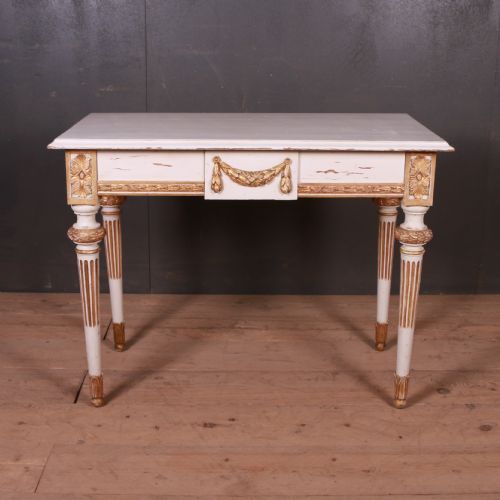
When you search for a cream painted writing desk, you enter a field spanning the nineteenth century through the Art Deco era, taking in styles from French provincial to Swedish Gustavian and English country. These pieces range from simple pine work tables and kneehole desks to serpentine console tables and kidney-shaped writing tables fitted with leather or suede tops.
The most common examples on this page date from the nineteenth century and the early twentieth century, reflecting both English Victorian workshops and continental European traditions. Alongside conventional desks, you will encounterbureaux, secretaire bookcases, and side tables that served double duty for correspondence and display in period homes.
How they were made
Makers relied on solid timber and pine as foundations, applying layered paint finishes that often aged into patinated surfaces over decades of use. Workshops integrated brass hardware, gilt wood accents, and inset leather or suede writing surfaces to elevate the utility of each piece.
Structural forms reveal regional carpentry methods, from the cabriole legs of French provincial pieces to the straightforward joinery of English country furniture. Surface decoration ranges from simple painted wood to intricate schemes featuring original painted decoration and applied plaques.
Materials recorded across the selection include pine, timber, leather, brass, and gilt wood finished with layered paint.
What varies in quality
The distinction between standard utility furniture and superior examples lies in the integrity of the original construction and the preservation of early painted finishes. Pieces that retain their unstripped painted decoration and original hardware carry greater authenticity than later repainted surfaces.
Refinements such as kidney-shaped profiles, inset suede writing surfaces, and specialist details like Wedgwood plaques distinguish ambitious neoclassical or French chateau commissions from plain provincial work tables.
The Cream Painted Writing Desk Glossary
- Cabriole leg
- A furniture leg that curves out and then in, resembling the leg of an animal. This form appears frequently on French provincial and eighteenth-century style writing tables.
- Kneehole desk
- A desk with a central recess for the user's legs, flanked by pedestals of drawers. These pieces became popular during the eighteenth and nineteenth centuries.
- Secretaire bookcase
- A tall cabinet combining a bookcase top with a pull-down writing flap concealing small drawers and pigeonholes. It provides both storage and a compact writing surface.
- Serpentine front
- A furniture front characterised by a convex central section flanked by concave curves. This contour requires skilled carpentry and adds visual movement to side tables and desks.
- Gustavian
- The Swedish interpretation of neoclassical design, marked by restrained ornamentation and pale painted finishes. These pieces emphasise functional elegance and light colour palettes.
Cream Painted Writing Desk: Frequently Asked Questions
How do I date a painted desk?
Dating relies on examining the underlying timber, construction joints, and the composition of the paint layers. Earlier pieces from the Georgian and Victorian periods utilise hand-cut joinery and aged softwood or hardwood timbers.
Secondary indicators include the style of hardware, the presence of original leather or suede inserts, and signs of genuine wear beneath the painted surface.
Are these desks suitable for daily work?
Most antique writing desks and tables function well for contemporary laptop use and writing tasks. Their dimensions often suit modern home offices while providing more character than mass-produced alternatives.
Care should be taken to protect antique leather or painted writing surfaces with appropriate desk pads during heavy daily use.
What is Swedish Gustavian style?
Gustavian furniture stems from the late eighteenth-century Swedish adaptation of French neoclassical design. It favours restrained carving, fluted legs, and pale cream or grey painted finishes.
These pieces were designed to maximise reflected light in northern European homes, creating an airy and balanced interior aesthetic.
How do I care for a painted surface?
Preserving an aged paint finish requires dusting with a dry, soft cloth and avoiding modern chemical cleaners or abrasive polishes. Wax is occasionally applied to protect the surface without altering the patina.
Direct sunlight and sudden humidity changes should be avoided to prevent the paint from cracking or the underlying timber from warping.