

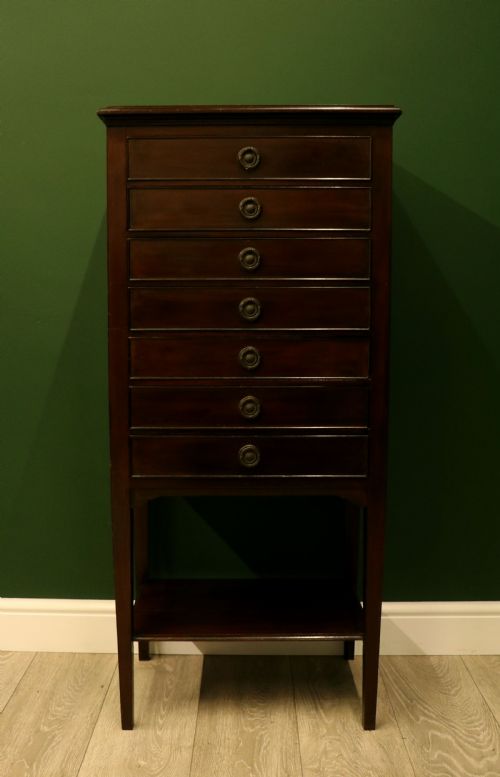


Edwardian Music Storage Cabinet
An Edwardian music storage cabinet is a compact, purpose-built piece designed to organise sheet music, offering practical storage with refined period character.
Edwardian Music Storage Cabinet
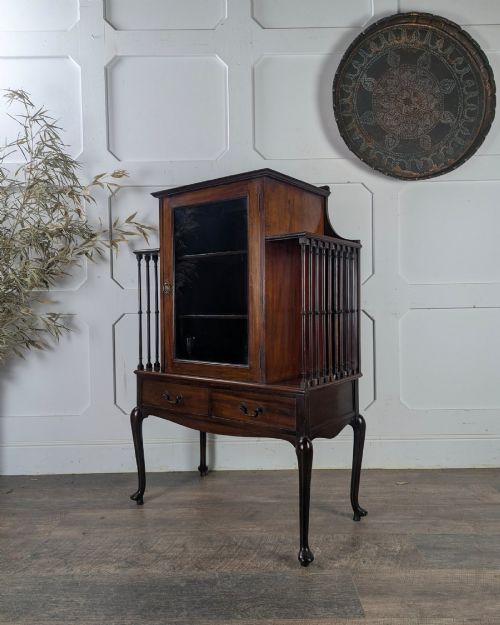
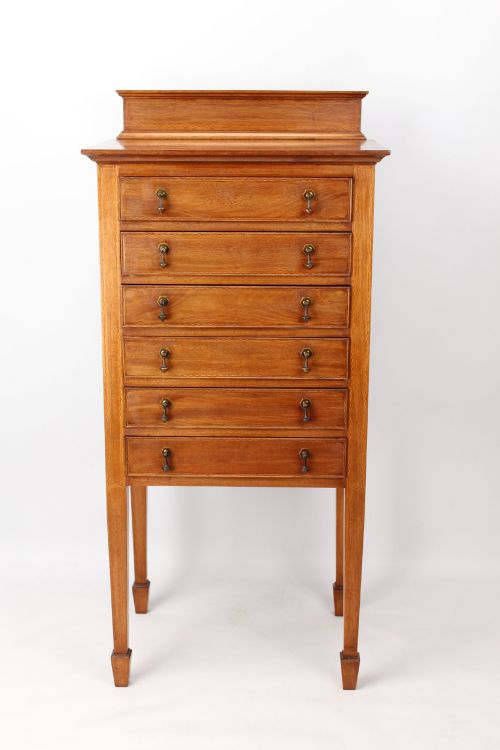
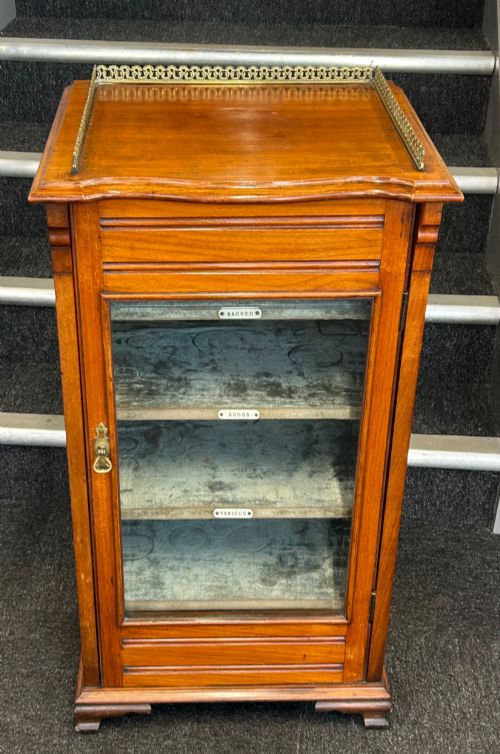
An edwardian music storage cabinet is typically encountered as an upright, freestanding piece designed specifically to house sheet music and scores. The selections available span the Edwardian period, alongside related examples from the late Victorian era and the early twentieth century.
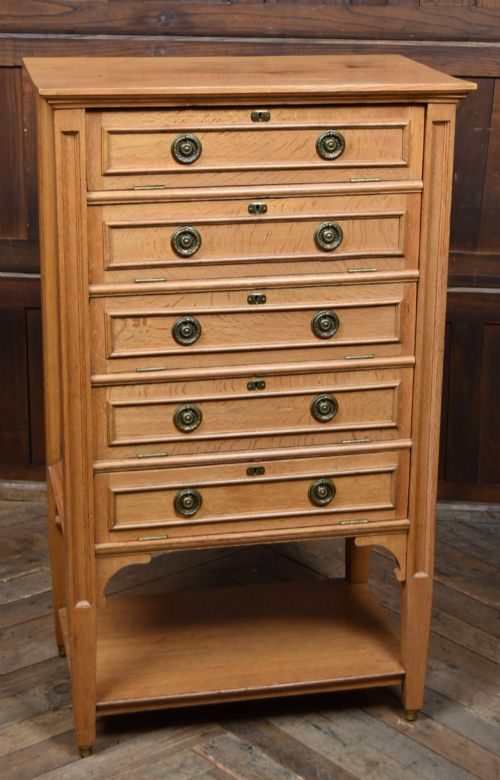
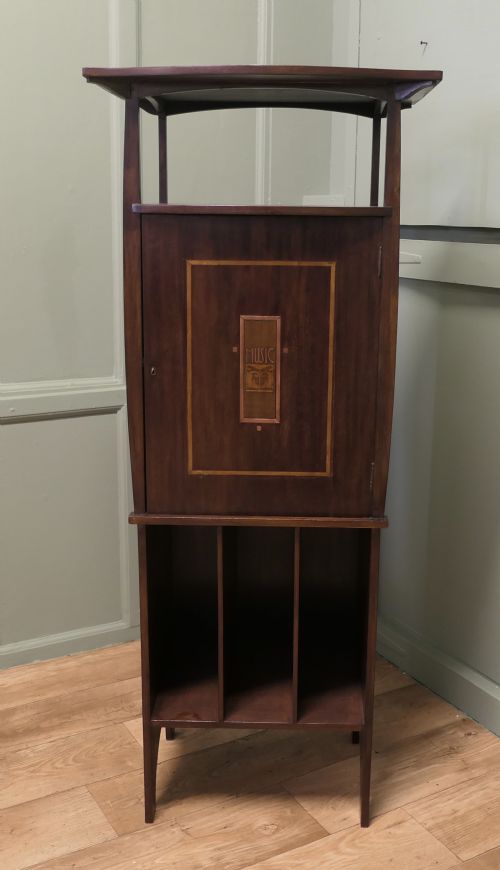
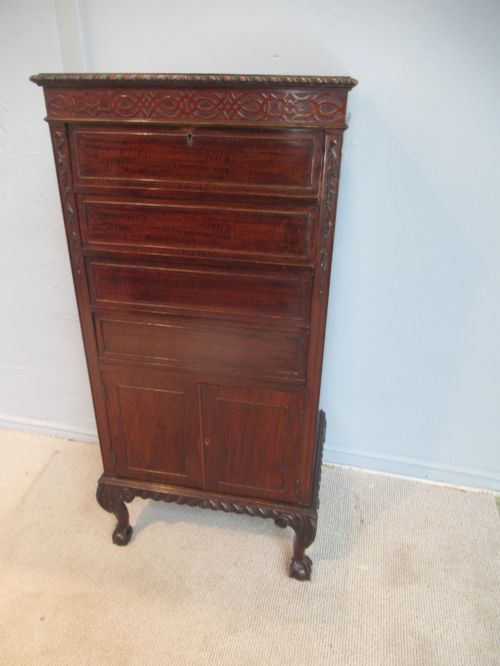
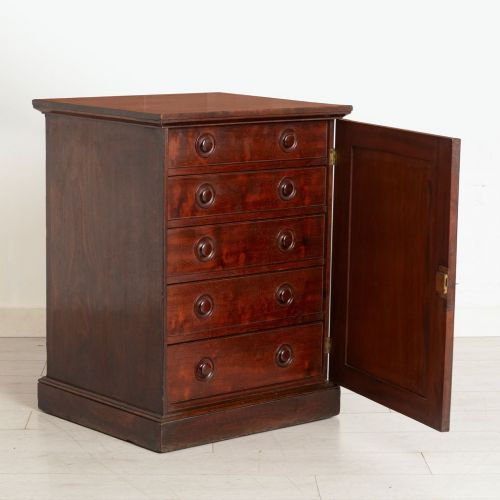
Most pieces on this page take the form of dedicated music cabinets with fall fronts, hinged doors, or multiple shallow drawers. Alongside these, buyers will find related filing furniture, piano stools, and display variants adapted for domestic parlour use.
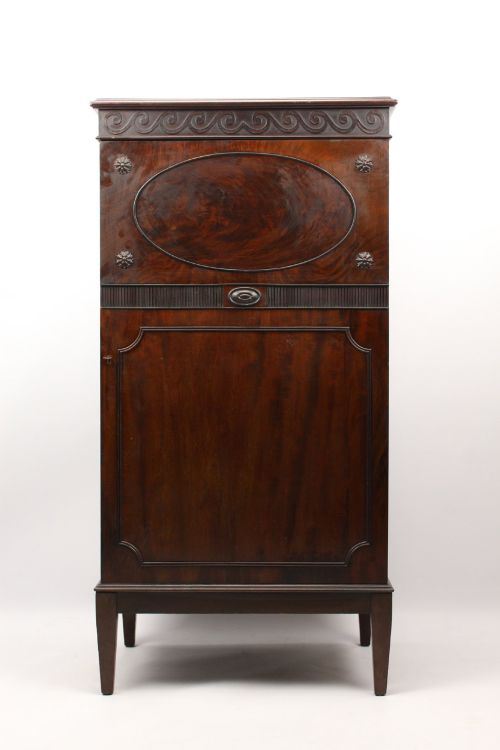
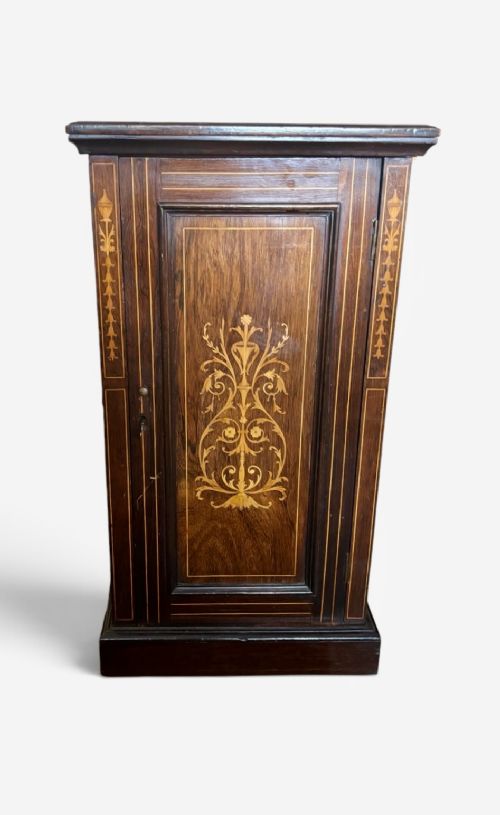
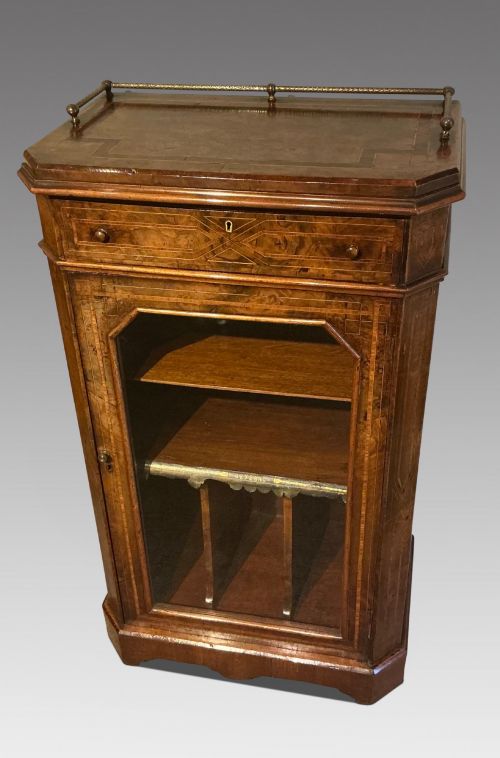
Makers and workshops of the period utilised various timbers, most commonly mahogany, walnut, and oak, often enhanced with marquetry or satinwood inlay. The resulting furniture balances functional compartmentalisation with the decorative standards of the early nineteen hundreds.
Materials and construction methods
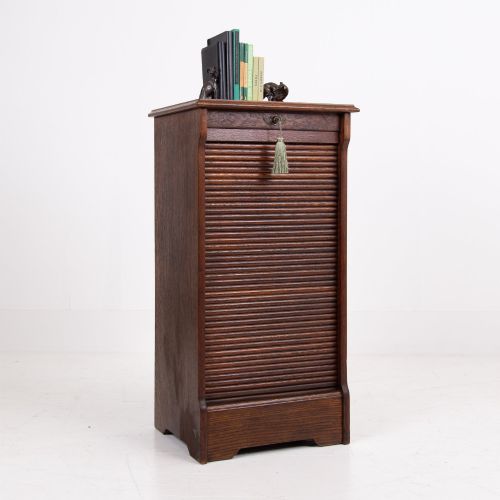
Cabinet makers of the period relied on solid hardwoods and select veneers, framing mahogany, walnut, and oak to build durable carcasses. Tambour doors, drop-front panels, and multiple internal drawers required precise joinery to ensure smooth operation of moving parts.
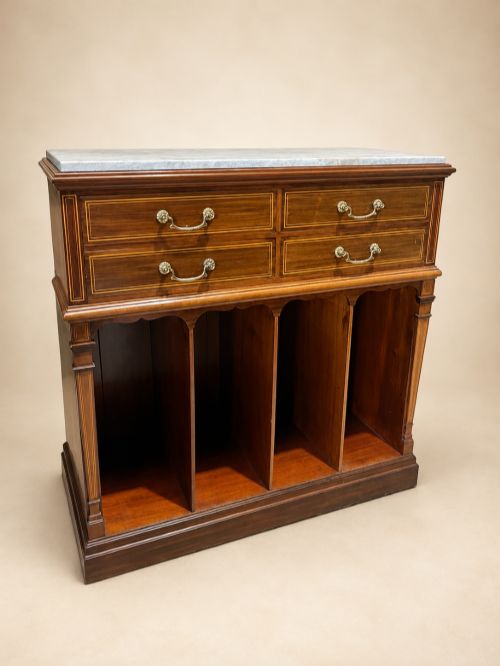
Surface decoration frequently involved contrasting stringing, satinwood inlay, and marquetry details set into the primary timber. Brass hardware, including drop handles, escutcheons, and hinges, was integrated to complement the exterior grain and tone.
Musicians once relied on these clever drop-front compartments to conceal their chaotic sheet music collections from polite afternoon visitors.
Distinctions in construction and design
Quality separates pieces through the selection of timber veneers, the crispness of inlaid marquetry, and the integration of specialised hardware such as tambour mechanisms. Finer examples display carefully matched grain patterns and substantial brass mountings rather than pressed substitutes.
Internal engineering marks the distinction between standard production and superior workshop output. Smooth-sliding drawers designed for sheet music scores, well-fitted drop fronts, and intact interior partitions reflect higher original manufacturing standards.
GM Elwood for JS Henry·Denby and Spinks·Keeble London
The Edwardian Music Storage Cabinet Glossary
- Fall front
- A hinged panel that drops forward to reveal interior shelves or storage compartments. This mechanism allows easy access to stacked sheet music.
- Tambour
- A flexible door constructed from narrow strips of wood glued to a canvas backing, sliding along a track. It provides concealed storage in compact cabinet designs.
- Marquetry
- The art of applying pieces of veneer to a structure to form decorative patterns and pictures. It is frequently seen on mahogany and walnut cabinet doors.
- Stringing
- Thin lines of contrasting wood inlay used to outline panels and drawers. This technique defines the geometric borders typical of Edwardian cabinetwork.
- Pedestal cabinet
- A tall, narrow piece of furniture standing on a base or plinth. These forms maximise vertical storage space in smaller domestic rooms.
Edwardian Music Storage Cabinet: Frequently Asked Questions
What is an edwardian music storage cabinet used for?
These cabinets were originally manufactured to keep sheet music, scores, and songbooks organised and protected from dust in domestic parlours and music rooms. The interior shelving and shallow drawers kept paper items flat and sorted.
Today, buyers utilise them to store modern documents, vinyl records, or stationery while retaining period aesthetic value in a living space.
How do I identify an edwardian music storage cabinet?
Look for upright proportions, drop-front doors, or sets of shallow internal drawers specifically scaled for paper folios. Timber choices typically lean towards mahogany, walnut, and oak.
Many examples feature delicate satinwood inlay or brass hardware characteristic of the early twentieth century and late Victorian periods.
Can I use these cabinets for modern storage?
The internal dimensions make these pieces well-suited for organising papers, crafts, or media collections. Shallow drawers and partitioned spaces adapt easily to contemporary domestic sorting needs.
Placing them in studies or hallways allows the furniture to serve a practical function without altering its antique structure.
How do I care for the wood and inlay?
Keep the timber away from direct heat sources and strong sunlight to prevent the veneers and inlaid stringing from drying out or lifting. Regular dusting with a dry cloth maintains the polished surface.
Applying a suitable wax occasionally helps nourish older hardwood finishes and preserves the natural grain.