

Antique Music Storage Cabinet
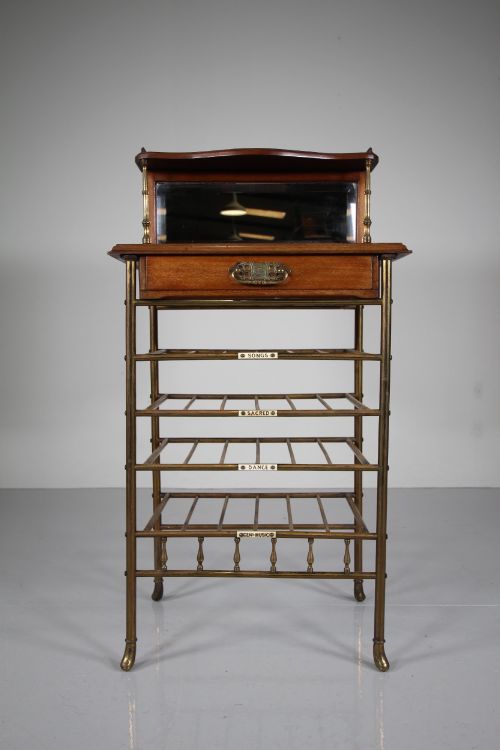
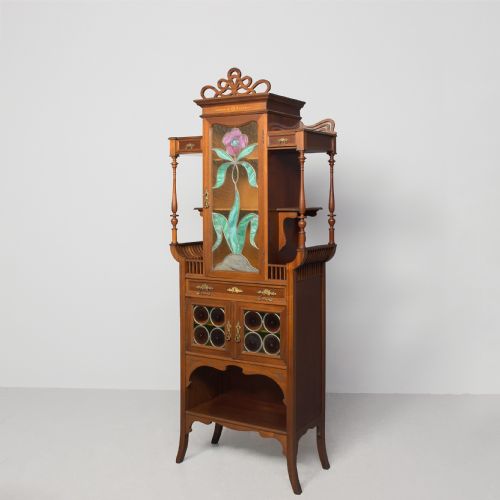
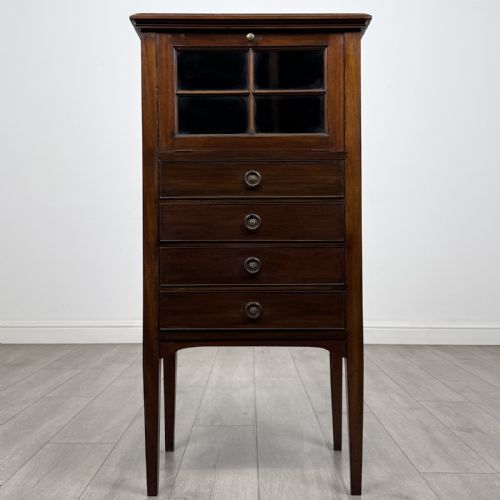
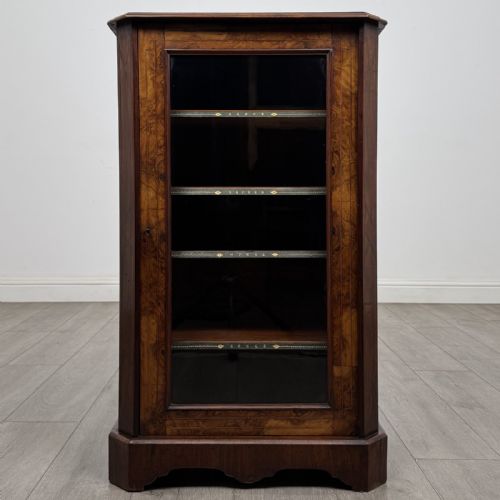
An antique music storage cabinet holds scores and sheets within compartments, offering functional period timber furniture for domestic parlours.
Antique Music Storage Cabinet
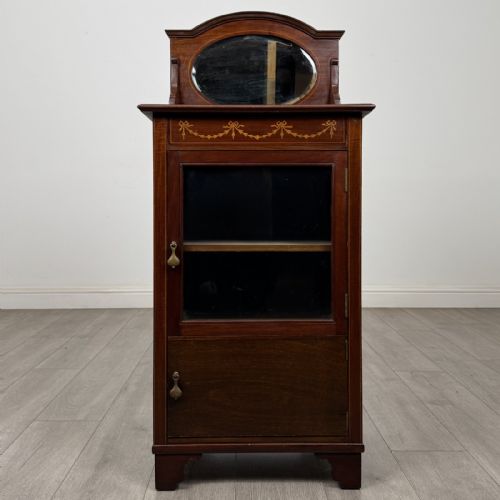
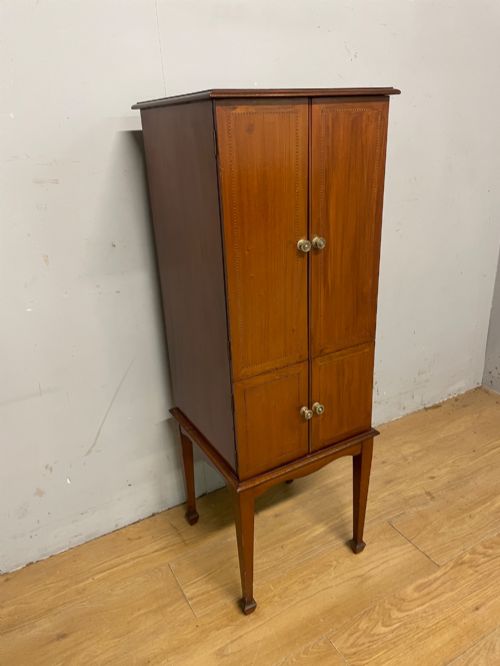
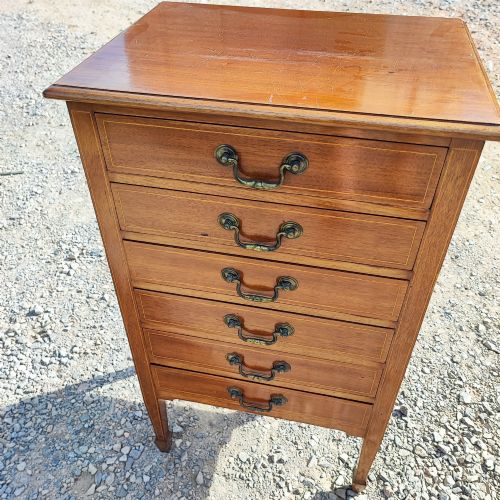
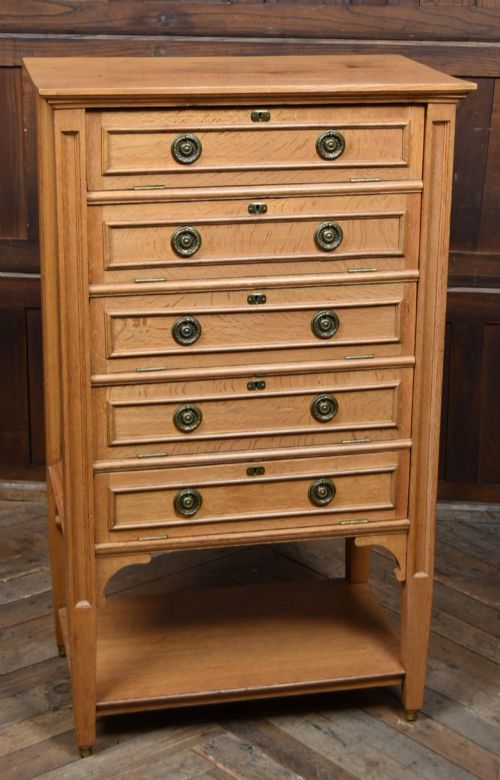
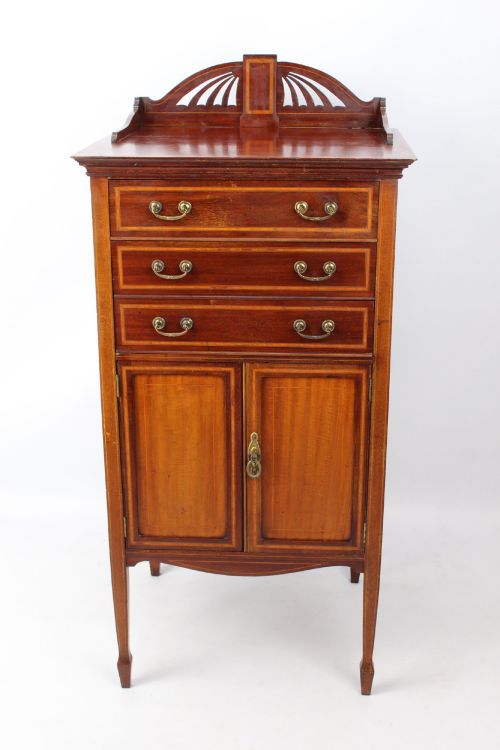
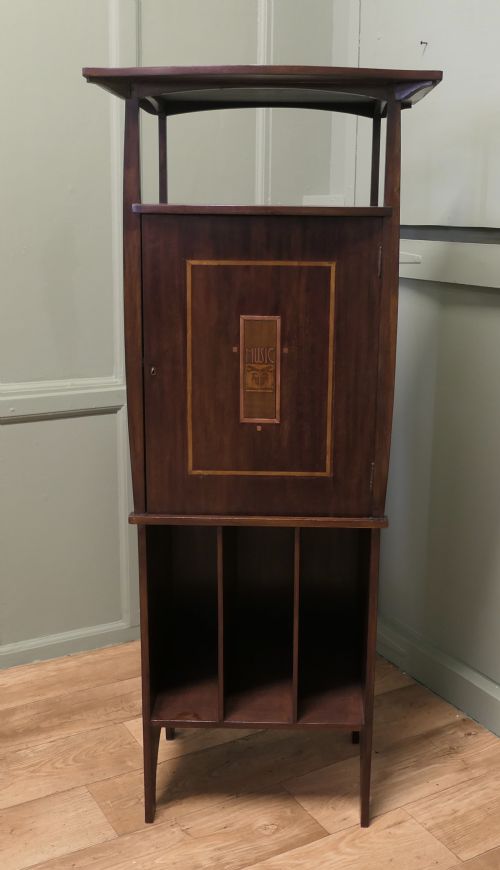
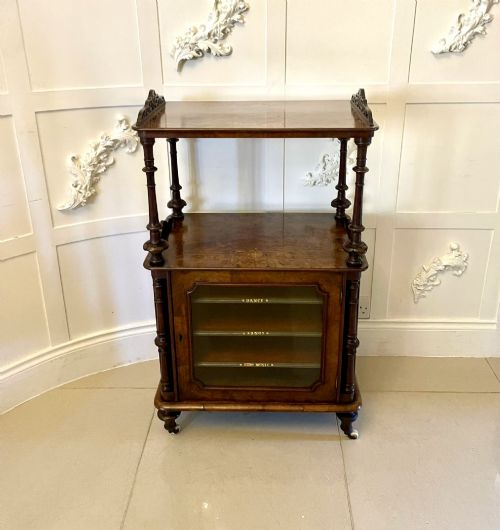
An antique music storage cabinet appears primarily in Edwardian and Victorian forms designed to house sheet music and scores neatly near a piano or parlour seating. These pieces emerge in styles ranging from plain utility to elaborate inlaid Edwardian and Victorian designs.
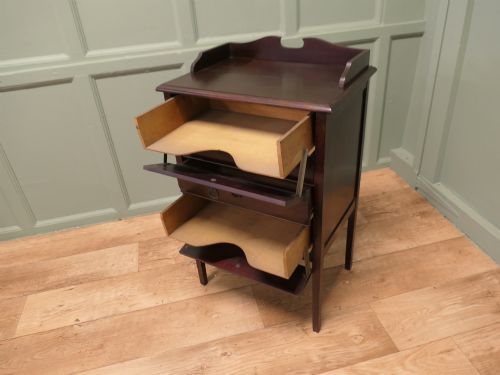
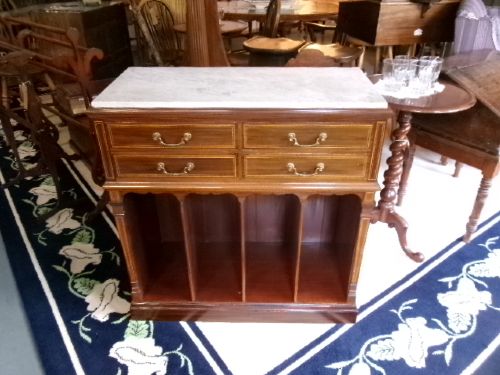
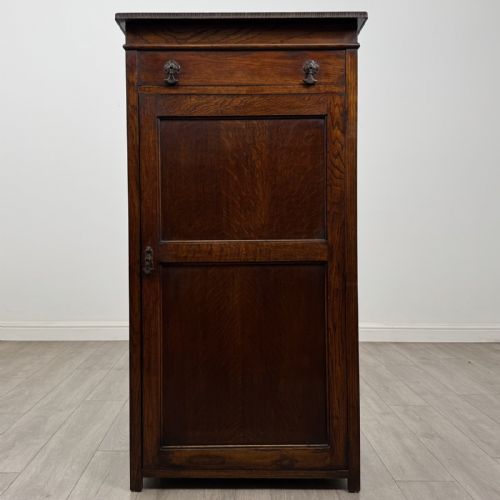
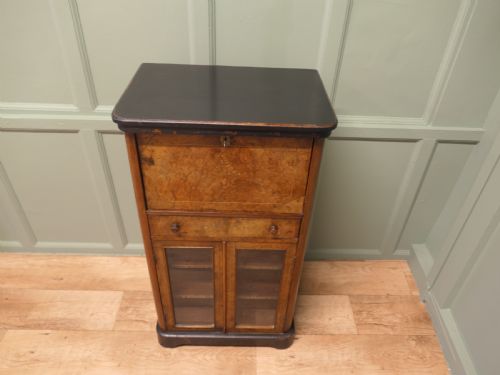
Buyers encounter variations such as narrow side cupboards, fall-front drop drawers, and multi-drawer filing formats built from solid and veneered timbers. Many examples incorporate glass doors or open shelving alongside internal sliding shelves tailored for paper storage.
Materials and construction
Cabinet makers utilised dense hardwoods like mahogany, walnut, burr walnut, and oak as the structural foundation for these pieces. Workshops often applied contrasting stringing, marquetry, and satinwood or brass details to decorate the exterior surfaces.
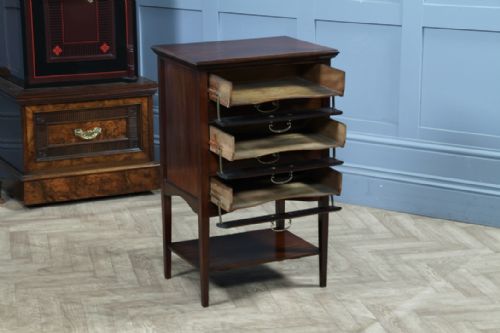
Internal mechanics frequently involved tambour doors, drop-front mechanisms, and graduated drawers designed to keep fragile paper sheets flat. Glass panels and brass hardware completed the construction of these specialised storage units.
Antique Music Storage Cabinet Retail Price Guide 2026
Typical asking prices for music storage cabinet among the pieces listed under this phrase on Sellingantiques today, from the lower quarter to the upper quarter. They describe what is for sale here now, not the wider market.
Periods represented on this page span the Victorian era, the Edwardian period, and the early twentieth century up to the nineteen-thirties.
Quality variations
The standard of a piece rests upon the selection of timber veneers, the crispness of marquetry inlay, and the finesse of the brass handles or hinges. Elaborate French Art Nouveau, Arts and Crafts, or Aesthetic Movement designs by recorded makers generally command greater attention than standard production items.
Internal mechanics such as smooth-running tambour doors and well-fitted internal drawers indicate superior cabinet work. The integrity of the timber joints and the preservation of original polished surfaces determine the overall merit of each surviving example.
GM Elwood·JS Henry·Denby and Spinks·Henry Ogden and Son·Keeble London
The Antique Music Storage Cabinet Glossary
- Tambour
- A flexible door constructed from narrow strips of wood glued to canvas, allowing it to slide smoothly around a curved track. This mechanism saves exterior space on narrow cabinets.
- Fall-front
- A hinged front panel that drops downward to open, providing immediate access to internal compartments or document shelves. It is commonly found on storage cabinets designed for sheet music.
- Marquetry
- Decorative patterns formed by fitting together thin veneers of various coloured woods and other materials. This technique decorates the exterior doors and panels of fine period cabinets.
- Stringing
- Inlaid lines of contrasting timber set flush into the surface of a cabinet to outline drawers or panels. It defines Edwardian and late Victorian decorative work.
Antique Music Storage Cabinet: Frequently Asked Questions
How were music cabinets used?
Musicians used these cabinets to store paper sheet music sorted by composer or genre, keeping domestic music rooms tidy. The drop-front or drawer designs prevented delicate scores from curling or tearing.
Some examples also incorporated display sections for ornaments or books, serving a dual purpose in the Victorian or Edwardian interior.
How do I identify an Edwardian music cabinet?
Edwardian examples often display lighter timbers such as satinwood inlay, contrasting stringing, and tapered legs. They frequently adopt Sheraton Revival motifs with refined proportions.
Cabinet makers during this period favoured bright mahogany or walnut surfaces finished with delicate brass handles and subtle marquetry.
How do I care for my cabinet?
Keep the timber away from direct heat sources and sudden humidity changes to protect the veneers and internal mechanisms. Regular dusting with a dry cloth maintains the polished finish.
Avoid overloading the internal drawers to ensure the sliding mechanisms and drop-front hinges continue to operate smoothly.