
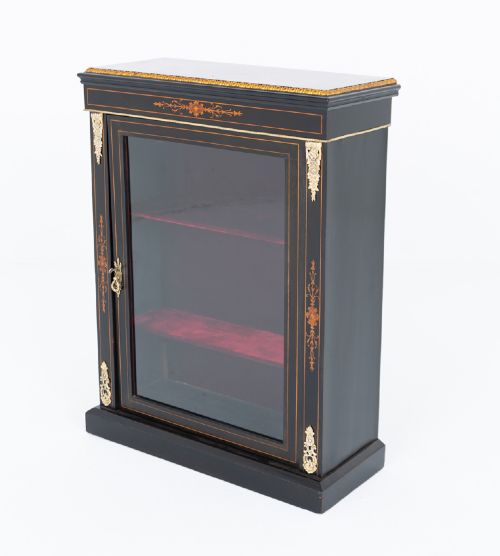


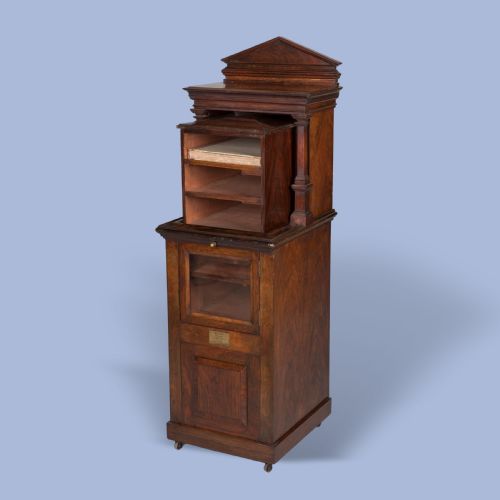
Victorian Glazed Music Cabinet
A victorian glazed music cabinet brings handsome domestic organisation into a room, storing sheet music behind glass doors with period charm.
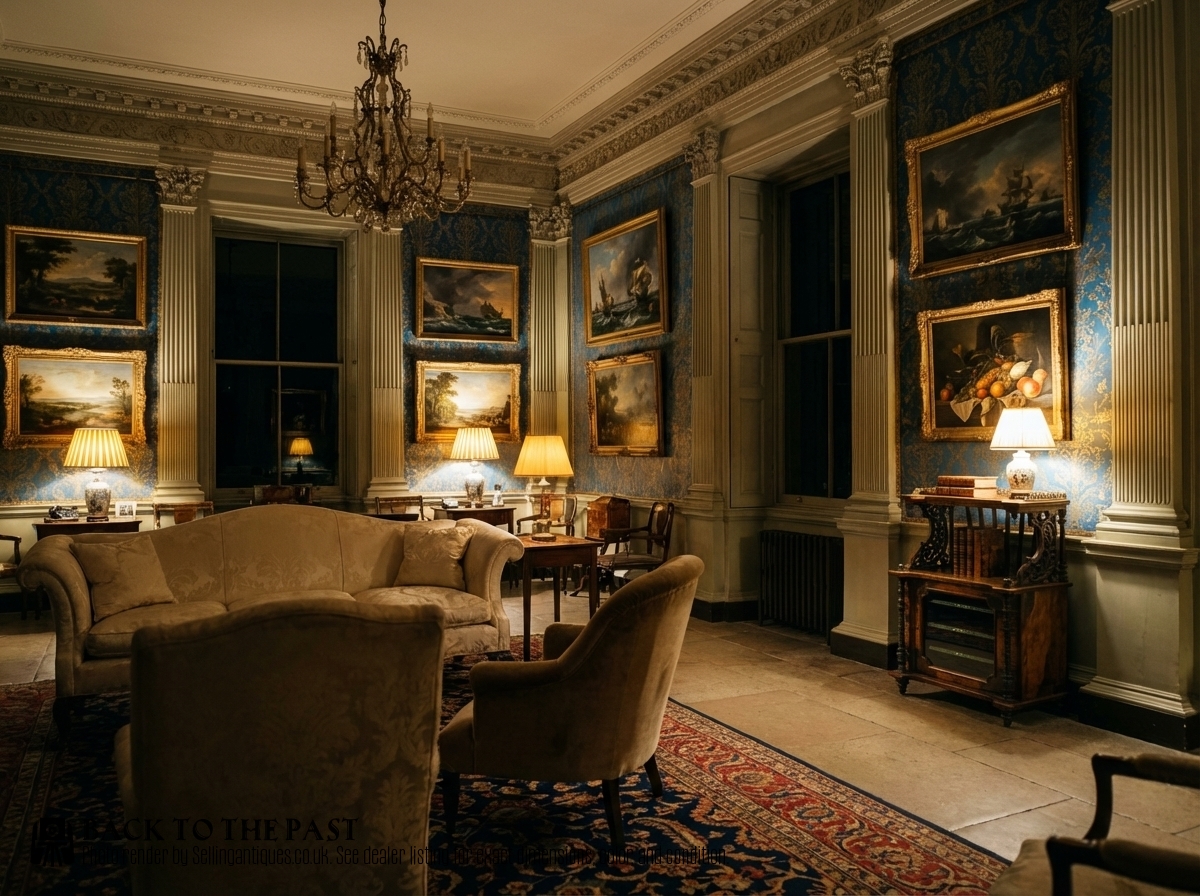
Victorian Glazed Music Cabinet
A victorian glazed music cabinet is a specialised domestic storage piece designed during the nineteenth century to hold sheet music, often featuring glazed doors that protect the contents while displaying them.
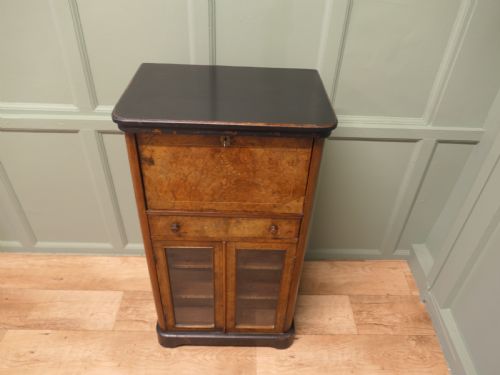
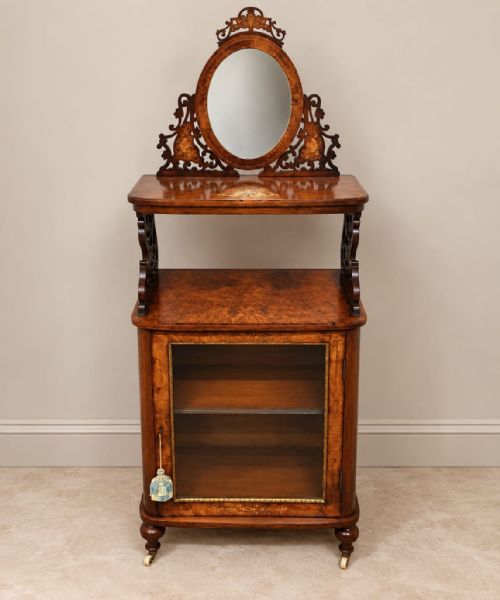
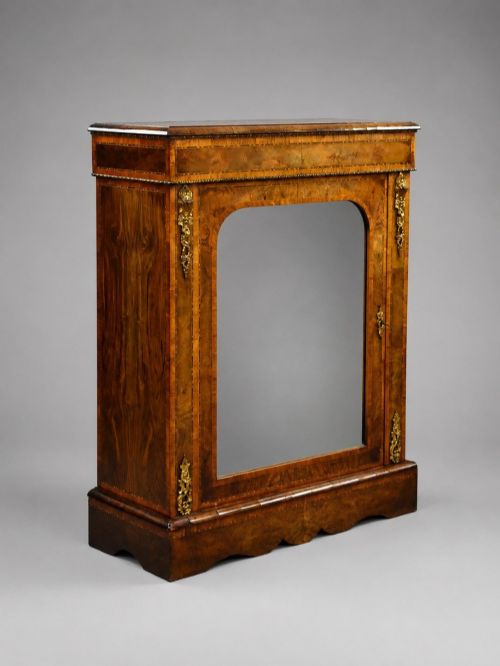
The pieces listed on this page span the Victorian period, including forms identified as music cabinets, display cabinets, pier cabinets, and side cabinets originating from the mid to late nineteenth century.
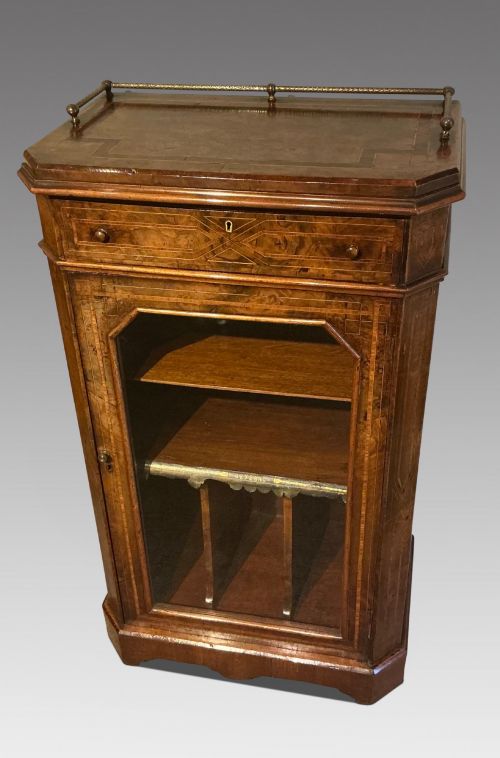
Buyers will encounter various formats constructed to sit against a wall or in a corner, frequently incorporating internal shelving or specialised filing compartments for paper.
How they were made
Cabinet makers utilised dense timbers such as burr walnut, walnut, mahogany, rosewood, ebonised wood, and hardwood, often selecting figured grains for visual impact.
Surfaces frequently display boxwood marquetry inlay, ormolu mounts, and brass details, combined with glass panels and occasionally mirrors to form the door fronts and display sections.
Materials recorded across the archive include burr walnut, mahogany, rosewood, brass, ormolu, and boxwood marquetry.
What varies in quality
Quality rests in the selection of timbers and the execution of details like boxwood marquetry inlay, burr walnut figuring, and metal mounts.
Construction standards show in the neatness of internal filing divisions, the fit of the glazed doors, and the preservation of original brass and glass components.
The Victorian Glazed Music Cabinet Glossary
- Burr walnut
- A timber harvested from the wart-like growths on walnut trees, prized for its swirling, highly figured grain patterns. It forms the primary decorative surface on many high-status cabinets.
- Pier cabinet
- A slender piece of furniture designed to fit against the narrow section of wall between windows. These often feature glazed doors and delicate marquetry.
- Marquetry inlay
- An elaborate technique of fitting small pieces of contrasting wood veneers into a prepared ground. It creates intricate floral or geometric patterns across the cabinet door.
- Ormolu
- Gilded bronze mounts applied to furniture for decorative accent. It provides a bright metallic contrast against dark woods like walnut.
- Ebonised
- Wood treated with a dark stain or finish to imitate ebony. This dark surface was popular during the Victorian Aesthetic Movement.
Victorian Glazed Music Cabinet: Frequently Asked Questions
What is a victorian glazed music cabinet?
A victorian glazed music cabinet is a nineteenth-century furniture piece built specifically to store sheet music. The glass-fronted door allowed musicians to view their collection while keeping paper clean and protected from dust.
These cabinets often include internal shelves or sliding drawers tailored to the dimensions of bound music folios and loose sheets. Today, collectors value them for their compact footprint and refined woodwork.
How were these cabinets used originally?
In nineteenth-century parlours and drawing rooms, these cabinets sat near the piano to hold the household's sheet music collection. Family members and guests would browse the scores before playing.
The glass doors served a practical purpose in keeping moisture and soot away from delicate paper scores while displaying the bindings.
Can I use one for modern storage?
These cabinets adapt readily to contemporary living spaces for storing books, vinyl records, or displaying collections. The internal proportions suit small items that require neat organisation behind glass.
Placing them in living rooms or studies maintains their traditional domestic function while protecting stored items from dust.
How do I identify the wood types?
Victorian makers relied heavily on walnut, particularly burr walnut with its distinctive swirling grain patterns. Mahogany and rosewood also appear frequently, alongside ebonized finishes that mimic ebony.
Close inspection reveals natural grain variations and characteristic tones, from the warm brown of walnut to the deep reddish hues of mahogany.