
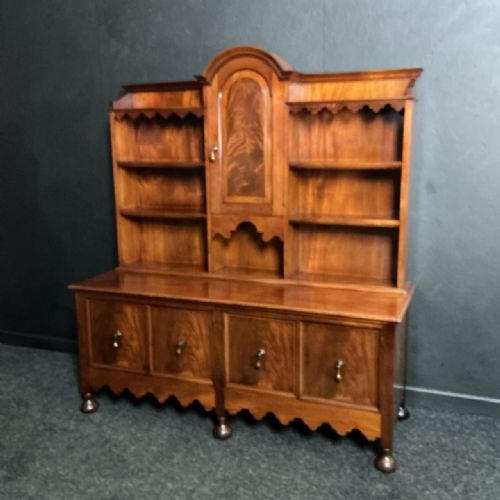
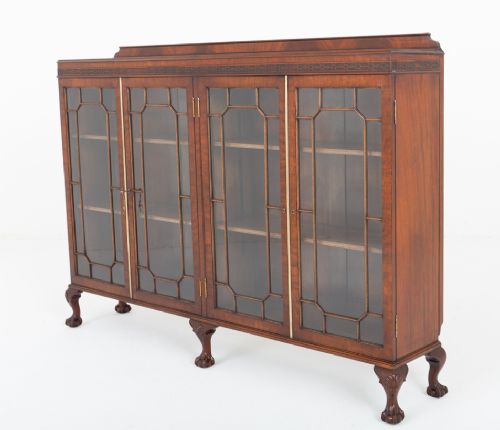
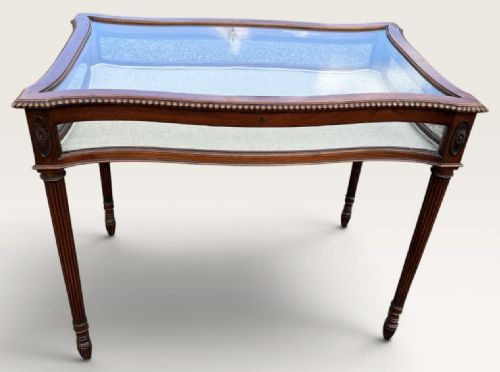
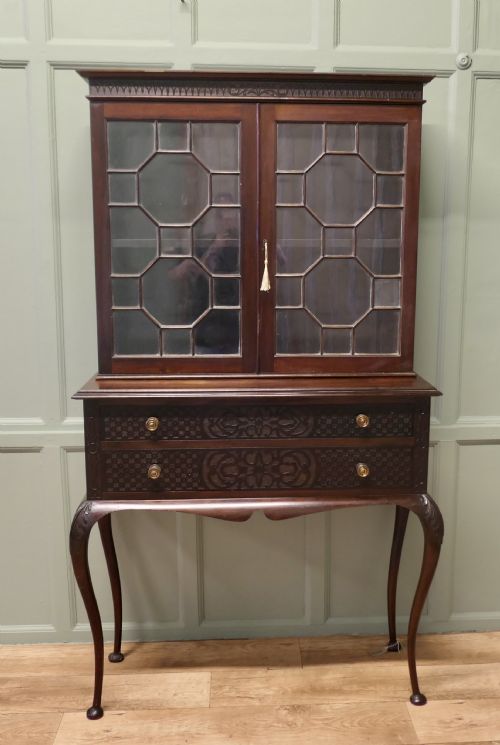
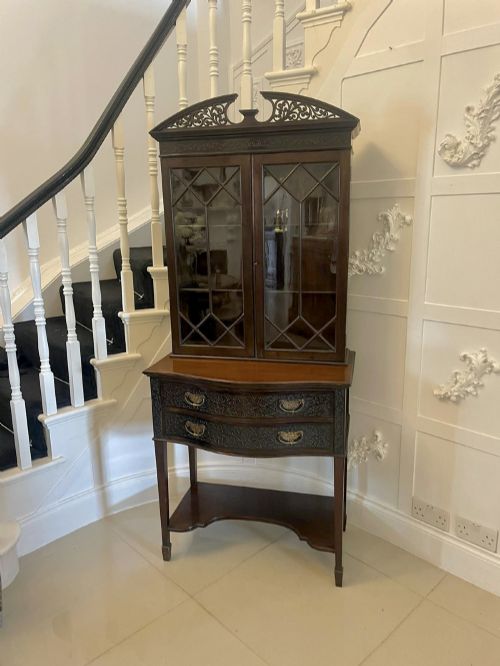
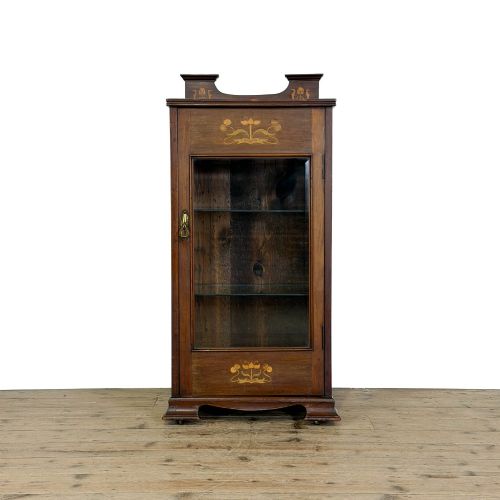
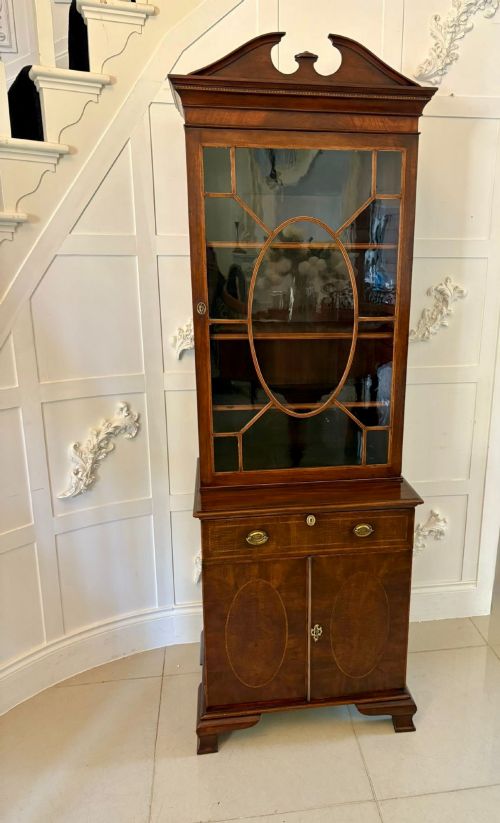
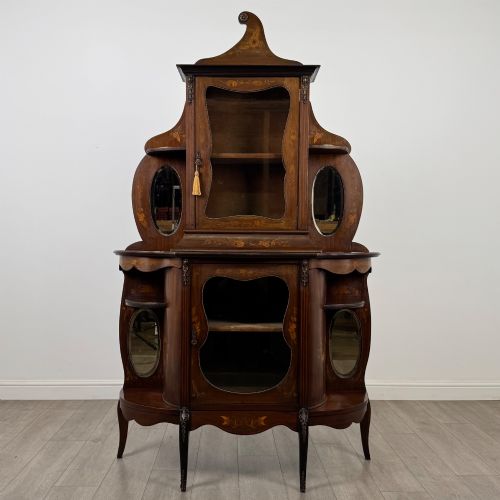
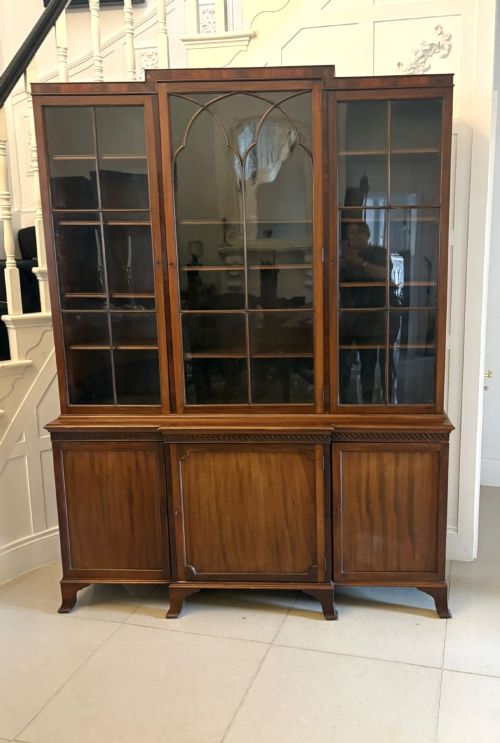
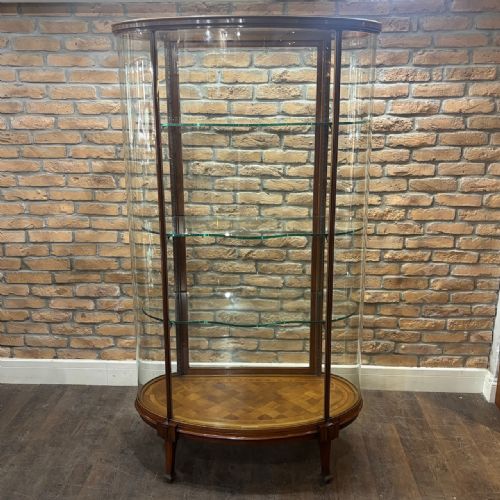
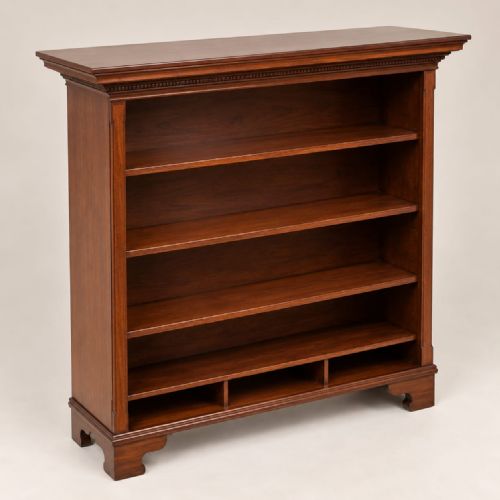
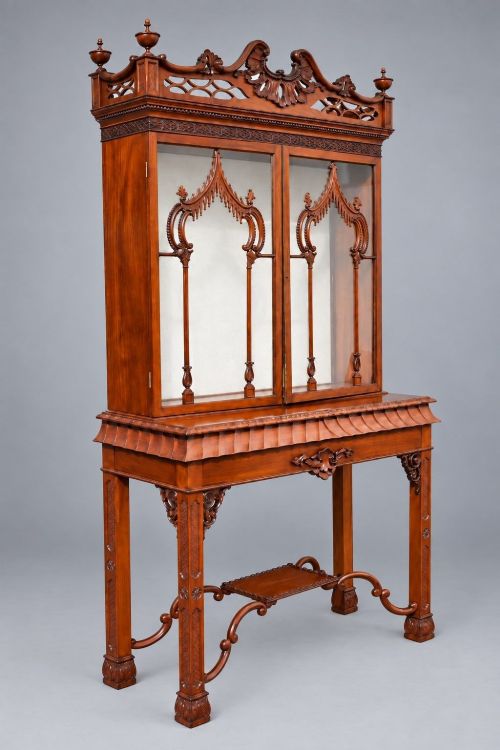


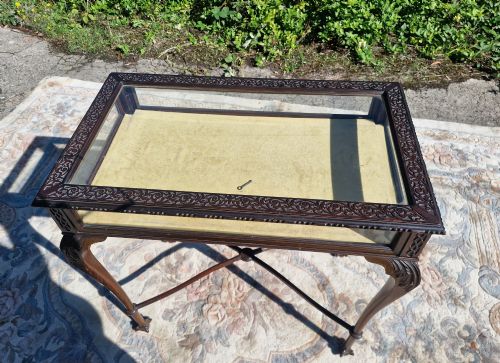
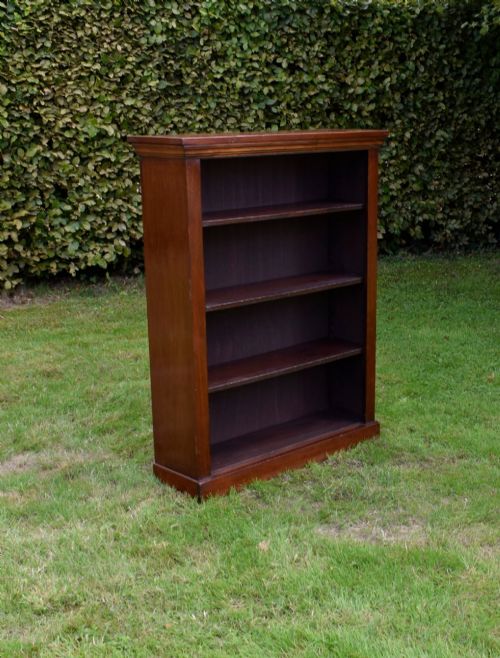
Edwardian Mahogany Display Cabinet
An edwardian mahogany display cabinet brings refined display space to a room, combining rich timber with delicate glazed compartments.
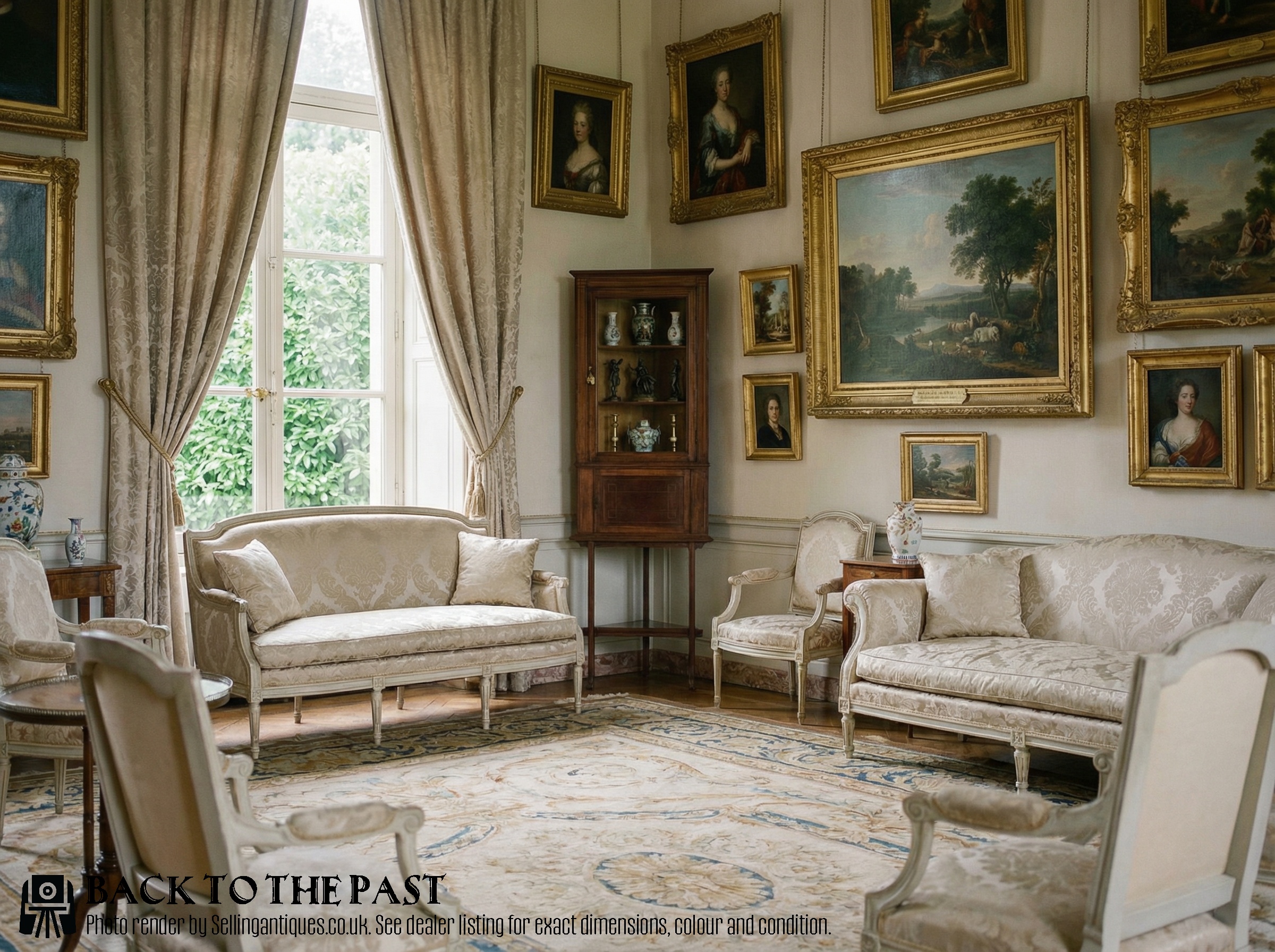
Edwardian Mahogany Display Cabinets
Most examples rely on mahogany timber, often enhanced with satinwood inlay, glass panels, and brass hardware. Buyers frequently encounter standard glazed display cabinets alongside bow front, breakfront, and shaped variations.
Construction and Materials
Cabinet makers utilised solid mahogany and flamed mahogany veneers, applying satinwood inlay and cross banding for decorative contrast. Internal elements incorporated adjustable glass shelves, mirrored backs, and fabric linings.
Structural integrity depended on glazed doors, lead details, and brass fittings. Workshops also produced specialised forms such as corner display cabinets and gun cabinets using these standard materials.
Retail Price Guide 2026
Typical UK retail prices for edwardian mahogany display cabinet, calculated from the Sellingantiques database of over a million retail prices indexed since 2003. This retail price guide relies exclusively on Sellingantiques data; no external sources or auction records are used, so the figures do not describe the wider market.
Some Edwardian cabinets double as gun storage, proving that even polite drawing rooms occasionally needed a locked partition for sporting arms.
Assessing Quality
Differences in quality rest on the selection of timber veneers, such as flamed mahogany, and the precision of satinwood inlay work. Superior examples display intricate shaped silhouettes, breakfront forms, and hand-painted panels.
Interior detailing also separates standard production from finer pieces, evident in mirrored pediments, bevelled glass, and tailored fabric linings. The integration of maker signatures, such as work by Waring & Gillow or T. Inglesant & Sons, elevates an individual piece.
T. Inglesant & Sons Leicester·Waring & Gillow
The Edwardian Mahogany Display Cabinet Glossary
- Bow front
- A convex curved cabinet front that projects outward. This shape provides a softer silhouette than flat-fronted alternatives.
- Breakfront
- A cabinet design where the central section projects forward from the flanking sides. It creates architectural depth in larger display furniture.
- Satinwood inlay
- A contrasting light-coloured wood inserted into the mahogany surface. Craftsmen used this technique to form delicate geometric or floral patterns.
- Vitrine
- A glass-sided cabinet specifically made for exhibiting porcelain and curiosities. The term is frequently used interchangeably with display cabinet.
- Pediment
- The decorative crown at the top of a cabinet. Some Edwardian examples incorporate mirrors or carved crests into this upper section.
Frequently Asked Questions
What is an edwardian mahogany display cabinet?
An edwardian mahogany display cabinet is a glazed piece of furniture built around 1900 to exhibit porcelain, books, and decorative objects.
These cabinets typically feature mahogany timber, glass panels, and satinwood inlay, produced in formats ranging from corner cupboards to breakfront bookcases.
How do I style a corner display cabinet?
A corner display cabinet fits neatly into unused room junctions while offering visible storage behind glazed doors.
Internal glass shelves and mirrored backs reflect light, making these pieces practical for smaller rooms or restricted spaces.
What styles influence edwardian cabinets?
These cabinets reflect Edwardian taste alongside Sheraton revival influences and Arts and Crafts simplicity.
Designers balanced traditional mahogany construction with lighter decorative inlays and occasional hand-painted panels.
How do I care for mahogany furniture?
Mahogany requires stable indoor humidity and protection from direct sunlight to prevent timber splitting and fading.
Regular dusting with a dry cloth keeps the polished surface and brass fittings in sound condition.