

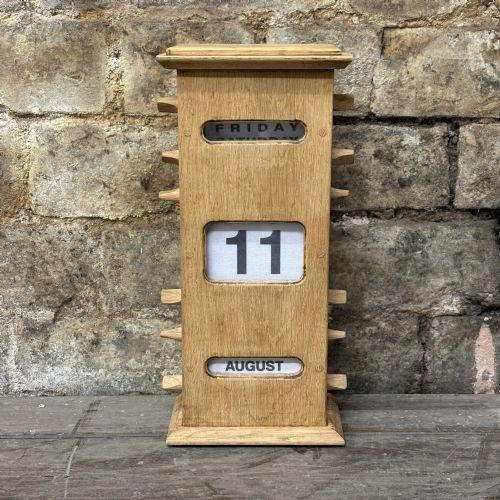


Edwardian Desk Calendar
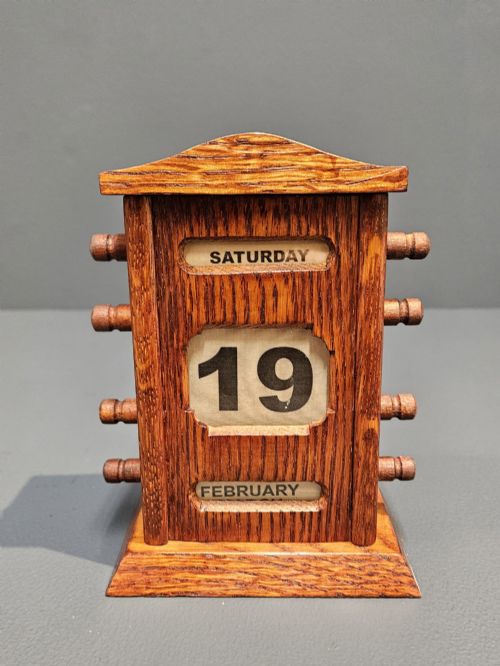
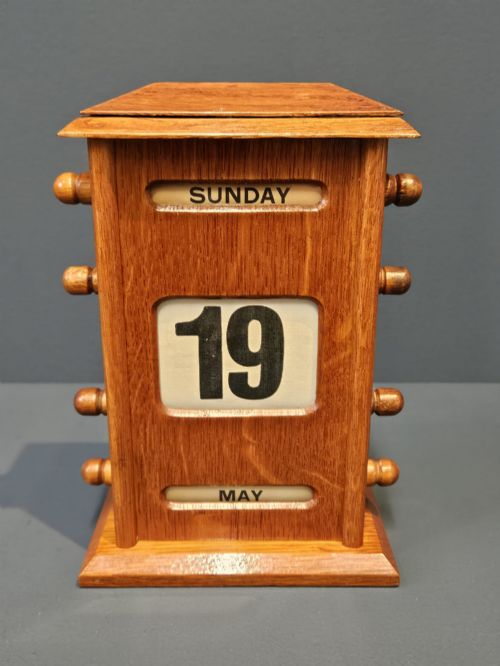
An edwardian desk calendar keeps time on the writing surface with timber frames and sliding cards.
Edwardian Desk Calendar
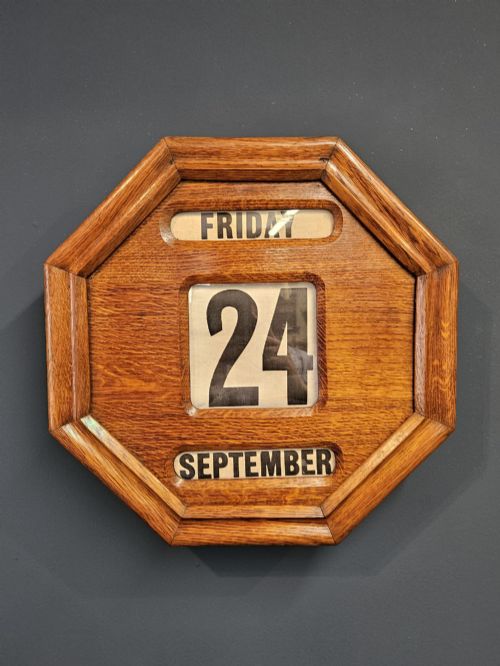
An edwardian desk calendar organises the working day using paper cards, glass panels, or brass slides mounted within timber and metal housings. These accessories sit upon writing desks, mantelpieces, and stationery cabinets.
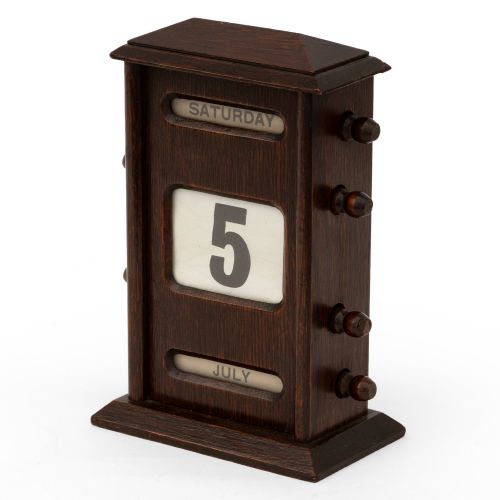
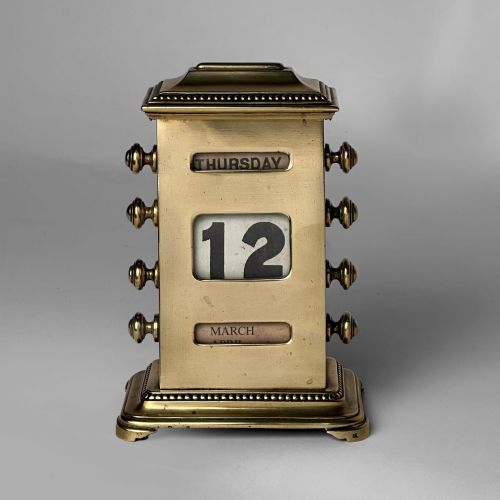
The oak version dominates the selection, appearing in plain, golden, figured, and polished finishes across numerous formats. Walnut and mahogany also occur frequently, alongside brass, gunmetal, slate, and silver.
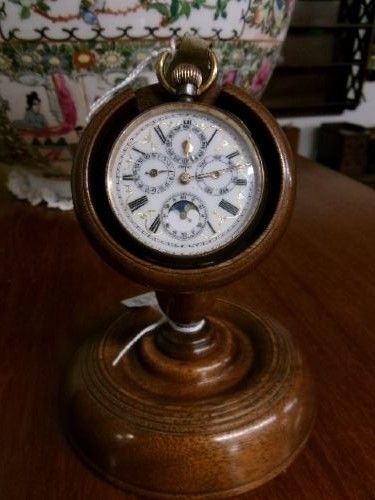
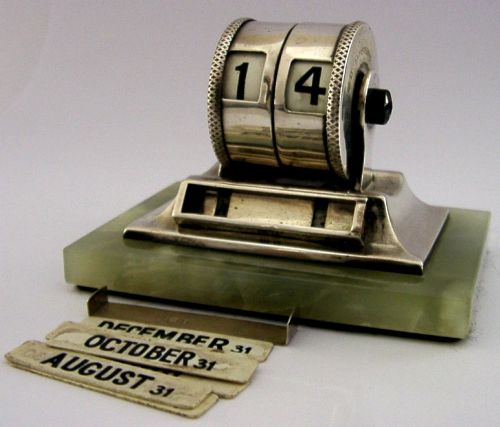
Makers adapted these date mechanisms to diverse objects, incorporating them into pocket watches, mantel clocks, and wall-mounted panels. The perpetual function relies on adjustable windows or rollers showing days, months, and dates.
How they were made
Craftsmen shaped solid and figured timbers into desktop frames, joining corners with mitres and securing brass hinges or clips. Wood surfaces received polishing to highlight the natural grain of oak, mahogany, and walnut.
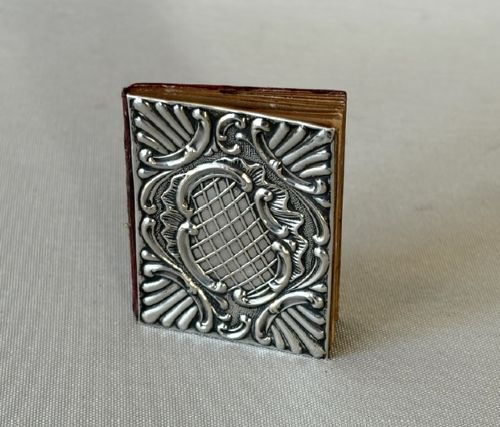
Metal components involved cast brass, gunmetal, and sterling silver, often engraved with lettering or decorated with Egyptian motifs. Tile elements incorporate ceramic work by specific potteries, while paper cards display printed numerals.
Edwardian Desk Calendar Retail Price Guide 2026
Typical asking prices for edwardian desk calendar among the pieces listed under this phrase on Sellingantiques today, from the lower quarter to the upper quarter. They describe what is for sale here now, not the wider market.
Some date indicators included moonface complications originally developed for pocket watches.
What varies in quality
The grade of timber and the crispness of casting define the standard of the piece, separating mass production from specialist work. Solid woods with figured grains and heavy cast brass frames demonstrate superior workmanship.
Integration of the calendar mechanism into complex items such as clock movements or pocket watches indicates higher manufacture. Complete sets with legible original font layouts and undamaged ceramic tiles retain greater integrity.
William Tonks of Birmingham·Minton Hollins·Asprey London
The Edwardian Desk Calendar Glossary
- Perpetual calendar
- A mechanism designed to show the correct date indefinitely through adjustable cards, dials, or rollers. Users manually shift the indicators each month.
- Stationery cabinet
- A wooden desk accessory housing paper, envelopes, and occasionally an integrated calendar or inkwell. These pieces match the timber and style of contemporaneous desk furnishings.
- Boulle
- An intricate marquetry technique using brass and tortoiseshell inlaid into a dark wood ground. Asprey utilised this decorative method on select luxury pieces.
- Gunmetal
- A type of bronze alloy used for dark, durable pocket watch cases and calendar housings. It provides a robust alternative to bright brass or silver.
Edwardian Desk Calendar: Frequently Asked Questions
How do perpetual calendars work?
These devices use rotating rollers or sliding cards to display the days, dates, and months of the year. Users manually adjust the windows daily or monthly to maintain the correct sequence.
Most models require a simple shift of a brass knob or paper strip rather than complex mechanical gear adjustments.
What woods were used most?
Oak is the primary timber found across these pieces, appearing in golden, figured, and polished variants. Mahogany and walnut also form the structural bodies of many examples.
Cabinetmakers selected these hardwoods for durability and aesthetic harmony with period office furniture.
Can these calendars be wall mounted?
Certain formats feature hanging brackets or apertures designed specifically for vertical display on walls. These larger variants often incorporate bold fonts for improved legibility across a room.
Desk variants rely on hinged easels or flat bases to remain stable on a writing surface.
How do I identify an Edwardian piece?
Edwardian items date from the reign of King Edward VII, spanning the first decade of the twentieth century. Stylistic markers include polished oak frames and classic lettering.
Matching pieces often accompany stationery cabinets or inkstands from the same workshop.