


Antique Date Stand
An antique date stand marks time on a desk or hall table, offering a tangible link to a specific year or day through brass, wood, or paper.
Antique Date Stand
An antique date stand encompasses desk accessories, perpetual calendars, and inkstands that bear explicit dates or provision for changing the day, month, and year. These pieces serve functional roles in tracking time while doubling as decorative desk furniture.
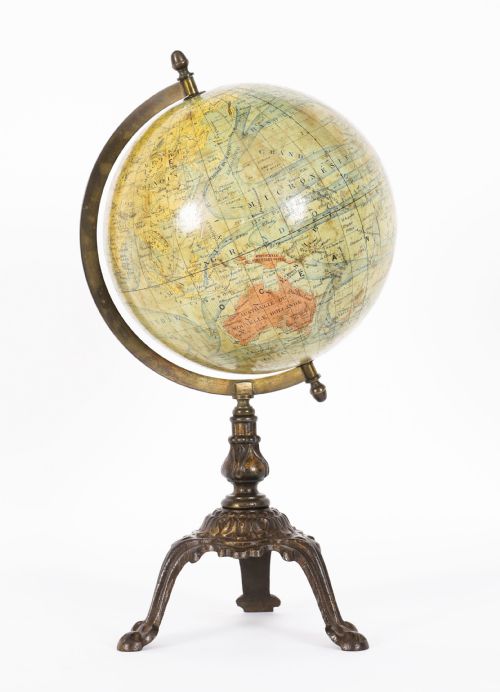
The items found under an antique date stand search stretch from 17th Century carved child highchairs on stands to Edwardian and 1920s brass perpetual calendars, alongside Victorian desk items and globes with marked production years. Brass, silver plate, and oak form the backbone of these functional domestic objects.
Buyers are most likely to encounter desk accessories like perpetual calendars and inkstands alongside small furniture forms fitted with a stand, often featuring stamps, inscriptions, or engraved dates from the Victorian and Edwardian eras.
How they were made
Makers utilised brass, cast iron, and silver plate for metal desk calendars and match holders, often combining them with mahogany, oak, coromandel, and satinwood for trays and backing mounts. Casting, carving, and silver mounting define the physical construction of these desk pieces.
Woodworking techniques appear in solid oak bookcases, joined highchairs, and limewood carvings, where skilled hands shaped panels and figures, occasionally adding initials and precise years. Glass cut-work and paper integration complete the material repertoire seen across the inventory.
Listings feature desk accessories, globes, and stands spanning the 17th Century to the 1960s, constructed from brass, oak, glass, and paper.
What varies in quality
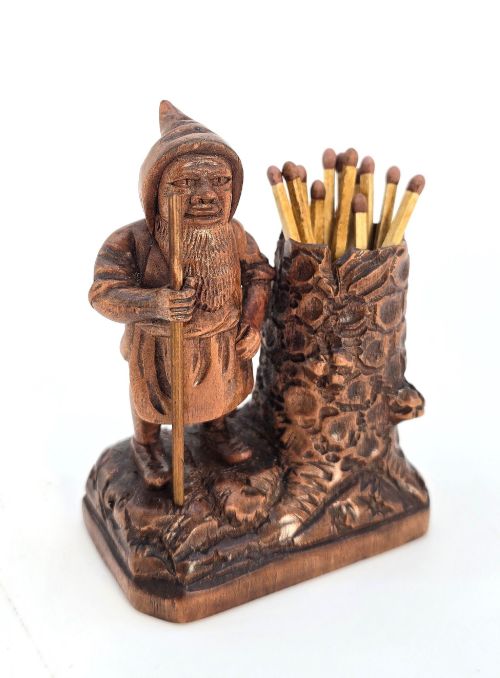
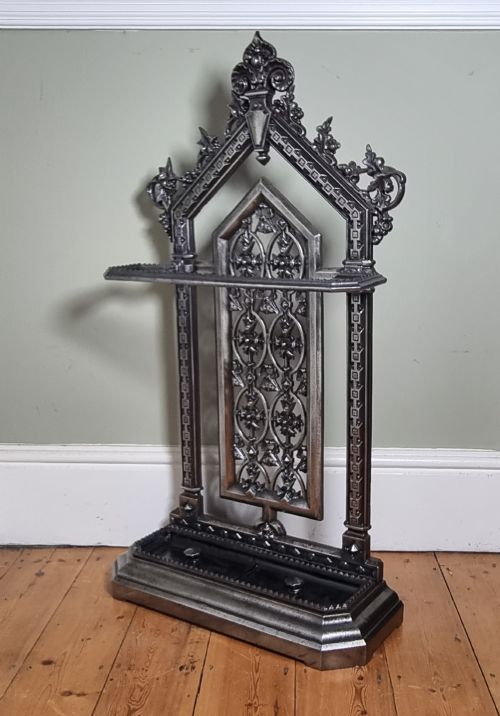
The calibre of an antique date stand depends on the crispness of its cast or carved decoration, such as the depth of detail on an Aesthetic Movement cast iron stand or a Black Forest limewood figure. Finer examples maintain crisp lettering on perpetual calendar drums and clean mounts on silver and brass.
Material selection separates standard pieces from exceptional ones, with exotic woods like coromandel and satinwood, or heavy cast brass with detailed Egyptian decoration, showing superior workmanship compared to simpler utilitarian items.
Lebegue and Cie·Rupert Favell·Elkington
The Antique Date Stand Glossary
- Perpetual calendar
- A desk accessory designed to show the day and month through interchangeable cards, dials, or metal slides without needing replacement each year. These often feature brass or silver-plated frames.
- Aesthetic Movement
- A late 19th-century design style focusing on visual beauty over narrative meaning, frequently seen on cast iron stands and metalwork. It drew inspiration from Japanese art and natural forms.
- Limewood
- A pale, fine-grained wood favoured by carvers for intricate three-dimensional figures, such as match holders and gnomes. Its softness allows for sharp undercut details.
- Coromandel
- A dense, dark East Asian timber with contrasting light streaks, used for luxury Victorian desk trays and boxes. It provides a heavy, high-status foundation for silver mounts.
- Inkstand
- A fitted tray holding inkwells, pen rests, and sometimes a date mechanism or bell, designed for a writing desk. Examples often incorporate silver plate, mahogany, or ceramic elements.
Antique Date Stand: Frequently Asked Questions
What is an antique perpetual calendar?
A perpetual calendar is a mechanical desk accessory designed to display the changing days and months indefinitely.
These pieces use rotating drums, sliding cards, or movable brass pointers to let the user adjust the date without discarding the calendar each year.
How do I identify an Edwardian date stand?
Edwardian date stands and desk clips typically combine brass with mahogany or oak, reflecting the stylistic shift towards lighter, cleaner domestic accessories.
They often feature simplified mechanical actions and restrained decoration compared to heavily ornamented Victorian counterparts.
Were these items used in offices?
Desk accessories with date stands and calendars served both domestic libraries and professional offices during the 19th and early 20th centuries.
Wealthy households and business premises alike utilised them to keep track of correspondence and daily schedules.
What woods are common on desk stands?
Oak, mahogany, coromandel, and satinwood appear frequently on desk trays, calendars, and stands from the 19th century onwards.
Carved pieces also utilise limewood for detailed figural work like match holders and small animal sculptures.