





Antique Desk Calendar
An antique desk calendar organises the working day through mechanical brass apertures, paper cards or turning drums, bringing solid tactile weight to the writing table.
Antique Desk Calendar
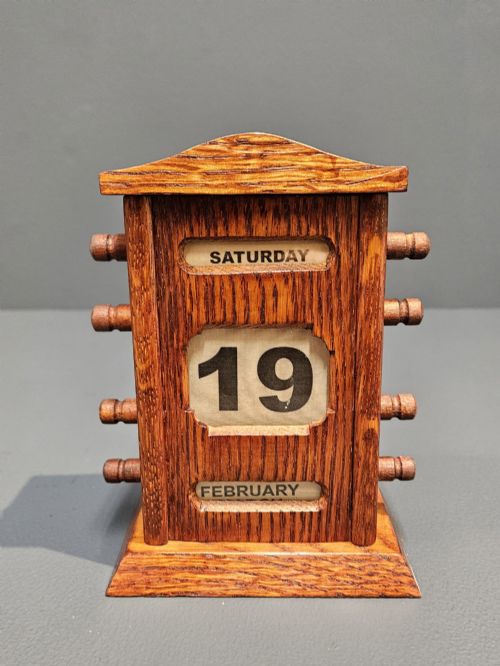
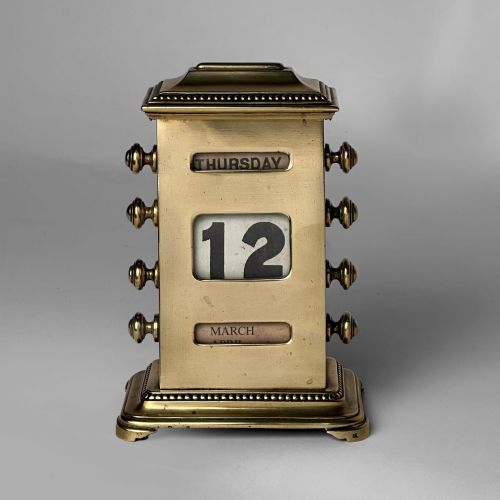
An antique desk calendar is a functional accessory designed to track days, dates and months on a table or writing surface. These pieces range from simple wooden frames with sliding markers to complex perpetual mechanisms housed in brass or silver.
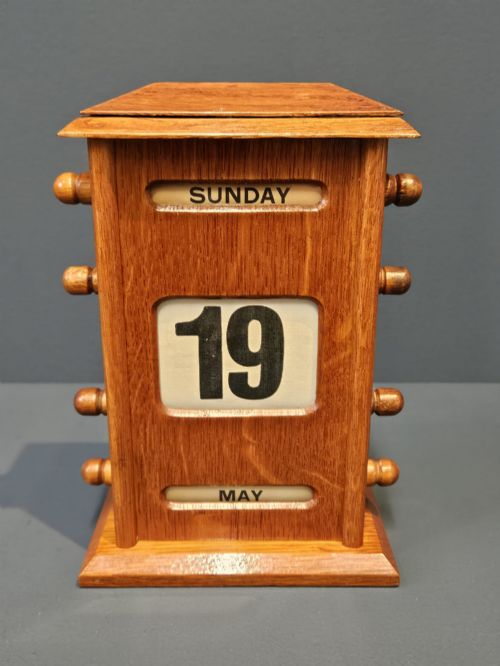
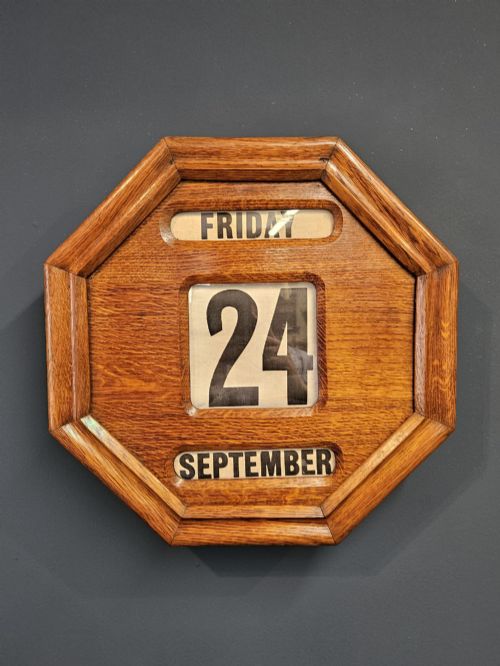
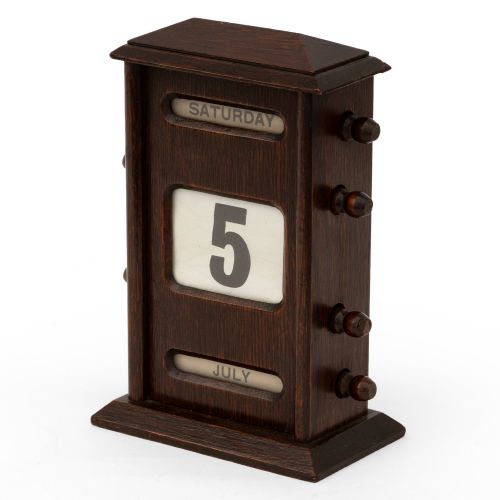
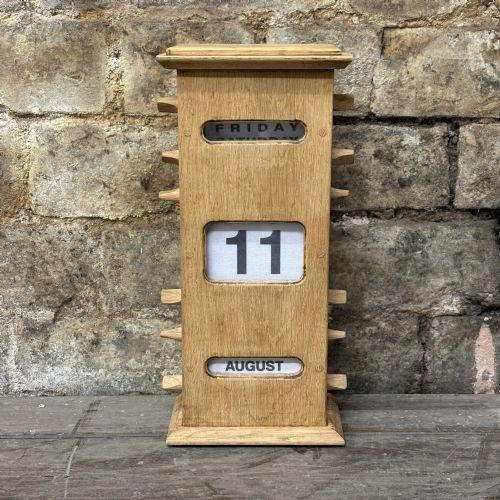
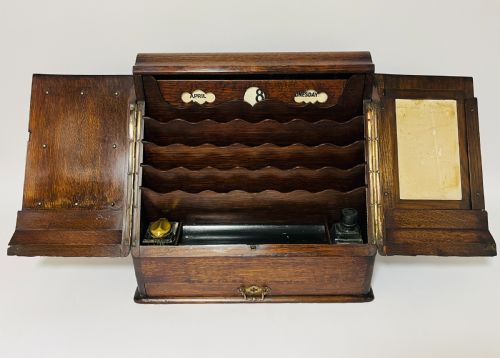
The version most commonly met on this page is the polished oak or mahogany perpetual calendar, often built with integrated card slots or turning dials. Examples also appear combined with inkstands, stationery cabinets or timepieces.
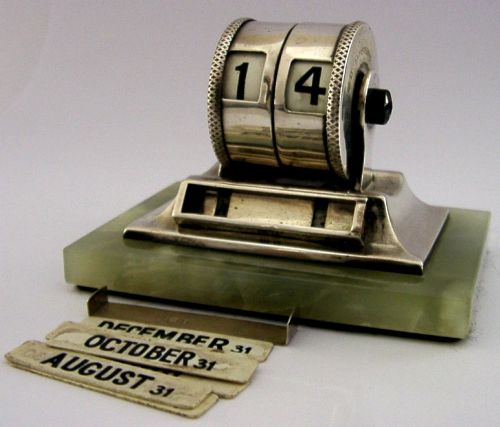
Origins stretch from the late nineteenth century through the Edwardian era into the Art Deco period, incorporating materials like bakelite, onyx and silver alongside traditional hardwoods.
How they were made
Makers utilised dense timbers such as oak, mahogany and walnut for the bodies, often polished to a high finish and fitted with brass hinges, clips and bezels. Metal components were cast, stamped or engraved with numerals and month names.
More elaborate models incorporate bevelled glass panels, enamel plaques, tortoiseshell veneer or green onyx bases. Working mechanisms rely on internal drums, rotating paper ribbons or card inserts moved by small side knobs.
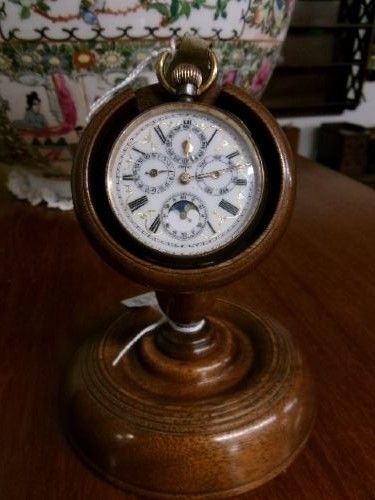
Clockwork variations integrate calendar functions into carriage clocks or mantel clocks using brass gear trains, escapements and porcelain or silvered dial faces.
Antique Desk Calendar Retail Price Guide 2026
Typical asking prices for desk calendar among the pieces listed under this phrase on Sellingantiques today, from the lower quarter to the upper quarter. They describe what is for sale here now, not the wider market.
What varies in quality
Quality rests in the precision of the mechanics and the integrity of the materials. Solid hardwood construction with cleanly cut bevels and tight joints sits above simpler veneered boxes.
The clarity of the lettering on the date cards or drums distinguishes finer examples from cruder output. Signed brasswork from established makers or integrated precision clockwork elevates a piece above standard desk accessories.
William Tonks of Birmingham·Louis Goret·L Epee·J. F. Bautte Et Cie·Drocourt·Moser·Brocot·Asprey
The Antique Desk Calendar Glossary
- Perpetual calendar
- A mechanism designed to track the date correctly across changing month lengths without manual resetting after every short month. It relies on internal gearing or adjustable cards.
- Carriage clock
- A small, portable spring-driven clock with a carrying handle, frequently featuring auxiliary calendar dials for day and date. They originated in France for travellers.
- Stationery cabinet
- A desk box fitted with internal compartments for writing paper and envelopes, often incorporating a calendar on the fall front or lid. They are typically built in oak or mahogany.
- Boulle
- A decorative technique of inlaying brass and tortoiseshell onto a wooden carcass, associated with French furniture and high-status desk items. Named after the cabinetmaker André-Charles Boulle.
- Sonnerie
- A striking clock movement that automatically sounds the hours and quarters as they pass. Grand sonnerie movements strike the hours and preceding quarters at each quarter hour.
Antique Desk Calendar: Frequently Asked Questions
How do perpetual calendars work?
Perpetual calendars use rotating drums, paper ribbons or sliding cards marked with days, dates and months. The user adjusts these manually each morning, or internal gear trains advance the date automatically.
Simpler desk models rely entirely on hand-turned knobs, whereas complex clockwork versions calculate the progression of days through mechanical wheels.
Where were they placed?
These calendars sat upon library tables, partners' desks and writing cabinets in private homes and offices. Their primary purpose was to provide a clear reference point during correspondence and administrative tasks.
Larger oak and mahogany versions anchored the corner of a desk, while smaller travelling models in brass cases accompanied owners on journeys.
How do I clean the wood?
Oak and mahogany surfaces benefit from occasional application of traditional beeswax applied with a soft cloth and buffed gently. Avoid modern liquid polishes containing silicone, which can build up over time and dull the grain.
Metal fittings require careful treatment with a dry cloth to preserve the patina, avoiding harsh abrasives on engraved or plated surfaces.
Can I use it today?
Most mechanical desk calendars function effectively for daily use once the mechanisms are checked and cleaned. Card and drum systems require only correct manual setting to display the current date.
Clockwork calendar combinations may need professional servicing by a horologist to ensure the movement keeps accurate time and advances the date correctly.