


Antique Wooden Calendar
An antique wooden calendar brings mechanical daily order to a desk, offering tactile charm that modern screens simply cannot match.
Antique Wooden Calendar
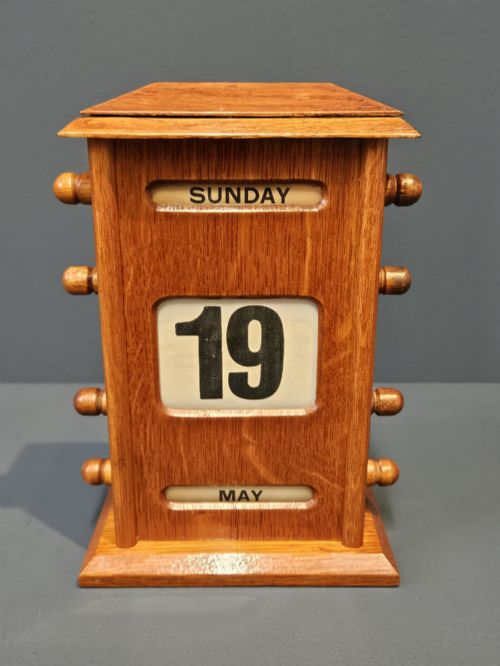
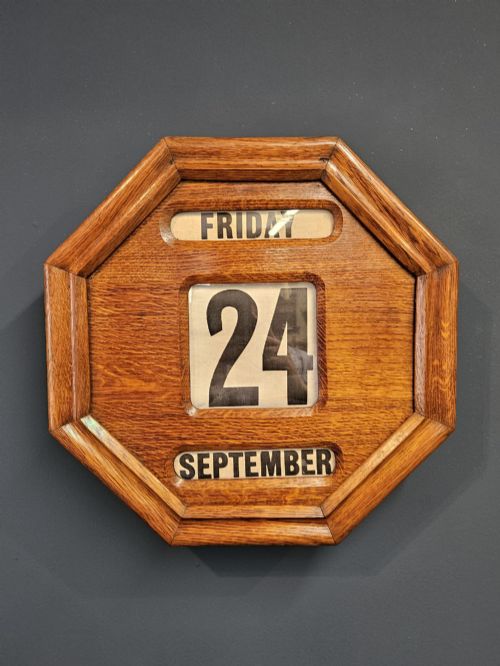
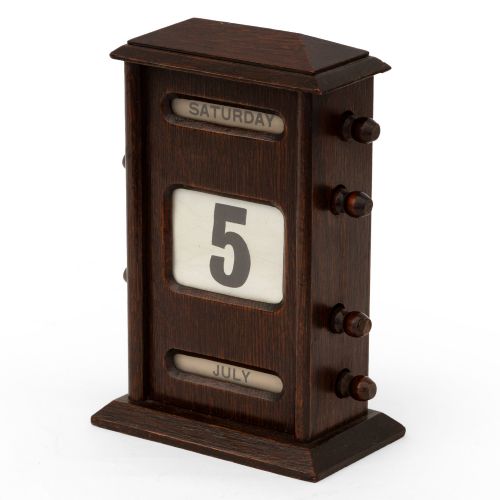
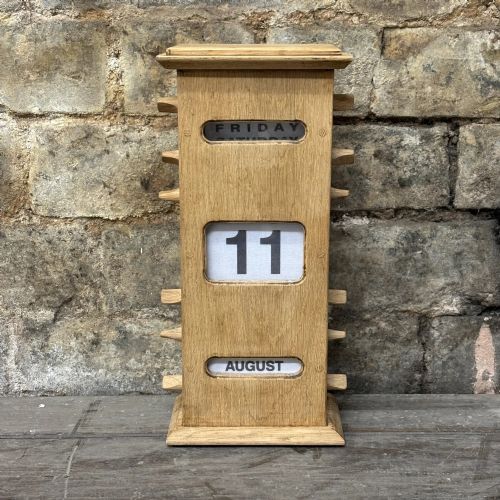
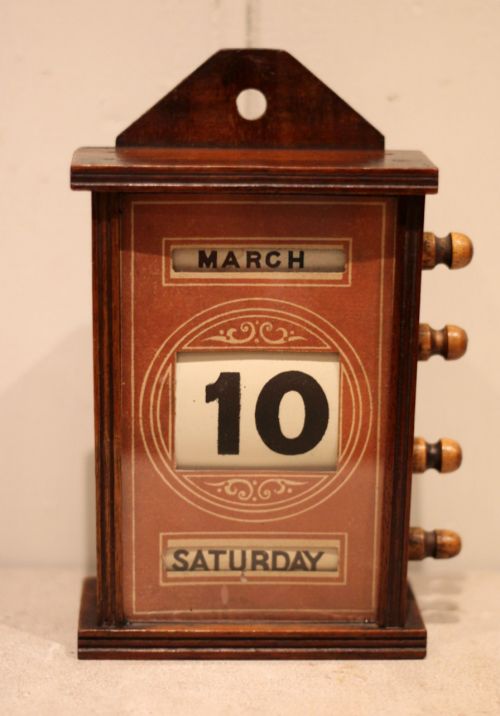
When you search for an antique wooden calendar, you are looking at practical desk accessories and wall fixtures designed to track the date through manually adjusted panels, cards, or dials. These pieces range from compact desktop perpetual calendars to larger wall-mounted versions and stationary cabinets incorporating date displays.
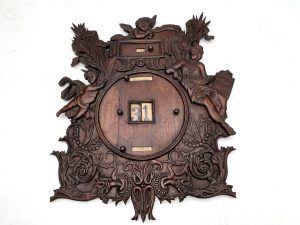
You are most likely to meet oak and mahogany desk variations from the nineteenth and early twentieth centuries on this page. The selection frequently includes Victorian and Edwardian examples, alongside Art Deco and occasional eighteenth-century carved oak pieces.
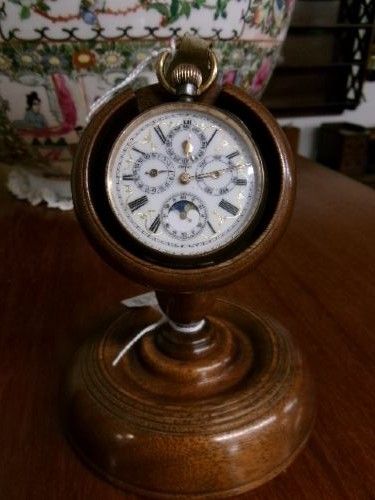
Many of these items combine multiple functions, appearing alongside stationary cabinets, mantel clocks, barometers, and pocket watches. Their primary appeal lies in combining durable natural timber with functional mechanics that remain operational in a modern room.
How they were made
Cabinet makers utilised dense hardwoods such as oak, mahogany, and walnut to construct the main housings and frames. These timbers were frequently carved, panelled, or polished to suit the prevailing aesthetic of the period, from ornate Victorian styling to clean Art Deco lines.
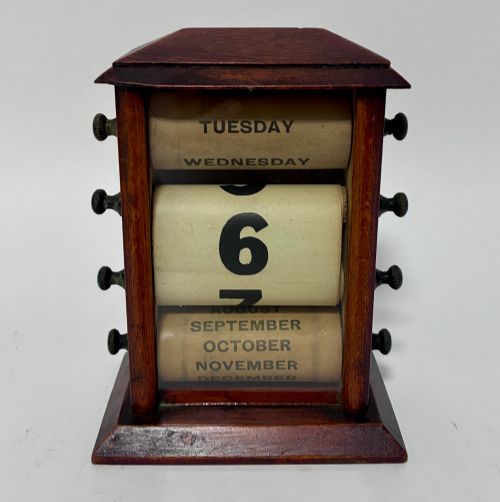
Mechanical and visual details were integrated using contrasting materials like brass, glass, enamel, and paper. Printed paper cards or rotating wooden drums display the days and months, while brass fittings secure the adjustable components and mounting hardware.
What varies in quality
Quality in these pieces rests primarily on the crispness of the timber carving and the precision of the integrated joinery. Finer examples display well-figured grain, tight joints, and robust housing for the moving date components.
The sophistication of the mechanism and the legibility of the font also separate standard items from superior specimens. Clear typography on paper or enamel inserts and smooth operation of adjustable dials indicate thoughtful initial manufacture.
The Antique Wooden Calendar Glossary
- Perpetual calendar
- A calendar designed to be adjusted year after year using interchangeable cards, rotating drums, or sliding indicators. This mechanism avoids the need to purchase a new calendar annually.
- Stationary cabinet
- A desk box or cabinet featuring built-in compartments for writing materials, often incorporating a calendar face or date adjustment mechanism on the exterior.
- Barometer
- An instrument measuring atmospheric pressure, occasionally housed in carved walnut or oak alongside timepieces and calendars to form a comprehensive desk or wall station.
- Mantel clock
- A clock designed to sit on a fireplace mantel, sometimes paired with calendar functions or executed in matching wooden cases like oak and walnut.
Antique Wooden Calendar: Frequently Asked Questions
How do perpetual calendars work?
Perpetual calendars utilise rotating wooden drums, sliding indicators, or changing cards to display the days, dates, and months continuously. Users manually shift these components each day or month to maintain the correct sequence without replacing the calendar annually.
This mechanical setup allows the device to function indefinitely across different years, requiring only simple human interaction every morning or at the turn of a month.
Where should I place a desk calendar?
A wooden desk calendar suits any writing table, study desk, or bookshelf where its warm timber tones and mechanical face can be easily seen and adjusted. Placing it away from direct heat sources prevents the wood from drying out and protects any paper or enamel components.
Because many examples incorporate oak or mahogany housings, they integrate naturally with traditional library furniture and classic interior schemes.
How do I identify Victorian pieces?
Victorian wooden calendars often display darker oak or mahogany construction with heavier proportions, carved detailing, or brass fittings that reflect nineteenth-century taste. They frequently combine date functions with stationery storage or inkwell compartments.
Comparing the timber finish and the style of the lettering against known nineteenth-century design periods helps confirm the era of manufacture.
Are wall calendars difficult to mount?
Wall-mounted wooden calendars typically feature built-in hanging loops or sturdy backboards designed for secure attachment to a wall stud or solid hook. Their weight depends on the density of the oak or mahogany used in the frame.
Ensuring proper wall fixings supports the weight of the timber housing and allows safe daily adjustment of the calendar font or cards.