







Ecclesiastical Brass Stands
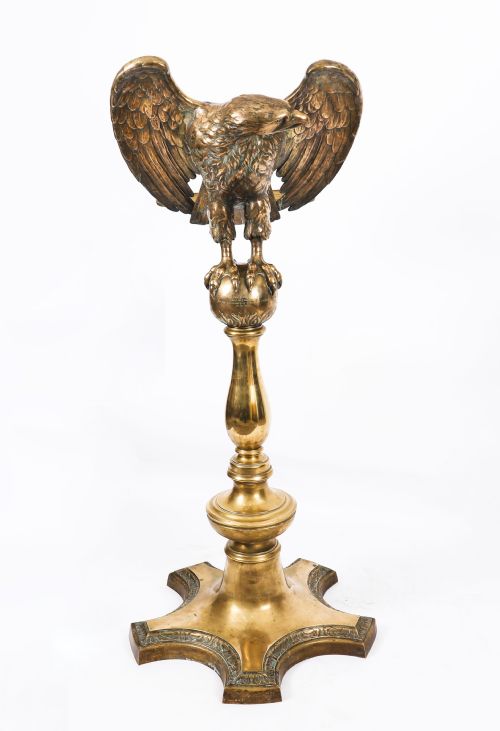
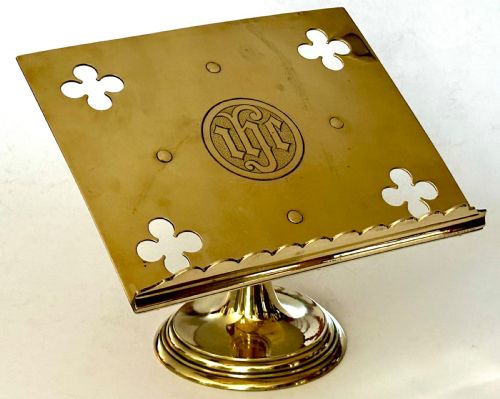
These ecclesiastical brass stands are functional items of church furniture designed for altars and chancels, prized for their heavy cast construction and period devotional styling.
Ecclesiastical Brass Stands
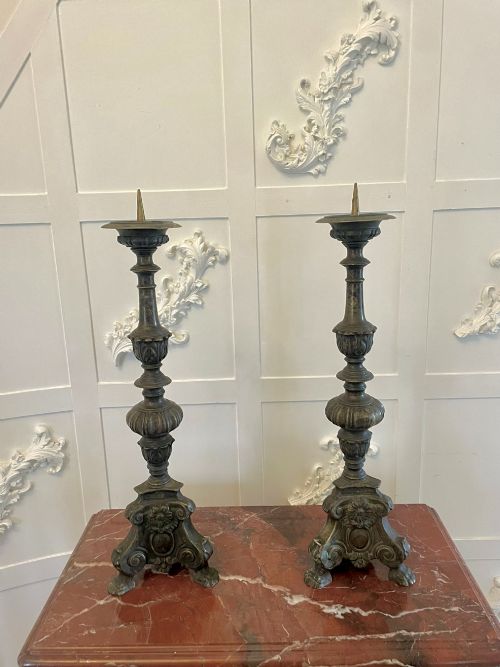
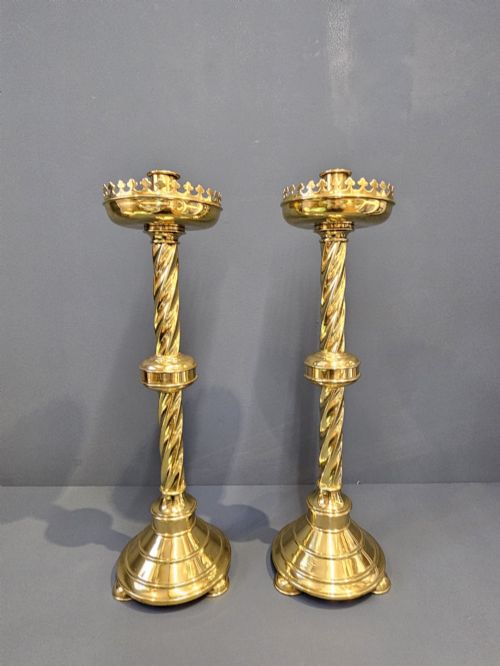
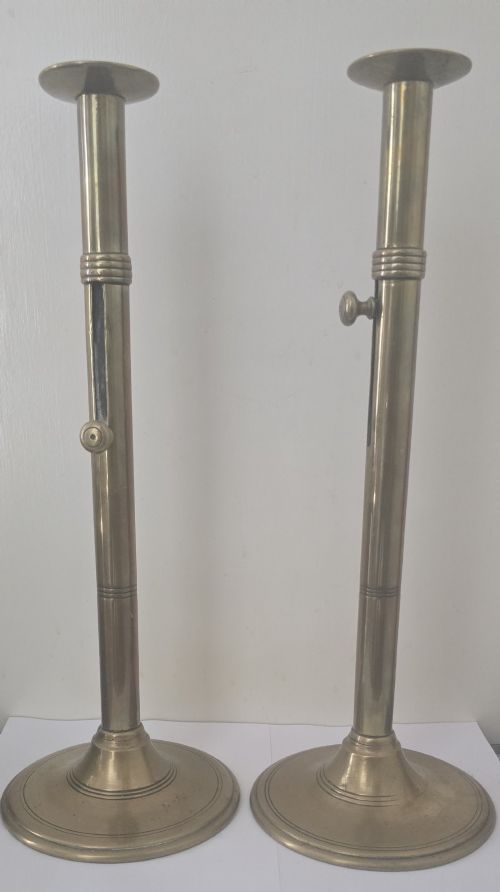
When you search for ecclesiastical brass stands, you encounter a range of devotional objects shaped by church interiors, most frequently taking the form of tall altar candlesticks, pricket stands, and reading lecterns. These pieces emerge predominantly from the nineteenth century, reflecting the surge in Gothic Revival church refurbishments across Britain and France.
Buyers are most likely to meet Victorian pairs designed to carry heavy candles for church services, often displaying ornate casting or simpler Gothic Revival lines. Floor-standing variants and table lecterns appear less frequently, offering heavier proportions suited to larger liturgical spaces.
Materials and construction methods
The primary material across these pieces is cast and turned brass, chosen for its durability and warm metallic lustre under candle illumination. Certain items combine this metalwork with secondary materials like oak for reading slopes or iron for internal structural support.
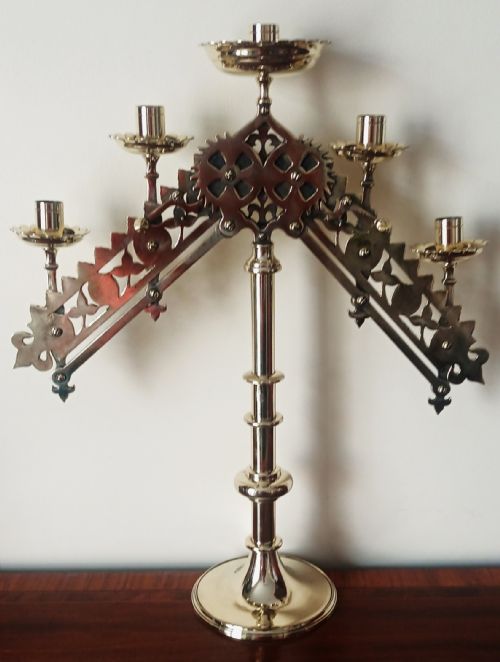
Manufacturing techniques rely heavily on sand casting for ornate bases and nodes, combined with lathe-turning for shafts and candle sockets. Articulated joints and screw threads allow certain candelabras and stands to adjust their reach and configuration.
Listings span the nineteenth and twentieth centuries, incorporating Victorian Gothic Revival styles alongside Georgian and Rococo Revival forms.
Quality factors in metalwork
The distinction between ordinary and superior pieces rests on the crispness of the casting detail and the weight of the metal utilised in the shaft and base. Heavily weighted bases and sharply chased ornamentation indicate a higher grade of workshop production intended for prominent cathedrals or large parish churches.
Proportion and symmetry dictate the visual success of taller pairs, where uniform turning and solid joint construction prevent wobbling in floor-standing holders. Maker attribution, when present through stamped registry marks or firm signatures, elevates the standing of a piece.
T Thomason & Co
The Ecclesiastical Brass Stands Glossary
- Pricket candlestick
- A candle holder featuring a vertical spike at the top rather than a socket, designed to impale the base of a large candle. This form predominates on church altars.
- Gothic Revival
- An architectural and decorative style popular during the nineteenth century that revived medieval Gothic forms, visible in pointed arches, trefoils, and heavy tracery.
- Candelabra
- A branched candlestick holding multiple lights on separate arms, often articulated in these ecclesiastical examples to swivel or adjust position.
- Lectern
- A raised stand with a slanted top used to hold books for reading aloud during services, occasionally constructed with brass mounts on an oak frame.
- Altar cross
- A devotional crucifix placed centrally on or behind the altar, matching the metalwork and decorative vocabulary of the surrounding candlesticks.
Ecclesiastical Brass Stands: Frequently Asked Questions
How were these stands used in churches?
These brass stands served specific liturgical functions on or around church altars, holding heavy candles for illumination during services or supporting large service books for the clergy.
Floor-standing versions carried primary light sources near the chancel steps, while smaller pairs sat directly on the altar table alongside crosses and vases.
How do I date an antique brass candlestick?
Dating relies on stylistic clues such as the presence of Victorian Gothic Revival ornament, cast construction marks, and the evolution of base designs from Georgian ejectors to heavy nineteenth-century prickets.
Component assembly methods, including threaded joins and hand-cut screws, also help distinguish earlier Georgian production from later Victorian workshop manufacturing.
Can I use church candlesticks in a home interior?
These substantial metal stands integrate easily into modern or traditional domestic rooms as decorative floor or table accents, provided their height and weight are accommodated.
Their robust construction makes them stable when fitted with modern candles, though pricket spikes require candles with a pre-drilled base or a protective bobeche.