





Gothic Revival Urns
Gothic revival urns bring architectural drama and solemn grandeur indoors and out, uniting medieval revival forms with nineteenth-century decorative arts.
Gothic Revival Urns
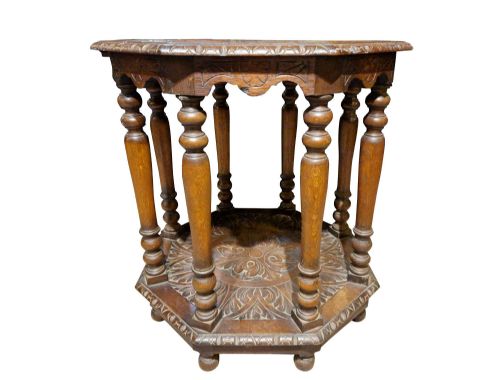
When you search for gothic revival urns, you encounter a selection of heavy architectural vessels, garden plinths, and occasional tables dating primarily from the nineteenth century. These objects draw heavily upon medieval ecclesiastical design, incorporating pointed arches, trefoil motifs, and robust carved oak or cast metal structures.
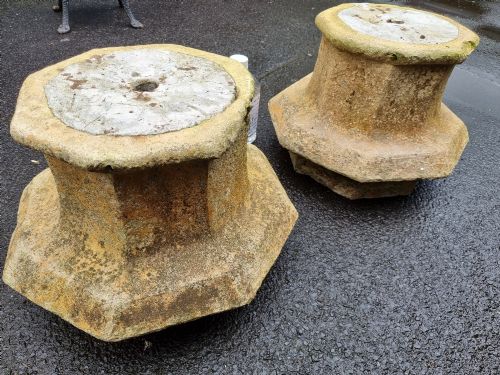
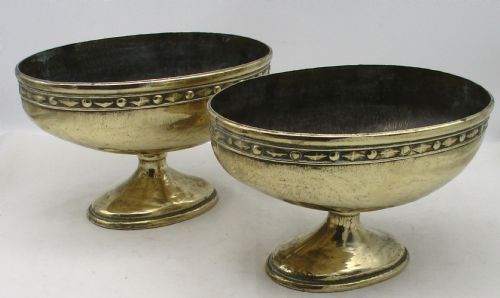
The pieces on this page span several functional categories, ranging from monumental bronze vases on siena marble bases to ecclesiastical brass altarware and reclaimed stone garden planters. Many items blur the line between domestic display objects and church furnishings, reflecting the Victorian appetite for serious historical styles in everyday spaces.
Origins vary across European traditions, with French Charles X period bronzes, Italian Grand Tour souvenirs, and British oak tables all appearing within the evidence. Buyers most frequently meet nineteenth-century brass stands, carved oak pedestals, and composite stone garden pieces when browsing this category.
How they were made
Makers utilised durable metals, dense hardwoods, and heavy mineral blocks to achieve the monumental weight expected of medieval architectural revivals. Cast brass and patinated bronze provide sharp relief for intricate church metalware and decorative vessels, while carved oak serves as the primary medium for structural tables and pedestals.
Stonemasons and carvers employed traditional hand-working techniques alongside casting methods to replicate ancient architectural forms. Natural stone, composite materials, and siena marble were shaped and polished to create sturdy plinths and bases capable of supporting heavy metal urns.
The listings combine nineteenth-century oak tables and pedestals with ecclesiastical brassware and reclaimed stone architectural fragments.
What varies in quality
Quality in these objects rests upon the crispness of the carving and the purity of the material casting. Sharp architectural lines and deep relief work in oak or bronze distinguish superior workshop output from softer, more generalized decorative castings.
The integration of contrasting materials, such as bronze mounted cleanly onto siena marble bases, dictates the visual success of an item. Superior pieces maintain structural integrity and harmonious proportions between the vessel and its pedestal or base.
The Gothic Revival Urns Glossary
- Trefoil
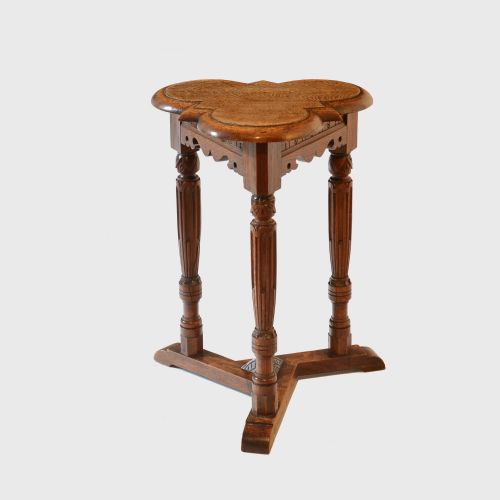
- A three-lobed ornamentation resembling a clover leaf, commonly carved into nineteenth-century Gothic oak tables and panels. This geometric motif echoes the tracery found in medieval church windows.
- Caryatid
- A carved architectural figure serving as a support pillar in place of a column. In these listings, they appear on heavy oak pedestals supporting display surfaces.
- Ciborium
- A covered ecclesiastical vessel designed to hold sacramental bread, executed in heavy brass during the nineteenth century. These items share aesthetic traits with altar vases and pedestal bowls.
- Grand Tour
- A cultural journey undertaken by wealthy Europeans to study classical and medieval antiquities, inspiring decorative bronze urns and souvenirs. Pieces from this tradition often utilise patinated metals and classical proportions.
- Torchere
- A tall ornamental stand designed to support a light fixture or vase. Nineteenth-century examples in carved wood frequently adopt revival architectural styling.
Gothic Revival Urns: Frequently Asked Questions
Where should I place a heavy stone planter?
Heavy stone and composite planters require a stable, level surface capable of supporting considerable weight, particularly if they incorporate reclaimed architectural fragments.
Position them in gardens or courtyards where their weathering and stone composition can be appreciated without risking structural damage to indoor flooring.
How do I care for antique brass church vessels?
Antique brass altarware and chalices benefit from gentle dusting with a soft, dry cloth rather than aggressive chemical polishing. Preserving the natural patination built up over the nineteenth century maintains the historical integrity of the metal.
Avoid using abrasive cleaners that strip the surface finish and diminish the definition of cast ecclesiastical details.
Are carved oak tables structurally suitable for daily use?
Nineteenth-century oak occasional tables and clover leaf stands offer robust construction well-suited for holding lamps, books, or decorative bowls. Their dense hardwood frames withstand normal daily placement of objects.
Keep them away from direct heat sources and sudden humidity changes to prevent timber splitting in the joined top surfaces.
How do I distinguish French bronze vases from Italian pieces?
French bronze work from periods such as the Charles X era often pairs cast metal with refined mineral plinths like siena marble. These pieces tend to emphasise crisp sculptural lines and formal balance.
Italian Grand Tour souvenirs frequently reflect classical antiquity filtered through Victorian taste, sometimes incorporating patination that mimics excavated artefacts.