





Church Brass Stands
Church brass stands are heavy altar fixtures and reading supports that bring enduring architectural dignity to domestic interiors.
Church Brass Stands
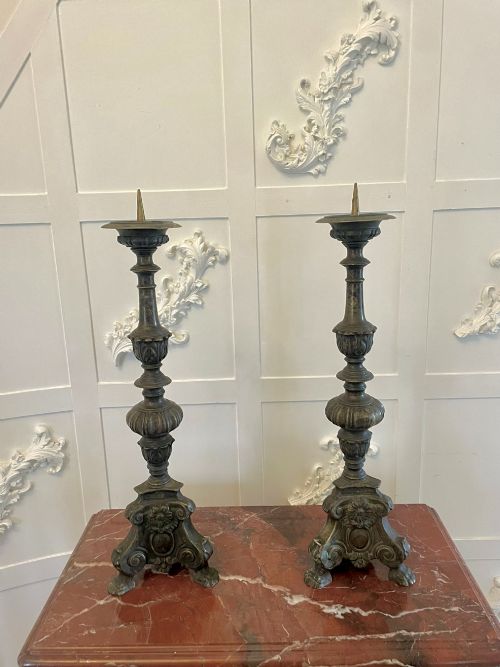
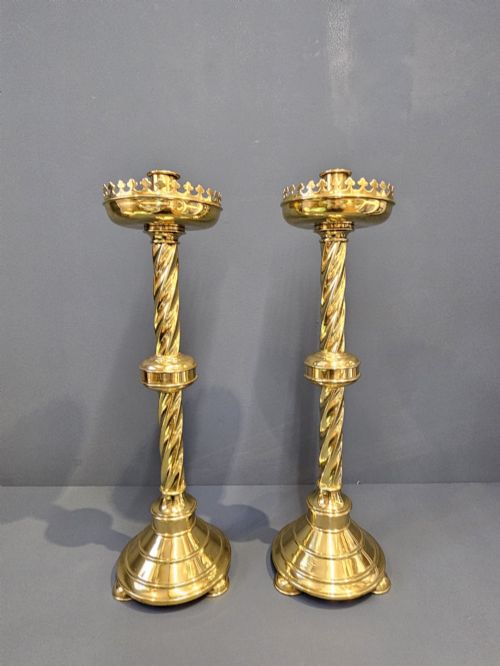
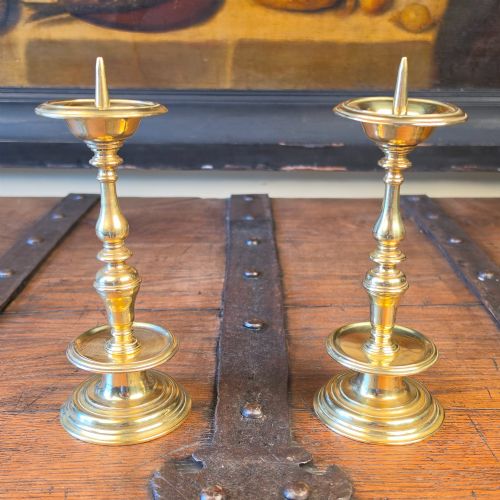
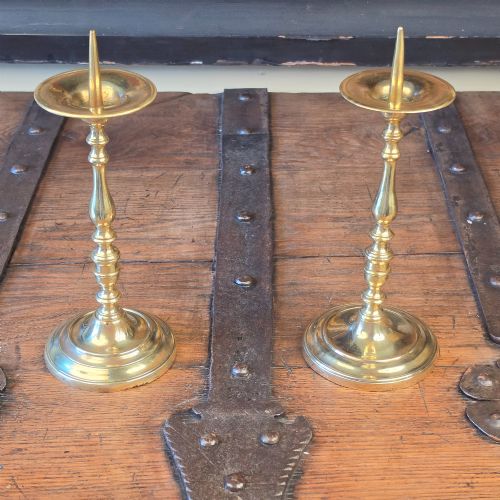
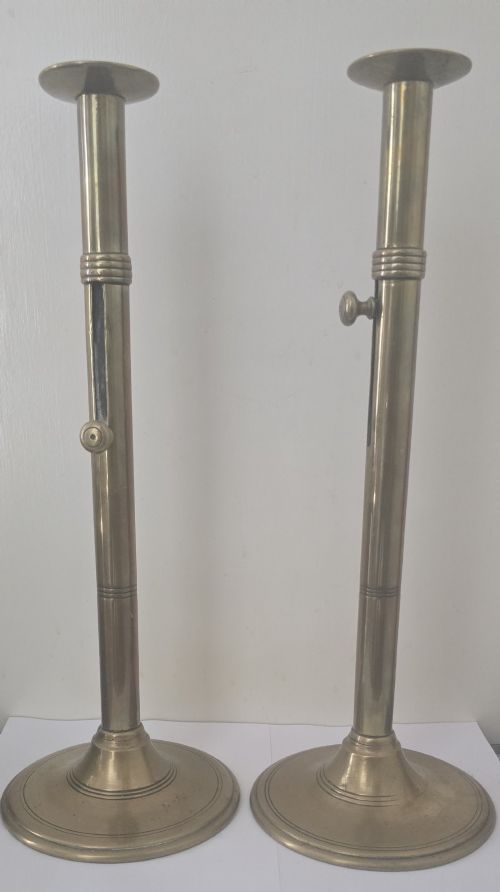
Church brass stands encompass tall floor-standing holders, table candlesticks, pricket candlesticks, and reading lecterns created for ecclesiastical use. Buyers looking at this page find pieces originating predominantly across the nineteenth century, alongside earlier seventeenth and eighteenth-century examples and later twentieth-century iterations.
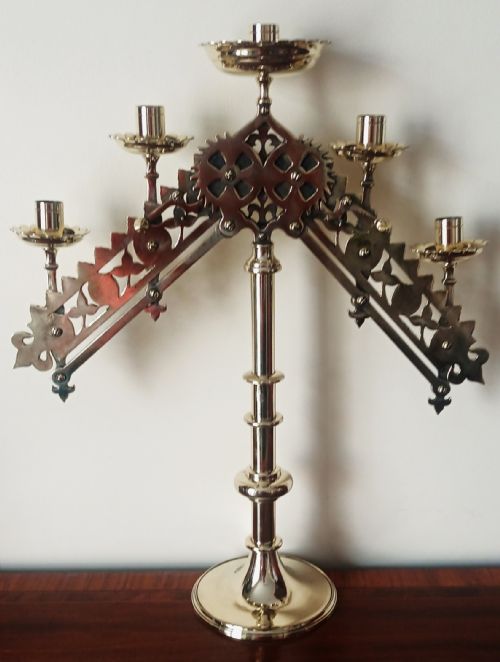
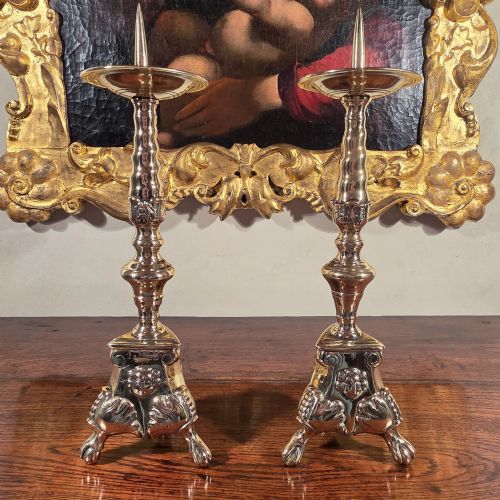
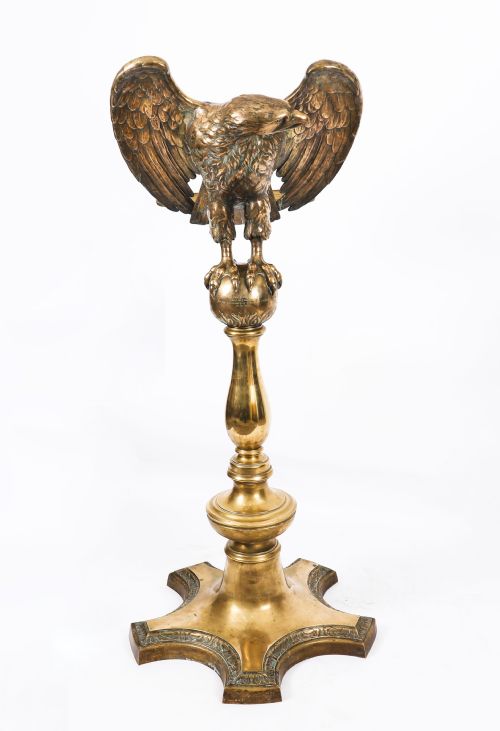
The most frequent items met here are pairs of tall brass candlesticks and pricket candlesticks shaped by Victorian Gothic Revival tastes. Alongside these stand reading desks, articulated candelabra, and occasional floor-standing candle holders incorporating timber or iron elements.
Origins span English, Scottish, French, and Flemish workshops, reflecting both standard ecclesiastical production and specific regional design movements like the Amsterdam School. The forms serve practical illumination and display functions while retaining their original liturgical character.
Materials and construction
Makers utilised cast brass as the primary medium, frequently combining it with bronze, wrought iron, and painted metal surfaces. Structural stability in tall floor and table models often relied on heavy turned wooden bases in oak or other hardwoods.
Casting methods produced substantial components joined by threaded rods, pins, or riveted brackets, allowing for articulated movement in complex candelabra. Surface enrichment involved chased detailing, Corinthian column fluting, and applied decorative mounts.
Listings include materials such as brass, bronze, wrought iron, oak, and fabric across nineteenth-century and earlier periods.
Design and proportion
Quality rests in the heaviness of the metal casting and the crispness of the chased or turned detail. Superior examples display balanced proportions across graduated heights and sophisticated architectural ornament rather than simple repeated factory casting.
The integrity of the construction, including original threaded fixings and unaltered structural components, separates standard utilitarian pieces from exceptional workshop output.
T Thomason & Co
The Church Brass Stands Glossary
- Pricket candlestick
- A candlestick featuring an upward-pointing metal spike designed to impale a candle, rather than a socket to hold it.
- Candelabra
- A branched candlestick holding multiple lights, sometimes constructed with articulated arms that adjust the spread.
- Lectern
- A raised reading stand designed to hold service books, often featuring a sloped desk supported by a pillar or sculptural base.
- Gothic Revival
- A nineteenth-century design style drawing inspiration from medieval architecture, marked by pointed arches, trefoils, and heavy structural forms.
- Side ejector
- A mechanical lever fitted to a candlestick shaft to push remaining candle stubs out of the socket.
Church Brass Stands: Frequently Asked Questions
What is a pricket candlestick?
A pricket candlestick uses a sharp metal spike at the top to secure the candle instead of a traditional enclosing socket.
This form appears frequently on older ecclesiastical pieces designed for large wax altar candles.
How do I clean church brass stands?
Cleaning requires a soft cloth and minimal intervention to preserve the aged patina built up over decades or centuries.
Aggressive metal polishes remove historical surface darkening and diminish the visual depth of the cast details.
Where were these stands used?
These pieces originated in churches, chapels, and cathedrals for holding altar lights and supporting service lecterns.
Today they function as sculptural floor and table focal points in residential rooms.
Are these stands heavy?
Many examples are exceptionally heavy due to solid brass casting and weighted iron or wooden bases.
This weight provided necessary stability for tall floor-standing models holding thick candles.
How do I identify Victorian Gothic Revival pieces?
Victorian Gothic Revival stands show architectural motifs like pointed arches, trefoils, and heavy column shafts.
These designs date mainly from the nineteenth century and reflect a revival of medieval church aesthetics.