
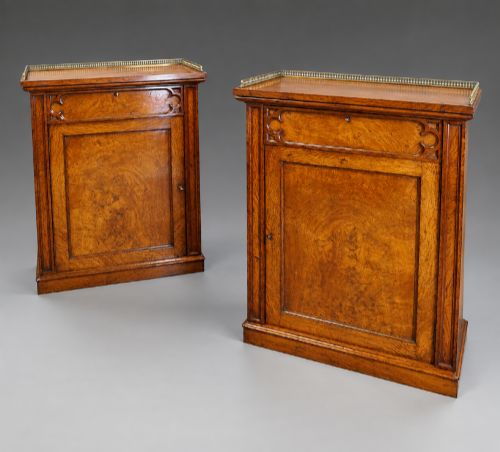
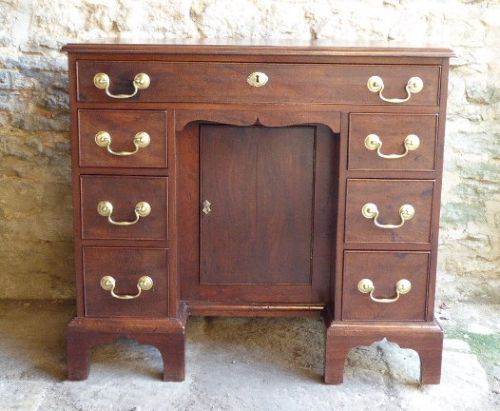
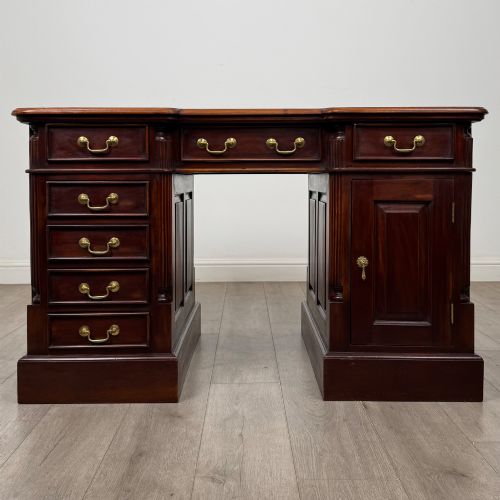
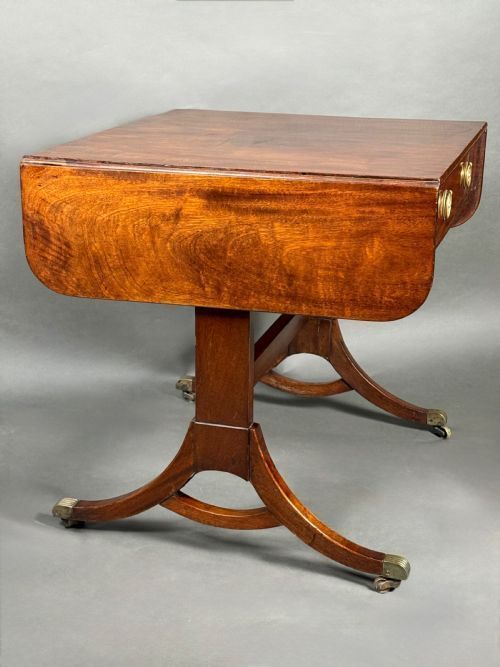
Antique Brass Pedestals
Antique brass pedestals comprise support columns and mounts in brass that anchor tables, desks and stands across Regency, Victorian and Edwardian periods.
Antique Brass Pedestals
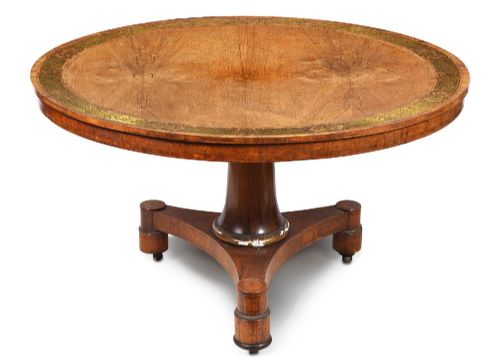
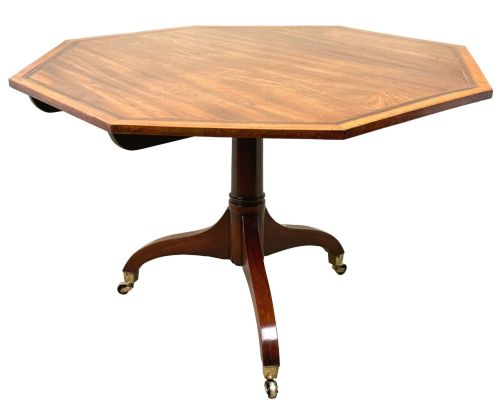
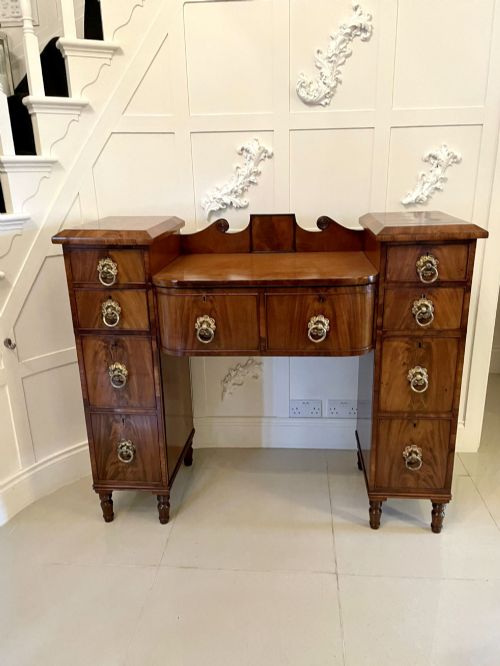
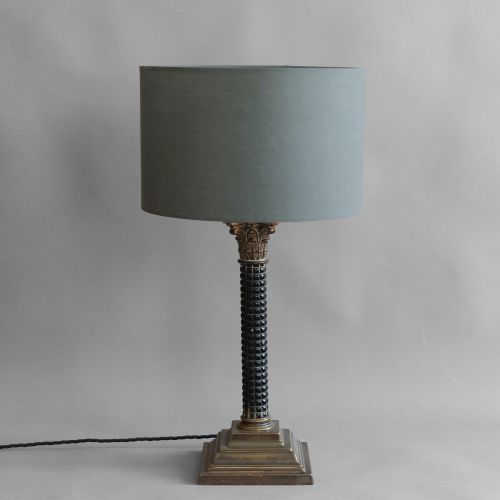
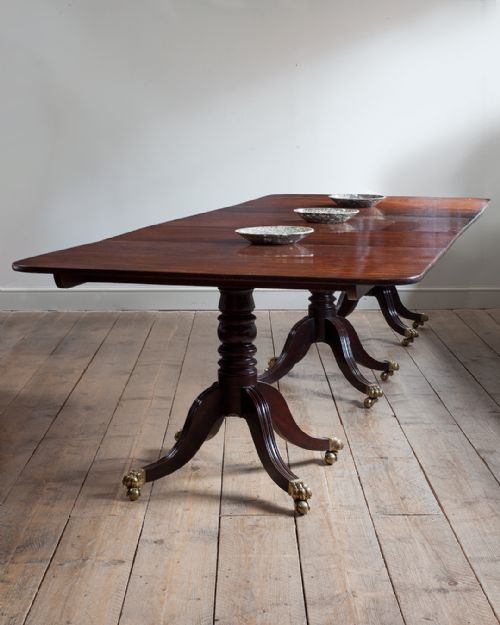
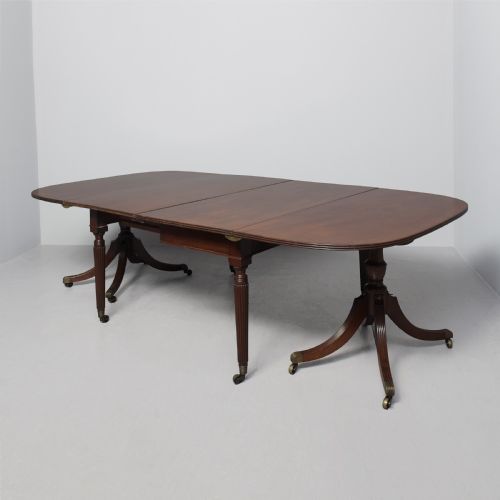
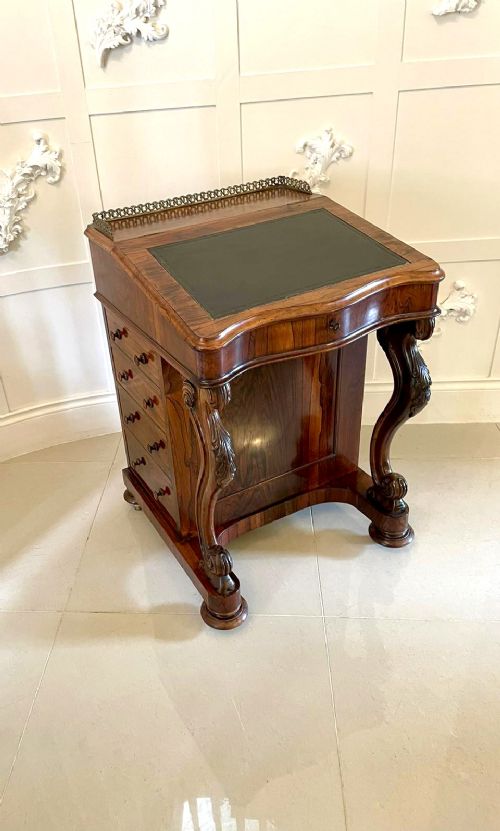
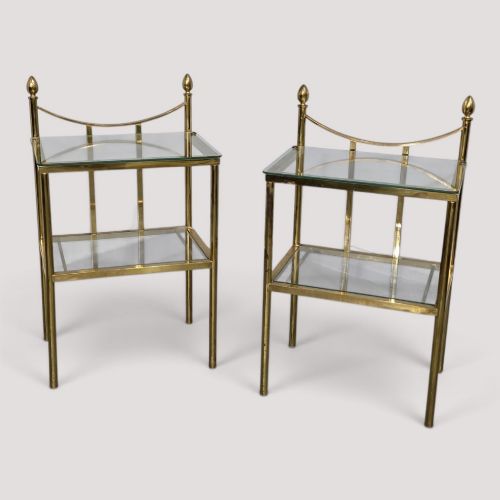
The objects span from the Georgian period through the 19th Century and into the 20th Century, incorporating woods like mahogany, rosewood, and oak. Forms range from large multi-pedestal extending dining tables to smaller items like lamp tables, plant stands, and Davenport desks.
Makers and workshops of the 18th and 19th centuries utilised brass alongside cabinet timbers to create functional furniture with stable pillar supports. Buyers select these pieces for domestic utility, formal dining, or workspace organisation.
How they were made
Cabinet makers constructed the primary carcases from dense hardwoods such as flame mahogany, figured mahogany, rosewood, and oak, often incorporating burr oak or satinwood veneers. Surfaces received polished finishes to highlight the natural grain patterns of the timber.
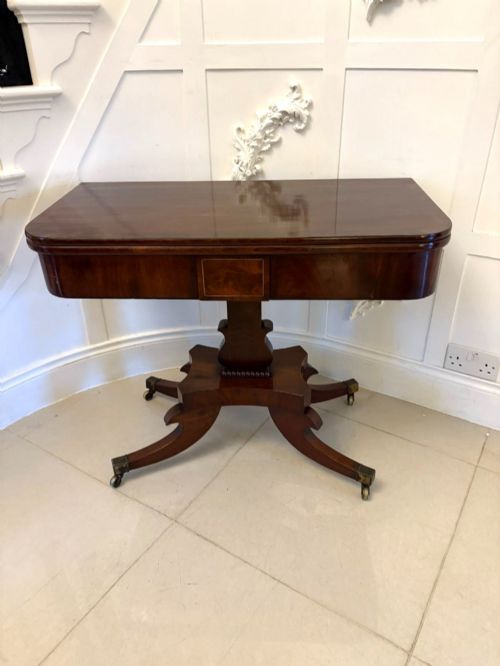
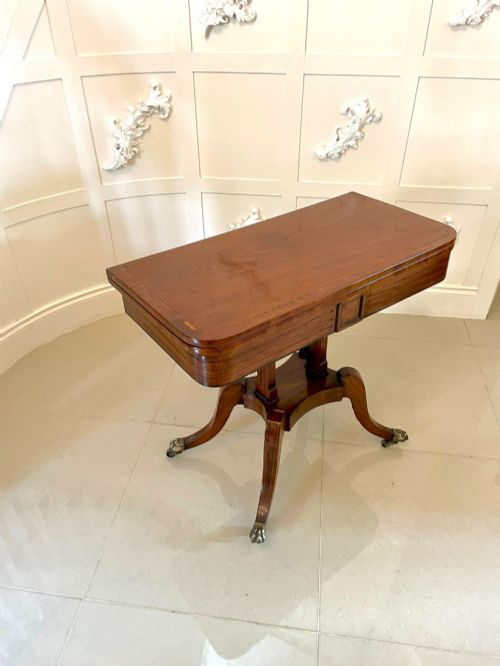
Brass was integrated through cast or rolled mounts, stringing, and inlay work, particularly during the Regency period. Metal components provided durability and decorative contrast against the dark timber surfaces of pedestals and table bases.
Listings feature 19th Century, Georgian, Victorian, and Edwardian periods utilising brass, mahogany, rosewood, oak, and marble.
What varies in quality
Quality rests upon the selection of timber veneers, such as figured or flame mahogany and rosewood, paired with precision in brass inlay and casting. Superior examples exhibit cohesive proportion across multi-pillar dining tables and desks.
Execution of internal framing, drawer construction, and the crispness of brass mounts separate standard utilitarian items from pieces attributed to notable makers and workshops.
Gillows of Lancaster·Hewetsons London·Trollope And Sons·George Bullock·Thomas Butler of London·Edwards And Roberts
The Antique Brass Pedestals Glossary
- Pedestal
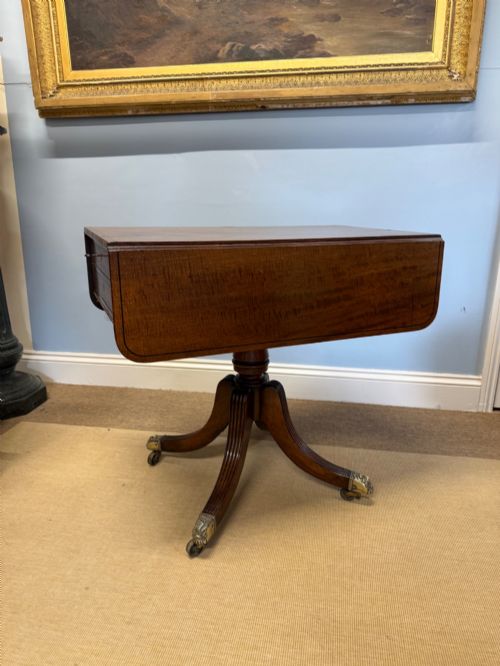
- A structural support column or pillar holding up a table top, desk, or plant stand. These pillars often terminate in brass paw feet or castors.
- Inlay
- A technique where contrasting materials like brass or lighter woods are inserted into recesses within the primary timber surface. This creates geometric or botanical patterns.
- Mahogany
- A durable tropical hardwood utilised extensively for dining tables and desks throughout the Georgian and Victorian periods. Its stable nature suited heavy pillar construction.
- Console table
- A wall-mounted or freestanding table designed to stand against a flat surface, often featuring fold-over tops and brass mounts.
Antique Brass Pedestals: Frequently Asked Questions
How do I identify a Regency pedestal table?
Regency pedestal tables typically feature figured mahogany timbers, brass stringing or inlay, and turned pillars terminating in brass castors.
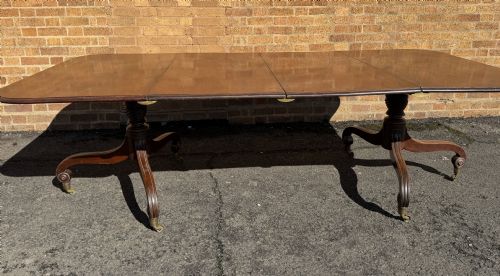
Proportions remain balanced, and multi-pillar extending formats often include drop-in leaves supported by brass clips.
What materials are used in these desks?
Desks combine primary cabinet timbers such as mahogany, oak, and walnut with secondary woods for drawer linings. Brass hardware appears on handles, locks, and structural mounts.
Leather inserts often form the writing surface on pedestal desks.
Where were plant stands placed?
Plant stands occupied prominent corners or window spaces in Victorian and Edwardian drawing rooms to elevate decorative flora. Marble tops provided water-resistant surfaces for pots.
Their compact brass and wood structures offered stability on carpets.
How do multi-pillar tables extend?
Multi-pillar dining tables utilise modular sections joined by brass table locks and wooden pegs. Additional leaves drop into the centre frame.
Extra pedestals bear the weight when fully expanded for dining.