


Gothic Revival Pedestals
Gothic revival pedestals bring architectural ambition into a room, offering sturdy vertical display spaces rooted in nineteenth-century design.
Gothic Revival Pedestals
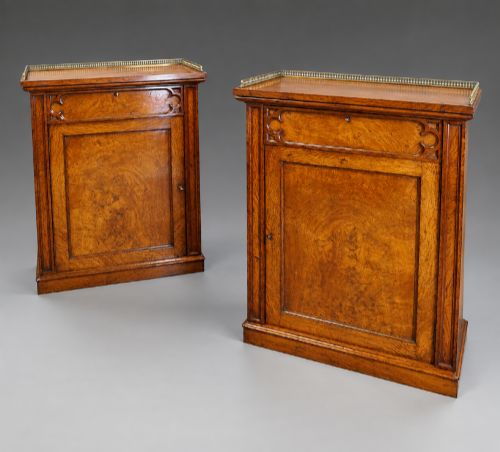
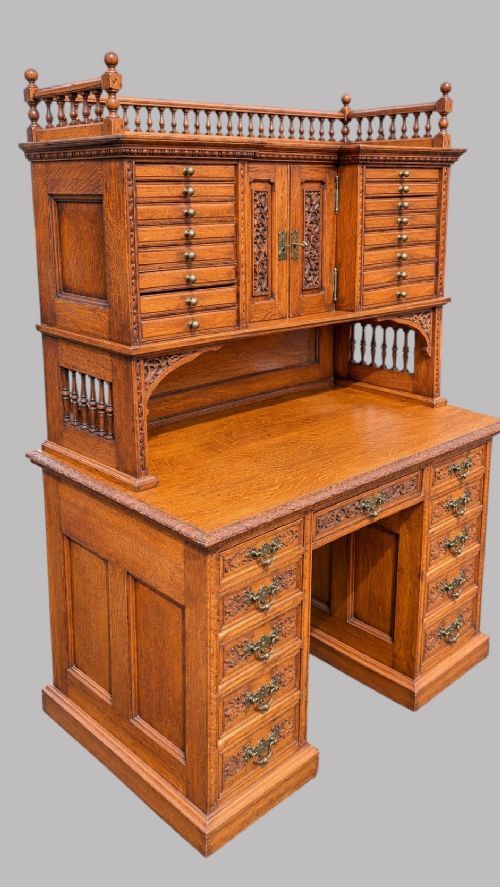
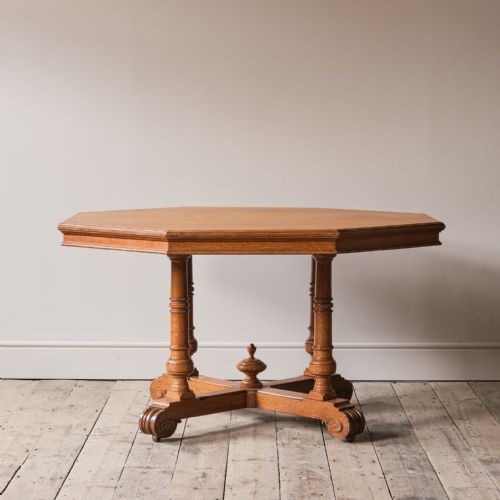
When searching for gothic revival pedestals, collectors encounter architectural furnishings shaped by nineteenth-century tastes, spanning the Victorian era through the Edwardian period. The evidence shows forms ranging from specific pedestals and torcheres to related oak furniture like side tables and desks.
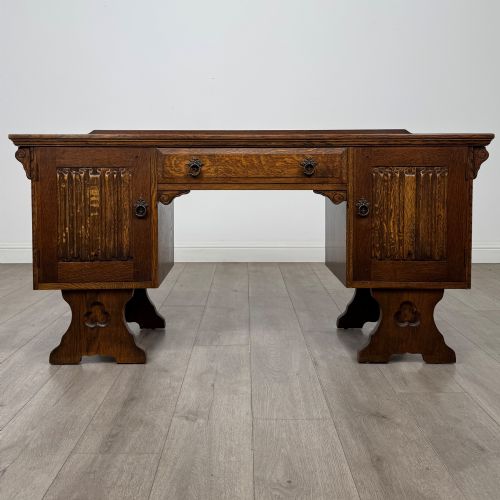
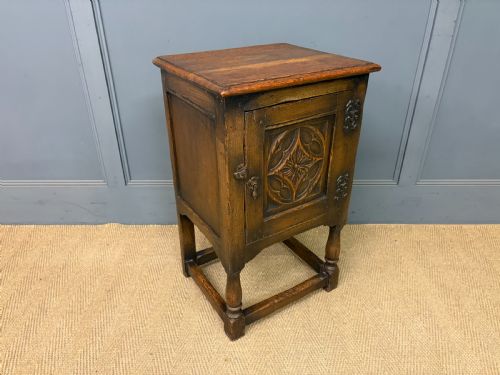
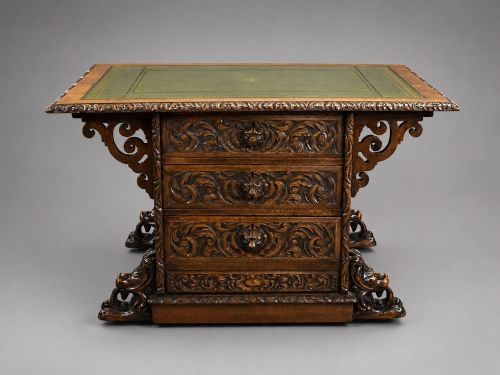
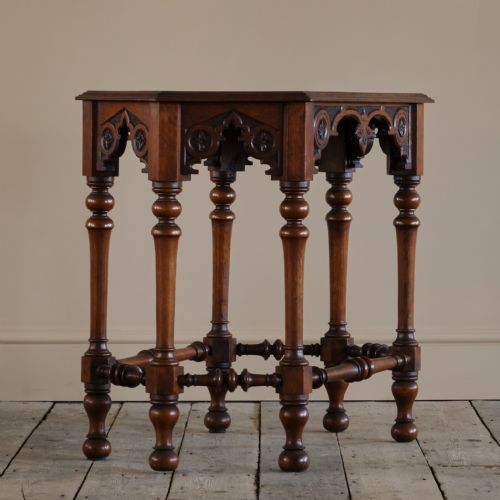
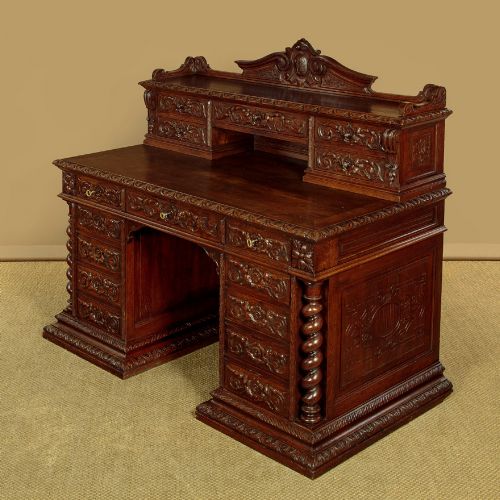
The objects appearing under this search draw primarily on nineteenth-century craftsmanship, with oak as the dominant material. Pieces often display characteristic pointed arches, tracery, and heavy carving typical of the Gothic revival and related Victorian styles.
Materials and Construction
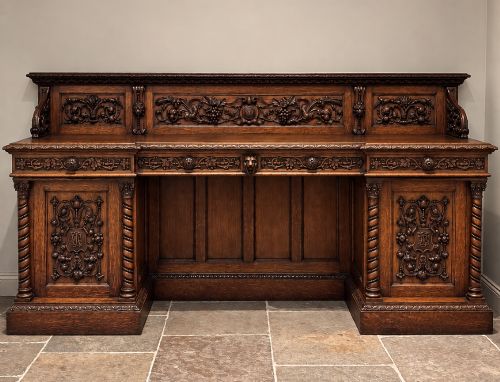
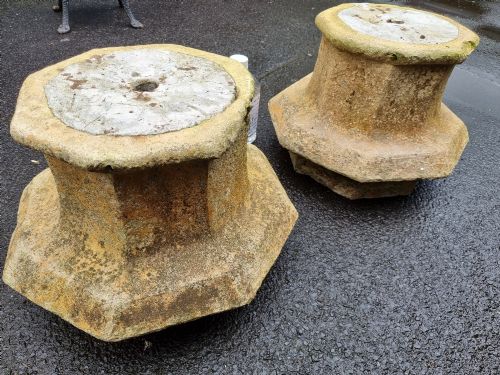
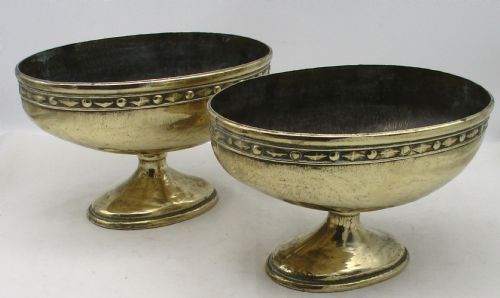
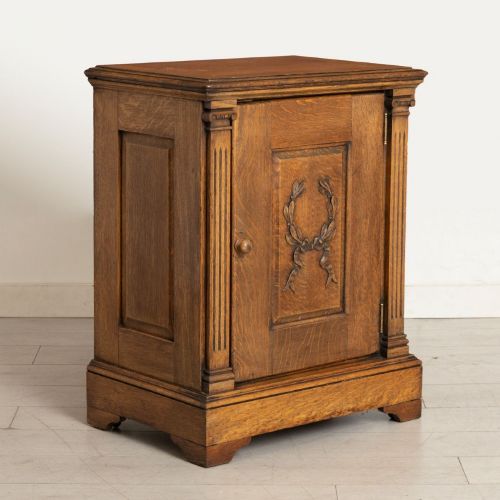
The pieces recorded in the listings rely heavily on solid oak, worked by hand to create deep relief carvings, linenfold panels, and structural mouldings. Alongside wood, makers utilised materials like brass, walnut, and occasional composite stone to achieve the architectural weight expected of the style.
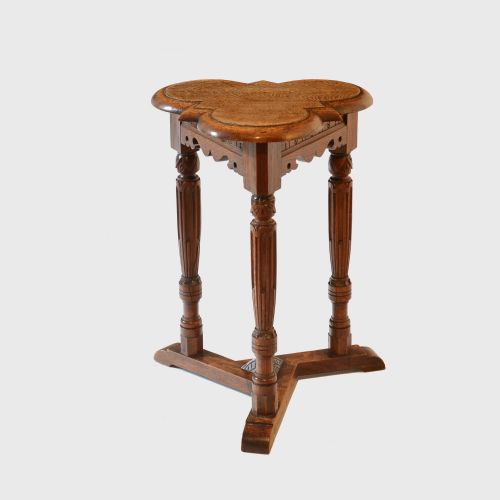
Joinery and construction techniques reflect nineteenth-century workshop practices, combining heavy framing with detailed surface ornamentation such as carved foliage, geometric trefoils, and linenfold motifs.
Carved wooden green men peer out from nineteenth-century oak furniture, watching over the room with leafy smiles.
Assessing Quality and Execution
Quality in these pieces rests upon the depth and crispness of the carving, distinguishing between mass-produced factory work and pieces shaped by skilled hands. The integration of architectural elements, from balanced proportions to well-defined mouldings, separates standard items from exceptional examples.
The selection of timber and the preservation of original surfaces also dictate the standing of a piece, with well-figured oak and intact hardware holding greater integrity than heavily altered or stripped surfaces.
Baillie Scott
The Gothic Revival Pedestals Glossary
- Gothic Revival
- An architectural and decorative style drawing inspiration from medieval design, featuring pointed arches and structural verticality. This movement dominated nineteenth-century furniture production.
- Linenfold
- A style of relief carving used on wooden panels to imitate folded linen fabric. It appears frequently on nineteenth-century oak furniture.
- Trefoil
- A graphic ornament composed of three overlapping rings or leaf shapes. This motif is commonly found in Gothic tracery and table designs.
- Torchere
- A tall ornamental stand or candlestick designed to hold a light source. In nineteenth-century interiors, these functioned as vertical display pedestals.
Gothic Revival Pedestals: Frequently Asked Questions
How do I date a nineteenth-century pedestal?
Dating relies on examining the timber species, joinery methods, and decorative motifs characteristic of specific decades within the Victorian and Edwardian periods. Oak was predominantly used throughout the nineteenth century.
Cabinetmakers often combined Gothic revival elements with Renaissance or Elizabethan influences, which helps narrow the production era.
Where were these pieces used originally?
In nineteenth-century homes and institutional interiors, these pedestals and torcheres held lighting, urns, or sculptural busts in halls and reception rooms. Their sturdy construction suited both domestic spaces and ecclesiastical settings.
Today, they function similarly in modern interiors as accent furniture for displaying curated objects.
Are these pedestals strictly made of oak?
While oak is the primary material recorded in the listings, related nineteenth-century furnishings also incorporate walnut, brass, and composite stone. Wood selection often reflects the prevailing tastes of the specific decade.
Carved details and structural elements vary depending on the chosen material, ranging from deep wood reliefs to cast metalwork.