


Ebonised Wood Sofa
An ebonised wood sofa brings striking dark surfaces and sculptural nineteenth-century lines into a modern interior.
Ebonised Wood Sofa
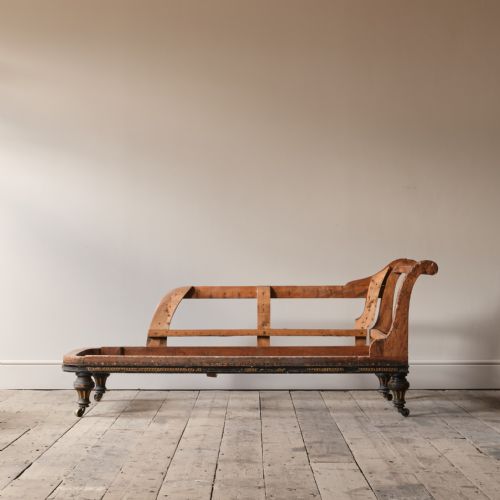
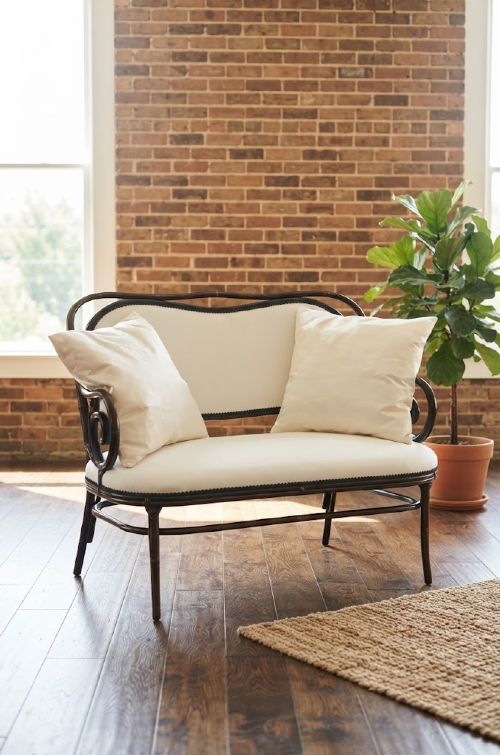
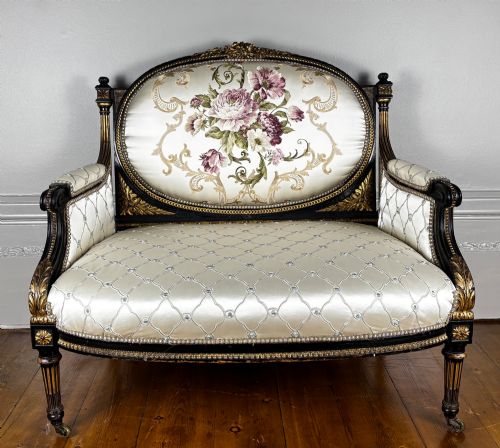
An ebonised wood sofa is a seating piece finished to resemble ebony, appearing across nineteenth-century styles including Victorian, Regency, and the Aesthetic Movement. These examples range from scroll-end designs to miniature pieces and French parcel gilt settees, alongside related seating forms.
Buyers examining this selection encounter pieces utilising ebonised wood often paired with fabric upholstery. The available items reflect diverse origins and nineteenth-century periods, capturing dark wood aesthetics from English workshops and continental makers.
How they were made
Cabinetmakers constructed these frames using timber such as wood and mahogany, applying ebonisation treatments to achieve a deep, dark finish. Gilding and brass accents frequently highlight the structural lines and carved details.
Upholstery and textile work completed the seating, with fabric applied over sprung or padded frames. Continental and English makers utilised traditional joinery methods suited to nineteenth-century production.
Cabinetmakers occasionally ebonised ordinary fruitwoods simply because genuine ebony was too heavy and costly for large Victorian settees.
What varies in quality
The sophistication of the carved wooden details and the crispness of the ebonised finish distinguish finer examples from simpler production. Superior pieces display careful attention to surface preparation and the retention of original gilding.
The integrity of the underlying timber framework and the quality of the surviving upholstery materials determine the overall standing of an individual settee. Workshops known for high-grade cabinetmaking achieve greater refinement in proportions and joinery.
Holland & Sons·Thonet·Howard & Sons·Gillows
The Ebonised Wood Sofa Glossary
- Ebonised
- Wood treated with stain, paint, or chemical processes to imitate the dark, dense appearance of natural ebony. This finish gained popularity during the nineteenth century for furniture requiring a dramatic dark surface.
- Aesthetic Movement
- A late nineteenth-century design current emphasising artistic expression, often featuring ebonised surfaces and simplified forms. Pieces from this movement frequently incorporate Japanese-inspired motifs.
- Parcel Gilt
- Partially gilded woodwork where gold leaf highlights specific carved motifs or mouldings against a dark background. This technique creates contrast on ebonised frames.
- Scroll-End
- A furniture arm or terminal shaped into a curving scroll reminiscent of a rolled scroll of paper. This form appears frequently on nineteenth-century chaises longues and settees.
- Regency
- A British design period spanning the early nineteenth century characterised by classical revival motifs and refined proportions. Furniture from this era often utilises exotic timbers and clean structural lines.
Ebonised Wood Sofa: Frequently Asked Questions
What is an ebonised wood sofa?
An ebonised wood sofa is a seating piece featuring timber treated to achieve a deep black finish resembling ebony. These pieces emerge predominantly from nineteenth-century design movements.
Craftsmen utilised this dark finish to create striking visual contrast within Victorian, Regency, and Aesthetic Movement interiors.
How do I clean an ebonised finish?
Maintain ebonised surfaces by dusting gently with a soft, dry cloth to prevent the accumulation of grit. Avoid harsh chemical cleaners that can strip or dull the dark surface treatment.
Professional restoration may be required if the ebonised coating suffers significant scratches or wear over time.
Where were these sofas made?
These sofas originate from various European workshops, with English and continental makers producing notable examples during the nineteenth century. Specific pieces reflect regional cabinetmaking traditions and local design preferences.
Maker attribution is occasionally supported by stamps or historical documentation associated with prominent nineteenth-century firms.
Are these sofas suitable for daily use?
Many nineteenth-century settees remain robust enough for regular seating when the internal frame is structurally sound. Buyers often assess the underlying wood and joinery before incorporating them into daily living spaces.
Reupholstery is frequently undertaken to adapt the fabric to modern interior schemes while preserving the antique frame.