




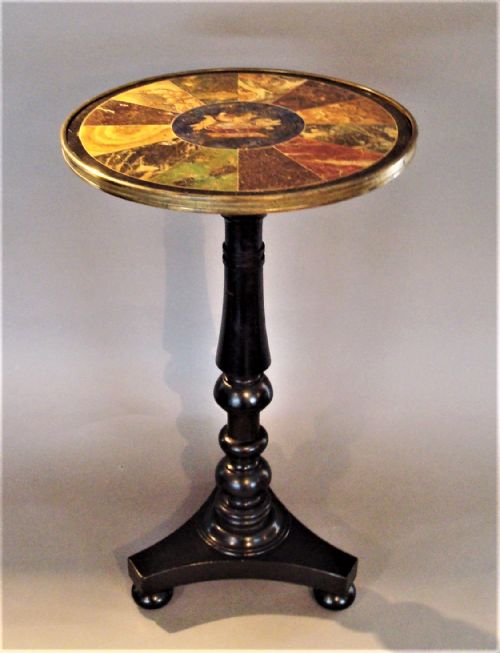


Ebonised Candle Stand
An ebonised candle stand is a dark-finished timber support for illumination, prized for its dramatic silhouette and historic decorative presence.
Ebonised Candle Stand
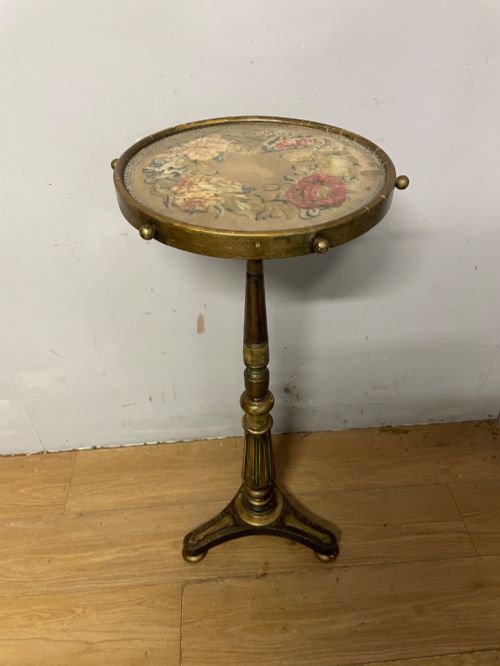
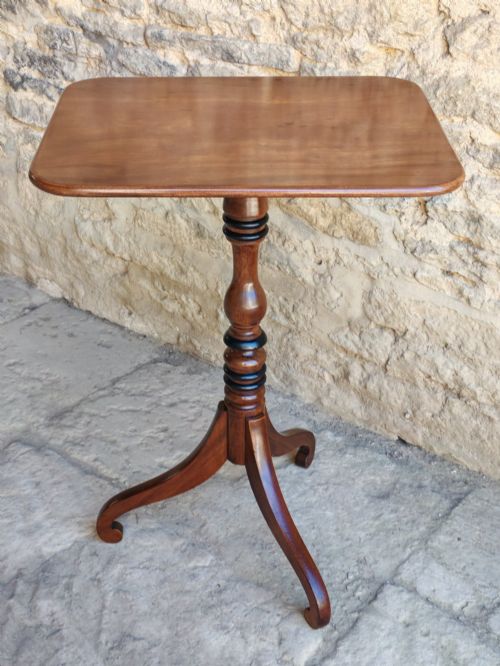
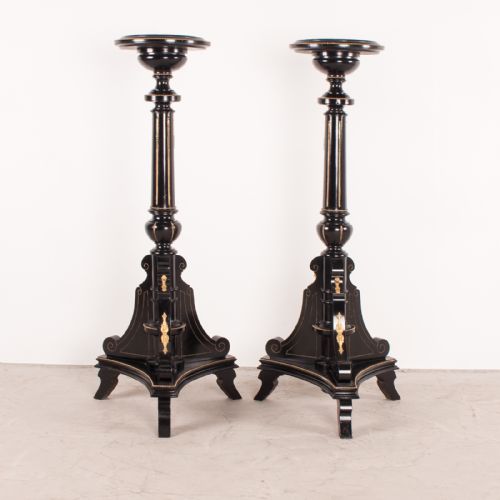
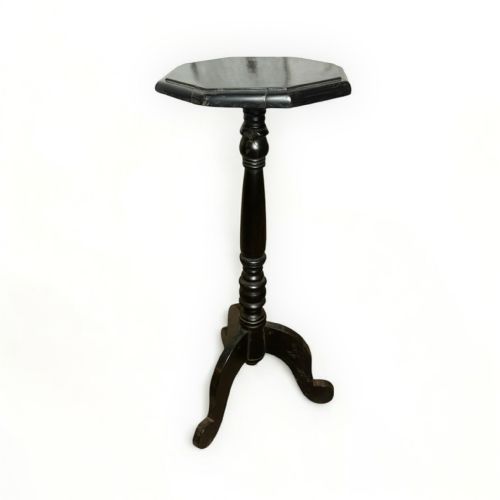
An ebonised candle stand brings striking contrast to a room through dark wood finishes applied across various nineteenth-century forms. Buyers seeking an ebonised candle stand encounter tall torcheres, smaller tripods, and occasional tables designed to elevate light sources or display decorative objects.
The selection ranges from Regency period stands to Victorian and Georgian examples, often incorporating materials such as burr birch, walnut, mahogany, and solid ebony. Alongside dedicated torchere designs, the inventory includes wine tables, pedestals, and candlesticks featuring ebonised components or tripartite bases.
How they were made
Maker techniques rely on darkening timbers to imitate expensive ebony, alongside the use of solid ebony, oak, walnut, and alder root. Artisans combined these woods with brass, ormolu, lacquer, and gold leaf to create ornate surfaces.
Construction spans the Georgian, Regency, and Victorian eras, utilising turnery, tripod supports, tilt-top mechanisms, and applied decorative schemes like chinoiserie and simulated marble.
Materials recorded across the selection include brass, gold leaf, lacquer, and ormolu paired with hardwoods like walnut, oak, and solid ebony.
What varies in quality
Distinction across the range lies in the selection of primary timbers, such as solid ebony versus painted or stained secondary woods, and the complexity of the turned or carved supports. Finer examples display meticulous joinery on tripod bases and sophisticated surface decoration including lacquer or gold leaf.
The integration of secondary materials like ormolu mounts, brass details, or intricate regional styles from Swedish or Venetian workshops elevates the execution of the piece above standard utilitarian furniture.
Humphrey Hopper
The Ebonised Candle Stand Glossary
- Ebonised wood
- Timber treated with a dark stain or finish to imitate true ebony. This technique was popular in nineteenth-century cabinet making to achieve a formal, high-contrast appearance.
- Torchere
- A tall stand or pedestal designed to support a candle or lamp. These elevated lighting supports often feature slender columns and tripod or tripartite bases.
- Tripod table
- A small table supported by a pillar resting on three legs. This construction provides stable footing on uneven historical floors.
- Ormolu
- Gilded bronze used for decorative mounts and accents. It adds metallic richness to the dark surfaces of Regency and Victorian furniture.
- Tilt-top mechanism
- A hinged table top that folds vertically when not in use. This clever design allowed tables to be stored flat against walls to save floor space.
Ebonised Candle Stand: Frequently Asked Questions
How were torcheres used historically?
Torcheres were placed around rooms to hold candles and provide functional lighting before the widespread availability of electric power. Their elevated platforms positioned flames effectively to cast light across a wider area.
Over time, they also served as display surfaces for sculptures, vases, and other decorative art objects within wealthy interiors.
How do I identify a Regency period stand?
Regency stands often feature classical motifs, elegant proportions, and specific finishes such as lacquer, simulated marble, or ormolu mounts. Makers of this era drew inspiration from ancient Greek and Roman designs.
Look for refined tripod bases, architectural columns, and sophisticated decorative treatments that reflect early nineteenth-century aesthetics.
Where should I place a stand at home?
These tall, slender pieces suit corners, entryways, or flanking larger pieces of furniture where floor space is limited. Their vertical silhouette draws the eye upward without overcrowding a room.
They function well as accent pieces to support a modern lamp, a small plant, or a sculptural object.