
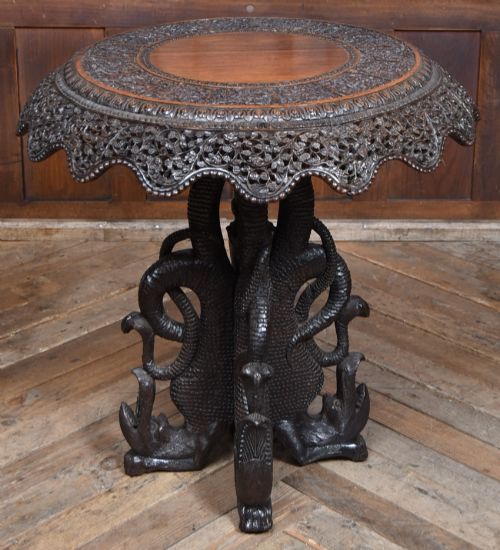


Dragon Carved Pedestal
A dragon carved pedestal brings intense sculptural carving and heavy timber presence into a room, serving as a striking display stand or torchere.
Dragon Carved Pedestal
A dragon carved pedestal is a sturdy support structure designed to elevate plants, vases, or lighting fixtures within a room. These pieces appear across various forms in the listings, including plant stands, torchieres, side tables, and occasional display tables.
Most examples found in the selection date from the nineteenth century, encompassing Victorian and Edwardian periods alongside specific regional styles like Chinese Export, Anglo-Burmese, and Japanese Meiji. Buyers will frequently encounter round or octagonal wooden tops supported by intricately carved animal motifs and columnar shafts.
The primary function of these stands is display, holding jardiniere bowls, bronze lamps, or ornamental vases. Their physical presence combines functional height with dense, narrative-driven woodwork.
How they were made
Construction relies heavily on dense timbers such as hardwood, teak, rosewood, oak, and padouk, selected for their ability to hold deep, undercut sculptural details without splitting. Artisans utilised hand-carving techniques to bring out the muscular forms of dragons, griffins, and elephants from the solid mass of the wood.
Many tables and stands incorporate contrasting materials into their design, notably inset rouge marble slabs or polished bronze mounts. Ebonising and dark staining treatments are also common, applied to accentuate the grain and shadow of the carved surfaces.
Listings feature nineteenth-century items spanning Victorian, Meiji, and Qing Dynasty periods, utilising teak, rosewood, marble, and bronze.
What varies in quality
Quality in a dragon carved pedestal is largely determined by the depth, clarity, and anatomy of the carving itself. Superior pieces show muscular definition, expressive scales, and undercut claws that stand entirely free from the core structure.
The selection of materials dictates the upper tier of craftsmanship, where dense exotic hardwoods or perfectly fitted marble inserts elevate the piece beyond standard production. Structural integrity also separates standard furniture from exceptional examples, ensuring the heavy top remains balanced over the carved pillar.
The Dragon Carved Pedestal Glossary
- Torchere
- A tall, slender stand designed specifically to hold a light source, candle, or small ornamental vase. These vertical pieces often feature exaggerated carving along the central shaft.
- Jardiniere stand
- A specialised low or medium height table built to support a heavy ceramic plant pot or flower bowl. They frequently feature water-resistant tops such as inset marble.
- Hardwood
- Timber derived from broad-leaved trees, offering exceptional density and durability for intricate carving. Rosewood, teak, and oak fall into this category.
- Ebonising
- A chemical or pigment treatment applied to cheaper woods to imitate the deep black colour of solid ebony. It was widely utilised during the Victorian period.
- Meiji Period
- A historical Japanese era spanning from 1868 to 1912, noted for highly detailed decorative arts and bronze work. Pieces from this time often display naturalistic animal forms.
Dragon Carved Pedestal: Frequently Asked Questions
What is a dragon carved pedestal used for?
These pieces serve primarily as ornamental display stands for heavy items like bronze lamps, ceramic vases, or large potted plants. They lift decorative objects to eye level within a room.
Their substantial height and sculptural bases mean they also function effectively as standalone sculptural furniture in hallways and corners.
How do I identify a nineteenth-century piece?
Nineteenth-century examples show deep, hand-chiseled wood grain and traditional joinery methods appropriate to the Victorian or Qing Dynasty eras. The use of heavy exotic hardwoods and inset marble is typical of this timeframe.
Examine the underside and joints for signs of age-appropriate tool marks and honest timber shrinkage rather than modern mechanical fastenings.
Where should I place a torchere stand?
Torchere stands suit corners, entrance halls, or flanking positions beside larger items of furniture where vertical height is needed. Their narrow footprint allows them to occupy tight spaces without blocking walkways.
Ensure the floor is level so that heavy items placed on the elevated top remain stable and secure.
What is the difference between a side table and a plant stand?
Side tables typically offer broader, flat surfaces intended for general placement of objects or occasional use with seating. Plant stands and jardiniere tables are usually narrower and taller, often featuring inset stone tops to resist moisture.
Both categories frequently share the same heavy dragon carving and column supports found across nineteenth-century oriental and Victorian workshops.