


Earthenware Chinoiserie Plates
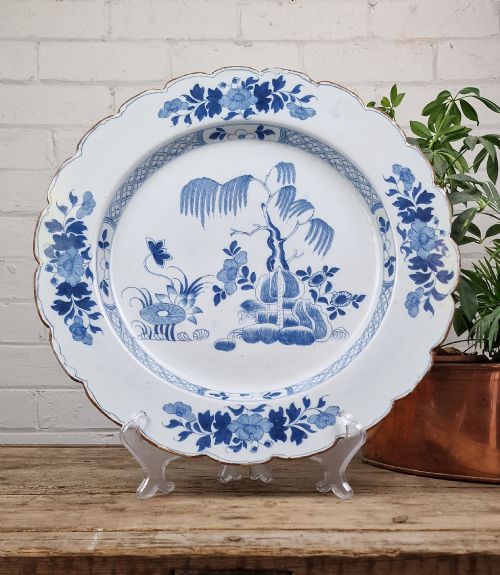
These earthenware chinoiserie plates bring together centuries of tin-glazed earthenware and transfer-printed ceramics decorated with imaginative oriental motifs.
Earthenware Chinoiserie Plates
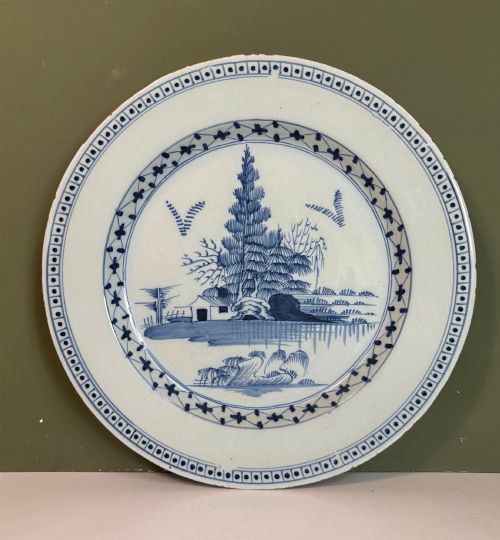
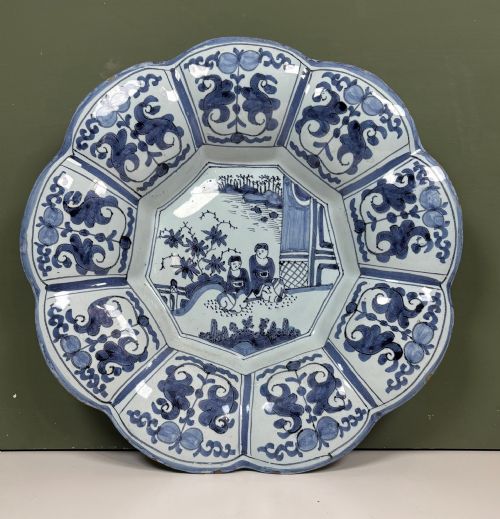
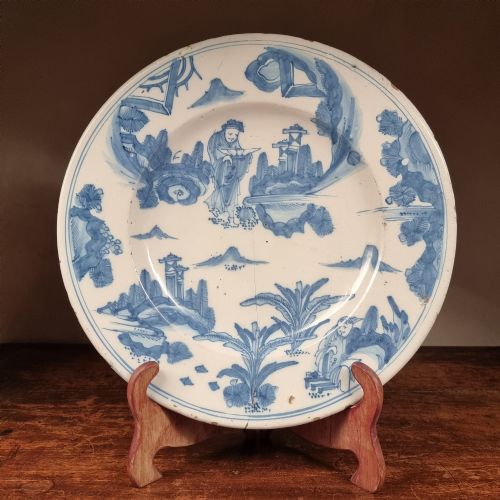
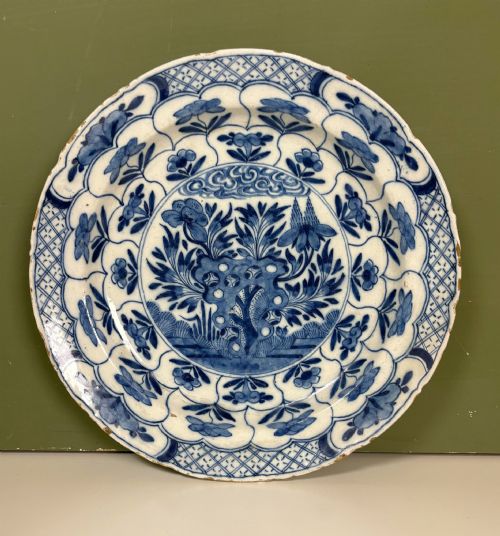
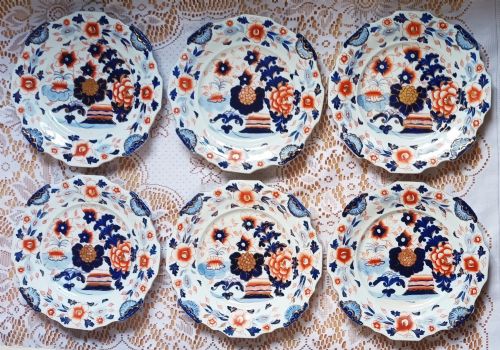
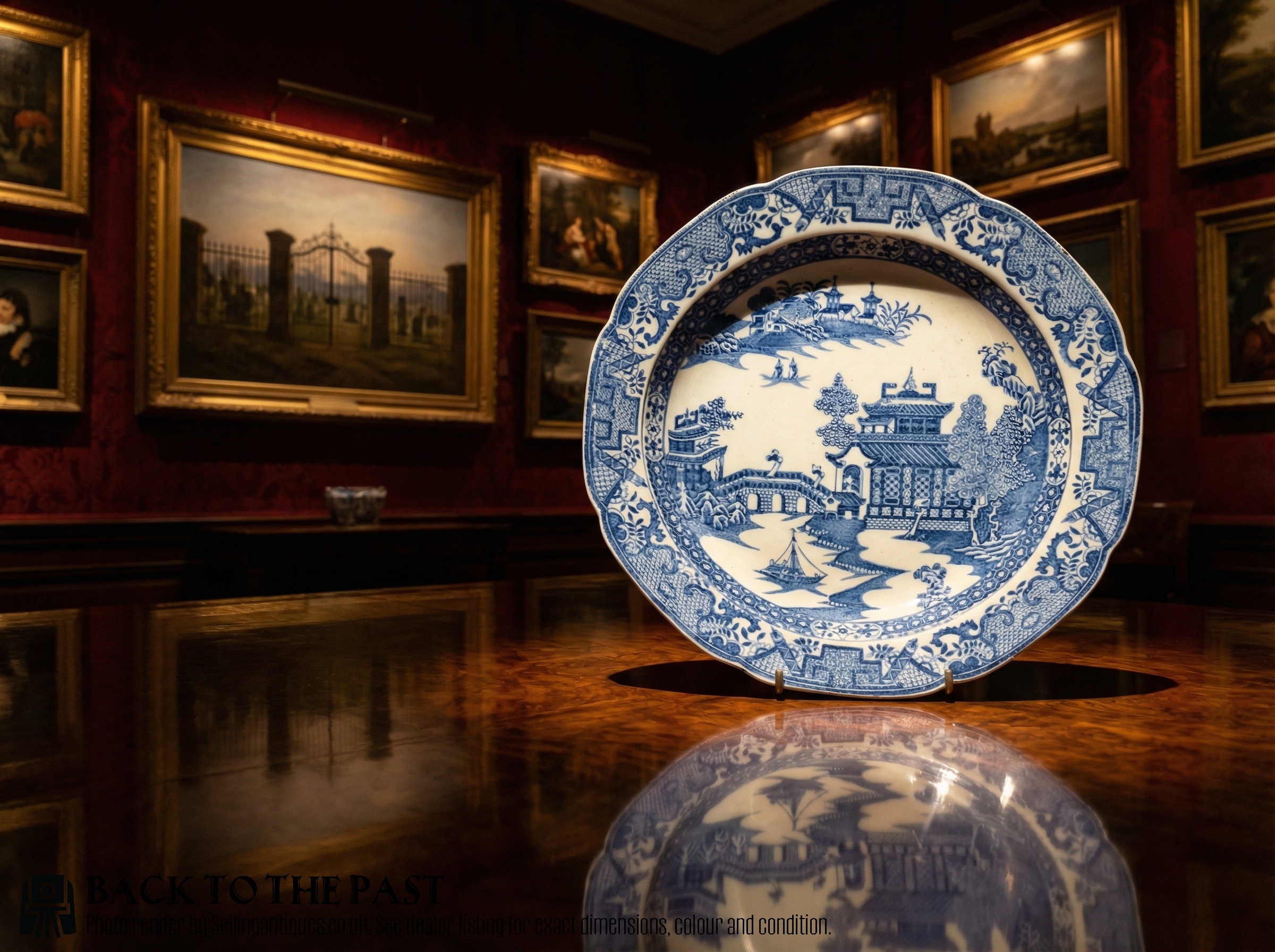
When buyers search for earthenware chinoiserie plates, they encounter a range of ceramics spanning the seventeenth century through to the Victorian era. The selection centres heavily on early tin-glazed dishes alongside later transfer-printed and pearlware examples.
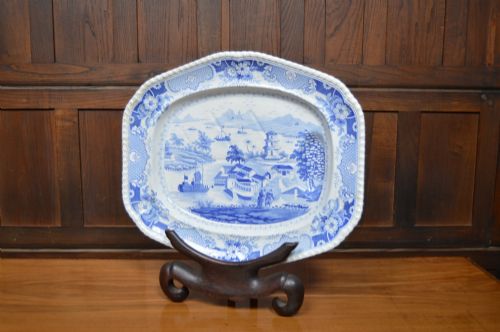
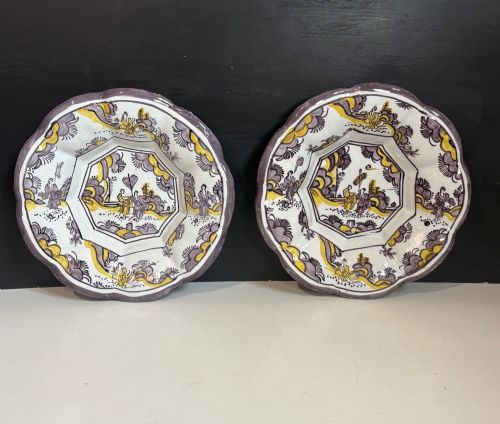
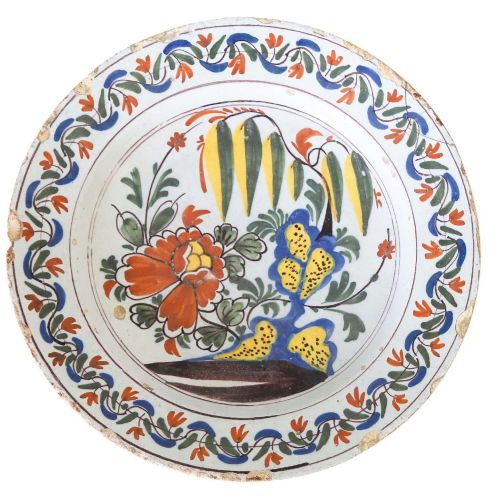
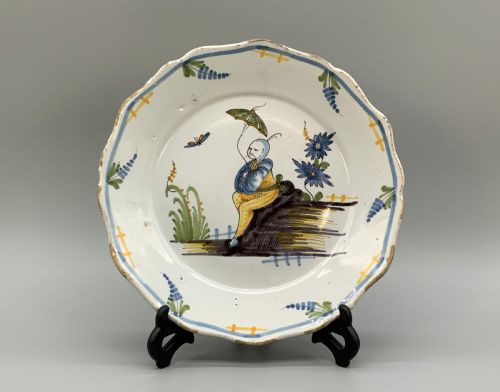
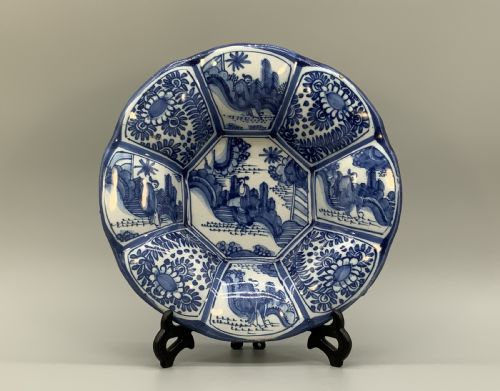
The forms vary from large chargers and serving platters down to individual dinner plates and decorative dishes. Many pieces display traditional motifs inspired by Chinese porcelain, executed across English, French and Dutch potteries.
How they were made
Potters built these wares using earthenware bodies coated in tin glaze or applied with cobalt pigment underglaze. Artisans painted designs by hand or transferred printed patterns onto the clay before firing.
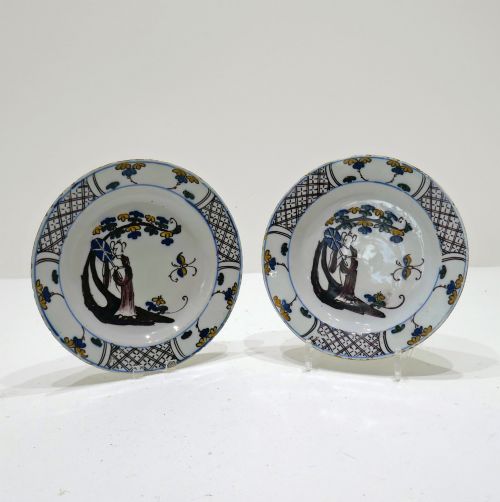
Palettes rely on blue and white pigments, alongside polychrome enamels featuring manganese, yellow and green. Later nineteenth-century examples utilise ironstone and pearlware to achieve durable surfaces.
Several eighteenth-century chargers bear thumbprint indentations on the underside, left by potters steadying the wet clay before firing.
What varies in quality
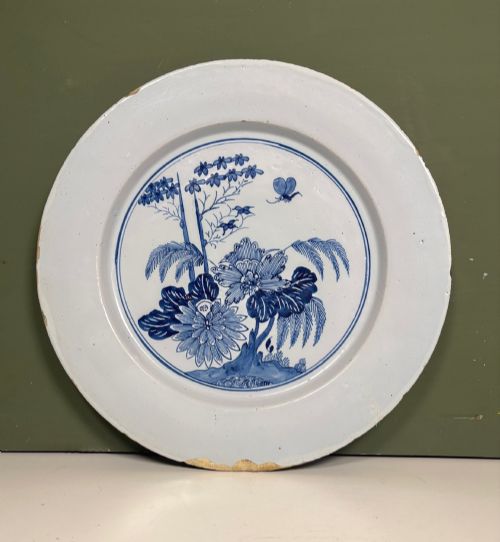
The distinction between average and exceptional pieces rests on the crispness of the hand-painted or transferred brushwork. Finer examples display precise cobalt pigment control and well-balanced compositions across the surface of the charger or plate.
Glaze consistency and the complexity of the oriental landscape dictate visual appeal. Early tin-glazed earthenware often shows subtle surface undulations that separate seventeenth and eighteenth-century items from later industrial production.
C.J. Mason·Minton·Wedgwood·Copeland and Garrett·Caughley
The Earthenware Chinoiserie Plates Glossary
- Tin Glaze
- An opaque white lead glaze containing tin oxide, providing a smooth canvas for painted decoration. It absorbs cobalt pigment readily during the firing process.
- Pearlware
- A refined earthenware developed in the late eighteenth century with a bluish tint in the glaze to mimic Chinese porcelain. It forms the body of many transfer-printed plates.
- Charger
- A large decorative plate intended for display on a sideboard or wall rather than regular dining use. These items measure substantially wider than standard dinnerware.
- Kraak Style
- A Dutch and English interpretation of Chinese export porcelain featuring panelled borders and central landscape motifs. It appears frequently on seventeenth and eighteenth-century dishes.
- Transferware
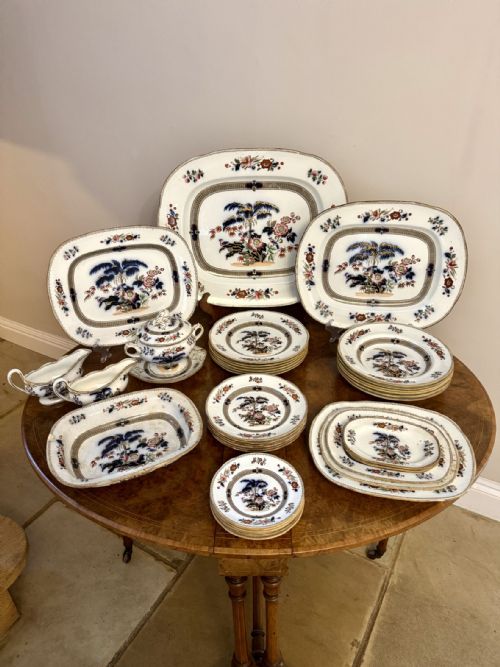
- A ceramic decoration technique where an engraved copper plate prints the design onto tissue paper, which is then transferred onto the unglazed or bisque surface.
Earthenware Chinoiserie Plates: Frequently Asked Questions
How do I date an early tin-glazed dish?
Early tin-glazed earthenware plates display characteristic soft paste bodies and tin glaze that often shows minor edge chipping. The brushwork tends to be freehand and expressive, typical of seventeenth and eighteenth-century workshops.
Examining the footring and underside reveals unglazed clay characteristics peculiar to specific production periods. Bristol, Lambeth and various continental centres left distinct physical traits on the reverse of each charger.
What is the difference between a charger and a plate?
Chargers are significantly larger in diameter than standard plates, generally exceeding twelve inches. They were designed primarily for formal display on sideboards or walls rather than for serving food at the table.
Standard plates and serving platters appear in everyday dining services and meat courses. The larger surface area of a charger allowed potters to paint more elaborate oriental scenes and complex borders.
Can I use antique earthenware plates for dining?
Using antique tin-glazed and pearlware plates for regular dining is generally discouraged due to the fragile nature of the historic glaze. Centuries of use can wear the surface pigments and cause staining on exposed earthenware bodies.
Displaying these ceramics on walls or within cabinets preserves the painted decoration and prevents accidental damage. Ironstone and later Victorian dinnerware are slightly more robust but still benefit from careful handling.
What does the chinoiserie style involve?
Chinoiserie represents European artistic interpretations of Chinese and East Asian design motifs. Artisans depicted imagined landscapes, pagodas, bridges and figures wearing traditional garments.
These patterns were adapted by English and continental potteries to satisfy a widespread fascination with oriental porcelain. The designs combine European forms with exotic botanical and architectural elements.