


Antique English Pottery Set
An antique english pottery set gathers the table wares, tea services and dessert services shaped by centuries of ceramic tradition.
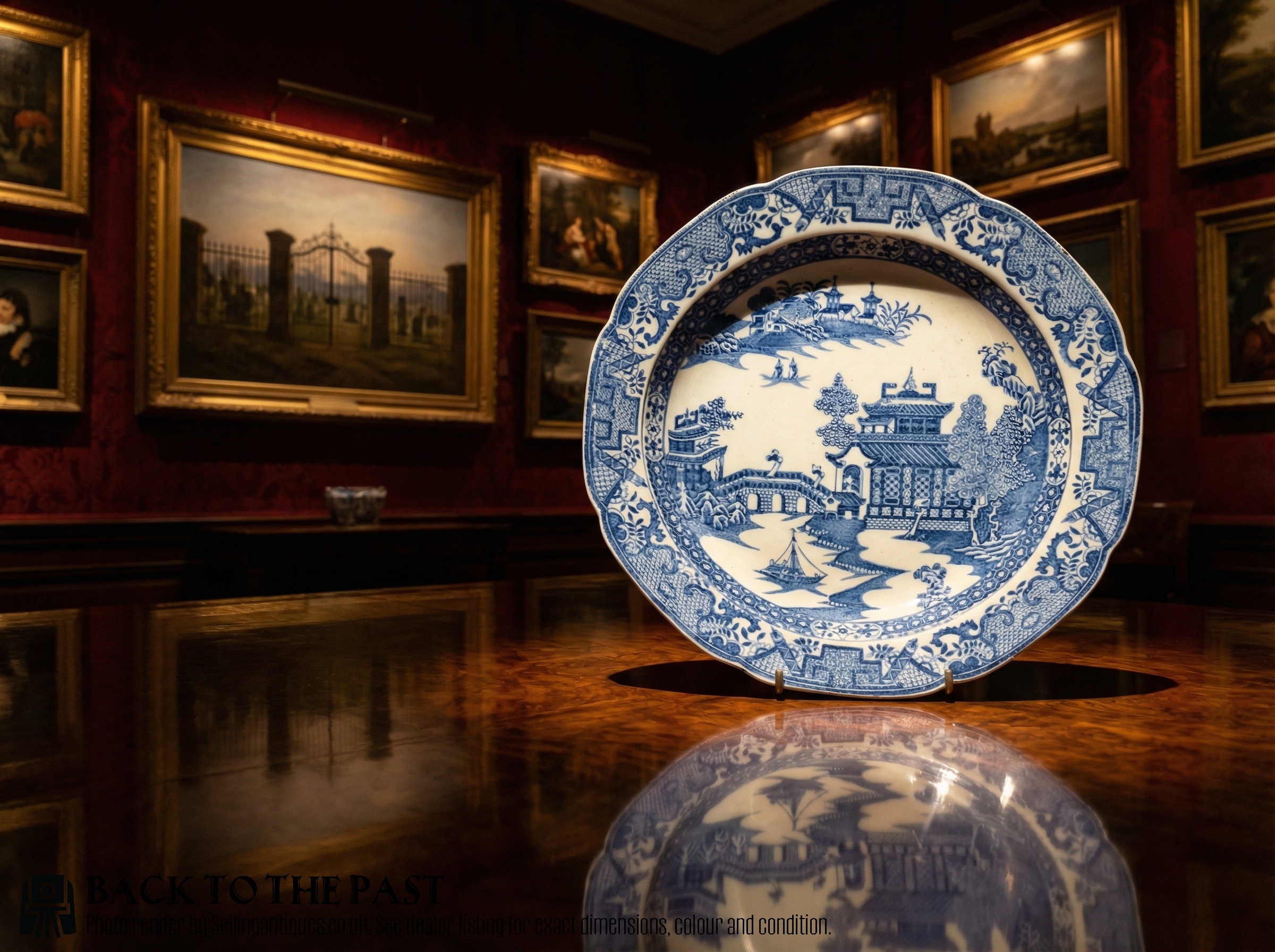
Antique English Pottery Set
When someone hunts for an antique english pottery set, they encounter a wide range of functional groupings created for dining, tea and display. The forms span tea sets, dessert services, dinner plates, soup bowls, jugs, and supper sets originating from eighteenth-century creamware up to twentieth-century art deco production.
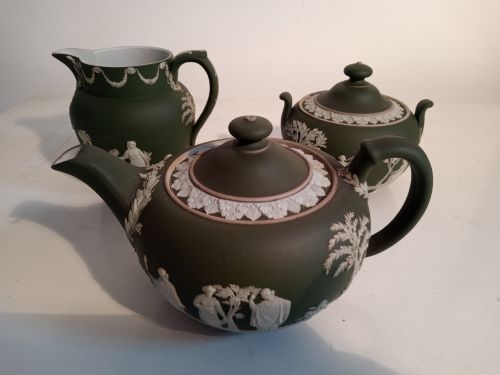
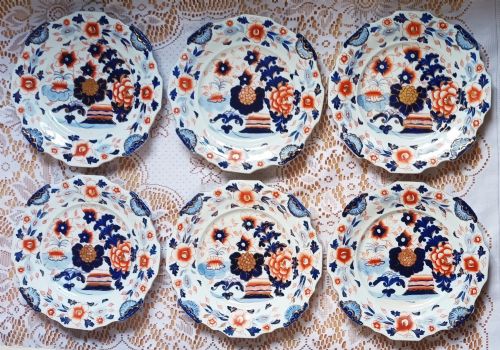
The most common configurations on this page include matching sets of plates, graduated jugs, and paired tea items such as cups and saucers or complete tea for two sets. These objects represent domestic service and decorative tableware from periods including the Georgian era, Victorian times, and early twentieth-century workshops.
How they were made
Potters relied on body materials such as earthenware, stoneware, ironstone, and creamware, shaped into plates, bowls, jugs, and tureens. These ceramic bases provided the sturdy foundations necessary for daily service or decorative display.
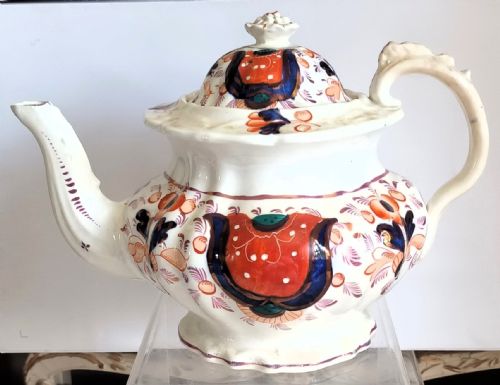
Decoration relied on hand-applied enamel, glaze, gold leaf, and transfer printing techniques like bar printing and blue and white patterns. These methods produced the rich surface designs seen on patterns ranging from oriental motifs to geometric art nouveau styling.
Listings feature items from the eighteenth, nineteenth, and twentieth centuries, incorporating earthenware, stoneware, ironstone, and creamware.
What varies in quality
Quality rests upon the crispness of the moulding and the alignment of transfer printed or hand-painted patterns across the various pieces of a set. Well-executed examples maintain consistent glaze application and precise pattern registration from the central plates down to the smallest tea bowls.
The reputation of the maker and the complexity of the design also divide standard domestic ware from finer artistic output. Sets produced by established potteries utilising detailed enamel work or specialised bodies like ironstone and lustre display a higher degree of ceramic skill.
Wedgwood·Doulton Lambeth·Booths·Clarice Cliff·Davenport·Sewell·Phillips and Bagster·Copeland Spode
The Antique English Pottery Set Glossary
- Creamware
- A fine earthenware developed in the eighteenth century with a pale yellowish cream colour glaze. It became a staple of English tables for dinner and dessert services.
- Ironstone
- A dense, durable type of stoneware patented in the nineteenth century. It offered great resistance to chipping and served as a strong base for colourful transfer printed designs.
- Transfer printing
- A decoration technique where an engraved metal plate transfers a design onto paper and then onto the ceramic surface before glazing. This allowed complex patterns to be repeated accurately across a set.
- Dessert service
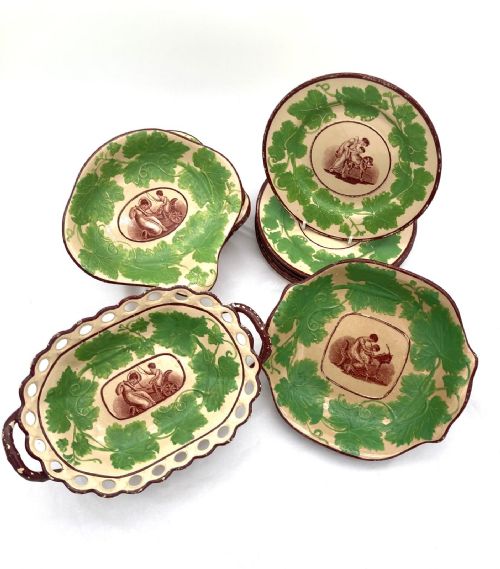
- A matched grouping of plates, bowls, and sometimes compotes designed specifically for serving the final course of a meal. They often featured elaborate enamel painting or rich borders.
- Lustre
- A metallic ceramic glaze that produces an iridescent sheen on the surface of pottery. It was applied to catch the light on small bowls and decorative items.
Antique English Pottery Set: Frequently Asked Questions
What pieces belong in a tea set?
A tea set typically includes a teapot along with supporting vessels for milk and sugar, accompanied by matching cups and saucers.
These groupings were designed for social hospitality in the parlour or drawing room during the eighteenth and nineteenth centuries.
How do I identify ironstone china?
Ironstone is a heavy, durable ceramic body that rings slightly when struck and resists everyday wear better than standard earthenware.
Many nineteenth-century examples feature impressed or printed factory marks on the underside alongside rich decorative patterns.
What is a dessert service used for?
A dessert service was utilised at the end of formal meals to serve fruit, sweetmeats, and small cakes.
These sets often contain a larger number of plates and decorative dishes than standard dining ware.
How do I care for antique pottery?
Antique pottery requires gentle hand washing in warm water without harsh detergents to protect the historic glaze and delicate enamel or gold leaf decoration.
Avoiding sudden temperature changes prevents thermal shock and preserves the underlying ceramic body.