


Early Georgian Walnut Bureau
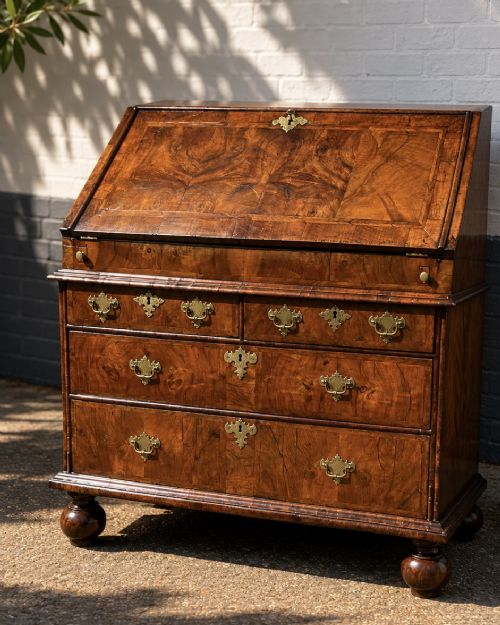
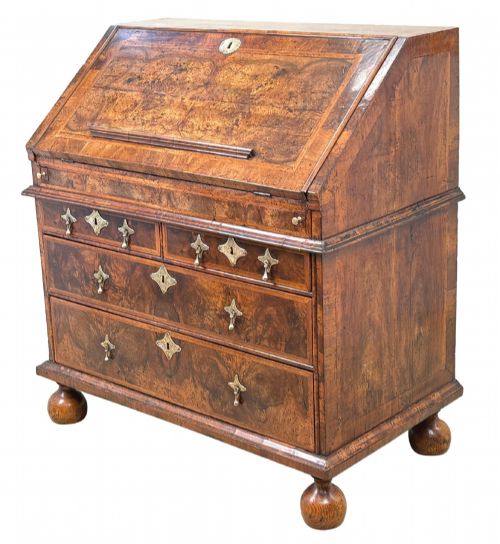
When you search for early georgian walnut bureau, you look for fall-front writing desks with fitted interiors made from figured timbers during the eighteenth century.
Early Georgian Walnut Bureau
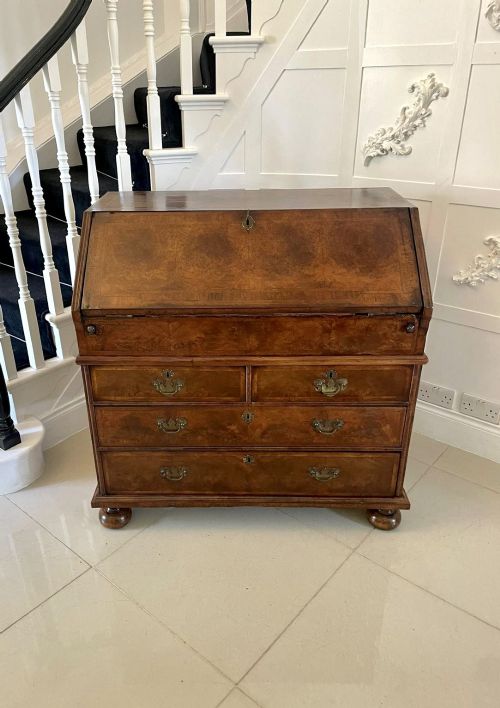
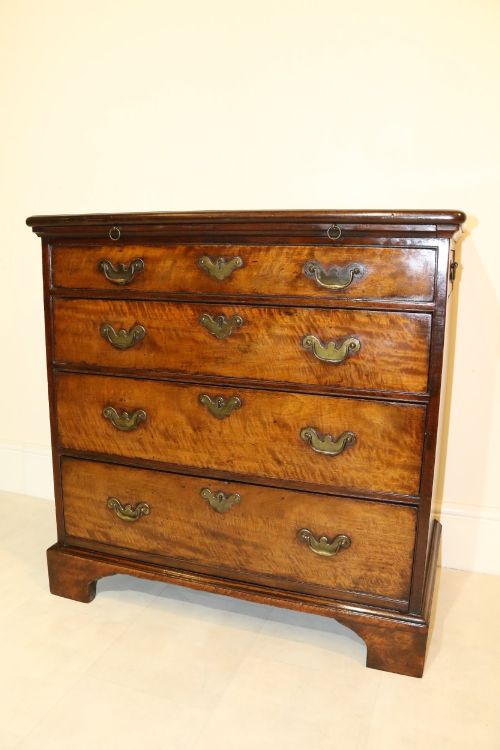
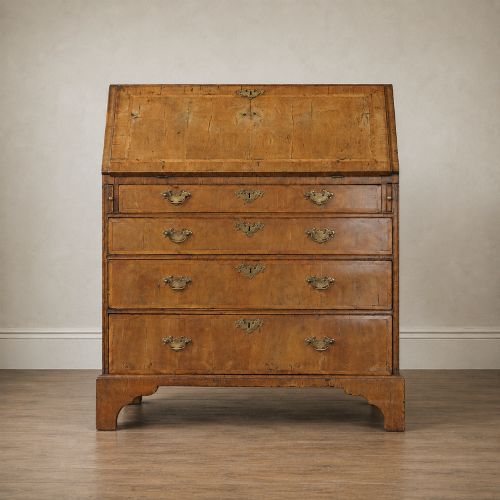
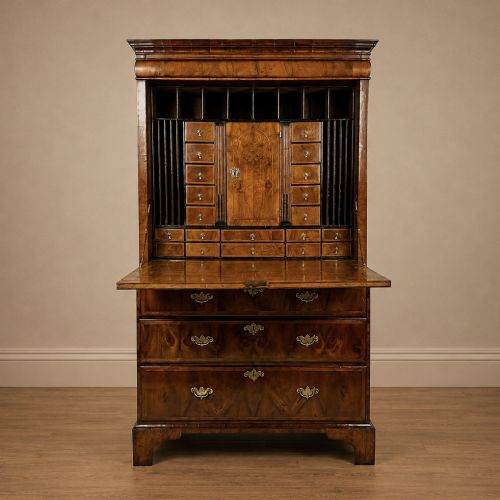
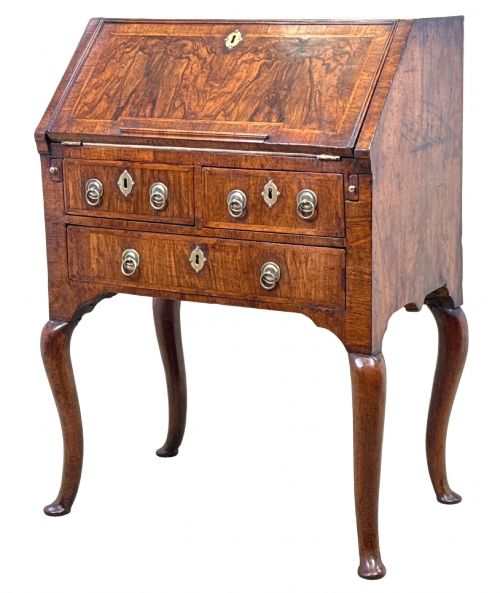
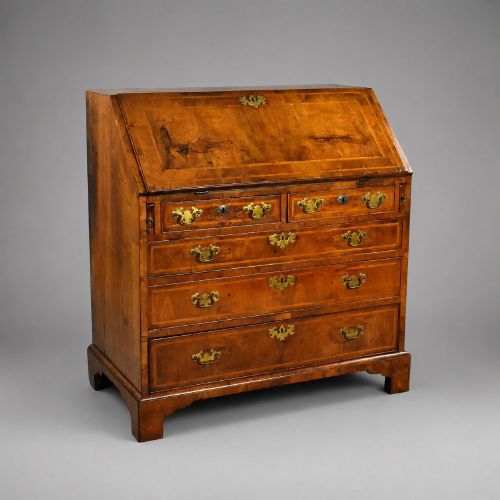
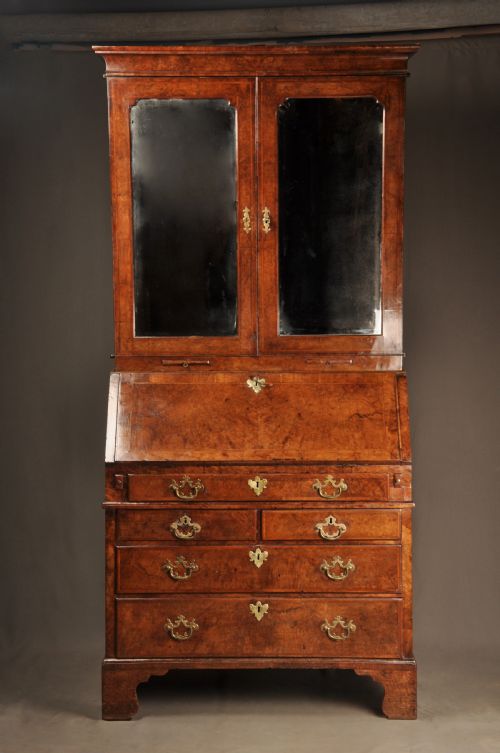
An early georgian walnut bureau is a writing cabinet with a sloping fall front that opens to reveal a fitted interior of small drawers and pigeonholes. Most examples date from the eighteenth century, spanning the reigns of Queen Anne, George I and George II, constructed as standalone pieces or as taller bureau bookcases in two sections.
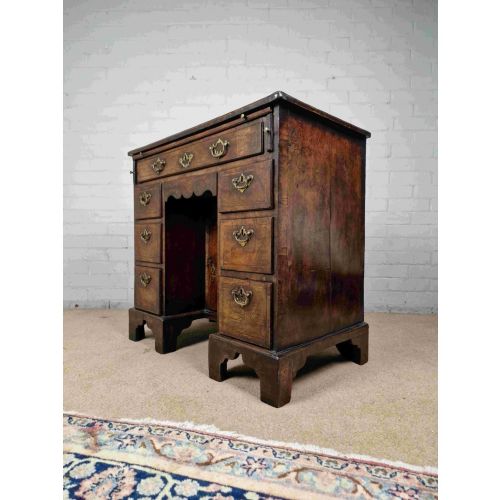
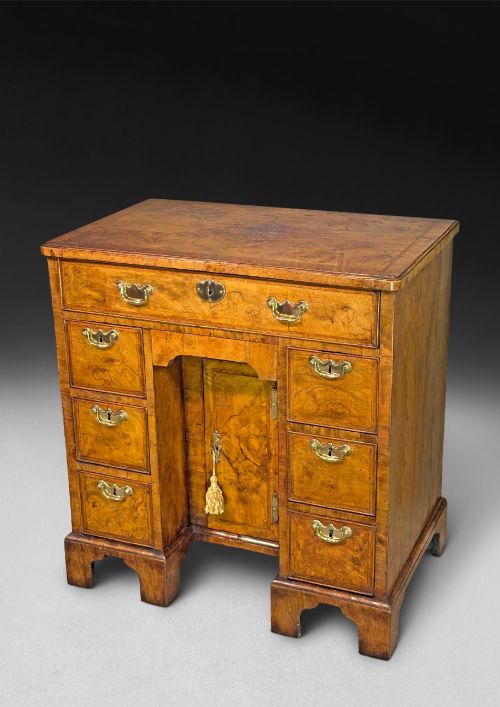
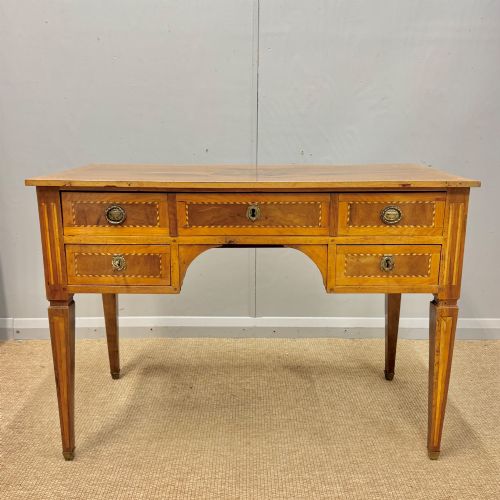
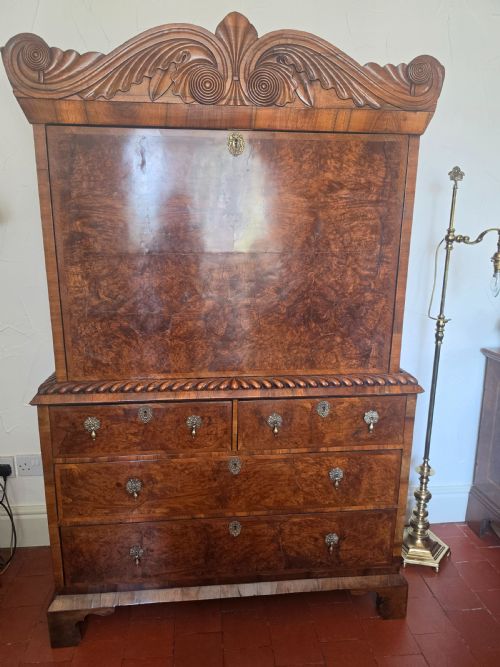
The form developed to serve private correspondence and account keeping in domestic settings. Alongside standard slope-front desks, the record includes escritoires, kneehole desks, and bureau bookcases equipped with glazed top sections and candle slides.
Materials and Techniques
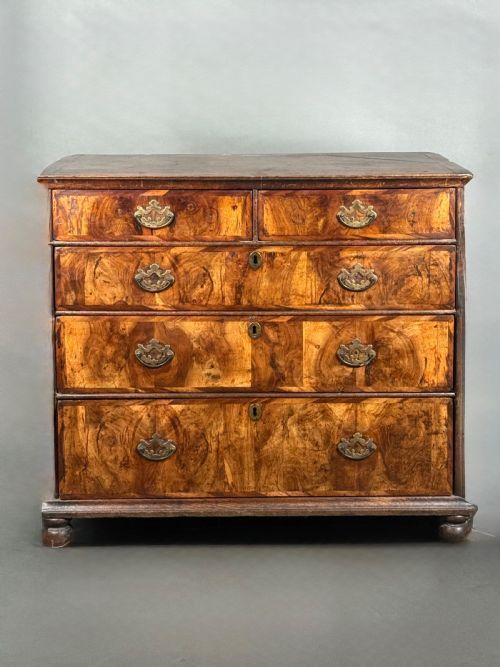
Cabinet makers used native oak and pine as secondary woods for internal framing and drawer linings, applying veneers of figured walnut and burr walnut to the primary exterior surfaces. Cross-banding in contrasting grain orientations and fine feather-banding or herringbone inlay decorate the drawer fronts and the fall front.
Hardware consists of brass drop handles, escutcheons, and hinges fixed with original ironwork. The fall-front writing surface relies on internal lopers that pull forward from the case to support the weight when open.
Several pieces preserve small hidden drawers inside the fitted interior designed for storing secret correspondence.
Distinctions in Execution
The selection of the walnut timber dictates the visual impact, with highly figured burr veneers commanding greater interest than straight-grained walnut. The crispness of the feather-banding and the precision of the cross-banded borders show the hand of the specialist veneer cutter.
Internal configuration alters the character of the piece, where secret compartments, carved pigeonholes, and stepped drawer arrangements separate standard furniture from more ambitious cabinet work. Original surface patination and the survival of early brass hardware complete the primary indicators of quality.
The Early Georgian Walnut Bureau Glossary
- Burr walnut
- Timber taken from walnut tree growths that produce complex, swirling grain patterns. This highly decorative veneer appears on the primary surfaces of formal eighteenth-century furniture.
- Fall front
- A hinged writing flap that drops from a vertical position to form a horizontal desk surface. It conceals the fitted interior drawers and pigeonholes when closed.
- Feather-banding
- Narrow strips of veneer cut diagonally and laid in opposing directions to form a herringbone pattern around panel borders. This technique frames drawer fronts on case furniture.
- Lopers
- Wooden support arms that pull out from the bureau case beneath the fall front. They bear the weight of the writing surface when the desk is in use.
- Escritoire
- A tall writing cabinet with a drop-front desk compartment above lower drawers. The form overlaps with the bureau and often includes internal compartments.
Early Georgian Walnut Bureau: Frequently Asked Questions
How do I use an early georgian walnut bureau?
Lower the fall front onto the pulled-out wooden lopers to reveal the inner compartments for writing and storage.
Keep the piece away from direct sunlight and heat sources to protect the thin walnut veneers from drying and lifting.
How can I date an eighteenth-century walnut desk?
Examine the secondary woods used in the drawer linings and internal framing, as oak and softwoods shifted in availability across reigns.
Look at the complexity of the internal fitments and the style of the brass hardware, which evolved from simple drop handles to more ornate cast designs.
Did these desks come in sections?
Standard slope-front desks were built as single carcases mounted on bracket feet or short legs.
Larger bureau bookcases were constructed in two distinct parts, featuring a glazed upper cabinet resting upon the lower desk base.