
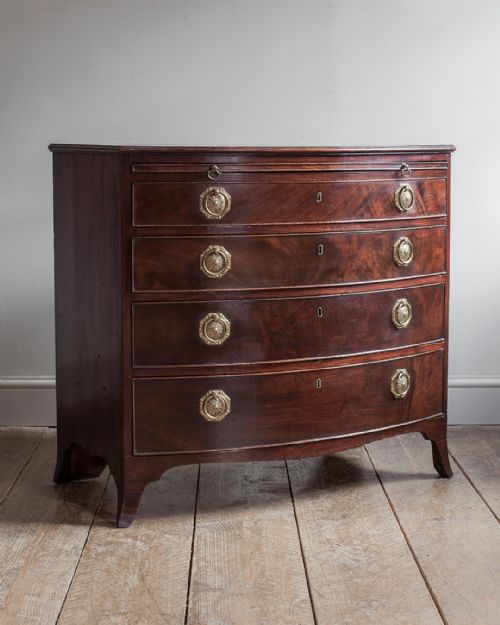
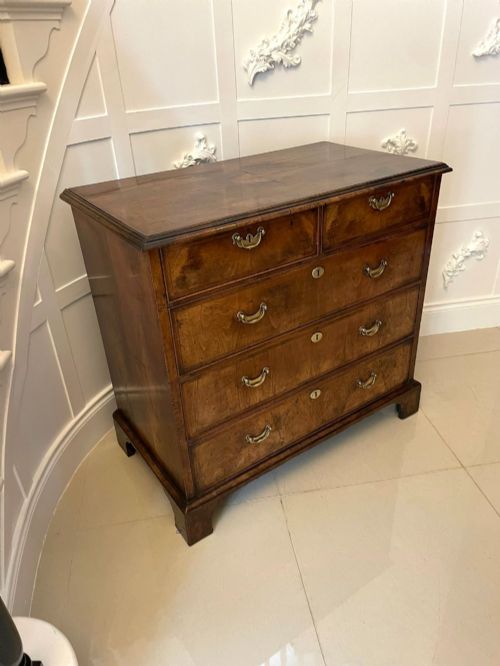
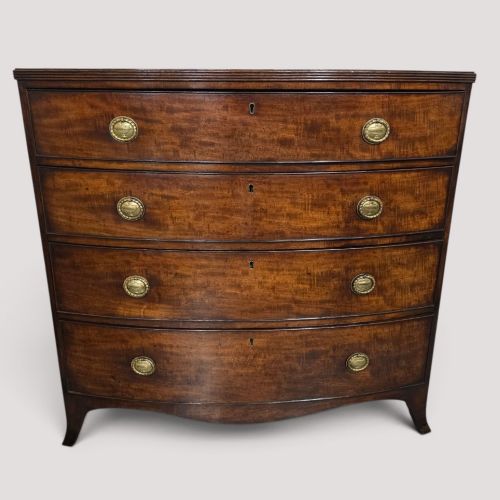

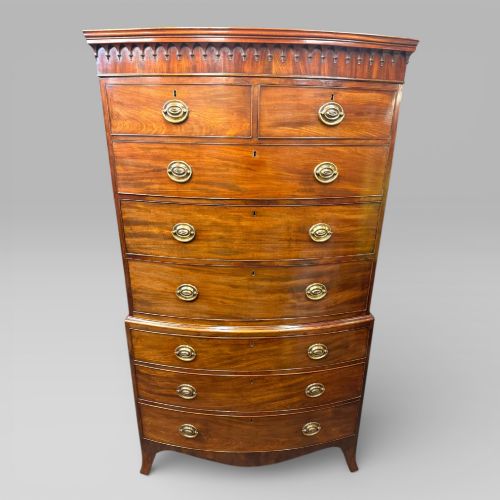
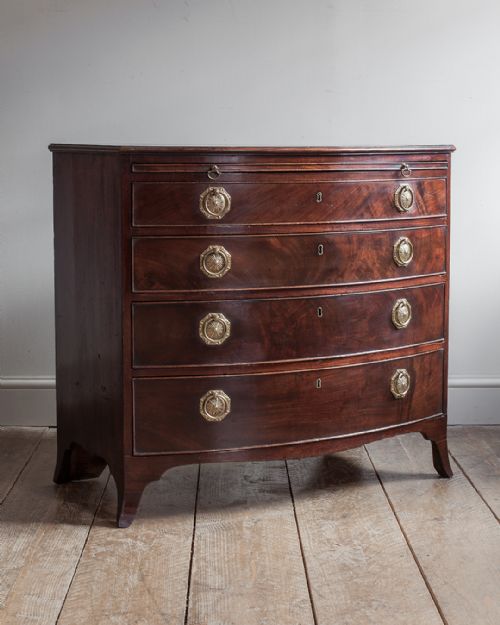
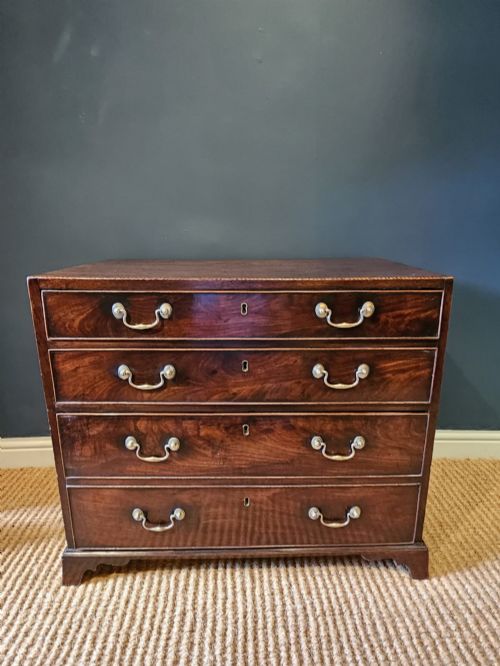
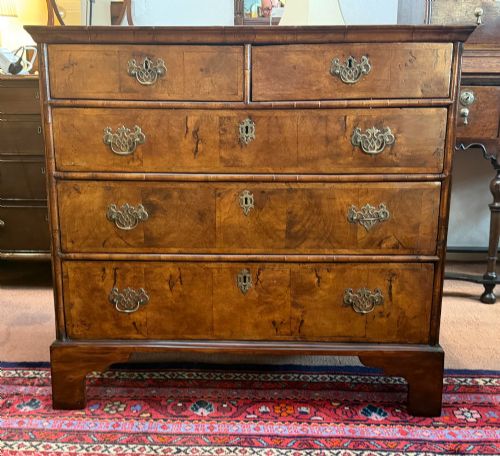
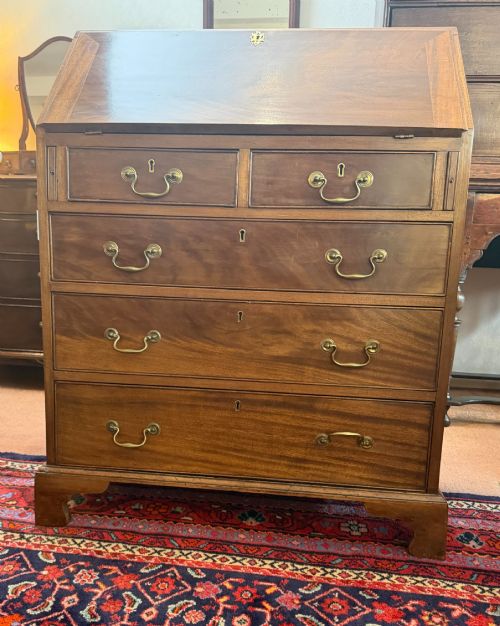
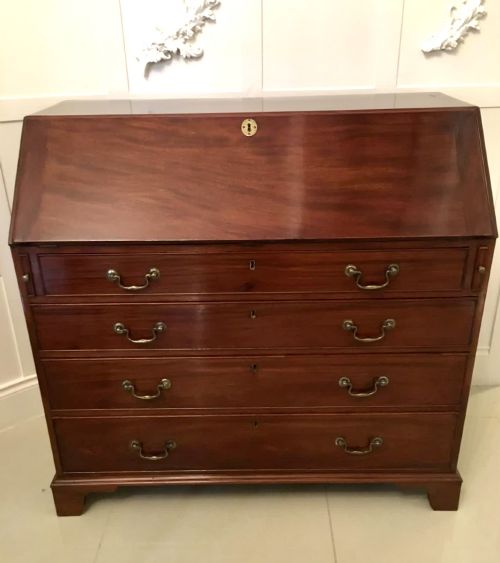
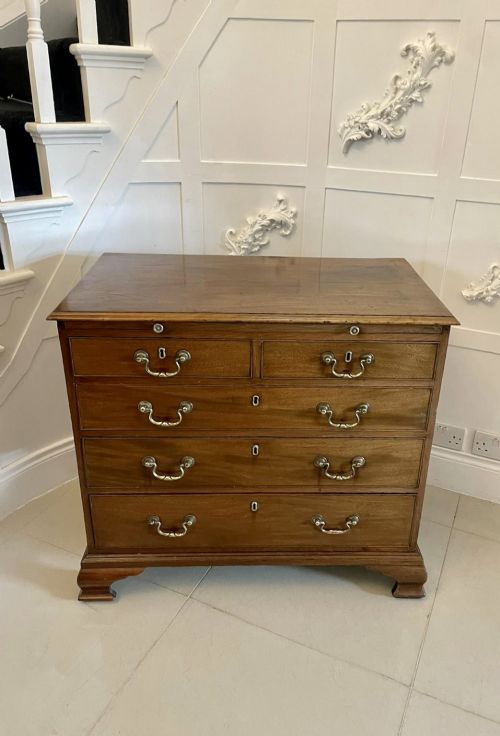
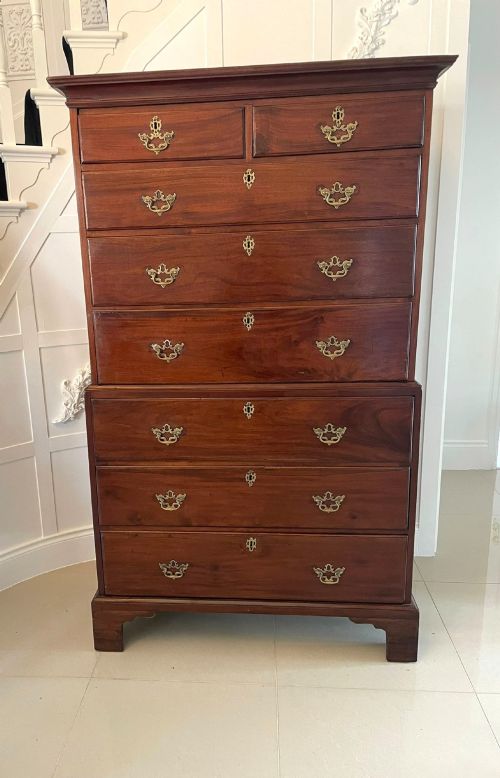
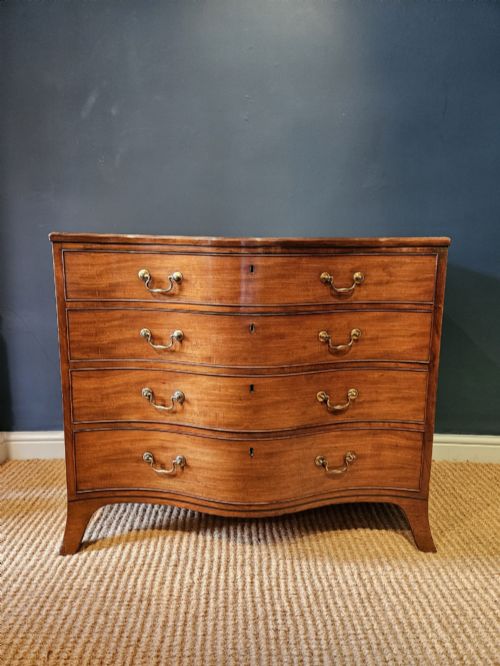
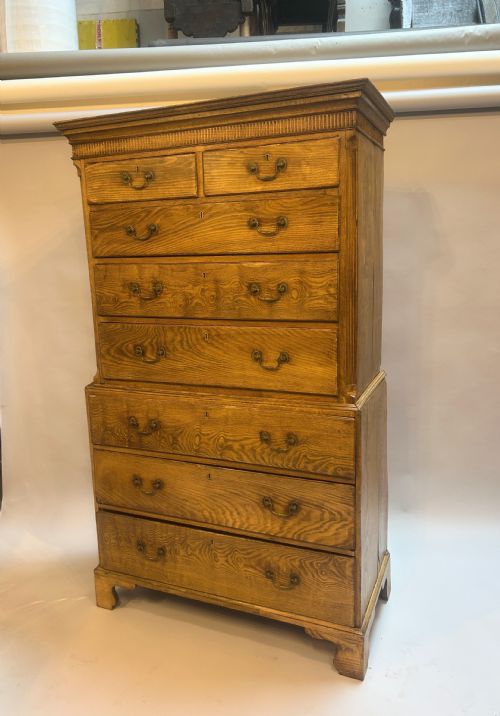
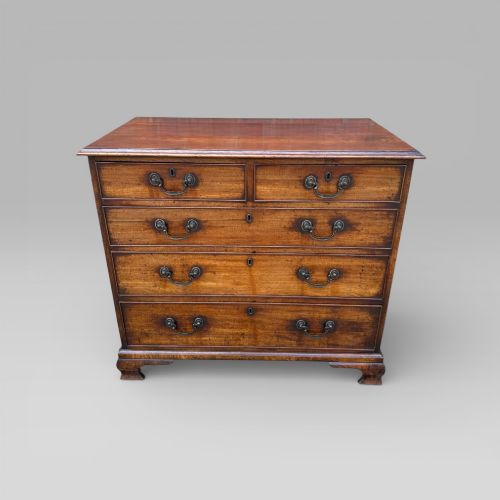
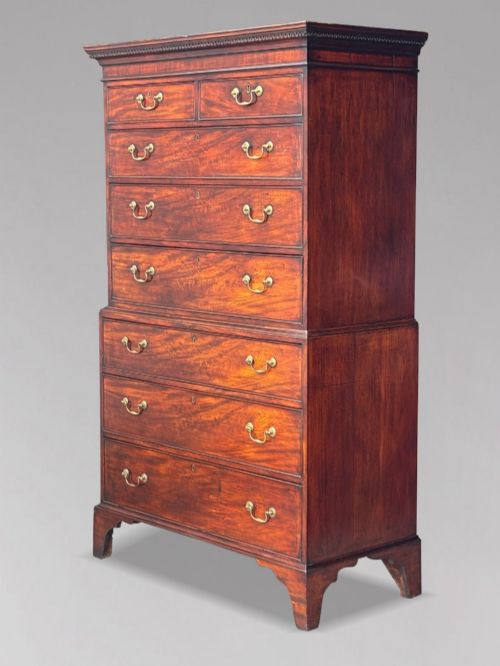
George I Chest Drawers
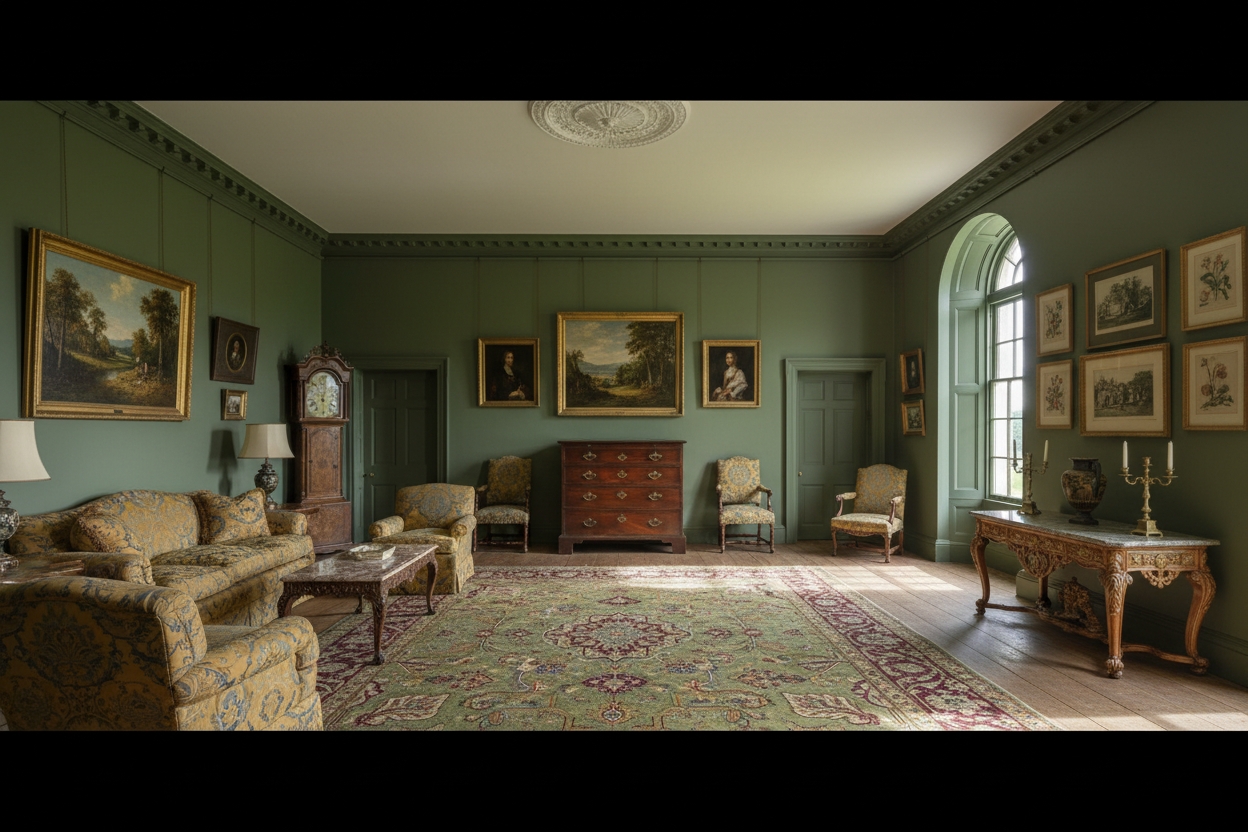
A george i chest drawers brings architectural proportion and figured timber to a room, offering enduring storage through classic 18th-century design.
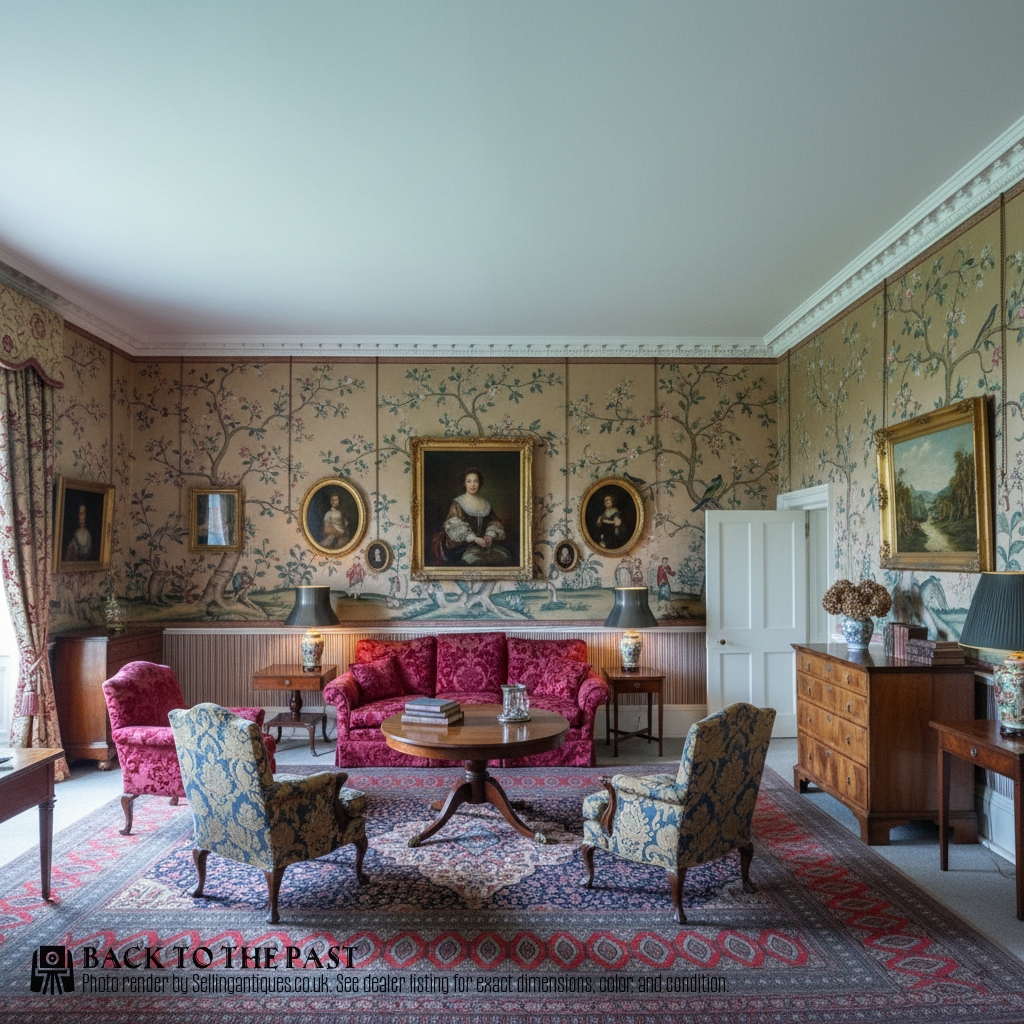
What george i chest drawers are
A george i chest drawers represents the early Georgian period, spanning the early decades of the 18th century. These pieces display restrained lines and substantial proportions.
The walnut finish dominates this group, often enriched with decorative banding. Walnut gives way to mahogany and oak in later Georgian contexts, but walnut defines the core George I aesthetic.
Makers construct these chests as functional storage items with multiple drawer tiers. Buyers encounter various scales, from compact examples to wider bedroom chests.
How they were made
Cabinetmakers select timber such as walnut, mahogany, and oak for structural frames and drawer linings. They apply veneers to primary surfaces to showcase grain patterns.
Craftsmen employ brass hardware for drawer pulls and escutcheons, securing them with traditional joinery methods. Borders feature decorative techniques like herringbone and feather banding.
Retail Price Guide 2026
Typical UK retail prices for george i chest drawers, calculated from the Sellingantiques database of over a million retail prices indexed since 2003. This retail price guide relies exclusively on Sellingantiques data; no external sources or auction records are used, so the figures do not describe the wider market.
Listings feature walnut, oak, mahogany, and brass across Georgian and 18th Century periods.
What varies in quality
Timber selection dictates visual success, with highly figured walnut veneers and consistent grain matching elevating a piece. Subtle banding details require precise hand-cutting.
Structural integrity relies on timber stability and the retention of original brass hardware. Internal drawer construction reveals the maker's attention to secondary woods.
Gillows
The George I Chest Drawers Glossary
- Herringbone banding
- A decorative inlay pattern resembling fish bones, arranged in alternating diagonals along drawer borders. This technique demands precise woodworking skill.
- Feather banding
- Narrow strips of veneer cut diagonally to form a central V-shaped motif, framing drawer faces on walnut pieces. It adds textural depth to the facade.
- Bracket feet
- Simple, architectural feet supporting the base corners of the chest, shaped in profile. They lift the case off the floor with understated stability.
- Escutcheon
- A protective brass plate surrounding the keyhole of a drawer. It prevents wear on the surrounding timber from repeated key use.
- Secondary wood
- Timber used in hidden structural areas, such as drawer linings and backboards, often including oak or pine. Its condition aids period identification.
Frequently Asked Questions
What defines a george i chest drawers?
These pieces date from the early 18th century and feature walnut construction. They rely on simple, strong proportions rather than heavy carving.
Cabinetmakers utilised decorative veneers and banding to create visual interest on the drawer fronts. Brass hardware completes the traditional appearance.
How do I care for walnut timber?
Keep the wood away from direct heat sources and strong sunlight to prevent the veneer from drying out. Maintain stable indoor humidity.
Apply a traditional wax polish periodically to nourish the surface and preserve the historic finish without trapping moisture.
Where should I place this chest?
A bedroom or hallway provides a practical setting for daily storage needs. The compact proportions fit well against a flat wall.
Ensure the surface receives indirect light to highlight the figured grain patterns of the timber safely.
How do I spot replacement hardware?
Examine the interior of the drawer front for filled holes left by previous handle configurations. Original brass leaves distinct impressions in the timber.
Match the patina of the metal with the age of the chest for consistency.