

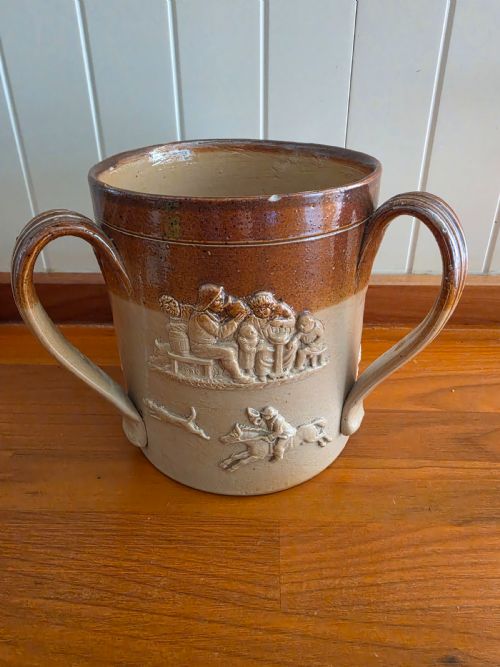


Early 19th Century Pottery
Early 19th century pottery brings robust utilitarian vessels and characterful figures into modern rooms through durable earthenware and vivid transfer-printed designs.
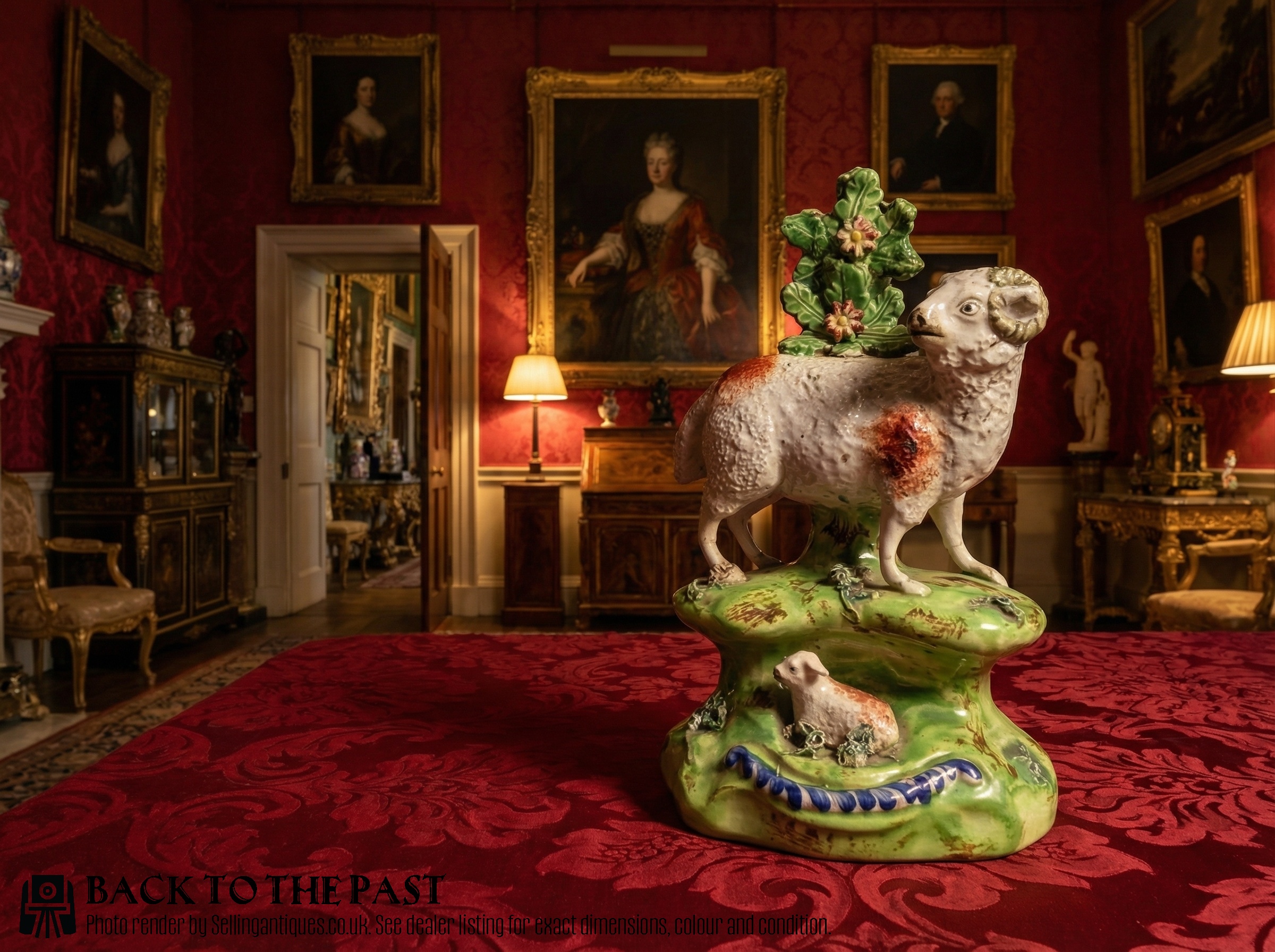
Early 19th Century Pottery
Early 19th century pottery encompasses functional kitchenware, display plates, and expressive figures shaped during the Georgian, Regency, and early Victorian eras. Buyers seeking this category encounter jugs, platters, and transfer-printed dishes alongside sculptural figures of lions, dogs, and human subjects.
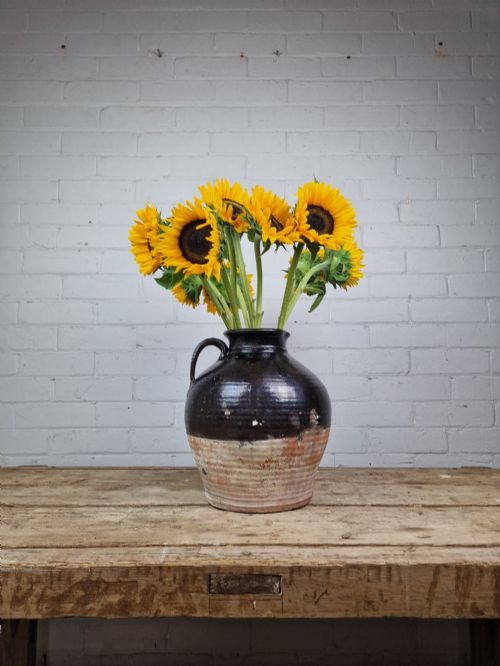
English regional potteries and Staffordshire works dominate the selection, providing durable vessels such as slipware jugs, tygs, and salt-glazed containers. Alongside these domestic utilities appear blue and white transfer-printed items, lustreware, and imported porcelain pieces reflecting contemporary tastes.
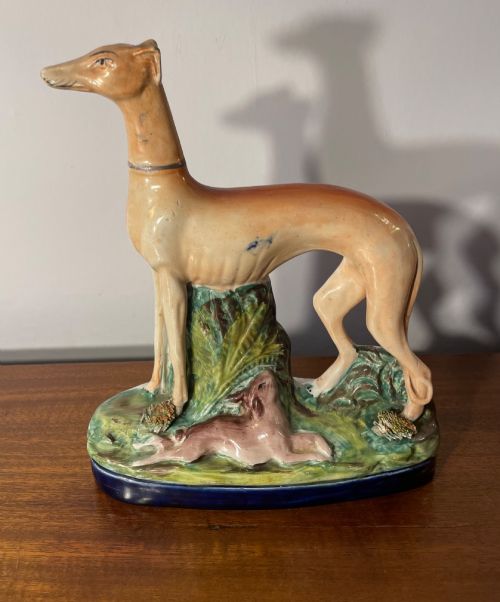
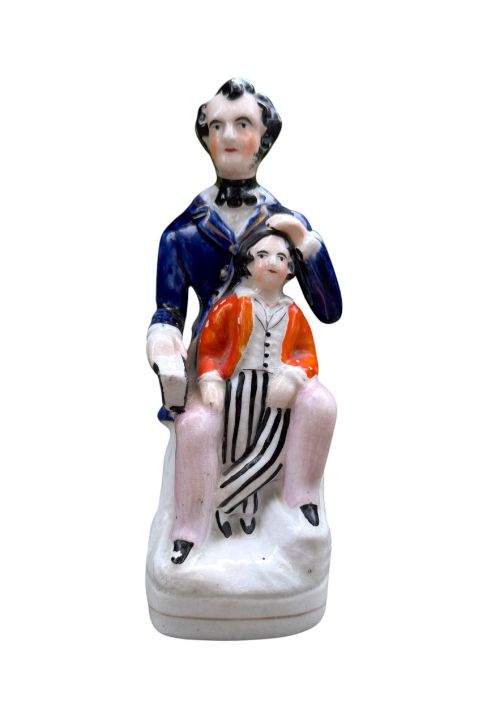
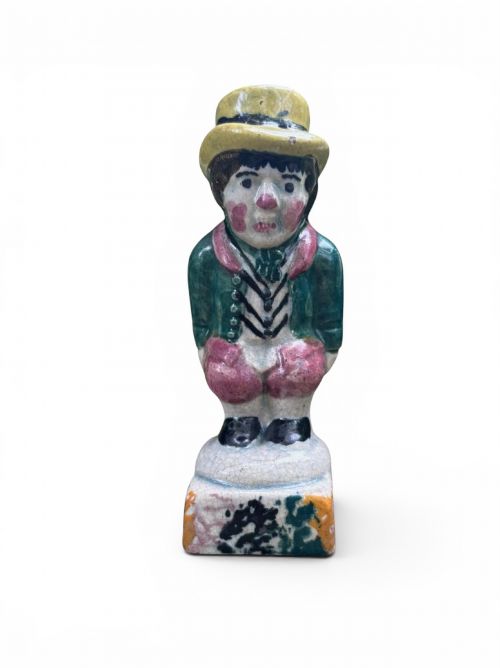
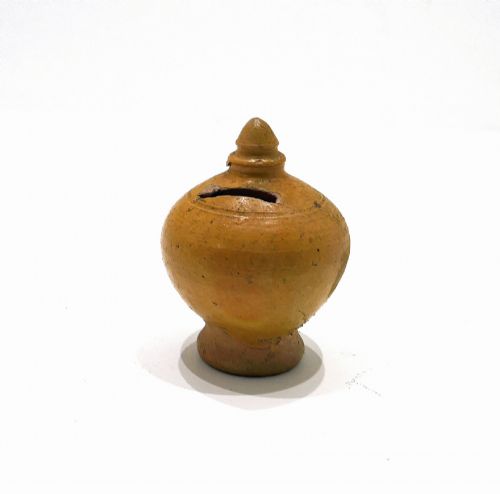
Figurative ceramics form a distinct strand within early 19th century pottery, ranging from naive folk art money boxes to modelled pearlware animal groups. These sculptural objects capture domestic animals, theatrical characters, and notable figures with hand-painted details.
Materials and Technique
Potters of this era shaped local clays into earthenware, pearlware, and stoneware bodies, applying lead glazes or tin enamels before kiln firing. Stoneware provided heavy, watertight utility for vessels like tygs and storage jars, while refined earthenware and pearlware offered smooth white surfaces for painted or transfer-printed decoration.
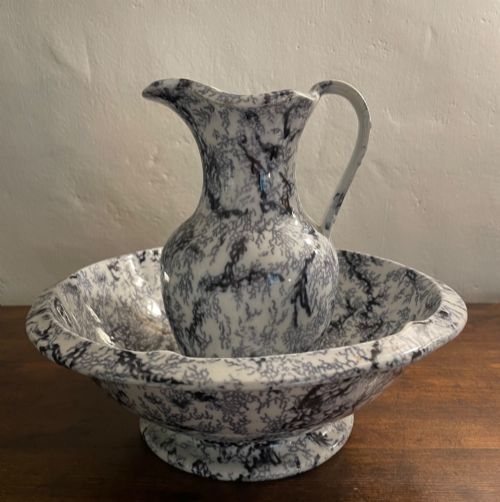
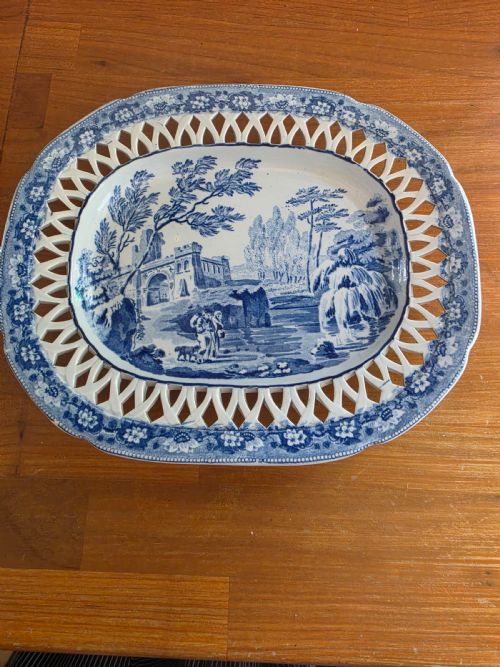
Transfer printing revolutionized output by applying engraved copperplate designs onto paper and transferring them directly onto the ceramic body. This technique enabled factories to produce intricate blue and white patterns, flow blue scenes, and pink lustre borders across jugs, basins, and large meat plates with consistent precision.
Ceramic pugs and lions watch silently from nineteenth-century mantelpieces, proving that Victorian households loved dogs just as much as we do.
Standards of Execution
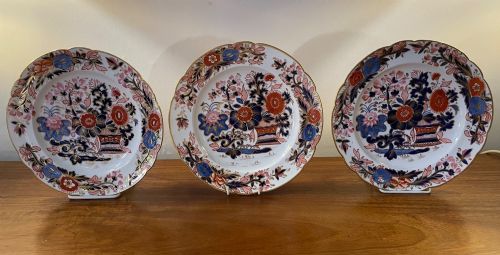
Hand-painting over transfer outlines introduces another layer of distinction, where careful brushwork in the Imari palette or enamel highlights elevates domestic ceramics into decorative display pieces. Smooth glazing without excessive bubbling or pooling indicates superior kiln control.
Davenport·Walton·Miles Mason·Sewell·Wooley
The Early 19th Century Pottery Glossary
- Pearlware
- A refined earthenware body developed by Josiah Wedgwood featuring a bluish glaze that pooled in recesses to create a whiter appearance than creamware. It served as the primary canvas for transfer-printed tea sets and figures.
- Transfer printing
- A decoration method where a copperplate engraving transferred inked patterns onto paper, which was then pressed onto the ceramic body before glazing. This innovation allowed complex landscapes and floral borders to be replicated rapidly.
- Lustreware
- Earthenware coated with metallic glazes containing copper, silver, or gold to produce a reflective, iridescent metallic finish. Pink and copper variations proved particularly popular for jugs and tea wares during the Regency period.
- Slipware
- Pottery decorated by applying liquid clay slip onto a contrasting clay body through trailing or brushing before glazing and firing. This traditional technique produced rustic country pieces with tactile surface patterns.
- Flow blue
- A Staffordshire transfer-printing technique where lime or ammonia was introduced into the kiln atmosphere to blur the cobalt design into the surrounding glaze. This produced a misty, soft-edged aesthetic highly characteristic of mid-nineteenth-century wares.
Early 19th Century Pottery: Frequently Asked Questions
How can I tell pearlware from creamware?
Examine the glaze pooled around handles, bases, or crevices to check its coloration. Creamware exhibits a warm, buttery yellow tint, whereas pearlware displays a faint bluish cast.
This subtle blue hue results from cobalt added to the lead glaze to counteract the natural yellowish tone of the underlying fired clay body.
Were these jugs used daily or displayed?
Most pitchers, jugs, and basins served practical domestic functions in kitchens, bedrooms, and dining rooms. Utilitarian earthenware handled liquids, food storage, and washing routines before entering collections.
Finer decorated pieces and figures were often positioned on mantelpieces or dresser shelves as decorative ornaments. Even functional wares frequently combined everyday utility with ornamental transfer designs.
What caused flow blue to blur?
Potters intentionally introduced volatile chlorides or ammonia gas into the kiln during the firing process. This chemical vapour caused the cobalt blue transfer print to bleed into the surrounding white glaze.
The resulting hazy effect was deliberately cultivated to soften harsh linear engravings and create a rich, atmospheric appearance on plates and jugs.