





Georgian Prattware Pottery
Georgian prattware pottery brings characterful earthenware and pearlware forms into the home, prized by collectors for their lively modelling and distinctive early colour palettes.
Georgian Prattware Pottery
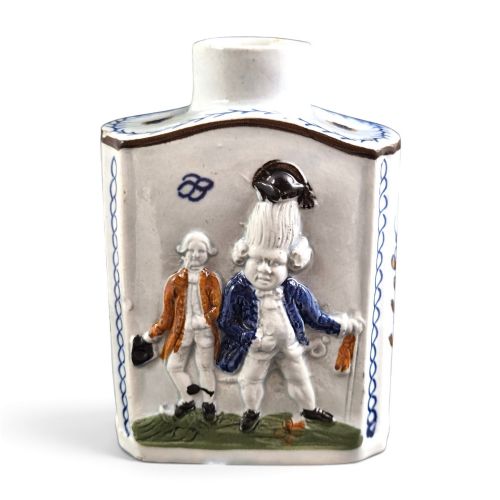
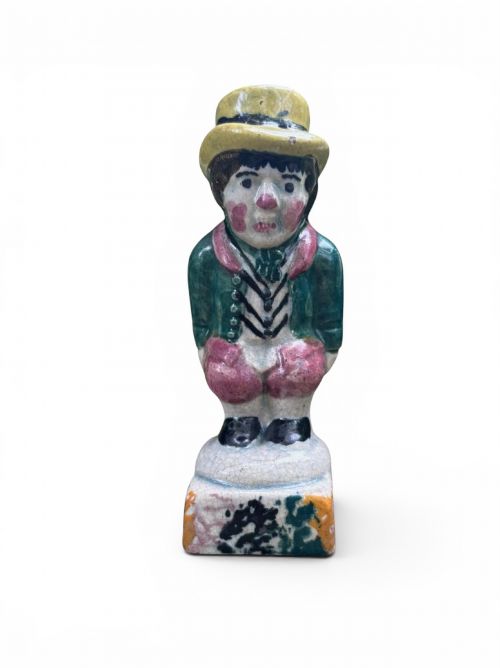
When buyers search for georgian prattware pottery, they encounter functional vessels and decorative figures made during the late eighteenth and early nineteenth centuries. These items range from mugs, jugs, and tea caddies to figurative pepper pots, Toby jugs, and animal forms.
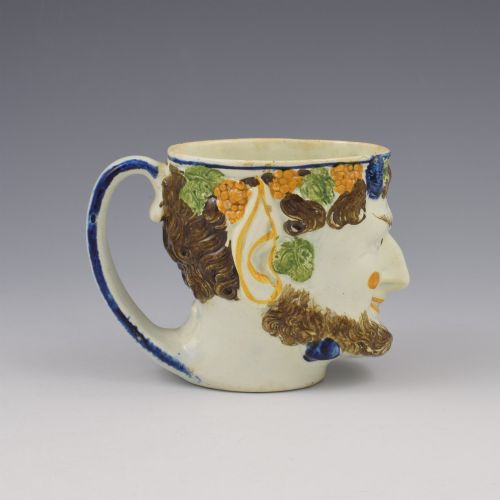
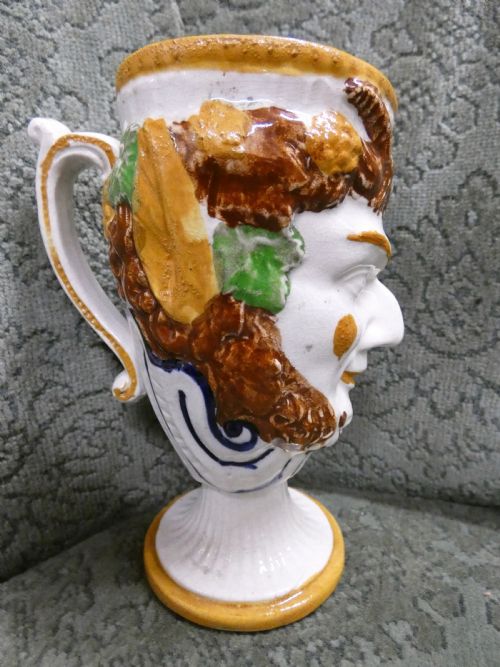
The pieces appearing on this page typically originate from Staffordshire potteries and span the Georgian and Regency periods. Figures such as Bacchus satyrs, lions, pug dogs, and literary busts sit alongside cottage models and spirit flasks.
Vessels like frog mugs and Winchester measure tankards demonstrate the utilitarian roots of these ceramics. Meanwhile, decorative plates with feather edging show how everyday tableware received the characteristic prattware treatment.
What varies in quality
Quality in these ceramics rests primarily on the sharpness of the moulding and the control of the coloured enamels. Finer examples retain crisp facial expressions on figures and clean separation of colours without blurring into the glaze.
The sophistication of the modelling distinguishes standard production pieces from superior works. Early potting and careful application of the palette elevate certain mugs, busts, and animal figures above simpler utilitarian wares.
Listings feature earthenware and pearlware bodies decorated with lead glaze and enamel, spanning the Georgian and Regency periods.
Enoch Wood & Sons
The Georgian Prattware Pottery Glossary
- Prattware
- A type of English earthenware decorated with low-relief moulding and specific underglaze colours, typically blue, ochre, brown, and yellow. It gained popularity during the Georgian era.
- Pearlware
- A refined earthenware developed by Josiah Wedgwood and adopted by other potteries, featuring a bluish-white glaze that pooled in recesses. It served as a common body for painted and moulded wares.
- Frog mug
- A drinking vessel featuring a small ceramic frog modelled inside the base, designed to surprise the drinker as the liquid drained. They were frequently produced in Staffordshire during the early nineteenth century.
- Cabbage leaf moulding
- A decorative relief pattern imitating overlapping foliage, commonly found on the exterior of Georgian jugs and tankards. It provided texture and rigidity to the vessel wall.
- Toby jug
- A pottery jug modelled in the form of a stout, cheerful man wearing a tricorn hat, usually holding a mug of beer or a pipe. These humorous figures were widely made in England.
Georgian Prattware Pottery: Frequently Asked Questions
What is prattware pottery?
Prattware pottery refers to English earthenware and pearlware decorated with moulded relief and specific underglaze colours like ochre and blue. These pieces date primarily from the late eighteenth and early nineteenth centuries.
Potters used these pigments to highlight details on figures, jugs, and plaques, creating a bright and durable finish that defined the Georgian ceramic style.
How do I date a piece?
Dating relies on examining the ceramic body, glaze characteristics, and the style of the moulding. Pearlware bodies with blue-tinted glazes often point toward the transition from the eighteenth to the nineteenth century.
Form and subject matter also offer clues, as specific animal models, literary busts, and satirical figures correspond to distinct phases of Regency and Georgian production.
Were frog mugs used daily?
Frog mugs served primarily as tavern novelties rather than standard everyday drinking vessels. The hidden ceramic frog was meant to startle the drinker as the beverage diminished.
They functioned as social catalysts and drinking games in public houses, which explains their robust earthenware construction and generous proportions.
How should I clean them?
Cleaning requires only warm water and a mild soap applied with a soft cloth. Harsh detergents or abrasive sponges can damage the delicate lead glazes and enamel colours.
Careful handling protects the fragile extremities of figures and the glazed surfaces of antique jugs, mugs, and tea caddies from accidental chipping.