
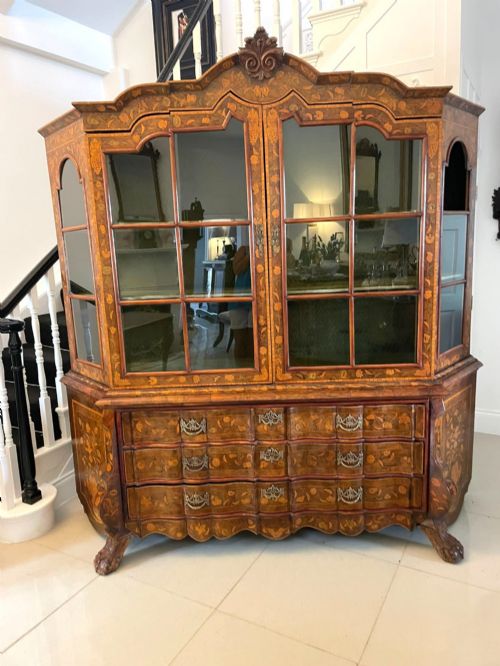
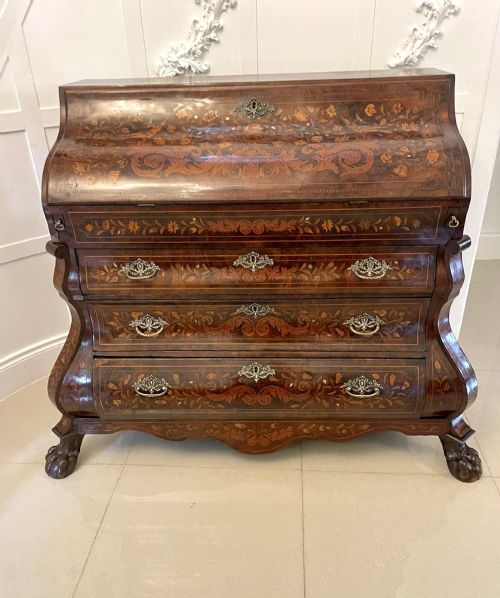
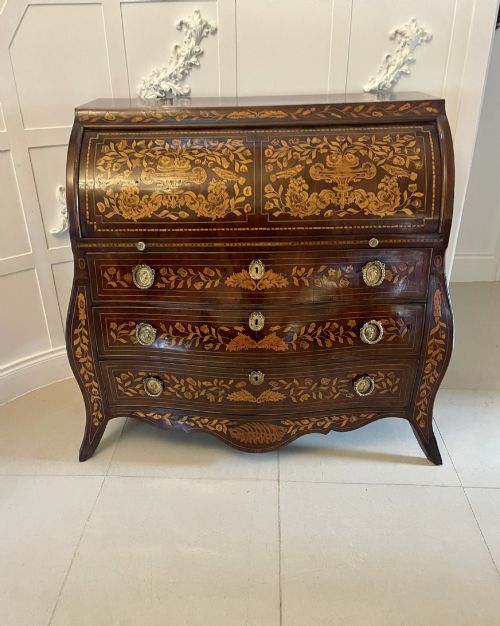
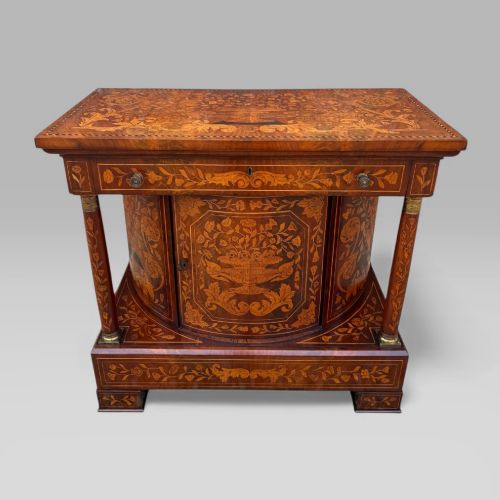


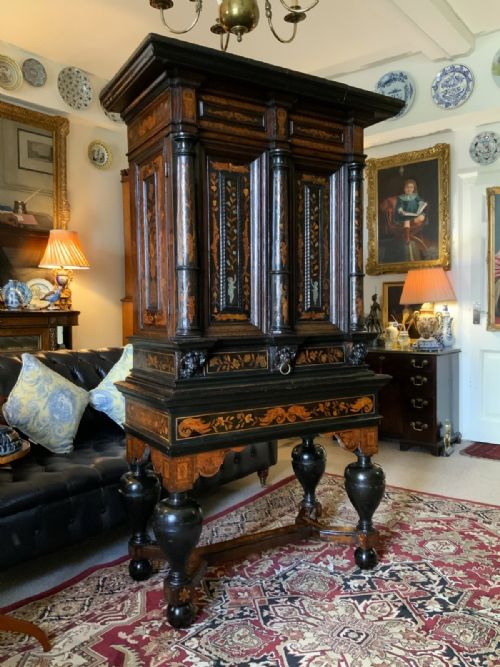
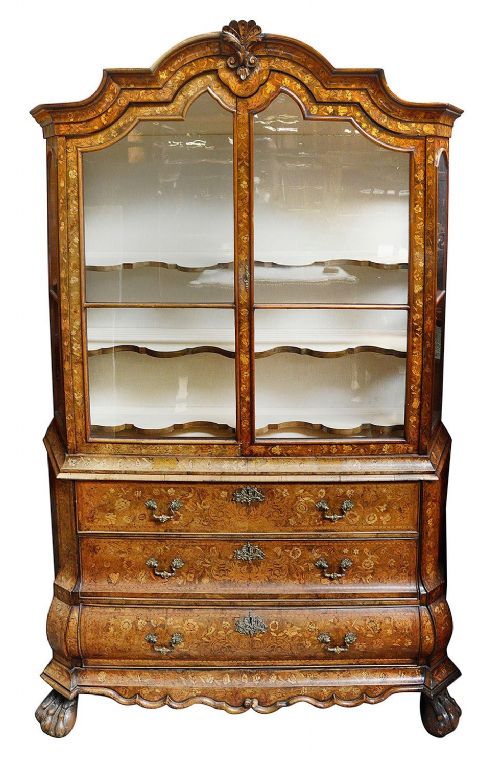
Dutch Inlaid Cabinet
A dutch inlaid cabinet brings floral marquetry and rich walnut surfaces together into a striking focal point for a period interior.
Dutch Inlaid Cabinet
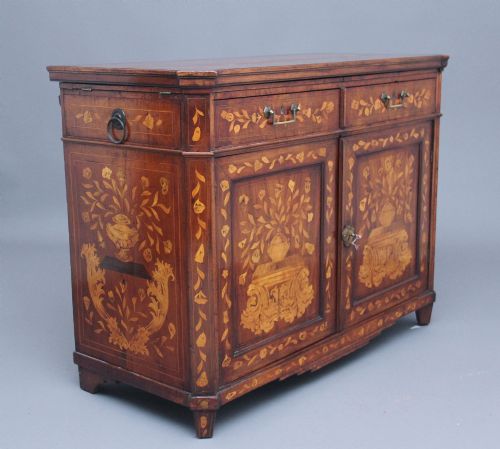
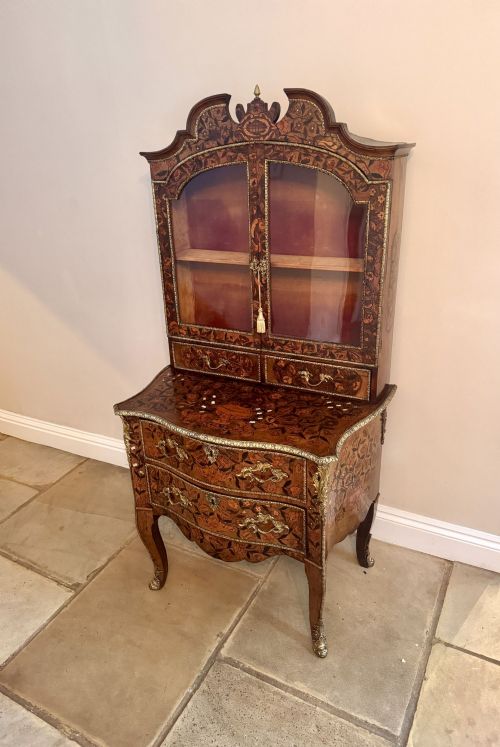
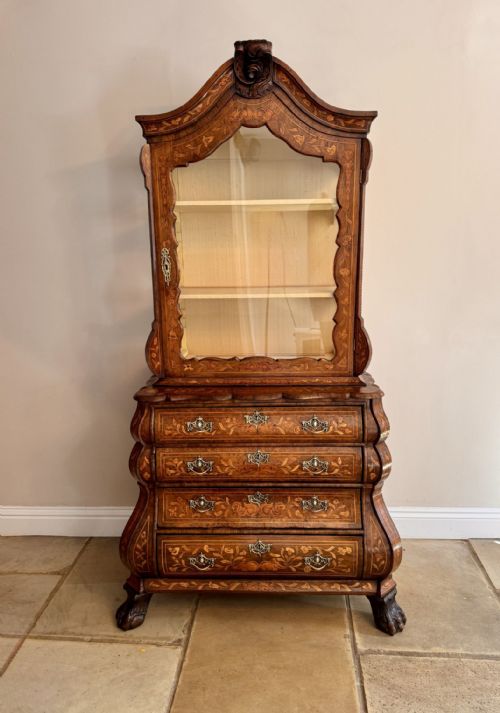
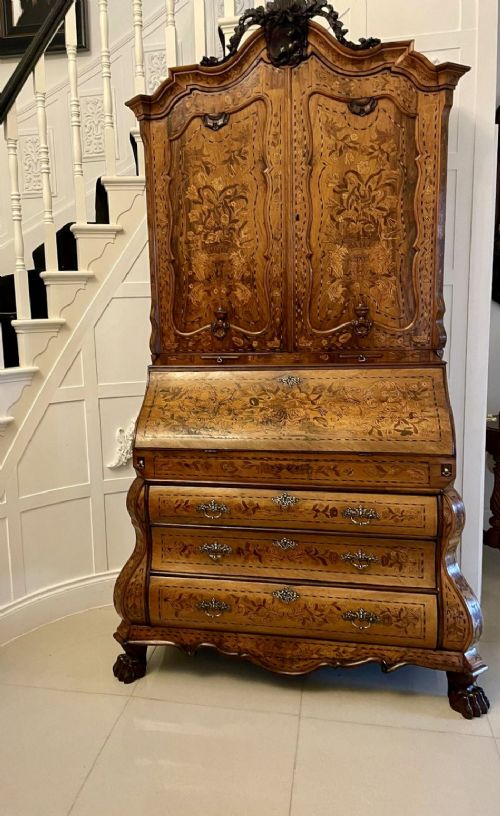
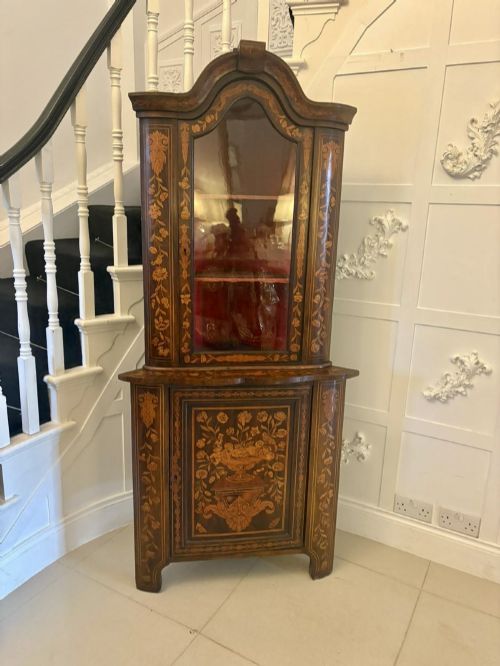
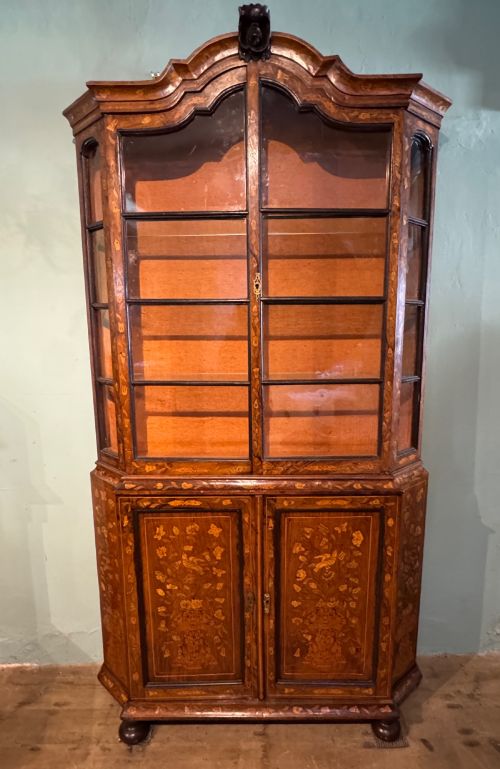
When someone searches for a dutch inlaid cabinet, they encounter an array of case furniture spanning from the seventeenth century through to the early twentieth century. The selection ranges from tall bureau bookcases and display cabinets on bombe chests to compact corner cupboards and console tables.
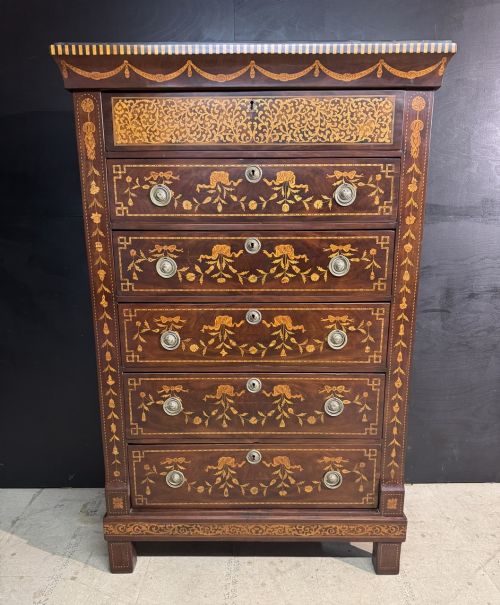
The pieces most commonly met on this page date from the eighteenth century and feature elaborate floral marquetry laid across walnut, burr walnut, and mahogany surfaces. Forms vary from stately linen presses and tallboys to secretaires and cylinder bureaux designed for writing and storage.
Origins trace through distinct periods including Dutch Baroque, Rococo, and Neoclassical styles, alongside later revivals. Buyers find both grand floor-standing display vitrines and smaller travelling or apprentice pieces that demonstrate the same intricate decorative ambition.
How They Were Made
Cabinetmakers constructed the foundational carcase using sturdy timbers such as oak, walnut, or mahogany before applying fine veneers. Fruitwood inlay and fruitwood marquetry form elaborate floral and botanical motifs across the exterior surfaces of doors, fall fronts, and drawer panels.
Contoured bombe profiles require skilled shaping of the wood to achieve the characteristic swelling drawer fronts associated with eighteenth-century workshops. Master artisans incorporated brass hardware, glazed panels for display sections, and occasional pewter inlay to complement the deep tones of the walnut and mahogany.
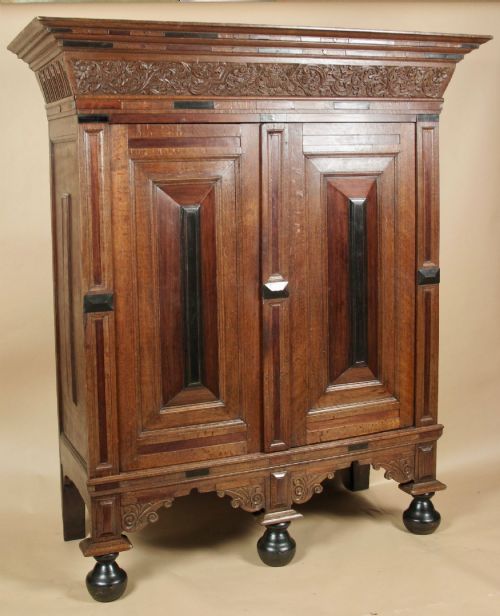
Periods represented span from seventeenth-century oak armoires through eighteenth-century bombe displays to twentieth-century revival pieces.
What Varies in Quality
The distinction between tiers of quality rests in the density and artistic execution of the marquetry work. Superior examples display intricate, multi-toned floral arrangements that flow seamlessly across drawer junctions and curved contours without awkward interruptions.
Structural ambition also defines the upper range, where challenging bombe forms and architectural bureau bookcase superstructures are executed with precise joinery. The choice of underlying timber, such as heavily figured burr walnut rather than plain hardwoods, elevates the visual depth of the finished piece.
Edwards and Roberts
The Dutch Inlaid Cabinet Glossary
- Marquetry
- Decorative patterns formed by fitting together small pieces of veneer into wooden panels. This technique creates complex pictorial scenes, most often floral designs on these cabinets.
- Bombe
- A swollen or bulging convex shape applied to the front and sides of case furniture. This curvilinear form is typical of eighteenth-century Dutch cabinet design.
- Bureau bookcase
- A combination piece comprising a sloping desk compartment over drawers, surmounted by a glazed or panelled bookcase section. It serves multiple domestic functions in a single tall item.
- Kussenkast
- A traditional Dutch armoire style characterised by cushion-moulded doors and panels. Early examples often utilise dense hardwoods like oak, ebony, and rosewood.
- Secretaire
- A writing cabinet featuring a fitted fall-front desk drawer concealing pigeonholes and small drawers. It combines storage with a dedicated writing surface.
Dutch Inlaid Cabinet: Frequently Asked Questions
How do I date a dutch inlaid cabinet?
Dating relies on observing the structural proportions, timber choices, and stylistic markers such as Baroque curves or Neoclassical symmetry. Eighteenth-century examples frequently employ burr walnut and elaborate floral marquetry over bombe carcases.
Later nineteenth-century and revival pieces often adopt broader proportions or incorporate mechanical fittings within cylinder bureaux. Comparing the secondary timbers inside drawer linings also helps confirm the period of manufacture.
Where should I place a corner cabinet?
Floor-standing and wall-mounted corner cupboards make efficient use of unused angles in reception rooms and dining spaces. Their curved or panelled doors allow them to anchor an empty corner while providing display or storage capacity.
Position them away from direct heat sources and strong sunlight to protect delicate fruitwood marquetry and walnut veneers from drying out or fading.
How do I care for walnut veneer and inlay?
Maintain stable indoor humidity and temperature levels to prevent the underlying woods from expanding and causing veneer to lift. Dust the surfaces regularly with a soft, dry cloth rather than applying modern silicone polishes.
Occasional application of traditional beeswax helps nourish the wood and preserve the subtle tones of fruitwood floral inlay without building up harmful residues.