


Mahogany Floral Marquetry Commode
These mahogany floral marquetry commode pieces bring rich timber and detailed floral inlay into a room, offering both practical storage and striking craftsmanship.
Mahogany Floral Marquetry Commode
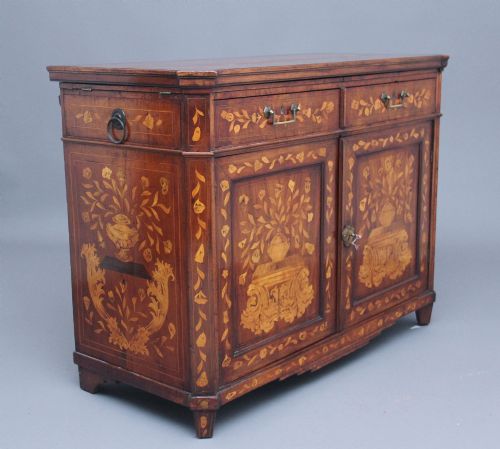
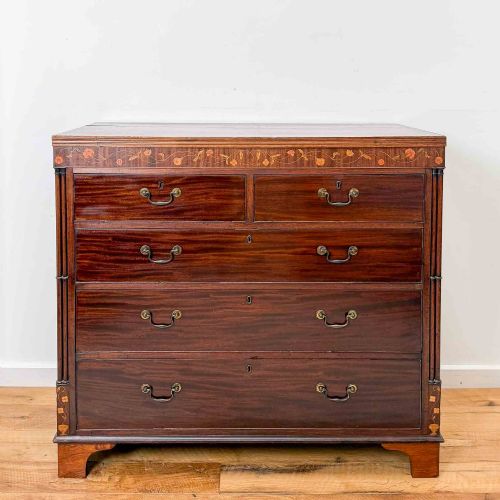
A mahogany floral marquetry commode brings together warm mahogany timbers and intricate inlaid floral designs, forming a distinctive group of storage furniture. When searching for a mahogany floral marquetry commode, buyers encounter various forms including chests of drawers, cabinets, and bureaux dating across the eighteenth and nineteenth centuries.
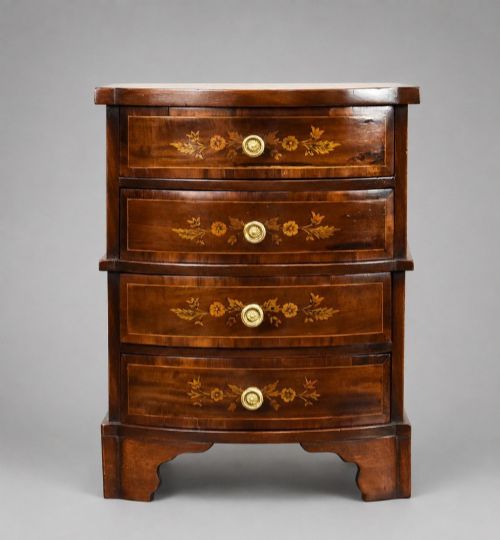
The pieces on this page span several distinct aesthetic traditions, featuring Dutch marquetry and George III style alongside Edwardian miniature examples. These items originate from periods such as the eighteenth century, the nineteenth century, and the Edwardian era, showing how cabinetmakers adapted floral inlay across different decades.
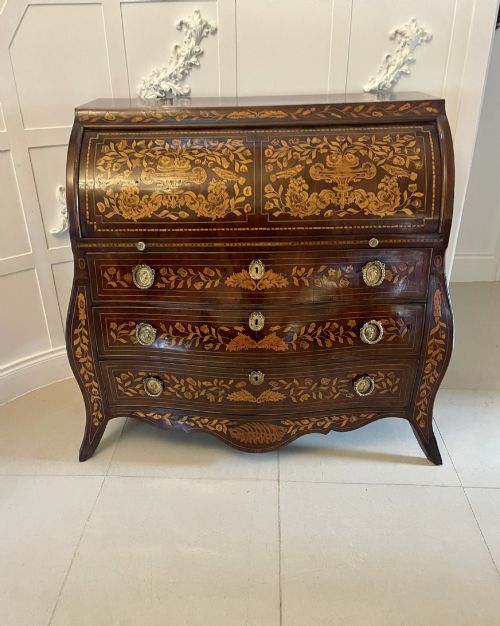
Chest of drawers formats dominate the selection, often accompanied by specialist forms like cylinder bureaux, demi-lune console tables, and travelling cabinets. The construction ranges from neat-sized pieces to bombé profiles, reflecting the diverse regional preferences of British and continental makers.
How they were made
Makers constructed the primary carcases using solid mahogany, often pairing the dark timber with contrasting lighter woods for the decorative work. Cabinetmakers utilised fruitwood, satinwood, walnut, and boxwood to build up the intricate floral motifs through careful wood inlay and marquetry techniques.
Details such as brass fittings complemented the timber surfaces, while specialist additions like marble tops appeared on select console forms. Artisans shaped the carcases into straight, serpentine, bow front, and bombé silhouettes before applying the detailed floral marquetry across the drawer fronts and surfaces.
Listings feature items from the eighteenth and nineteenth centuries alongside Edwardian pieces, incorporating mahogany, fruitwood, satinwood, walnut, boxwood, and brass.
What varies in quality
The standard of marquetry work determines much of the distinction between pieces, with superior examples showing crisp botanical details and precise timber selection. The variety of contrasting woods used for the floral inlay, including satinwood and fruitwood, contributes to the visual depth of the design.
Structural execution also separates the items, from neat-sized chests to grand bombé bureaux. The integration of mahogany carcases with fine brass hardware and shaped fronts indicates the level of craftsmanship invested by the workshop.
Edwards and Roberts
The Mahogany Floral Marquetry Commode Glossary
- Marquetry
- A decorative technique where pieces of veneer are fitted together to form pictorial patterns on a carcase. Craftsmen use various coloured woods to create floral designs.
- Bombé
- A swelling, convex furniture shape with outward-curving sides and fronts. This contour appears on specific continental chests and bureaux.
- Satinwood
- A durable, yellowish-brown timber with a lustrous finish often employed for contrast in inlay work. It provides bright highlights against darker mahogany surfaces.
- Cylinder bureau
- A writing desk featuring a rounded, half-cylinder shutter that rolls back to reveal fitted drawers and a writing surface. These are frequently decorated with extensive marquetry.
- Demi-lune
- A half-moon shape used for console tables and small storage furniture. This profile sits flat against a wall while curving outward at the front.
Mahogany Floral Marquetry Commode: Frequently Asked Questions
What is a marquetry commode?
A marquetry commode is a storage piece, typically a chest of drawers or cabinet, decorated with fitted wood veneers that form pictorial designs. These items combine structural utility with intricate surface decoration.
The examples found here utilise mahogany as a primary wood, enhanced by fruitwood, satinwood, and boxwood floral details.
How old are these chests?
The pieces span several centuries, with origins recorded in the eighteenth and nineteenth centuries, as well as the Edwardian period. Dating depends on the specific construction methods, stylistic influences, and timber choices.
Cabinetmakers of the Georgian and Regency eras produced distinct regional interpretations, ranging from British styles to Dutch marquetry.
Where were these pieces made?
Origin locations vary across British and continental workshops, with Dutch marquetry representing a significant portion of the surviving inventory. Makers in different regions applied their own local interpretations to floral inlay and carcase shapes.
Workshop traditions influenced whether a piece took a straight-fronted chest form or a more dramatic bombé profile.
How should I clean the wood?
Maintaining mahogany and marquetry surfaces requires gentle dusting with a soft, dry cloth to protect the delicate veneer work. Avoid using harsh chemical sprays or excess moisture that could damage the antique timber.
Applying occasional appropriate wax preserves the lustre of the mahogany and safeguards the contrasting inlay woods.