

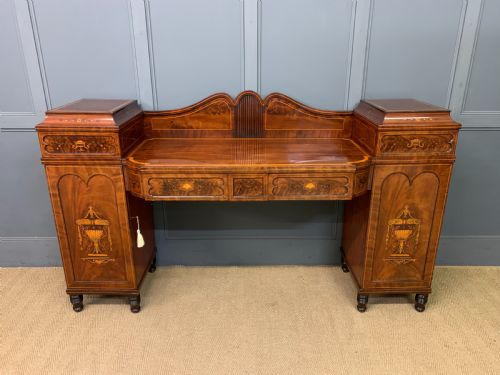


Marquetry Mahogany Sideboard
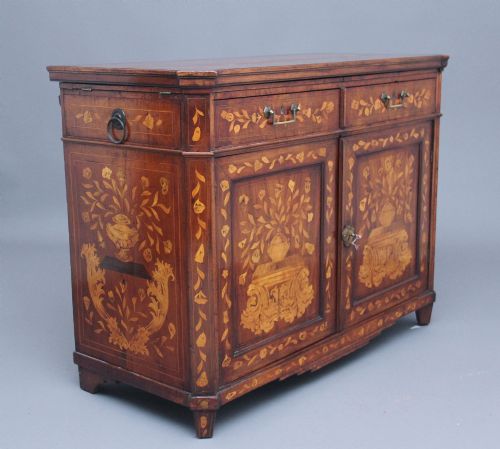
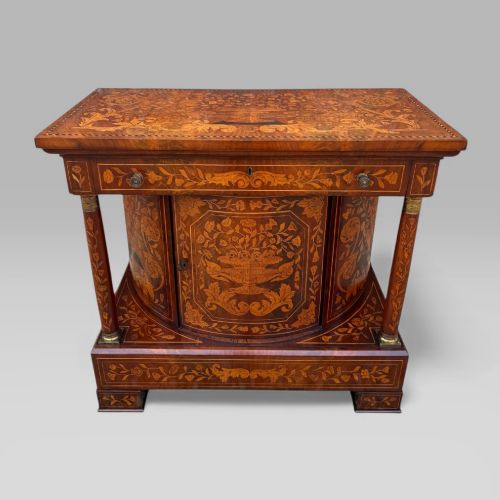
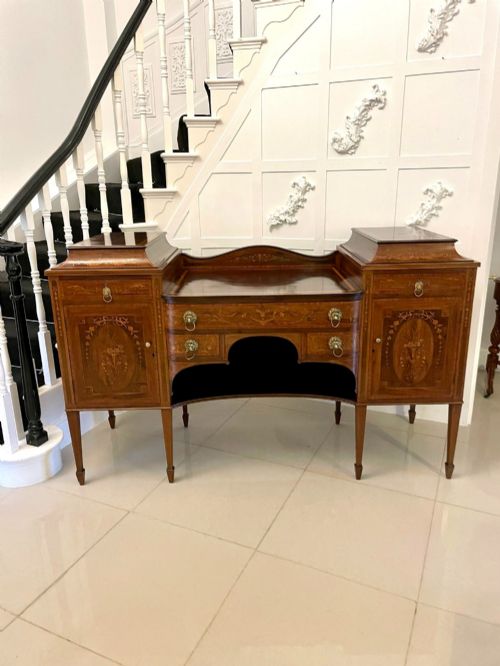
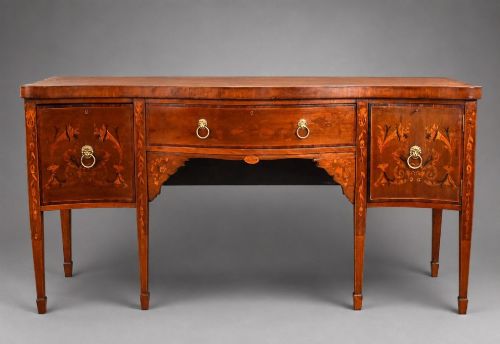
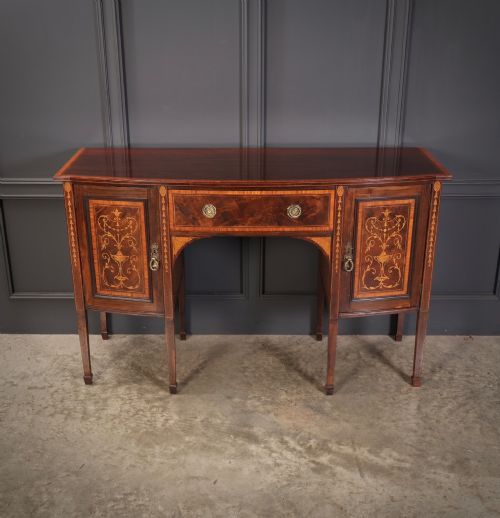
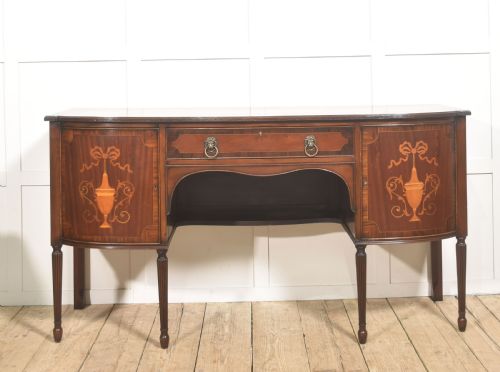
A marquetry mahogany sideboard brings distinct grain patterns, precise floral or geometric inlays, and formal storage into a room.
Marquetry Mahogany Sideboard
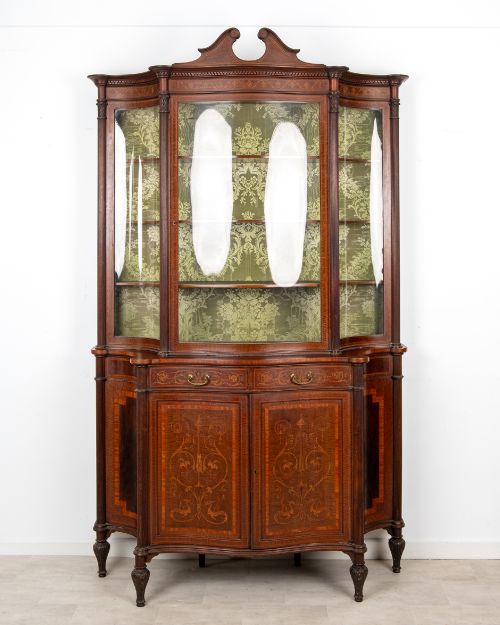
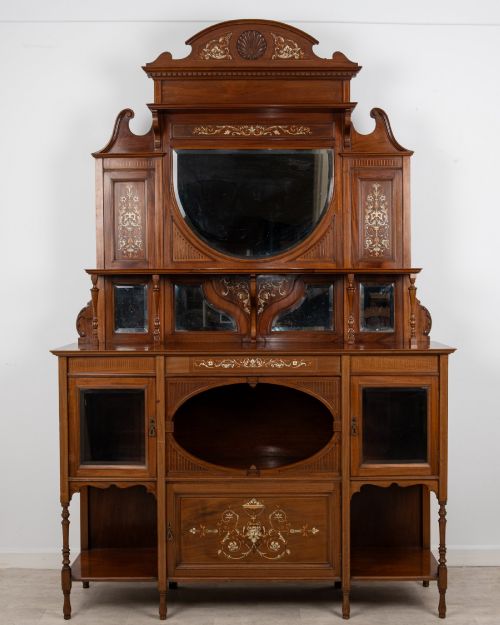
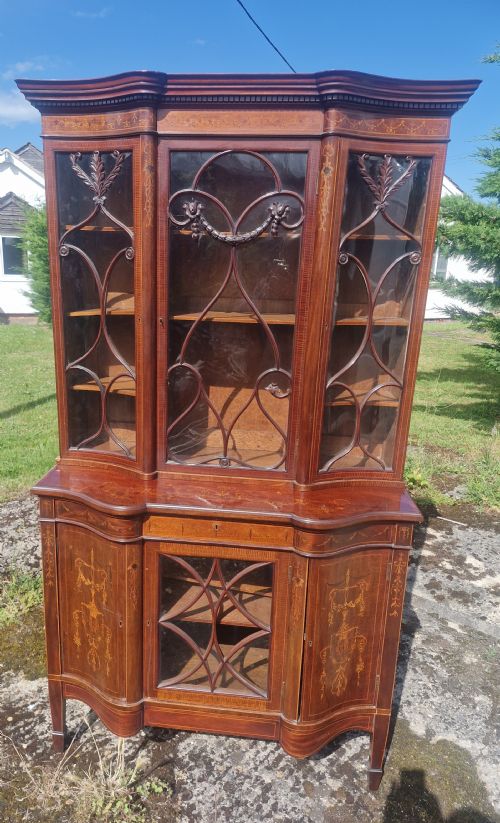
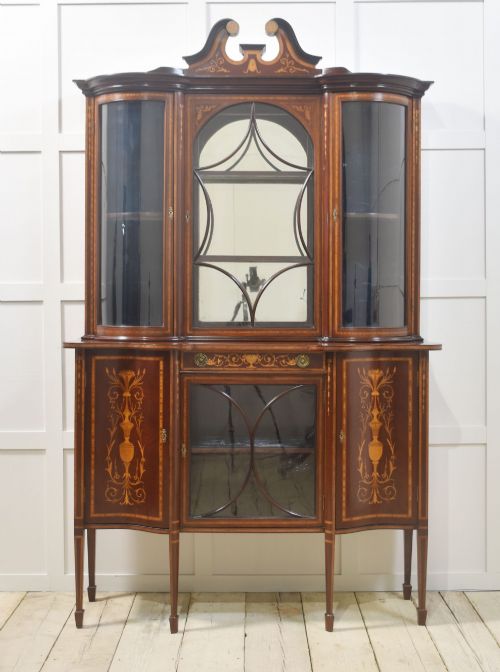
A search for a marquetry mahogany sideboard reveals formal dining room and reception furniture spanning the Georgian, Victorian, and Edwardian periods, alongside later twentieth-century interpretations. These items range from large pedestal sideboards and bow-front serving pieces to smaller side cabinets and serpentine commodes.
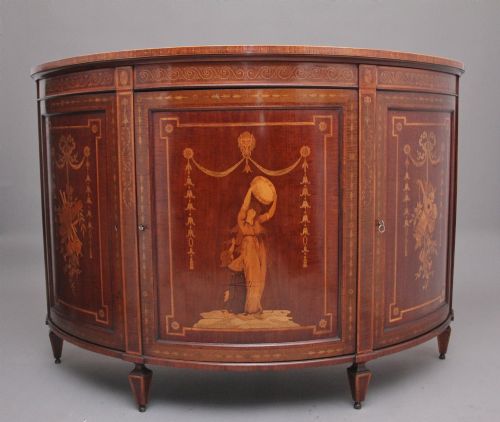
The versions most commonly met on this page date from the late nineteenth and early twentieth centuries, particularly within the Edwardian and Sheraton Revival styles. These later pieces draw heavily on eighteenth-century proportions while incorporating varied timbers and intricate decorative motifs.
Materials and construction
Makers built these cabinets using a dense tropical hardwood carcass, overlaid with fine veneers and shaped mahogany panels. Cabinetmakers relied on traditional joinery methods to ensure stability across wide timber surfaces.
The distinctive surface decoration relies on contrasting timbers such as satinwood, boxwood, and maple, cut thinly and assembled by hand into intricate floral, urn, or scrolling ribbon patterns. Brass mounts, glass doors, and marble tops appear on specific regional or stylistic variations.
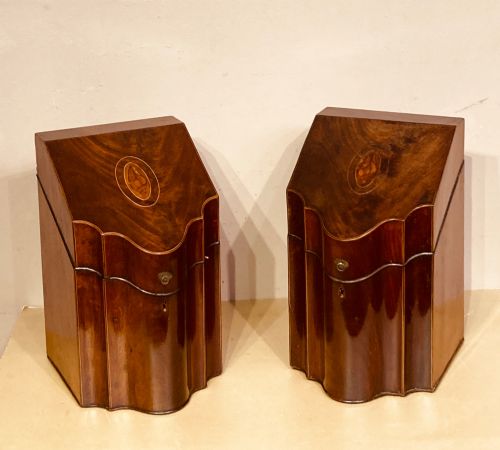
Several knife boxes designed to keep cutlery secure now serve as elegant, sloping tabletop curiosities.
Judging the standard
Quality rests upon the precision of the veneer work and the crispness of the inlaid details. Superior examples display seamless alignment where different timber grains meet, with no lifting or shrinkage in the marquetry panels.
The depth of colour in the primary mahogany timber and the structural integrity of the underlying carcase define the upper tier of these items. Workshops known for high-standard cabinet work maintained strict standards in timber selection and internal secondary woods.
Hewetsons London·Edwards and Roberts·Whytock and Reid of Edinburgh
The Marquetry Mahogany Sideboard Glossary
- Marquetry
- A decorative technique where small pieces of veneer are assembled to form pictorial or geometric patterns on a wooden surface. This method requires considerable skill to cut and fit the contrasting woods together.
- Sheraton Revival
- A late nineteenth and early twentieth-century design movement inspired by the lighter furniture forms of the eighteenth-century designer Thomas Sheraton. Pieces in this style often use delicate satinwood inlay on mahogany grounds.
- Serpentine
- A curved shape featuring a convex centre flanked by concave sides, creating an undulating front edge. This contour demands advanced woodworking techniques.
- Veneer
- A thin layer of superior or decorative timber applied to a secondary wood base. This practice allows for striking grain patterns across large surfaces while maintaining structural stability.
- Commode
- A low piece of furniture with drawers or doors, originating in France. These items often feature elaborate marquetry and decorative metal mounts.
Marquetry Mahogany Sideboard: Frequently Asked Questions
How do I date a sideboard?
Dating relies on combining the stylistic period, the construction methods used inside the drawers, and the characteristics of the timber.
Examining the secondary woods and backboards often reveals clues about the era of manufacture.
What is the difference between Edwardian and Georgian pieces?
Georgian pieces date from the eighteenth and early nineteenth centuries, showing heavy reliance on solid mahogany construction and hand-carved details.
Edwardian items from later decades often revive these earlier styles using lighter veneering techniques and machine-assisted precision.
How should I clean marquetry surfaces?
Dust surfaces regularly with a soft, dry cloth to prevent dirt accumulation in the grain and inlay joints. Avoid modern chemical sprays that can damage historic polishes.
Apply a traditional microcrystalline wax occasionally to nourish the timber and maintain the lustre of the polish.
Can I use a sideboard in a hallway?
Compact side cabinets, console tables, and narrower serving pieces adapt well to entrance halls or drawing rooms. Their shallow profiles allow them to sit against walls without obstructing thoroughfares.
Larger pedestal formats suit dining rooms and spacious reception areas where their full proportions can be appreciated.