







Dutch Delft Ceramic Charger
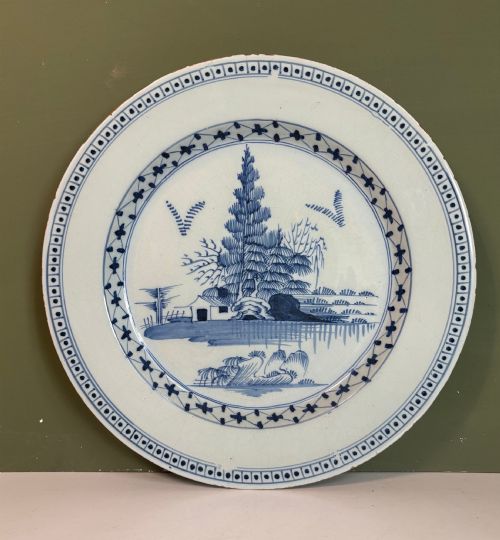
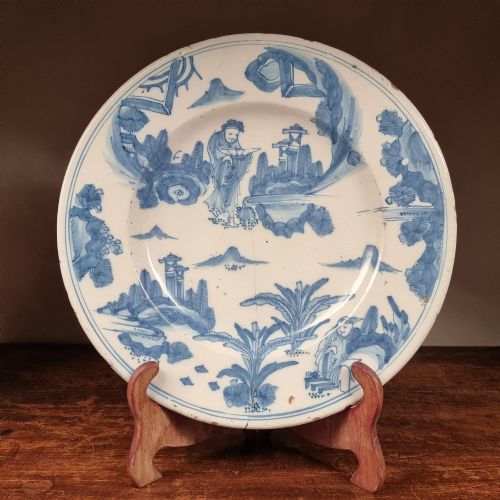
These large Dutch delft ceramic charger pieces bring tangible historic weight to a wall or table through bold cobalt pigment and tin-glazed earthenware.
Dutch Delft Ceramic Charger
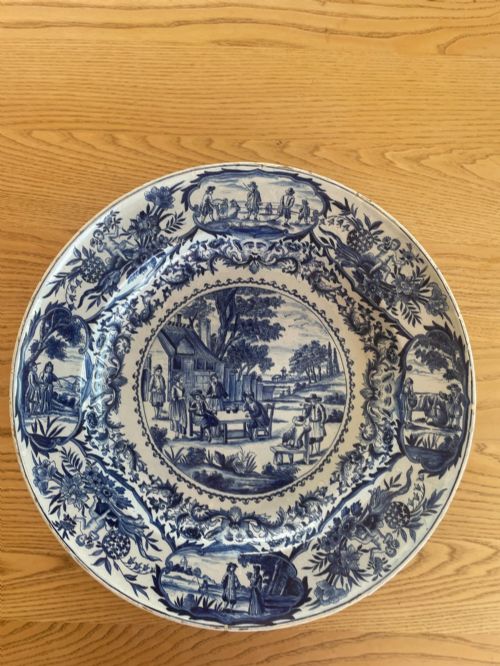
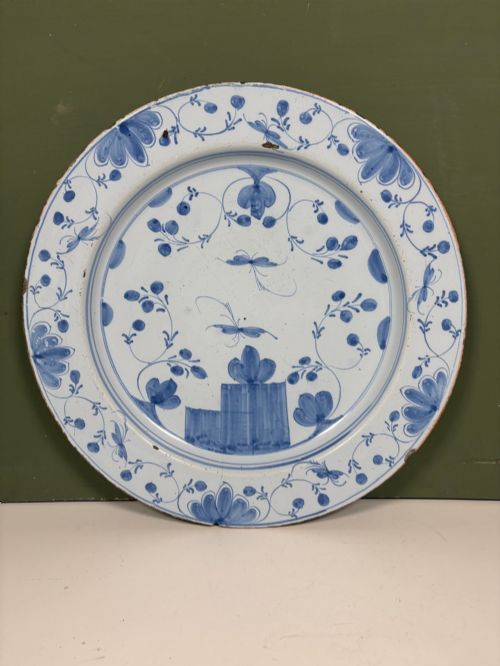
A dutch delft ceramic charger is a wide decorative earthenware plate or shallow bowl originating from the Netherlands across the seventeenth and eighteenth centuries. These items serve primarily as wall displays or centrepieces rather than functional tableware, bearing substantial diameters that showcase broad painted surfaces.
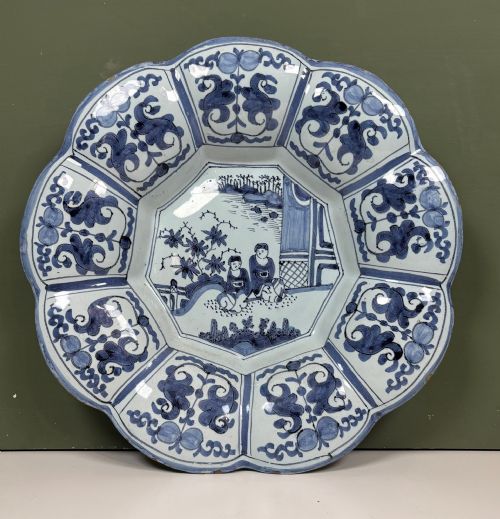
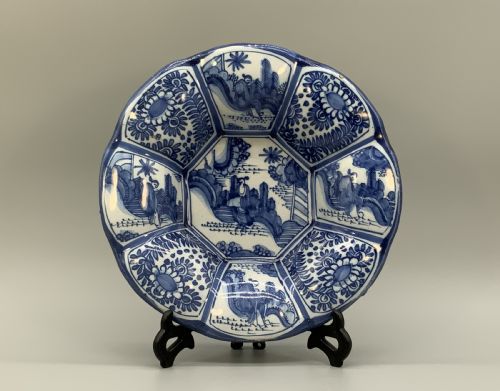
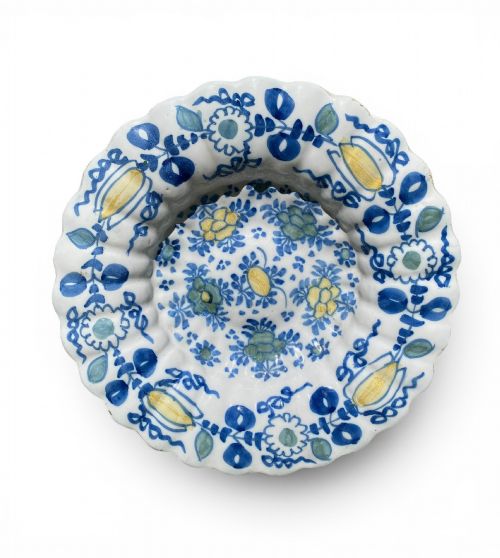
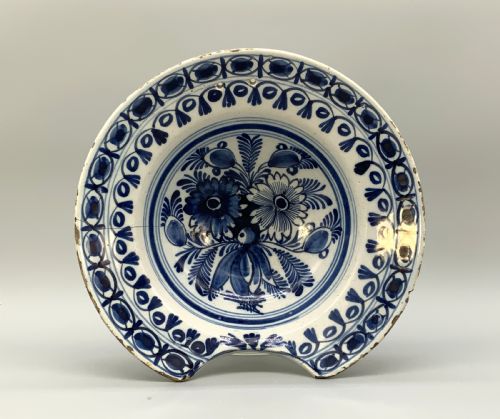
Most examples found here date from the eighteenth century, alongside seventeenth-century works and later nineteenth-century interpretations. Forms range from simple circular chargers to lobed dishes, barber's bowls, and marriage plates.
Makers drew heavily on Chinese styles, particularly Kraak porcelain patterns, alongside domestic geometric and floral motifs rendered in blue and white or polychrome palettes.
How they were made
Potters shaped local earthenware bodies before coating them in an opaque tin glaze that provided a smooth, white canvas for painting. Artisans then applied cobalt pigment or mixed oxides directly onto this unfired or raw glaze surface, allowing the colour to absorb permanently during the kiln firing.
Grand feu techniques demanded immense skill as the raw glaze soaked up the metallic pigments instantly, leaving no room to correct brushstrokes. Palettes utilised traditional blue and white alongside manganese and multi-coloured polychrome enamels.
Dutch Delft Ceramic Charger Retail Price Guide 2026
Typical asking prices for dutch delft ceramic charger among the pieces listed under this phrase on Sellingantiques today, from the lower quarter to the upper quarter. They describe what is for sale here now, not the wider market.
What varies in quality
The sophistication of the painted brushwork separates ordinary utility wares from exceptional collector pieces. Crisp execution in Kraak-style panels or intricate geometric florals indicates a master hand at work.
The purity and depth of the tin glaze also dictate standard, where an even, luminous white surface enhances the vibrancy of the cobalt pigment or polychrome details.
The Dutch Delft Ceramic Charger Glossary
- Tin-Glazed Earthenware
- Earthenware pottery covered with a lead glaze made opaque by the addition of tin oxide. This coating creates the characteristic white background typical of delftware.
- Polychrome
- Decoration employing multiple colours rather than a single hue. In these ceramics, it typically involves combinations of green, yellow, orange, and blue pigments.
- Kraak Style
- A decorative scheme inspired by late Ming dynasty Chinese porcelain, featuring panels of floral and animal motifs arranged radially around a central scene.
- Grand Feu
- A firing process where pigments are applied directly to the raw glaze and subjected to high kiln temperatures simultaneously. This technique fuses the colours permanently into the glaze.
- Barber's Bowl
- A specialised shallow dish featuring a semicircular cutout on the rim, historically used during shaving. Surviving examples share the same tin-glazed earthenware construction as standard chargers.
Dutch Delft Ceramic Charger: Frequently Asked Questions
How do I hang a heavy charger safely?
Wall display requires a specialised spring-loaded wire hanger that grips the rim securely without placing undue stress on the earthenware body.
Ensure the mounting hook fixes directly into solid wall anchors or timber studs rather than standard plasterboard.
What is the difference between a plate and a charger?
Chargers measure significantly larger in diameter than standard dining plates, intended primarily for grand display rather than daily service.
Potters built these expansive surfaces specifically to exhibit complex pictorial designs and Chinese-inspired motifs.
How do I clean old tin-glazed earthenware?
Dust surfaces gently with a dry, soft microfiber cloth to prevent particulate accumulation.
Avoid liquid immersion or harsh chemical cleaners, as porous historical earthenware and tin glazes remain sensitive to moisture.