




Chinoiserie Wall Dish
A chinoiserie wall dish brings together European forms and imagined Eastern motifs, offering bold painted scenes meant for display.
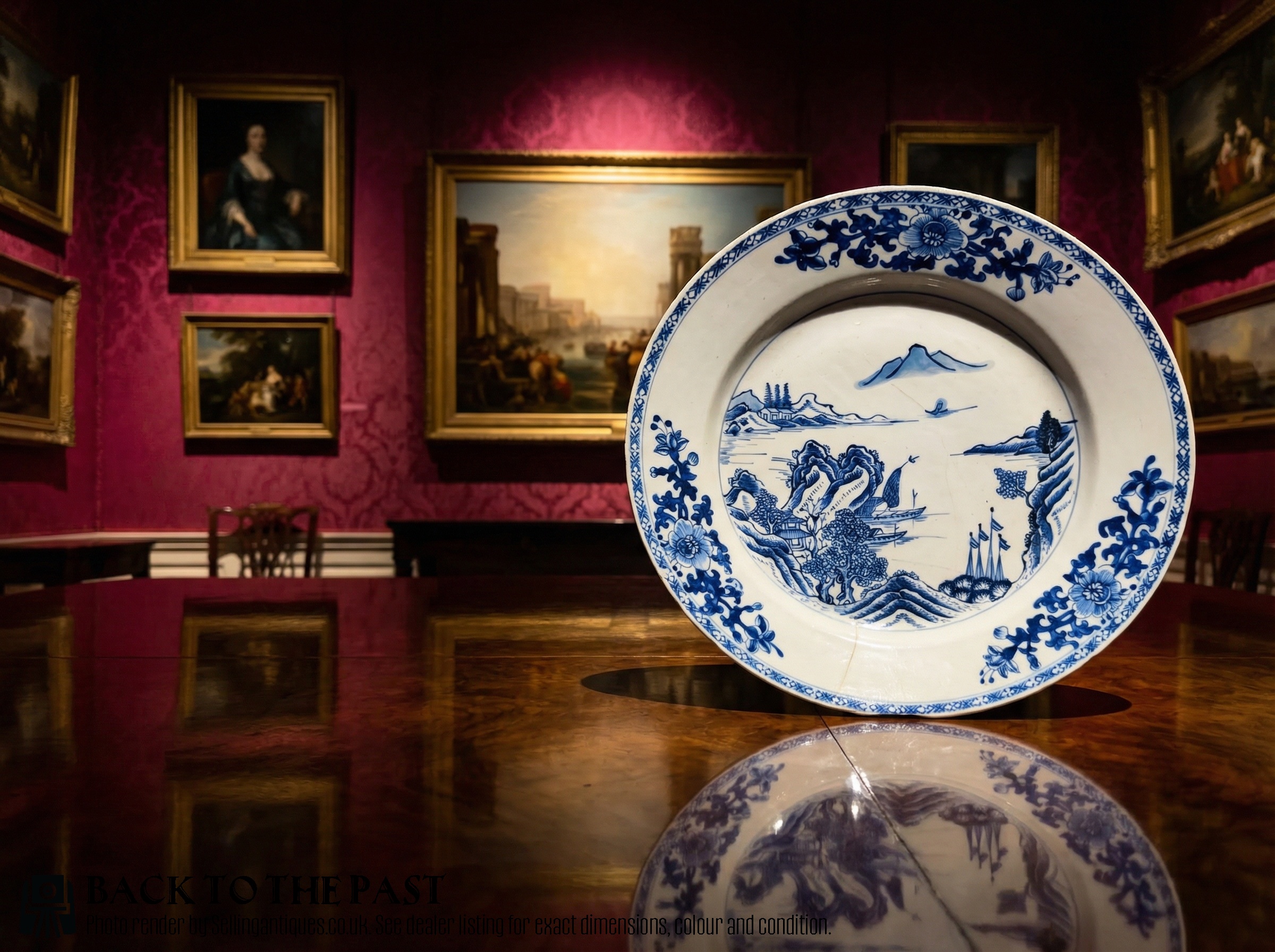
Chinoiserie Wall Dish
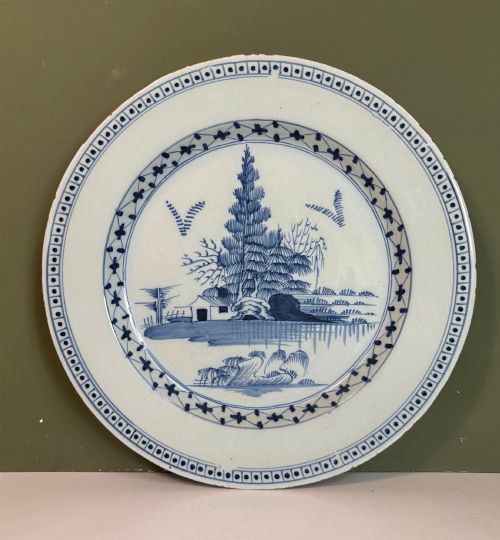
A chinoiserie wall dish is typically encountered as a tin-glazed earthenware charger or a soft-paste porcelain plate originating from the seventeenth, eighteenth, or nineteenth centuries. These pieces take the form of large chargers, platters, and decorative dishes intended to be hung upon a wall or set upon a dresser.
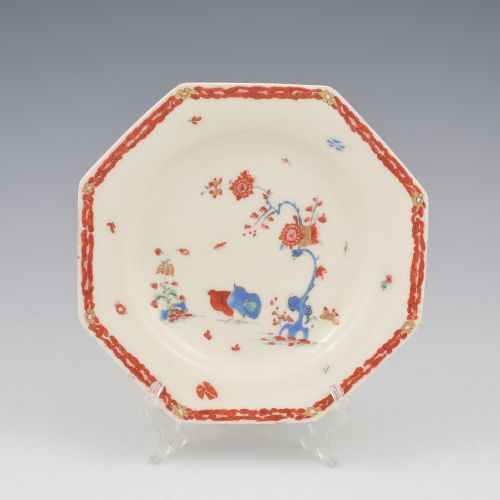
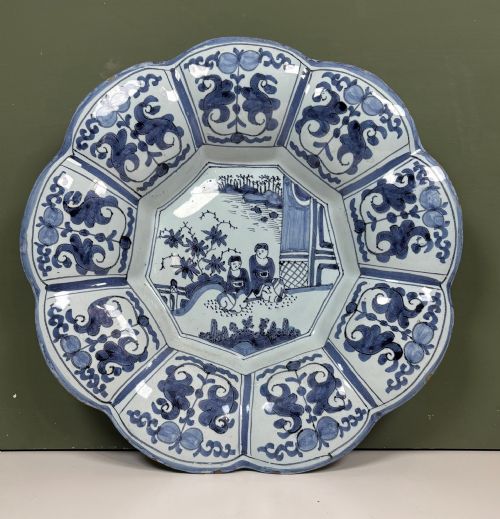
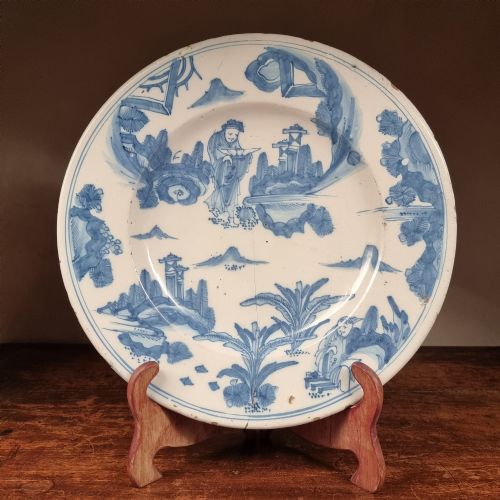
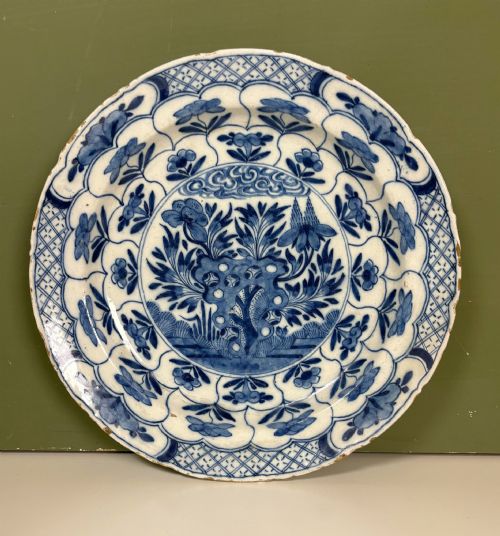
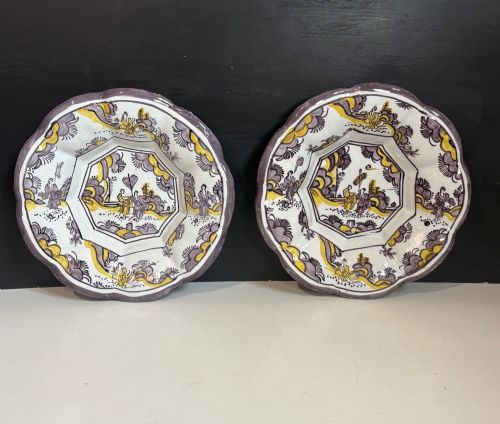
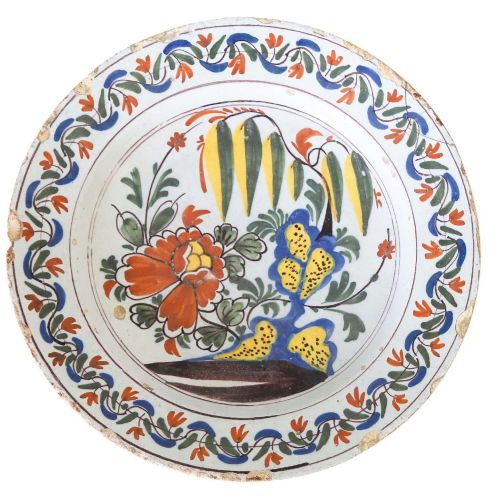
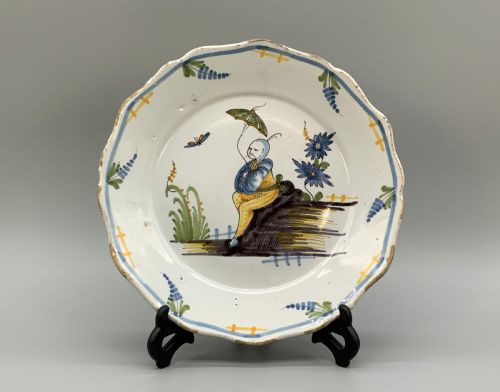
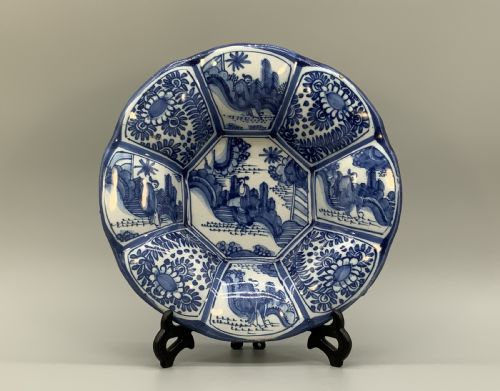
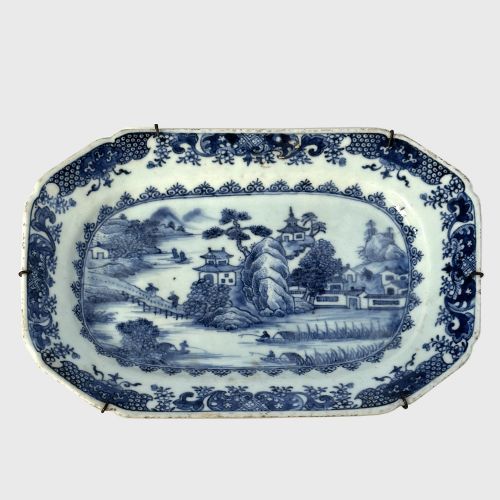
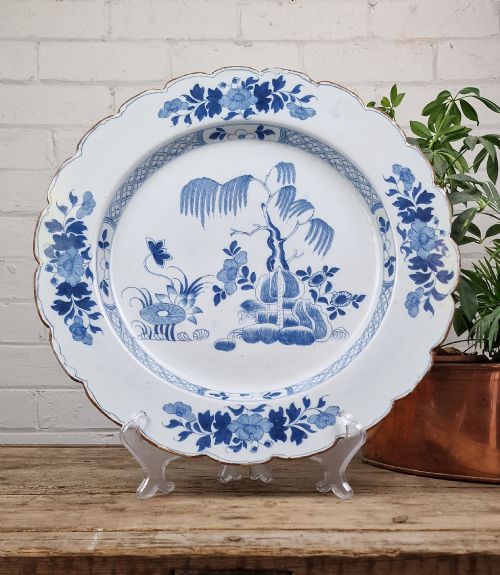
The aesthetic relies on European interpretations of Chinese and Japanese ornamentation, showing pagodas, exotic birds, and imaginary landscapes in cobalt pigment, enamel, or polychrome. Makers across England, France, Holland, and Asia produced these items, resulting in distinct regional interpretations of the same overarching style.
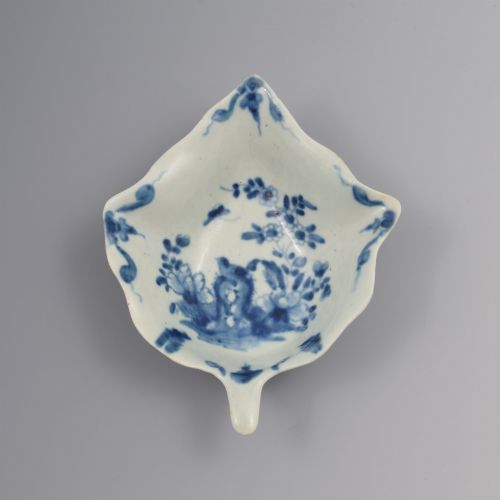
Examples on this page span Dutch delftware, English delftware from Lambeth and Bristol, and early porcelain from factories such as Worcester. Each piece presents a specific variant of the decorative idiom, from blue and white Kraak-style borders to vibrant manganese and yellow palettes.
How They Were Made
Potters constructed these objects using earthenware or porcelain bodies, applying tin glaze or transparent lead glaze to create a smooth surface for painting. Tin-glazed earthenware required a opaque white ground made from tin oxide, upon which pigments were hand-brushed before firing.
Porcelain bodies, including soft-paste and ironstone variations, provided a finer white surface that allowed delicate enamels and cobalt underglazes to fuse during high-temperature kiln firings. Artisans executed the painted scenes freehand, utilising mineral pigments to achieve the characteristic blue, polychrome, and manganese tones.
Certain eighteenth-century painters added two solitary birds to their landscapes simply to balance an awkward corner of sky.
What Varies in Quality
Quality rests upon the confidence of the brushwork and the clarity of the painted narrative, where fluid, expressive strokes distinguish superior compositions from rigid imitations. The depth and stability of the glaze further define the piece, as well-fired surfaces display an even sheen without excessive pitting or clouding.
The sophistication of the palette and the complexity of the orientalist motif play a primary role in separating standard production from exceptional examples. Pieces that integrate crisp detailing with a harmonious balance of negative space and dense decoration represent the higher tier of the medium.
John Ridgway·Mason and CJ Mason
The Chinoiserie Wall Dish Glossary
- Chinoiserie
- European artistic style reflecting Chinese and East Asian motifs. Artisans applied these whimsical landscapes and figures to ceramics and furniture.
- Tin Glaze
- Opaque white glaze containing tin oxide used on earthenware. It provides a clean, pale ground for painting blue and polychrome designs.
- Charger
- Large decorative plate designed for wall hanging or display. These sizable dishes typically measure twelve inches or more across.
- Kraak Style
- Chinese export porcelain design featuring segmented panel borders. Dutch and English potteries frequently copied this compartmentalised aesthetic.
- Soft-paste Porcelain
- Early European ceramic composite made from clay and glass frit. It fires at lower temperatures than hard-paste porcelain and shows a warm, creamy body.
Chinoiserie Wall Dish: Frequently Asked Questions
How were chinoiserie wall dishes displayed?
Historic interiors utilised these large platters as decorative focal points, mounting them securely on walls or arranging them prominently on sideboards and dressers.
Their substantial size and bright pigments made them ideal for catching ambient light in formal rooms.
What is the difference between delftware and porcelain?
Delftware employs a porous earthenware body covered in an opaque tin glaze, whereas porcelain uses a dense, vitrified clay body that remains white through its entire thickness.
Porcelain surfaces often feel harder and crisper under the brush than the slightly softer tin-glazed earthenware.
How do I identify a chinoiserie motif?
Look for fantastical architectural elements like tiered pagodas, peculiar rock formations, willow trees, and figures wearing imagined Eastern dress.
Exotic birds and floral sprays frequently complete the composition in a stylized, non-naturalistic manner.
Are these dishes safe for food use?
Historic pieces are intended for display and collection rather than daily dining.
Age, glaze degradation, and the composition of early ceramic bodies make modern culinary use impractical.