


Blue Delftware Charger
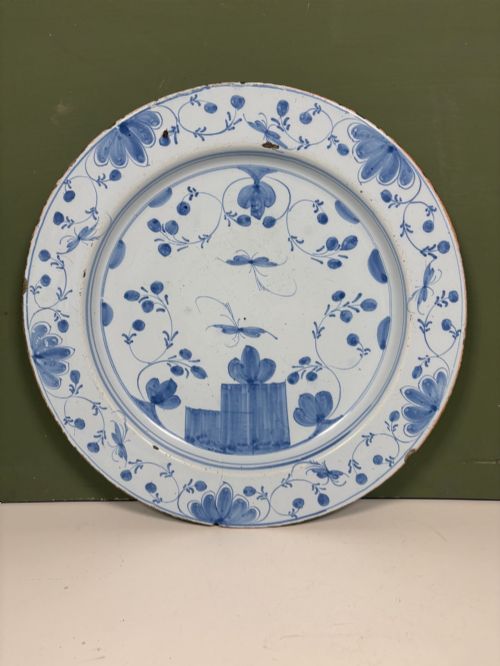
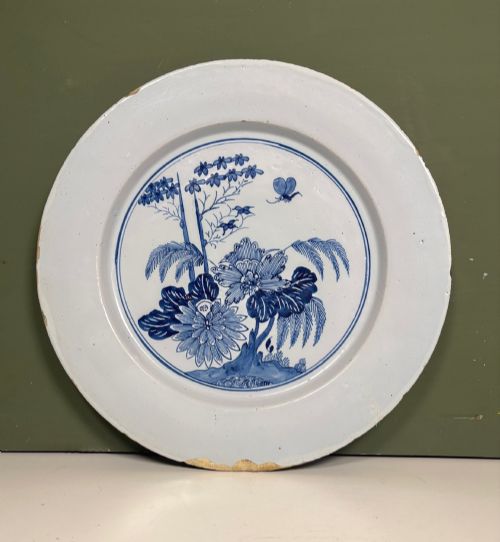
A blue delftware charger brings centuries of tin-glazed earthenware and painted cobalt pigment directly to a wall or table.
Blue Delftware Charger
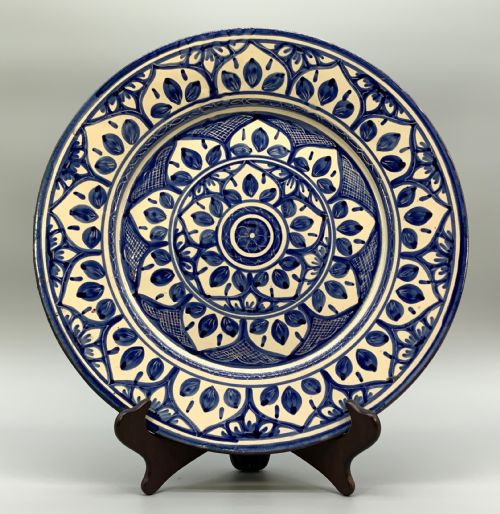
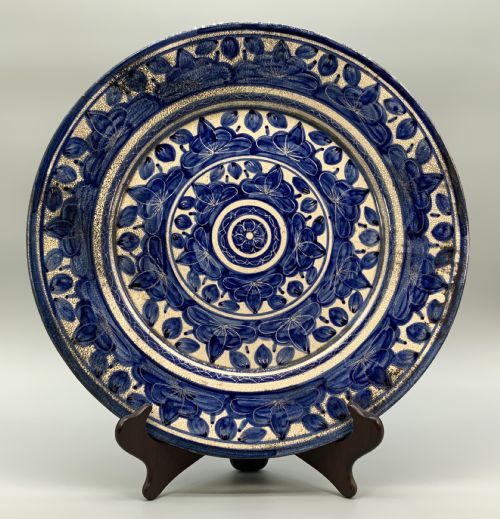
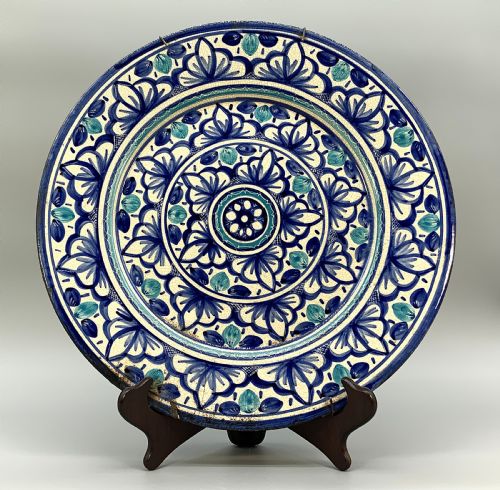
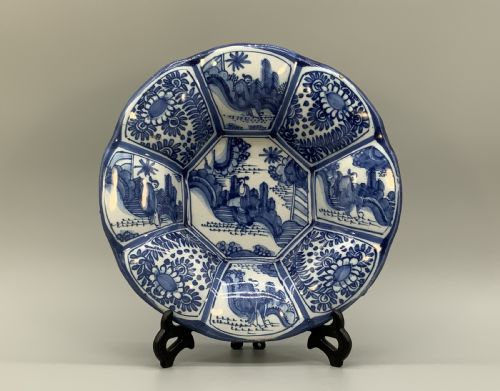
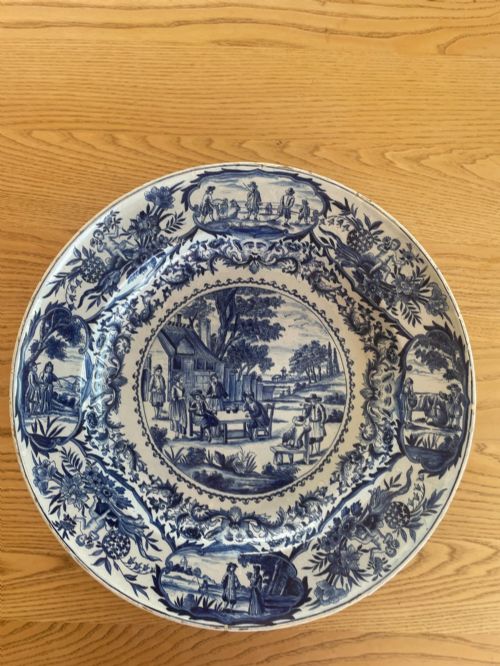
A blue delftware charger is a large circular earthenware plate intended for display rather than everyday dining. These pieces range from seventeenth-century Dutch and English examples to later continental interpretations in various styles.
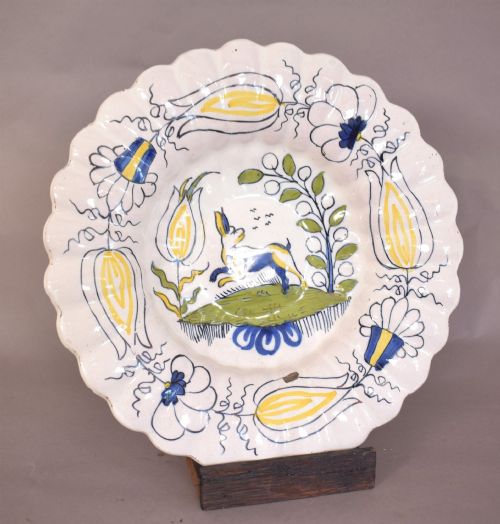
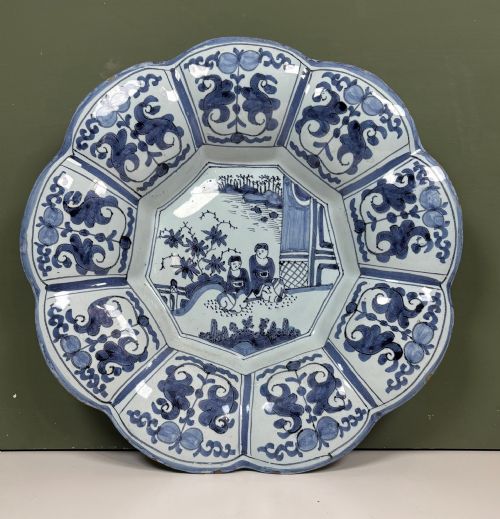
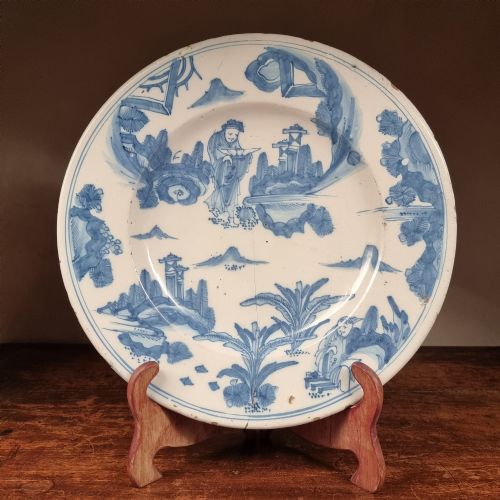
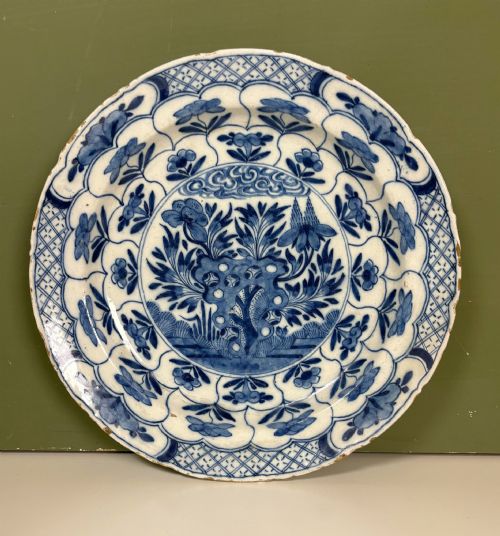
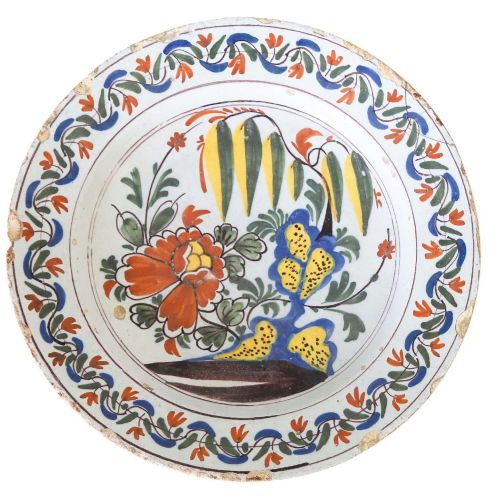
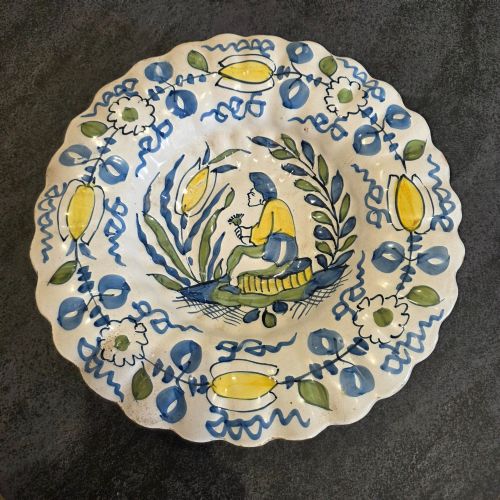
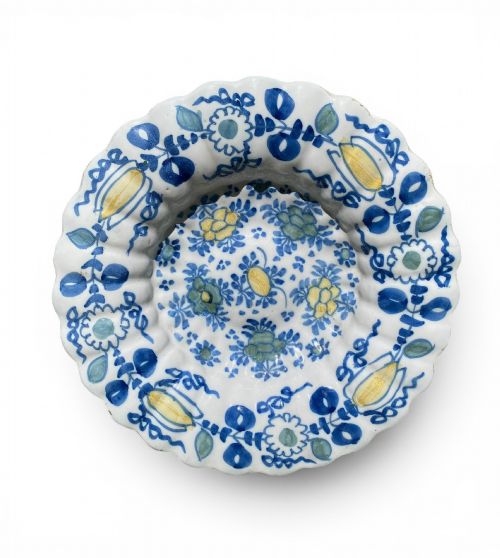
The versions most common on this page date from the eighteenth century, presenting generous diameters painted in blue and white or polychrome palettes. Makers produced these large dishes across workshops in England, Holland, and Spain.
Forms include lobed dishes, barber's bowls, and marriage plates alongside standard decorative chargers. Collectors encounter styles spanning Dutch Baroque, Georgian chinoiserie, and Moorish revival.
Materials and construction
Potters formed these chargers from earthenware bodies, coating the fired clay in an opaque tin glaze that provided a smooth white ground for painting. Artisans applied cobalt pigment directly onto this absorbent unfired glaze before placing the vessel in the kiln.
The interaction between the cobalt oxide and the tin glaze during firing created the characteristic blue and white designs seen on these plates. Some pieces received additional coloured pigments for polychrome decoration.
Listings on this page span the seventeenth, eighteenth, and nineteenth centuries, featuring tin-glazed earthenware decorated with cobalt pigment.
Judging quality and character
The clarity and confidence of the hand-painted decoration distinguish superior examples from simpler production. Brushwork that shows a sure hand and varied line brings life to floral, landscape, or figurative motifs.
The smoothness of the tin glaze and the trueness of the circular earthenware body reveal the skill of the potter in the kiln. Early pieces display the natural undulations and glaze pooling typical of historic ceramic manufacturing.
The Blue Delftware Charger Glossary
- Tin-glazed earthenware
- Pottery covered with a lead glaze made opaque by the addition of tin oxide. This white surface served as the canvas for painted decoration.
- Cobalt pigment
- A metallic oxide used by potters to achieve blue decoration on ceramic wares. It withstands high kiln temperatures without losing its intense colour.
- Charger
- A large decorative plate intended for display on a sideboard or wall rather than for serving food at the table.
- Polychrome
- Decoration employing multiple colours rather than a single hue. On these ceramics, this typically involves greens, yellows, and oranges alongside the blue.
- Kraak style
- A Chinese porcelain aesthetic imitated by European potters featuring panelled borders and central motifs of birds, flowers, or landscapes.
Blue Delftware Charger: Frequently Asked Questions
How were blue delftware chargers used?
Historic households displayed these large dishes on sideboards, dressers, and walls to demonstrate taste and status. Their generous scale made them ideal for decorative impact rather than functional dining.
Today, collectors continue to mount them on walls or display them on plate stands to appreciate the hand-painted cobalt designs.
How do I tell seventeenth-century pieces apart from later ones?
Seventeenth-century examples often display thicker earthenware bodies and influences from Kraak porcelain imports. The painting styles and tin glaze compositions evolved noticeably into the eighteenth century.
Examining the foot ring, glaze characteristics, and potting weight helps identify the specific period of manufacture.
Are these chargers safe for holding food?
Historic tin-glazed earthenware possesses a softer, porous body and surface glazes that can be sensitive to modern acidic foods. These pieces are intended for display and collection rather than practical culinary use.
Gentle dusting with a dry cloth is sufficient for ongoing care.
What is the difference between English and Dutch delftware?
English and Dutch workshops both utilised tin-glazed earthenware techniques but developed distinct decorative preferences and clay bodies. English centres such as Lambeth produced characteristic palette variations and forms.
Comparing the blue tones, glaze thickness, and back characteristics helps distinguish between the two regional traditions.